![[Marketing] Primeira Questao](https://storage.estuda.com.br/banners/0_6e09902a8e108d73cce3c7b9272eb1de_simulado_home_treineiro_desk.png)
Questão 11 - Mackenzie 1 Dia 2024
Read the text below and answer question.
Dinogorgon SkuII
A dinogorgon skull protrudes from a rock with the South African scrubland in the background
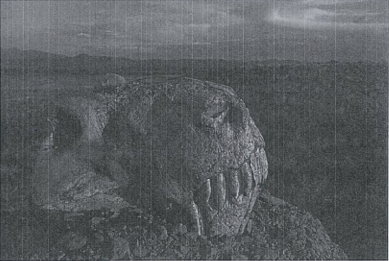
PHOTOGRAPH BY .JONATHAN BLAIR A dinogorgon skull protrudes from a rock with the South African scrubland in the background.
When a species disappears, bioiogists say that the species has become extinct. By making room for new species, extination helps drive the evolution oflife. Overlong periods oftime, the numberofspecies becoming extinct can remam fairly constant, meaning that an average number of species 90 extinct each year, century, ormillennium. However, during the history of ilfe on Earth, there have been periods ofmass extmnction, when large percentages of the planet’s species became extinct in a reiativeiy shart amount oftime. These extinctions have had wideiy different causes.
About 541 milhlon years ego, a great expansion occurred in the diversity of multiceilular organisms. Paleobiologists, scientists who study the fosslls of plants and animais to Icem how hfe evolved, cai! this event the Cambrian Explosion. Since the Cambrian Explosion, there have been five mass extinctions, each of which is named for the geoiogicai period in which it occurred, ar for the periods that immediately preceded and followed II.
The first mass extinction is called the Ordovician-Silurian Extinotion. It occurred about 440 milhon years ago, at the end of the period that pa!eontoiogists and geoiogists cali the Ordovician, and followed by the start of the Silurian period. in this extinetion event, many smaii ordanisms of the sea became extinct. The next mass extinction is cailed Devonian extinction, occurring 365 mil!ion years ago during the Devonian period. This extinction also saw the end of numerous sea organisms.
The iargest extinction took piace around 250 mililon years ego. Known as the Permian-Triassic extinction, or the Great Dying, this event saw the end of more than 90 percent of Earth’s species. Aithough life an Earth waà nearly wiped out, the Great Dying mede room fornew organisms, inciuding the first dinosaurs. About 210 mililon years ego, between the Triassic and .Jurassic periods, came another mass extinction. By eiiminating many large animais, this extinction event cieared the way for dinosaurs to fiourish. Finaliy, about 65.5 miiiion years ago, at the end of the Cretaceous period came the fifth mass extinction. This is the famous extinction event that brought the age of the dinosaurs to an end.
In each ofthese cases, the mass extinction created niches or openings in the Earth’s ecosystems. Those niches ailowed for newgroups oforganisms to thrive and diversify, which produced a range of new species. Iri the case of the Cretaceous extinction, the demise of the dinosaurs allowed mammals to thrive and grow larger.
Scientists refer to the current time as the Anthropocene period, meaning the period ofhumanity. They warn that, because ofhuman activities such as poilution, overfishing, and the cutting down of forests, the Earth might be on the verge of—oraiready in—a sixth mass extinction. if that is true, what new ilfe wouid rise up to fiJi the niche that we currently occupy?
(Taken from https://education.nationalgeographic.org/lresource/extinction/ Access: Septerhber/2023)
Aecording to the text, choose the correct alternative:

Sua aprovação tá logo ali. Só falta um clique
Cadastre-se grátis e libere o acesso a um mundo de estudos com:
- Questões filtradas por matéria, prova e dificuldade
- Comentários explicativos para aprofundar seus estudos
- Conteúdo exclusivo que te dá vantagem na reta final