![[Marketing] Primeira Questao](https://storage.estuda.com.br/banners/0_6e09902a8e108d73cce3c7b9272eb1de_simulado_home_treineiro_desk.png)
Questão 32 - UPE SSA 3ª Fase - 1º Dia 2024
The circular economy
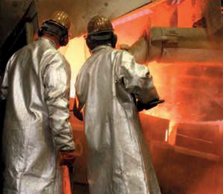
Workers at Umicore in Brussels separate out precious metals from electronic waste. Credit: Umicore
When my battered 1969 Toyota car approached the age of 30, I decided that her body deserved to be remanufactured. After 2 months and 100 hours of work, she returned home in her original beauty. “I am so glad you finally bought a new car,” my neighbour remarked. Quality is still associated with newness not with caring; long-term use as undesirable, not resourceful.
Cycles, such as of water and nutrients, abound in nature — discards become resources for others. Yet humans continue to 'make, use, dispose'. One-third of plastic waste globally is not collected or managed. [...]
There is an alternative. A 'circular economy' would turn goods that are at the end of their service life into resources for others, closing loops in industrial ecosystems and minimizing waste. It would change economic logic because it replaces production with sufficiency: reuse what you can, recycle what cannot be reused, repair what is broken, remanufacture what cannot be repaired. A study of seven European nations found that a shift to a circular economy would reduce each nation's greenhouse-gas emissions by up to 70% and grow its workforce by about 4% — the ultimate low-carbon economy.
Circular-economy business models fall in two groups: those that foster reuse and extend service life through repair, remanufacture, upgrades and retrofits; and those that turn old goods into as-new resources by recycling the materials. People — of all ages and skills — are central to the model. [...]
Yet a lack of familiarity and fear of the unknown mean that the circular-economy idea has been slow to gain traction. As a holistic concept, it collides with the silo structures of academia, companies and administrations. For economists who work with gross domestic product (GDP), creating wealth by making things last is the opposite of what they learned in school. GDP measures a financial flow over a period of time; circular economy preserves physical stocks. But concerns over resource security, ethics and safety as well as greenhouse-gas reductions are shifting our approach to seeing materials as assets to be preserved, rather than continually consumed.
By Walter R. Stahel
Disponível em: https://www.nature.com/articles/531435a Acesso: 16 abr. 2023. (Texto adaptado).
Observe a passagem que se encontra no início do texto:
“When my battered 1969 Toyota car approached the age of 30, I decided that her body deserved to be remanufactured. After 2 months and 100 hours of work, she returned home in her original beauty. “I am so glad you finally bought a new car,” my neighbour remarked.”
Sobre esse trecho, é CORRETO afirmar que o autor

Sua aprovação tá logo ali. Só falta um clique
Cadastre-se grátis e libere o acesso a um mundo de estudos com:
- Questões filtradas por matéria, prova e dificuldade
- Comentários explicativos para aprofundar seus estudos
- Conteúdo exclusivo que te dá vantagem na reta final