![[Marketing] Primeira Questao](https://storage.estuda.com.br/banners/0_6e09902a8e108d73cce3c7b9272eb1de_simulado_home_treineiro_desk.png)
Questão 33 - FGV-SP Administração - UNIFICADO 2025/1
Texto para a pergunta.
WHITE WOMEN AND SLAVERY
(Historical Note: Based on English common law, coverture laws in the United States forbade a married woman to own property, sign legal documents or enter into a contract, obtain an education against her husband's wishes, or keep a salary for herself.)
[1] They didn't know how bad it was. That was how James Redpath, a northern journalist who toured the U.S. South in the 1850s, explained white southern women's support for slavery to his readers. He reckoned [pensava] that women were shielded [protegidas] from the "most obnoxious features" - rarely witnessing the auctions [leilões] and punishments - and were oblivious to the "gigantic commerce" that it had become. Historians came to agree that slavery was the business of men.
[2] Research published last month shatters [destrói] that narrative. Economists at Ohio State University analyzed data from the New Orleans slave market, the biggest. They found that women were buyers or sellers in 30% of all transactions and 38% of those that involved female slaves.
[3] These are the first hard [concretos] numbers building on qualitative work by Stephanie Jones-Rogers at the University of California, Berkeley, showing just how instrumental women were to the slave economy. In the travel logs of foreigners she recently uncovered descriptions of southern belles bidding [mulheres sulistas finas dando lances] at the slave markets dressed in their finest silks and "glittering in precious jewels." For the ladies of the antebellum South [0 Sul antes da Guerra Civil (1861-1865)], slavery was more than business - it was their ticket to economic freedom. Coverture laws compelled women to relinquish [ceder] property and money to men when they married, but exceptions were made for slaves. Fathers hoping to secure their daughters' futures gave them slaves at baptisms, birthdays, and engagements [noivados].
[4] Women put slaves to work selling cakes or dresses and pocketed the profits in secret. Some ran slave brothels [bordeis]. They then used the cash to reinvest in the slave market. But unlike their husbands, who often bought men to work the fields, women bought more women, who were cheaper but paid dividends later on when they reproduced. After the Civil War it would be decades before the women of the South gained the right to control their earnings, have property, and vote. Ms. Jones-Rogers contends [argumenta] that their fight for segregation into the 20th century was fuelled by the sense of power they had known and lost. In the subjugation of others they had tasted freedom.
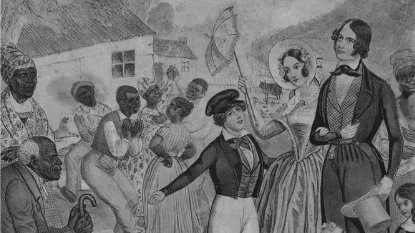
Adapted from The Economist, Jume 22,2024.
Because of coverture laws in the U.S. South, we may presume that

Sua aprovação tá logo ali. Só falta um clique
Cadastre-se grátis e libere o acesso a um mundo de estudos com:
- Questões filtradas por matéria, prova e dificuldade
- Comentários explicativos para aprofundar seus estudos
- Conteúdo exclusivo que te dá vantagem na reta final