


![[Marketing] Questao Topo - deslogado](https://storage.estuda.com.br/banners/0_6b7ebee90b03af1c560c73bb8bcce34a_banner_deslogado_70_dias.png)
Questões de Inglês
19.971 Questões
Questão 37 10615284
FDF C. Gerais 2021Leia o texto para responder à questão.
In the summer of 2014, Markie Miller discovered she’d been drinking toxic coffee. Miller lives in Toledo, Ohio, where fertilizer runoff from farms had caused blooms of toxic cyanobacteria in Lake Erie, her water supply. The city issued an alert at 2 am, but by the time Miller saw it she’d already been sipping her morning drink.
Miller started meeting with other residents to figure out how to protect their water. But what to do? You could sue a polluter (for polluting) or a government agency (for neglecting its regulatory duties), but even if you won, the damages would be too small to be an impediment. You could assemble a class action suit of hurt residents, but that’s a ponderous and uncertain process. The real problem, of course, was that the lake itself was polluted — and individuals can’t sue over that. In the eyes of the law, they don’t have “standing.” That’s when one activist raised an idea: What if the lake itself had standing? What if the citizens of Toledo passed a law giving it legal rights?
The idea of giving personhood to nature has been slowly gaining supporters. Environmentalists have encouraged governments and courts to award rights to lakes, hills, rivers, and even individual species of plants.
As intrigued as I am by the idea of mountains suing mining companies, though, I’m not sure the rights of nature will hold up in US courts. Corporations are against it. Even some indigenous thinkers aren’t keen on the idea, arguing that these new laws could infringe their treaty rights. And there’s some hubris here too. How do we humans know what nature wants or if it cares if humans survive?
Still, I think the approach is worth trying. The climate crisis is fully main stage, with California burning and Florida drowning. If we’re going to forestall worse to come, we need innovation not just in tech — more clean energy, resilient cities, genetically modified crops that need less fertilizer — but in law, the rule sets that architect our behavior.
The deep value of the personhood movement isn’t merely legal. It’s cultural. We’ve spent generations regarding the wilderness as a bottomless box of tissues, to be used and discarded at will. So we need a better way of talking about hills and forests and oceans; we need to see them with fresh eyes. Indigenous wisdom got this right, millennia ago. If we’re going to control our abuse of nature, we need to see it as our equal.
(Clive Thompson. www.wired.com, 17.12.2019. Adaptado.)
No trecho do penúltimo parágrafo “Still, I think the approach is worth trying”, o termo sublinhado tem o mesmo significado que
Questão 35 10615266
FDF C. Gerais 2021Leia o texto para responder à questão.
In the summer of 2014, Markie Miller discovered she’d been drinking toxic coffee. Miller lives in Toledo, Ohio, where fertilizer runoff from farms had caused blooms of toxic cyanobacteria in Lake Erie, her water supply. The city issued an alert at 2 am, but by the time Miller saw it she’d already been sipping her morning drink.
Miller started meeting with other residents to figure out how to protect their water. But what to do? You could sue a polluter (for polluting) or a government agency (for neglecting its regulatory duties), but even if you won, the damages would be too small to be an impediment. You could assemble a class action suit of hurt residents, but that’s a ponderous and uncertain process. The real problem, of course, was that the lake itself was polluted — and individuals can’t sue over that. In the eyes of the law, they don’t have “standing.” That’s when one activist raised an idea: What if the lake itself had standing? What if the citizens of Toledo passed a law giving it legal rights?
The idea of giving personhood to nature has been slowly gaining supporters. Environmentalists have encouraged governments and courts to award rights to lakes, hills, rivers, and even individual species of plants.
As intrigued as I am by the idea of mountains suing mining companies, though, I’m not sure the rights of nature will hold up in US courts. Corporations are against it. Even some indigenous thinkers aren’t keen on the idea, arguing that these new laws could infringe their treaty rights. And there’s some hubris here too. How do we humans know what nature wants or if it cares if humans survive?
Still, I think the approach is worth trying. The climate crisis is fully main stage, with California burning and Florida drowning. If we’re going to forestall worse to come, we need innovation not just in tech — more clean energy, resilient cities, genetically modified crops that need less fertilizer — but in law, the rule sets that architect our behavior.
The deep value of the personhood movement isn’t merely legal. It’s cultural. We’ve spent generations regarding the wilderness as a bottomless box of tissues, to be used and discarded at will. So we need a better way of talking about hills and forests and oceans; we need to see them with fresh eyes. Indigenous wisdom got this right, millennia ago. If we’re going to control our abuse of nature, we need to see it as our equal.
(Clive Thompson. www.wired.com, 17.12.2019. Adaptado.)
Considerando o contexto do artigo, a expressão “giving personhood”, no terceiro parágrafo, pode ser entendida como
Questão 33 10615243
FDF C. Gerais 2021Leia o texto para responder à questão.
In the summer of 2014, Markie Miller discovered she’d been drinking toxic coffee. Miller lives in Toledo, Ohio, where fertilizer runoff from farms had caused blooms of toxic cyanobacteria in Lake Erie, her water supply. The city issued an alert at 2 am, but by the time Miller saw it she’d already been sipping her morning drink.
Miller started meeting with other residents to figure out how to protect their water. But what to do? You could sue a polluter (for polluting) or a government agency (for neglecting its regulatory duties), but even if you won, the damages would be too small to be an impediment. You could assemble a class action suit of hurt residents, but that’s a ponderous and uncertain process. The real problem, of course, was that the lake itself was polluted — and individuals can’t sue over that. In the eyes of the law, they don’t have “standing.” That’s when one activist raised an idea: What if the lake itself had standing? What if the citizens of Toledo passed a law giving it legal rights?
The idea of giving personhood to nature has been slowly gaining supporters. Environmentalists have encouraged governments and courts to award rights to lakes, hills, rivers, and even individual species of plants.
As intrigued as I am by the idea of mountains suing mining companies, though, I’m not sure the rights of nature will hold up in US courts. Corporations are against it. Even some indigenous thinkers aren’t keen on the idea, arguing that these new laws could infringe their treaty rights. And there’s some hubris here too. How do we humans know what nature wants or if it cares if humans survive?
Still, I think the approach is worth trying. The climate crisis is fully main stage, with California burning and Florida drowning. If we’re going to forestall worse to come, we need innovation not just in tech — more clean energy, resilient cities, genetically modified crops that need less fertilizer — but in law, the rule sets that architect our behavior.
The deep value of the personhood movement isn’t merely legal. It’s cultural. We’ve spent generations regarding the wilderness as a bottomless box of tissues, to be used and discarded at will. So we need a better way of talking about hills and forests and oceans; we need to see them with fresh eyes. Indigenous wisdom got this right, millennia ago. If we’re going to control our abuse of nature, we need to see it as our equal.
(Clive Thompson. www.wired.com, 17.12.2019. Adaptado.)
No trecho do primeiro parágrafo “The city issued an alert at 2 am, but by the time Miller saw it she’d already been sipping her morning drink”, o termo sublinhado é empregado com o mesmo sentido do termo sublinhado em:
Questão 32 10615200
FDF C. Gerais 2021Leia o texto para responder à questão.
In the summer of 2014, Markie Miller discovered she’d been drinking toxic coffee. Miller lives in Toledo, Ohio, where fertilizer runoff from farms had caused blooms of toxic cyanobacteria in Lake Erie, her water supply. The city issued an alert at 2 am, but by the time Miller saw it she’d already been sipping her morning drink.
Miller started meeting with other residents to figure out how to protect their water. But what to do? You could sue a polluter (for polluting) or a government agency (for neglecting its regulatory duties), but even if you won, the damages would be too small to be an impediment. You could assemble a class action suit of hurt residents, but that’s a ponderous and uncertain process. The real problem, of course, was that the lake itself was polluted — and individuals can’t sue over that. In the eyes of the law, they don’t have “standing.” That’s when one activist raised an idea: What if the lake itself had standing? What if the citizens of Toledo passed a law giving it legal rights?
The idea of giving personhood to nature has been slowly gaining supporters. Environmentalists have encouraged governments and courts to award rights to lakes, hills, rivers, and even individual species of plants.
As intrigued as I am by the idea of mountains suing mining companies, though, I’m not sure the rights of nature will hold up in US courts. Corporations are against it. Even some indigenous thinkers aren’t keen on the idea, arguing that these new laws could infringe their treaty rights. And there’s some hubris here too. How do we humans know what nature wants or if it cares if humans survive?
Still, I think the approach is worth trying. The climate crisis is fully main stage, with California burning and Florida drowning. If we’re going to forestall worse to come, we need innovation not just in tech — more clean energy, resilient cities, genetically modified crops that need less fertilizer — but in law, the rule sets that architect our behavior.
The deep value of the personhood movement isn’t merely legal. It’s cultural. We’ve spent generations regarding the wilderness as a bottomless box of tissues, to be used and discarded at will. So we need a better way of talking about hills and forests and oceans; we need to see them with fresh eyes. Indigenous wisdom got this right, millennia ago. If we’re going to control our abuse of nature, we need to see it as our equal.
(Clive Thompson. www.wired.com, 17.12.2019. Adaptado.)
The most suitable title for the text is:
Questão 31 10615191
FDF C. Gerais 2021Read the comic strip
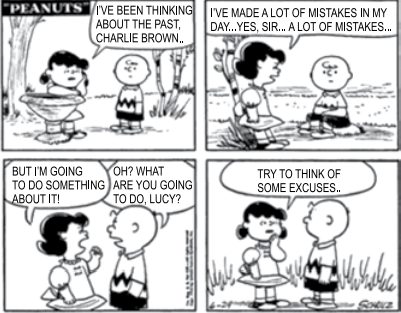
(www.gocomics.com)
The girl’s speech shows her intention of
Questão 11 10056849
UNISC Medicina Inverno 2021The question are related to the text below
The poet Dylan Thomas wrote that one should
not go gently into that good night, that old age
should burn and rage at close of day. As a younger
man reading that poem, I saw futility in those
[5] words. I saw aging only as a failing: a falling of
the body, of the mind, and even of the spirit. Isaw
my grandfather suffer aches and pains. Once
agile and proudly self-sufficient, by his sixties he
struggled to swing a hammer and was unable to
[10] read a label on a box of Triscuit crackers without
his glasses. I listened as my grandmother forgot
words, and I cried when eventually she forgot
what year it was.
At work, I watched as people neared retirement
[15] age, the spark gone from their eyes, the hope from
their smiles, counting the days until they could
walk away from 1t all, yet with only the vaguest
plans about what they would do once they had so
much free time, all day, every day. But as I've
[20] grown older myself, and have spent more time
with people who are 1n the last quarter of their
lives, I've seen a different side of aging. My
parents are now 1n their mideighties and are as
engaged with life as they have ever been,
[25] immersed in social interactions, spiritual
pursuits, hiking, and nature, and even starting
new professional projects.
Adapted from LEVITIN, Daniel. Sucessful aging: a neuroscientist explores the power and potential of our lives. New York: Dutton, 2020.
The words struggled (line 9), self-sufficient (line 8) and pursuits (line 26) can be replaced, without change in meaning, by
06