


![[Marketing] Questao Topo - deslogado](https://storage.estuda.com.br/banners/0_6b7ebee90b03af1c560c73bb8bcce34a_banner_deslogado_70_dias.png)
Questões de Inglês
19.971 Questões
Questão 20 6312551
FCMSCSP - Santa Casa 2022Leia a tirinha para responder à questão.
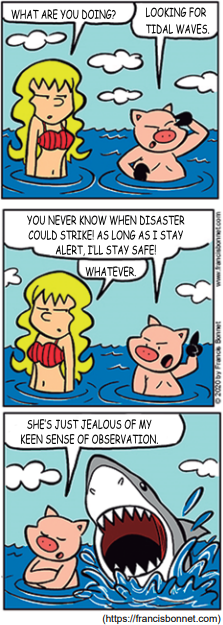
Na fala do porco do segundo quadrinho, a expressão “as long as” foi utilizada para indicar uma
Questão 19 6312550
FCMSCSP - Santa Casa 2022Leia a tirinha para responder à questão.
O humor da tira decorre, sobretudo,
Questão 18 6312548
FCMSCSP - Santa Casa 2022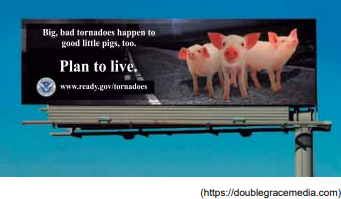
According to the context, the campaign intends to achieve behavioural changes by associating
Questão 16 6312541
FCMSCSP - Santa Casa 2022Leia o texto para responder à questão.
There is no agent of ecological imperialism more ferocious than the wild pig. Wherever Europeans invaded, from the Americas to Australia, so did their pigs, many of which escaped into the countryside to wreak havoc. The beasts tear through native plants and animals, they spread disease, they destroy crops, and they reconstruct whole ecosystems in their wake. They’re not so much pests as they are chaos embodied.
Now add climate change to the wild pig’s résumé of destruction. In their never-ending search for food, the pigs root through soils, churning the dirt like a farmer tills fields. Scientists already knew, to some extent, that this releases the carbon that’s locked in the soil, but researchers in Australia, New Zealand, and the US have now calculated how much soil wild pigs may be disturbing worldwide. The carbon dioxide emissions that they produce annually, the authors concluded, equal that of more than a million cars.
It’s yet another piece of an increasingly worrisome puzzle, showing how modification of the land has — in this case, inadvertently — exacerbated climate change. “Anytime you disturb soil, you’re causing emissions,” says University of Queensland ecologist Christopher O’Bryan, lead author on a new paper describing the research in the journal Global Change Biology. “When you till soil for agriculture, for example, or you have widespread land-use change — urbanization, forest loss.”
Given their domination of whole landscapes, pigs had to be making things worse, the researchers knew, but no one had modeled it worldwide. “We started to realize there’s a big gap at the global scale looking at this question,” O’Bryan adds.
(Matt Simon. www.wired.com, 19.07.2021. Adaptado.)
In the excerpt from the fourth paragraph “Given their domination”, the underlined word was used to indicate
Questão 14 6312538
FCMSCSP - Santa Casa 2022Leia o texto para responder à questão.
There is no agent of ecological imperialism more ferocious than the wild pig. Wherever Europeans invaded, from the Americas to Australia, so did their pigs, many of which escaped into the countryside to wreak havoc. The beasts tear through native plants and animals, they spread disease, they destroy crops, and they reconstruct whole ecosystems in their wake. They’re not so much pests as they are chaos embodied.
Now add climate change to the wild pig’s résumé of destruction. In their never-ending search for food, the pigs root through soils, churning the dirt like a farmer tills fields. Scientists already knew, to some extent, that this releases the carbon that’s locked in the soil, but researchers in Australia, New Zealand, and the US have now calculated how much soil wild pigs may be disturbing worldwide. The carbon dioxide emissions that they produce annually, the authors concluded, equal that of more than a million cars.
It’s yet another piece of an increasingly worrisome puzzle, showing how modification of the land has — in this case, inadvertently — exacerbated climate change. “Anytime you disturb soil, you’re causing emissions,” says University of Queensland ecologist Christopher O’Bryan, lead author on a new paper describing the research in the journal Global Change Biology. “When you till soil for agriculture, for example, or you have widespread land-use change — urbanization, forest loss.”
Given their domination of whole landscapes, pigs had to be making things worse, the researchers knew, but no one had modeled it worldwide. “We started to realize there’s a big gap at the global scale looking at this question,” O’Bryan adds.
(Matt Simon. www.wired.com, 19.07.2021. Adaptado.)
No trecho do terceiro parágrafo “in this case, inadvertently”, o termo sublinhado pode ser entendido como:
Questão 12 6312536
FCMSCSP - Santa Casa 2022Leia o texto para responder à questão.
There is no agent of ecological imperialism more ferocious than the wild pig. Wherever Europeans invaded, from the Americas to Australia, so did their pigs, many of which escaped into the countryside to wreak havoc. The beasts tear through native plants and animals, they spread disease, they destroy crops, and they reconstruct whole ecosystems in their wake. They’re not so much pests as they are chaos embodied.
Now add climate change to the wild pig’s résumé of destruction. In their never-ending search for food, the pigs root through soils, churning the dirt like a farmer tills fields. Scientists already knew, to some extent, that this releases the carbon that’s locked in the soil, but researchers in Australia, New Zealand, and the US have now calculated how much soil wild pigs may be disturbing worldwide. The carbon dioxide emissions that they produce annually, the authors concluded, equal that of more than a million cars.
It’s yet another piece of an increasingly worrisome puzzle, showing how modification of the land has — in this case, inadvertently — exacerbated climate change. “Anytime you disturb soil, you’re causing emissions,” says University of Queensland ecologist Christopher O’Bryan, lead author on a new paper describing the research in the journal Global Change Biology. “When you till soil for agriculture, for example, or you have widespread land-use change — urbanization, forest loss.”
Given their domination of whole landscapes, pigs had to be making things worse, the researchers knew, but no one had modeled it worldwide. “We started to realize there’s a big gap at the global scale looking at this question,” O’Bryan adds.
(Matt Simon. www.wired.com, 19.07.2021. Adaptado.)
In the excerpt from the first paragraph “many of which escaped into the countryside to wreak havoc”, the underlined expression can be replaced, without meaning change, by
06