


![[Marketing] Questao Topo - deslogado](https://storage.estuda.com.br/banners/0_6b7ebee90b03af1c560c73bb8bcce34a_banner_deslogado_70_dias.png)
Questões de Inglês
19.971 Questões
Questão 33 7346681
UPE SSA 2ª Fase - 1º Dia 2022How bike-friendly „slow streets' are changing cities

19th November 2020.
Moving around Bogotá can be a bit of a Jekyll-or-Hyde experience. On one hand, the city is infamous for having the world‟s worst traffic. Yet, on the other, its cycling infrastructure is considered an exemplary model of sustainable urban mobility, according to the Copenhagenize Index, which ranks bike-friendly cities. The Colombian capital even spawned a now-international movement in the 1970s called Ciclovía, which sees 1.5 million people pedal across 128km (80 miles) of car-free streets each Sunday morning.
So, when the pandemic reached its shores in mid-March, Bogotá Mayor Claudia López, an avid cyclist herself, enacted one of the world‟s first plans to encourage bike travel, using traffic cones to create 76km of temporary lanes.
“Everyone started using a bicycle, and they already knew how to get around on one because we have this bike culture thanks to the Ciclovía,” says Carlos Pardo, a local cycling advocate at the New Urban Mobility Alliance. He got involved at the outset of the pandemic by partnering with a local bikeshare company to provide 400 free e-bikes to health workers. He‟s busy persuading the public that the government‟s new bike lanes should become permanent fixtures in Bogotá.
Biking has enjoyed a renaissance around the world as urbanites shun public transport for the relative safety of a two-wheeled commute. Now, many advocates are working with local governments in the hope of turning these pandemic-response measures into lasting changes – ones that are more plausible now than ever after lockdowns provided an unprecedented opportunity to fast-track infrastructure trials.
Tabitha Combs, a lecturer at the University of North Carolina, has been crowdsourcing data on local actions affecting walking and cycling during the pandemic. She‟s identified at least 365 global cities that have allocated new street space for these activities since March. “This was clearly a phenomenon that was taking place in cities all around the world at roughly the same time,” she recalls of her decision to document the movement. “It was like a simultaneous global brainwave.”
Some cities created pop-up bike lanes. Others implemented „slow streets‟ by erecting makeshift barriers and reducing speed limits so that walkers and bikers could safely share the road with necessary vehicles. In Europe, Paris fast-tracked a plan to create 650km of temporary and permanent bikeways, while Rome introduced 150km of its own.
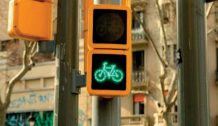
But these measures have not been without their detractors. Berlin was forced to remove eight hastily implemented bike paths in September, and New York City also struggled with its implementation, which relied either on community members or law enforcement to police new configurations, neither of which were particularly welcomed.
New biking infrastructure has played a key role in incentivising distanced open-air travel. At the outset of the pandemic, sales for bikes were up 75% in the US and 63% in the UK. Advocates have long touted biking‟s ability to increase public health and reduce automobile traffic. Of course, getting urbanites on bikes is an easy sell in the current climate. Next comes the question of how cities can keep them in the saddle once the coronavirus passes, particularly as enthusiasm has already waned in places such as the UK, where a new report shows having access to a car is more important than ever.
There are signs that governments around the world are actively capitalising on this moment. Some are rolling out experimental pilot programmes that, in normal times, could take a decade of meticulous planning. “During the pandemic, cities tried to shrink that process down to a couple of months or a couple of weeks in some places,” says Tabitha Combs. “I can‟t stress how revolutionary this is in the field of transportation planning.”
Disponível em: https://www.bbc.com/worklife/article/20201112-how-bike-friendly-slow-streets-are-changing-cities. Por Mark Johanson. Acesso em: 08 jul. 2021. Texto adaptado.
De acordo com o texto, é CORRETO afirmar que
Questão 59 7338566
PUC-GO 2022Read the following text fragment:
Introduction
The Tales of Beedle the Bard is a collection of stories written for young wizards and witches. They have been popular bedtime reading for centuries, with the result that the Hopping Pot and the Fountain of Fair Fortune are as familiar to many of the students at Hogwarts as Cinderella and Sleeping Beauty are to Muggle (nonmagical) children.
Beedle’s stories resemble our fairy tales in many respects; for instance, virtue is usually rewarded and wickedness punished. However, here is one very obvious difference. In Muggle fairy tales, magic tends to lie at the root of the hero or heroine’s troubles – the wicked witch has poisoned the apple, or put the princess into a hundred years’ sleep, or turned the prince into a hideous beast. In The Tales of Beedle the Bard, on the other hand, we meet heroes and heroines who can perform magic themselves, and yet find it just as hard to solve their problems as we do. Beedle’s stories have helped generations of wizarding parents to explain this painful fact of life to their young children: that magic causes as much trouble as it cures.
[…]
(ROWLING, J. K. The Tales of Beedle the Bard. London: Lumos. 2012. p. xi-xii.)
Analyze these connective expressions from the text: 1. “with the result”, 2. “for instance”, 3. “However”, 4. “on the other hand”, 5. “and”, and 6. “yet”, according to their functions on the context, and mark the only correct alternative:
Questão 35 7338270
PUC-GO 2022Complete the sentences bellow with the correct form of the verbs in parenthesis:
I - I have ______________ (eat) sushi before.
II - He ______________ (break) his foot.
III - They______________(finish)their projects yesterday.
IV - She hasn’t ______________ (send) the email yet.
Mark the only alternative with all the correct conjugation of the verbs in parenthesis:
Questão 20 7338182
PUC-GO 2022Read the sentences presented below:
I - She got a pat on the back for her good hard work.
II - I’ll be glad to see the back of that project.
III - There is a cat litter by the back door.
IV - The IT guy installed a backdoor on my computer.
Choose the only alternative with the correct meaning of all the underlined expressions in the sentences:
Questão 26 7337689
UNIVESP 2022Leia a tirinha.
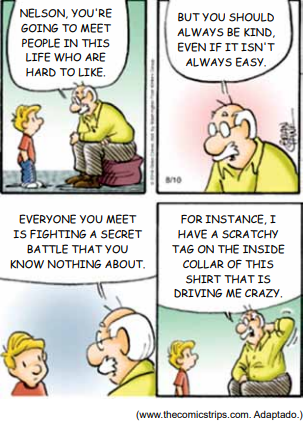
A expressão “for instance”, no último quadrinho, foi empregada para introduzir
Questão 24 7337685
UNIVESP 2022Leia o texto para responder à questão.
New Zealand will ban the sale of tobacco to its next generation, in a bid to eventually phase out smoking. Anyone born after 2008 will not be able to buy cigarettes or tobacco products in their lifetime, under a law expected to be enacted in 2022. “We want to make sure young people never start smoking,” Health Minister Dr Ayesha Verall said. The move is part of a sweeping crackdown on smoking announced by New Zealand’s Health Ministry.
Doctors and other health experts in the country have welcomed the “world-leading” reforms, which will reduce access to tobacco and restrict nicotine levels in cigarettes. “It will help people quit smoking or switch to less harmful products, and make it much less likely that young people get addicted to nicotine,” said Prof Janet Hook from the University of Otago.
The crackdown has been met with mixed reactions. “I reckon it’s a good move, really,” one man told Reuters news agency. “Because right now there’s a lot of young kids walking around with smokes in their mouth. Public are asking how they’re getting these smokes. And it’s also good for myself too because I can save more money.”
However, others have warned that the move may create a black market for tobacco — something the Health Ministry’s official impact statement does acknowledge, noting “customs will need more resource to enforce border control”. “This is all 100% theory and 0% substance,” Sunny Kaushal, chairman of the Dairy and Business Owners Group, a lobby group for local convenience stores, told New Zealand’s Stuff news site. “There’s going to be a crime wave. Gangs and criminals will fill the gap.”
(www.bbc.com, 09.12.2021. Adaptado.)
O trecho do texto em que se exprime uma opinião é:
06