


![[Marketing] Questao Topo - deslogado](https://storage.estuda.com.br/banners/0_6b7ebee90b03af1c560c73bb8bcce34a_banner_deslogado_70_dias.png)
Questões de Inglês
19.971 Questões
Questão 42 7994727
FMJ 2022Examine a tira Calvin and Hobbes, de Bill Watterson, para responder às questão.
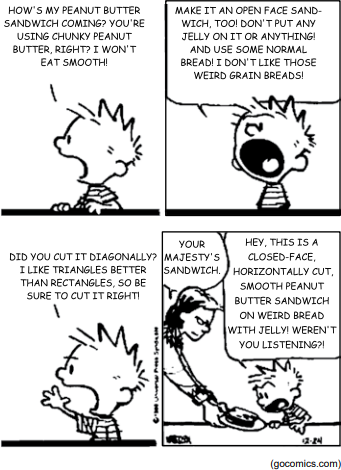
No trecho do terceiro quadrinho “I like triangles better than rectangles, so be sure to cut it right”, o termo sublinhado é empregado com o mesmo sentido do termo sublinhado em:
Questão 15 7954156
UFRGS 2° dia 2022Instrução: A questão estão relacionadas ao texto abaixo.
The human capacity for compassion is not a
reflex that is triggered automatically by the
presence of another living thing. Though
people in all cultures can react sympathetically
[5] to kin, friends, and babies, they tend to hold
back when it comes to larger circles of
neighbors, strangers, foreigners, and other
sentient beings. Philosopher Peter Singer has
argued that over the course of history, people
[10] have enlarged the range of beings ........
interests they value as they value their own. An
interesting question is what inflated the
empathy circle. And a good candidate is the
expansion of literacy.
[15] Reading is a technology for perspective-taking.
When someone else’s thoughts are in your
head, you are observing the world from that
person’s vantage point. Not only are you taking
in sights and sounds that you could not
[20] experience firsthand, but you have stepped
inside that person’s mind and are temporarily
sharing his or her attitudes and reactions.
Adopting someone’s viewpoint is not the same
as feeling compassion toward the person, but
[25] the first can lead to the second by a natural
route. It’s not a big leap to suppose that the
habit of reading other people’s words could put
one in the habit of entering other people’s
minds.
[30] The power of literacy to lift readers out of their
parochial stations is not confined to factual
writing. Satirical fiction, ........ transports
readers into a hypothetical world from which
they can observe the follies of their own, may
[35] be an effective way to change people’s
sensibilities without haranguing or
sermonizing. Realistic fiction, for its part, may
expand readers’ circle of empathy by seducing
them into thinking and feeling like people very
[40] different from themselves. In the 18th century
the novel became a form of mass
entertainment, and unlike earlier epics which
recounted the exploits of heroes, aristocrats, or
saints, the novels brought to life the aspirations
[45] and losses of ordinary people.
That century was also the heyday of the
epistolary novel, in which the story unfolds in a
character’s own words, exposing the
character’s thoughts and feelings in real time
[50] rather than describing them from the
distancing perspective of a disembodied
narrator. Melodramatic novels named after
female protagonists became unlikely
bestsellers. Grown men burst into tears while
[55] experiencing the forbidden loves, intolerable
arranged marriages, and cruel twists of fate in
the lives of undistinguished women (including
servants) with ........ they had nothing in
common.
[60] The phenomenon suggests a causal chain:
reading novels about characters unlike oneself
exercises the ability to put oneself in other
people’s shoes, which turns one against cruel
punishments and other abuses of human
[65] rights. As usual, it is hard to rule out alternative
explanations for the correlation. Perhaps
people became more empathic for other
reasons, which simultaneously made them
receptive to novels and concerned with others’
[70] mistreatment.
Whether or not novels were critical in
expanding empathy, the explosion of reading
may have contributed to the Humanitarian
Revolution by getting people into the habit of
[75] straying from their parochial vantage points.
And it may have also contributed by creating a
hothouse for new ideas about moral values and
the social order.
Adapted from: PINKER, S. The better angels of our nature: why violence has declined. London: Viking Penguin, 2011.
Consider the following propositions for rephrasing the sentence Melodramatic novels named after female protagonists became unlikely bestsellers (l. 52-54).
I - Overemotional books with titles inspired by their heroines became unexpected bestsellers.
II - Melodramatic soap operas titled later than their female characters became surprising bestsellers.
III- Sensational stories with feminine characters more relevant than the titles became dislikable bestsellers.
If applied to the text, which ones would be correct and keep the literal meaning?
Questão 13 7954116
UFRGS 2° dia 2022Instrução: A questão estão relacionadas ao texto abaixo.
The human capacity for compassion is not a
reflex that is triggered automatically by the
presence of another living thing. Though
people in all cultures can react sympathetically
[5] to kin, friends, and babies, they tend to hold
back when it comes to larger circles of
neighbors, strangers, foreigners, and other
sentient beings. Philosopher Peter Singer has
argued that over the course of history, people
[10] have enlarged the range of beings ........
interests they value as they value their own. An
interesting question is what inflated the
empathy circle. And a good candidate is the
expansion of literacy.
[15] Reading is a technology for perspective-taking.
When someone else’s thoughts are in your
head, you are observing the world from that
person’s vantage point. Not only are you taking
in sights and sounds that you could not
[20] experience firsthand, but you have stepped
inside that person’s mind and are temporarily
sharing his or her attitudes and reactions.
Adopting someone’s viewpoint is not the same
as feeling compassion toward the person, but
[25] the first can lead to the second by a natural
route. It’s not a big leap to suppose that the
habit of reading other people’s words could put
one in the habit of entering other people’s
minds.
[30] The power of literacy to lift readers out of their
parochial stations is not confined to factual
writing. Satirical fiction, ........ transports
readers into a hypothetical world from which
they can observe the follies of their own, may
[35] be an effective way to change people’s
sensibilities without haranguing or
sermonizing. Realistic fiction, for its part, may
expand readers’ circle of empathy by seducing
them into thinking and feeling like people very
[40] different from themselves. In the 18th century
the novel became a form of mass
entertainment, and unlike earlier epics which
recounted the exploits of heroes, aristocrats, or
saints, the novels brought to life the aspirations
[45] and losses of ordinary people.
That century was also the heyday of the
epistolary novel, in which the story unfolds in a
character’s own words, exposing the
character’s thoughts and feelings in real time
[50] rather than describing them from the
distancing perspective of a disembodied
narrator. Melodramatic novels named after
female protagonists became unlikely
bestsellers. Grown men burst into tears while
[55] experiencing the forbidden loves, intolerable
arranged marriages, and cruel twists of fate in
the lives of undistinguished women (including
servants) with ........ they had nothing in
common.
[60] The phenomenon suggests a causal chain:
reading novels about characters unlike oneself
exercises the ability to put oneself in other
people’s shoes, which turns one against cruel
punishments and other abuses of human
[65] rights. As usual, it is hard to rule out alternative
explanations for the correlation. Perhaps
people became more empathic for other
reasons, which simultaneously made them
receptive to novels and concerned with others’
[70] mistreatment.
Whether or not novels were critical in
expanding empathy, the explosion of reading
may have contributed to the Humanitarian
Revolution by getting people into the habit of
[75] straying from their parochial vantage points.
And it may have also contributed by creating a
hothouse for new ideas about moral values and
the social order.
Adapted from: PINKER, S. The better angels of our nature: why violence has declined. London: Viking Penguin, 2011.
Consider the sentence When someone else’s thoughts are in your head, you are observing the world from that person’s vantage point (l. 16-18).
If the segment someone else’s thoughts were replaced by other people’s thoughts, how many additional alterations would have to be made to keep the paragraph grammatically correct?
Questão 12 7954110
UFRGS 2° dia 2022Instrução: A questão estão relacionadas ao texto abaixo.
The human capacity for compassion is not a
reflex that is triggered automatically by the
presence of another living thing. Though
people in all cultures can react sympathetically
[5] to kin, friends, and babies, they tend to hold
back when it comes to larger circles of
neighbors, strangers, foreigners, and other
sentient beings. Philosopher Peter Singer has
argued that over the course of history, people
[10] have enlarged the range of beings ........
interests they value as they value their own. An
interesting question is what inflated the
empathy circle. And a good candidate is the
expansion of literacy.
[15] Reading is a technology for perspective-taking.
When someone else’s thoughts are in your
head, you are observing the world from that
person’s vantage point. Not only are you taking
in sights and sounds that you could not
[20] experience firsthand, but you have stepped
inside that person’s mind and are temporarily
sharing his or her attitudes and reactions.
Adopting someone’s viewpoint is not the same
as feeling compassion toward the person, but
[25] the first can lead to the second by a natural
route. It’s not a big leap to suppose that the
habit of reading other people’s words could put
one in the habit of entering other people’s
minds.
[30] The power of literacy to lift readers out of their
parochial stations is not confined to factual
writing. Satirical fiction, ........ transports
readers into a hypothetical world from which
they can observe the follies of their own, may
[35] be an effective way to change people’s
sensibilities without haranguing or
sermonizing. Realistic fiction, for its part, may
expand readers’ circle of empathy by seducing
them into thinking and feeling like people very
[40] different from themselves. In the 18th century
the novel became a form of mass
entertainment, and unlike earlier epics which
recounted the exploits of heroes, aristocrats, or
saints, the novels brought to life the aspirations
[45] and losses of ordinary people.
That century was also the heyday of the
epistolary novel, in which the story unfolds in a
character’s own words, exposing the
character’s thoughts and feelings in real time
[50] rather than describing them from the
distancing perspective of a disembodied
narrator. Melodramatic novels named after
female protagonists became unlikely
bestsellers. Grown men burst into tears while
[55] experiencing the forbidden loves, intolerable
arranged marriages, and cruel twists of fate in
the lives of undistinguished women (including
servants) with ........ they had nothing in
common.
[60] The phenomenon suggests a causal chain:
reading novels about characters unlike oneself
exercises the ability to put oneself in other
people’s shoes, which turns one against cruel
punishments and other abuses of human
[65] rights. As usual, it is hard to rule out alternative
explanations for the correlation. Perhaps
people became more empathic for other
reasons, which simultaneously made them
receptive to novels and concerned with others’
[70] mistreatment.
Whether or not novels were critical in
expanding empathy, the explosion of reading
may have contributed to the Humanitarian
Revolution by getting people into the habit of
[75] straying from their parochial vantage points.
And it may have also contributed by creating a
hothouse for new ideas about moral values and
the social order.
Adapted from: PINKER, S. The better angels of our nature: why violence has declined. London: Viking Penguin, 2011.
Select the alternative that offers adequate synonyms to the words kin (l. 05), parochial (l. 31), and heyday (l. 46) as used in the text.
Questão 11 7954092
UFRGS 2° dia 2022Instrução: A questão estão relacionadas ao texto abaixo.
The human capacity for compassion is not a
reflex that is triggered automatically by the
presence of another living thing. Though
people in all cultures can react sympathetically
[5] to kin, friends, and babies, they tend to hold
back when it comes to larger circles of
neighbors, strangers, foreigners, and other
sentient beings. Philosopher Peter Singer has
argued that over the course of history, people
[10] have enlarged the range of beings ........
interests they value as they value their own. An
interesting question is what inflated the
empathy circle. And a good candidate is the
expansion of literacy.
[15] Reading is a technology for perspective-taking.
When someone else’s thoughts are in your
head, you are observing the world from that
person’s vantage point. Not only are you taking
in sights and sounds that you could not
[20] experience firsthand, but you have stepped
inside that person’s mind and are temporarily
sharing his or her attitudes and reactions.
Adopting someone’s viewpoint is not the same
as feeling compassion toward the person, but
[25] the first can lead to the second by a natural
route. It’s not a big leap to suppose that the
habit of reading other people’s words could put
one in the habit of entering other people’s
minds.
[30] The power of literacy to lift readers out of their
parochial stations is not confined to factual
writing. Satirical fiction, ........ transports
readers into a hypothetical world from which
they can observe the follies of their own, may
[35] be an effective way to change people’s
sensibilities without haranguing or
sermonizing. Realistic fiction, for its part, may
expand readers’ circle of empathy by seducing
them into thinking and feeling like people very
[40] different from themselves. In the 18th century
the novel became a form of mass
entertainment, and unlike earlier epics which
recounted the exploits of heroes, aristocrats, or
saints, the novels brought to life the aspirations
[45] and losses of ordinary people.
That century was also the heyday of the
epistolary novel, in which the story unfolds in a
character’s own words, exposing the
character’s thoughts and feelings in real time
[50] rather than describing them from the
distancing perspective of a disembodied
narrator. Melodramatic novels named after
female protagonists became unlikely
bestsellers. Grown men burst into tears while
[55] experiencing the forbidden loves, intolerable
arranged marriages, and cruel twists of fate in
the lives of undistinguished women (including
servants) with ........ they had nothing in
common.
[60] The phenomenon suggests a causal chain:
reading novels about characters unlike oneself
exercises the ability to put oneself in other
people’s shoes, which turns one against cruel
punishments and other abuses of human
[65] rights. As usual, it is hard to rule out alternative
explanations for the correlation. Perhaps
people became more empathic for other
reasons, which simultaneously made them
receptive to novels and concerned with others’
[70] mistreatment.
Whether or not novels were critical in
expanding empathy, the explosion of reading
may have contributed to the Humanitarian
Revolution by getting people into the habit of
[75] straying from their parochial vantage points.
And it may have also contributed by creating a
hothouse for new ideas about moral values and
the social order.
Adapted from: PINKER, S. The better angels of our nature: why violence has declined. London: Viking Penguin, 2011.
Mark the statements below T (true) or F (false) according to the text.
( ) Compassion and empathy are automatic reflexes only when triggered by our closer circle of friends and family.
( ) Once you share another person’s point of view, it is impossible not to become compassionate towards him or her.
( ) Satirical literature may contribute to increasing empathy without preaching.
( ) Realistic novels tend to be very effective in building compassion because they tell stories about great heroes, aristocrats and saints.
The correct sequence of filling in the parentheses, from top to bottom, is
Questão 8 7953998
UFRGS 2° dia 2022Instrução: As questão estão relacionadas ao texto abaixo.
The first time our house was robbed, it was our
neighbor who climbed ........ through the dining
room window and stole our TV, our VCR, and
some videotapes. The second time our house
[5] was robbed, it was my brother Nnamabia who
faked a break-in and stole my mother’s jewelry.
It happened on a Sunday. My parents had
traveled, so Nnamabia and I went to church
alone. He drove my mother’s car. We sat
[10] together in church, but he left without a word
after about ten minutes. He came back just
before the priest said “Go in peace.” I imagined
he had gone off to smoke and to see some girl,
since he had the car to himself for once. We
[15] drove home in silence and, when he parked in
our driveway, I stopped to pluck some flowers
while Nnamabia unlocked the front door. I
went inside to find him standing still in the
middle of the parlor. “We’ve been robbed!” he
[20] said.
It took me a moment to understand. I felt that
there was a theatrical quality to the way the
drawers were flung open, as if it had been done
to make an impression. Or perhaps it was
[25] simply that I knew my brother so well. My
father knew, too. He pointed out that the
window had been opened from the inside,
rather than outside, and that the robber knew
exactly where the jewelry was. Nnamabia
[30] stared at my father with dramatic, wounded
eyes and said, “I know I have caused you both
terrible pain in the past, but I would never
violate your trust like this.” He used words like
“terrible pain” and “violate,” as he always did
[35] when he was defending himself. Then he
walked out ........ the back door and came
home two weeks later, gaunt, smelling of beer,
crying, saying he was sorry and he had pawned
the jewelry and all the money was gone.
[40] My father asked Nnamabia to write a report:
how he had sold the jewelry, what he had
spent the money on, with whom he had spent
it. I don’t think he thought Nnamabia would tell
the truth, but my professor father liked reports
[45] and things nicely documented. Besides,
Nnamabia was seventeen. What else could my
father have done? “That he could hurt his
mother like this” was the last thing my father
said, in a mutter.
[50] But Nnamabia really hadn’t set out to hurt her.
He did it because my mother’s jewelry was the
only thing of value in the house. He did it, too,
because other sons of professors were doing it.
The thieving boys were the popular ones. They
[55] drove their parents’ cars, their seats pushed
back and their arms stretched out to reach the
steering wheel.
When, at eleven, Nnamabia broke the window
of his classroom with a stone, my mother paid
[60] to replace it and did not tell my father. When
he pressed the key of my father’s car into a
piece of soap that my father found before
Nnamabia could take it to a locksmith, she
made vague sounds about how he was just
[65] experimenting. When he stole the exam
questions and sold them to my father’s
students, she shouted ....... him but then told
my father that Nnamabia was sixteen, after all,
and really should be given more pocket money.
[70] I don’t know whether Nnamabia felt remorse
........ stealing her jewelry. I could not always
tell what he really felt. And we never talked
about that after that day. It was as if
pretending that Nnamabia had not done those
[75] things would give him the opportunity to start
afresh. The robbery might never have been
mentioned again if Nnamabia had not been
arrested three years later and locked up at the
police station.
Adaptado de: ADICHIE, C. N. Cell One. In: The thing around your neck. New York / Toronto: Harper Collins, 2009.
A expressão start afresh (l. 75-76) pode ser substituída, sem prejuízo do sentido que tem no texto, por
06