


![[Marketing] Questao Topo - deslogado](https://storage.estuda.com.br/banners/0_6b7ebee90b03af1c560c73bb8bcce34a_banner_deslogado_70_dias.png)
Questões de Inglês
19.971 Questões
Questão 18 9550501
FACISA 2022/1HOW DIVERSITY WORKS
Being around people who are different from us makes us more creative, more diligent and harder-working
The first thing to acknowledge about diversity is that it can be difficult. […] It is reasonable to ask what good diversity does us. Diversity of expertise confers benefits that are obvious – you would not think of building a new car without engineers, designers and quality-control experts – but what about social diversity? What good comes from diversity of race, ethnicity, gender and sexual orientation? Research has shown that social diversity in a group can cause discomfort, rougher interactions, a lack of trust, greater perceived interpersonal conflict, lower communication, less cohesion, more concern about disrespect, and other problems. So what is the upside?
The fact is that if you want to build teams or organizations capable of innovating, you need diversity. Diversity enhances creativity. It encourages the search for novel information and perspectives, leading to better decision-making and problem-solving. […] Even simply being exposed to diversity can change the way you think. […]
People who are different from one another in race, gender and other dimensions bring unique information and experiences to bear on the task at hand. A male and a female engineer might have perspectives as different from each other as an engineer and a physicist – and that is a good thing. […] [It was found] that companies that prioritized innovation saw greater financial gains when women were part of the top leadership ranks.
Racial diversity can deliver the same kind of benefits. […] For innovation-focused banks, increases in racial diversity were clearly related to enhanced financial performance. […]
Diversity is not only about bringing different perspectives to the table. Simply adding social diversity to a group makes people believe that differences of perspective might exist among them and that belief makes people change their behavior. […] They assume they will need to work harder to come to a consensus. This logic helps to explain both the upside and the downside of social diversity: people work harder in diverse environments both cognitively and socially. They might not like it, but the hard work can lead to better outcomes. […]
This is how diversity works: by promoting hard work and creativity; by encouraging the consideration of alternatives even before any interpersonal interaction takes place. […] we need diversity – in teams, organizations and society as a whole – if we are to change, grow and innovate.
By Katherine W. Phillips, The Science of Overcoming Racism, Scientific American, Special Collector’s Edition, Volume 30, Number 3, SUMMER 2021
The text informs us that when working together, people from diverse backgrounds
Questão 17 9550498
FACISA 2022/1HOW DIVERSITY WORKS
Being around people who are different from us makes us more creative, more diligent and harder-working
The first thing to acknowledge about diversity is that it can be difficult. […] It is reasonable to ask what good diversity does us. Diversity of expertise confers benefits that are obvious – you would not think of building a new car without engineers, designers and quality-control experts – but what about social diversity? What good comes from diversity of race, ethnicity, gender and sexual orientation? Research has shown that social diversity in a group can cause discomfort, rougher interactions, a lack of trust, greater perceived interpersonal conflict, lower communication, less cohesion, more concern about disrespect, and other problems. So what is the upside?
The fact is that if you want to build teams or organizations capable of innovating, you need diversity. Diversity enhances creativity. It encourages the search for novel information and perspectives, leading to better decision-making and problem-solving. […] Even simply being exposed to diversity can change the way you think. […]
People who are different from one another in race, gender and other dimensions bring unique information and experiences to bear on the task at hand. A male and a female engineer might have perspectives as different from each other as an engineer and a physicist – and that is a good thing. […] [It was found] that companies that prioritized innovation saw greater financial gains when women were part of the top leadership ranks.
Racial diversity can deliver the same kind of benefits. […] For innovation-focused banks, increases in racial diversity were clearly related to enhanced financial performance. […]
Diversity is not only about bringing different perspectives to the table. Simply adding social diversity to a group makes people believe that differences of perspective might exist among them and that belief makes people change their behavior. […] They assume they will need to work harder to come to a consensus. This logic helps to explain both the upside and the downside of social diversity: people work harder in diverse environments both cognitively and socially. They might not like it, but the hard work can lead to better outcomes. […]
This is how diversity works: by promoting hard work and creativity; by encouraging the consideration of alternatives even before any interpersonal interaction takes place. […] we need diversity – in teams, organizations and society as a whole – if we are to change, grow and innovate.
By Katherine W. Phillips, The Science of Overcoming Racism, Scientific American, Special Collector’s Edition, Volume 30, Number 3, SUMMER 2021
The text says that being exposed to diversity
Questão 16 9550476
FACISA 2022/1HOW DIVERSITY WORKS
Being around people who are different from us makes us more creative, more diligent and harder-working
The first thing to acknowledge about diversity is that it can be difficult. […] It is reasonable to ask what good diversity does us. Diversity of expertise confers benefits that are obvious – you would not think of building a new car without engineers, designers and quality-control experts – but what about social diversity? What good comes from diversity of race, ethnicity, gender and sexual orientation? Research has shown that social diversity in a group can cause discomfort, rougher interactions, a lack of trust, greater perceived interpersonal conflict, lower communication, less cohesion, more concern about disrespect, and other problems. So what is the upside?
The fact is that if you want to build teams or organizations capable of innovating, you need diversity. Diversity enhances creativity. It encourages the search for novel information and perspectives, leading to better decision-making and problem-solving. […] Even simply being exposed to diversity can change the way you think. […]
People who are different from one another in race, gender and other dimensions bring unique information and experiences to bear on the task at hand. A male and a female engineer might have perspectives as different from each other as an engineer and a physicist – and that is a good thing. […] [It was found] that companies that prioritized innovation saw greater financial gains when women were part of the top leadership ranks.
Racial diversity can deliver the same kind of benefits. […] For innovation-focused banks, increases in racial diversity were clearly related to enhanced financial performance. […]
Diversity is not only about bringing different perspectives to the table. Simply adding social diversity to a group makes people believe that differences of perspective might exist among them and that belief makes people change their behavior. […] They assume they will need to work harder to come to a consensus. This logic helps to explain both the upside and the downside of social diversity: people work harder in diverse environments both cognitively and socially. They might not like it, but the hard work can lead to better outcomes. […]
This is how diversity works: by promoting hard work and creativity; by encouraging the consideration of alternatives even before any interpersonal interaction takes place. […] we need diversity – in teams, organizations and society as a whole – if we are to change, grow and innovate.
By Katherine W. Phillips, The Science of Overcoming Racism, Scientific American, Special Collector’s Edition, Volume 30, Number 3, SUMMER 2021
The text tells us that
Questão 17 9550473
FACISA 2022/2THE SCIENCE OF SMILING

Smiles are calming. They’re contagious. And they have the power to transform our outlook.
[…] There’s a reason the tears-of-joy smiley face is the most popular emoji. A sunny countenance – the most frequent of all facial expressions – has the power to cheer up friends and make strangers feel at ease (predators don’t usually walk around with authentic smiles plastered on their mugs.) But can we actually smile ourselves happy […]? And if so, can we use this as a tool to transport ourselves into a more optimistic headspace? […]
Smiling starts in utero, and babies reward adults for feeding and caring for them by flashing a gummy grin. […] That, in turn, triggers the reward center in the brain of mothers, which may be a vital component in facilitating parent-infant attachment. […]
Smiling remains a powerful communication tool throughout the life cycle, with adults primarily relying on three types of smiles, which Niedenthal’s Emotions Lab has dubbed reward, affiliation, and dominance. Those baby beams fall under the reward umbrella, as do the smiles of joy that spontaneously happen when we’re happy to see someone or open a fabulous present. […]
Affiliation smiles (toothless, lips pressed together, corners of the mouth upturned) are used to acknowledge the presence of another person […] and they convey harmless intentions. […] Dominance smiles are more of a smirk or sneer, a way to negotiate status while conveying a feeling of superiority or defiance.
Reward smiles are the ones that elicit the most positive response from others, and, like yawns, they’re contagious, thanks to a phenomenon called facial mimicry. […] When you flash a friend an authentic reward smile, she automatically mirrors your expression. A happy side effect of this is she’ll likely feel a bit of your delight.
Smiley folks, then, are more likeable, according to research, in part because they make people around them feel better. That can translate into scoring a better job and being deemed more attractive.
[…] “Sometimes your joy is the source of your smile, but sometimes your smile can be the source of your joy”. […] Don’t be surprised if all that grinning makes you feel a bit more optimistic about life in general. […] “Smiling tells you something about a person’s disposition […] and happier people tend to take better care of themselves – they eat [healthier], exercise more.” Smiley people may have more and better relationships, and there is a rock-solid link between social connectedness and health.
By Leslie Goldman, Real Simple, Special Edition, The Power of Positivity, 2021
The text explains that
Questão 16 9550453
FACISA 2022/2THE SCIENCE OF SMILING
Smiles are calming. They’re contagious. And they have the power to transform our outlook.
[…] There’s a reason the tears-of-joy smiley face is the most popular emoji. A sunny countenance – the most frequent of all facial expressions – has the power to cheer up friends and make strangers feel at ease (predators don’t usually walk around with authentic smiles plastered on their mugs.) But can we actually smile ourselves happy […]? And if so, can we use this as a tool to transport ourselves into a more optimistic headspace? […]
Smiling starts in utero, and babies reward adults for feeding and caring for them by flashing a gummy grin. […] That, in turn, triggers the reward center in the brain of mothers, which may be a vital component in facilitating parent-infant attachment. […]
Smiling remains a powerful communication tool throughout the life cycle, with adults primarily relying on three types of smiles, which Niedenthal’s Emotions Lab has dubbed reward, affiliation, and dominance. Those baby beams fall under the reward umbrella, as do the smiles of joy that spontaneously happen when we’re happy to see someone or open a fabulous present. […]
Affiliation smiles (toothless, lips pressed together, corners of the mouth upturned) are used to acknowledge the presence of another person […] and they convey harmless intentions. […] Dominance smiles are more of a smirk or sneer, a way to negotiate status while conveying a feeling of superiority or defiance.
Reward smiles are the ones that elicit the most positive response from others, and, like yawns, they’re contagious, thanks to a phenomenon called facial mimicry. […] When you flash a friend an authentic reward smile, she automatically mirrors your expression. A happy side effect of this is she’ll likely feel a bit of your delight.
Smiley folks, then, are more likeable, according to research, in part because they make people around them feel better. That can translate into scoring a better job and being deemed more attractive.
[…] “Sometimes your joy is the source of your smile, but sometimes your smile can be the source of your joy”. […] Don’t be surprised if all that grinning makes you feel a bit more optimistic about life in general. […] “Smiling tells you something about a person’s disposition […] and happier people tend to take better care of themselves – they eat [healthier], exercise more.” Smiley people may have more and better relationships, and there is a rock-solid link between social connectedness and health.
By Leslie Goldman, Real Simple, Special Edition, The Power of Positivity, 2021
According to the information given in the text
Questão 64 9549807
FACERES 2022Use the comic strip bellow to answer question.
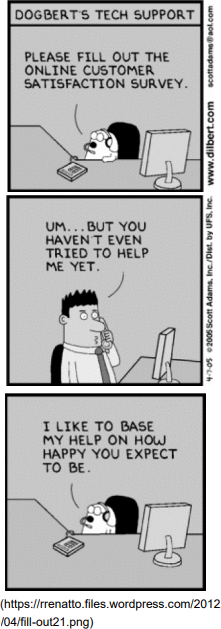
In the stretch “Um… but you haven’t even tried to help me yet” the words “even” and “yet” are, respectively:
06