


![[Marketing] Questao Topo - deslogado](https://storage.estuda.com.br/banners/0_6b7ebee90b03af1c560c73bb8bcce34a_banner_deslogado_70_dias.png)
Questões de Inglês
19.971 Questões
Questão 13 9695366
UNEC Medicina 2022TEXTO:
Acidic oceans destroying sea life
Mankind is changing the chemistry of the oceans
and may be causing the decline of sea life. Experts
say the ocean is more acidic now than it has been at
any time in the past half-million years.
[5] Carbon dioxide is an acidic gas and scientists say
that, as it dissolves into the sea, it’s making seawater
more acidic. They calculate that ocean acidity is up
30% since the Industrial Revolution. A new study
shows the growth of some tiny shell forming creatures
[10] appears already to have been stopped by the change.
Research of this new branch of science suggests
that as CO2 emissions continue to increase, many
shell forming species may not survive the next 50 –
100 years. This would hit commercial fisheries and
[15] start to destroy the delicate balance of life in the seas.
Dr Carol Turkey, who is running an acidification
debate in Copenhagen, fears a mass extinction: “55
million years ago there was a big production of CO2.
That resulted in the mass extinction of seabed dwelling
[20] shell forming organisms.
What we’re doing now is far, far faster, so it may
not be possible for organisms to adapt.”
Skeptics say we can’t be sure how ocean
chemistry will respond in the future and whether
[25] creatures will adapt. The scientists in Denmark say
we simply shouldn’t take the risk.
Harrabin, Roger. Acidic oceans destroying sea life. Disponível em:. Acesso em: 2 nov. 2021.
The text says that some shell forming species
Questão 12 9695312
UNEC Medicina 2022TEXTO:
Acidic oceans destroying sea life
Mankind is changing the chemistry of the oceans
and may be causing the decline of sea life. Experts
say the ocean is more acidic now than it has been at
any time in the past half-million years.
[5] Carbon dioxide is an acidic gas and scientists say
that, as it dissolves into the sea, it’s making seawater
more acidic. They calculate that ocean acidity is up
30% since the Industrial Revolution. A new study
shows the growth of some tiny shell forming creatures
[10] appears already to have been stopped by the change.
Research of this new branch of science suggests
that as CO2 emissions continue to increase, many
shell forming species may not survive the next 50 –
100 years. This would hit commercial fisheries and
[15] start to destroy the delicate balance of life in the seas.
Dr Carol Turkey, who is running an acidification
debate in Copenhagen, fears a mass extinction: “55
million years ago there was a big production of CO2.
That resulted in the mass extinction of seabed dwelling
[20] shell forming organisms.
What we’re doing now is far, far faster, so it may
not be possible for organisms to adapt.”
Skeptics say we can’t be sure how ocean
chemistry will respond in the future and whether
[25] creatures will adapt. The scientists in Denmark say
we simply shouldn’t take the risk.
Harrabin, Roger. Acidic oceans destroying sea life. Disponível em:. Acesso em: 2 nov. 2021.
According to the text, when compared with the past, the level of ocean acidity nowadays is considered to be
Questão 14 9590660
Unilago 2022/2Leia o texto a seguir e responda à questão.
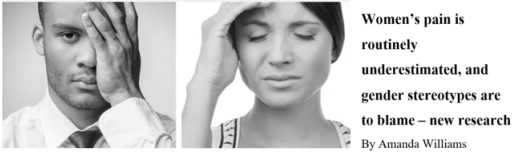
When a man consults a doctor about pain, he will hope to be taken seriously: to convince the doctor that the pain is real, and a problem that needs addressing. The experience is different for women, who may suspect that gender stereotypes could lead their doctor to conclude they’re not in as much pain as they say they are.
Unfortunately, this suspicion is valid. Evidence suggests that healthcare staff routinely underestimate patients’ pain, and particularly women’s pain, based on a number of biases and beliefs that have little to do with their actual testimony.
Now, a new study has found gender stereotypes are particularly decisive in the estimation of patients’ pain. Because of the false belief that women are oversensitive to pain, and express or exaggerate it more easily, healthcare staff, both men and women, often discount women’s verbal reports and nonverbal behaviour expressing pain.
Not only do they tend to underestimate women’s pain but, on the basis of their underestimate, they often under-treat pain – and even recommend psychological rather than analgesic treatment to women.
The new study ingeniously separates potential sources of observer bias in underestimating women’s pain: beliefs about women’s sensitivity to pain (“pain threshold”), about their willingness to report it, and their capacity to endure it (“pain tolerance”) – all, of course, compared to men as the norm or ideal.
Researchers used brief video clips of real patients undergoing painful examinations, with supporting information about patients’ ratings of their own pain, and a quantification of their pain expression.
Male and female lay participants watched a selection of these videos and, after each, recorded the patient’s sex, estimated their pain on a numerical scale, and rated their pain expressiveness too. Compared with the patient’s own rating of their pain, observers of both genders consistently underestimated women’s pain and overestimated men’s pain. When men and women showed exactly the same amount of pain in their facial expression, women were thought to be in less pain than men.
An additional experiment showed that stereotypes drove these judgements: men’s pain was estimated higher by those who believed that the typical man endured pain better than the typical woman, and women’s pain was estimated lower by those who thought that women were more willing to report pain than men.
The gender effect in pain estimation is surprisingly strong. In 2016, a study in my lab examined whether clinicians’ pain estimations were affected by patients’ depression history and their “trustworthiness” – an automatic judgement we make of other people’s faces.
What emerged was a strong underestimation of women’s pain, again by participants of both sexes. If women were perceived to be untrustworthy, this further disadvantaged them – but untrustworthiness had little effect on estimates of men’s pain. These stereotypes do not necessarily help men, and serious studies of men’s pain are rare.
There is much to be done by clinicians to abolish the inequalities in pain care – and many more inequalities, based on false stereotypes, to be unearthed through research. But this latest study, confirming that gender stereotypes inform our estimation of others’ pain, should help healthcare staff reflect on the social and personal bias they may bring to their practice.
(Adaptado de WILLIAMS, Amanda C. de C. Women’s pain is routinely underestimated, and gender stereotypes are to blame – new research. IN: The Conversation (web) Published: April 8, 2021 3.52pm Disponível em: https://theconversation.com/womens-painis-routinely-underestimated-and-gender-stereotypes-are-to-blame-new-research-158599> Acesso em: 10 abr. 2022.)
Com relação às pesquisas descritas no texto, considere as afirmativas a seguir.
I. Resultados de pesquisa indicam que estereótipos de gênero levam à supervalorização da dor masculina e à subestimação da dor feminina.
II. Um estudo sugere que a percepção de credibilidade que o médico tem do paciente influencia no diagnóstico de dor.
III. Pesquisas indicam que as médicas tendem a superestimar a dor feminina ao passo que consideram os homens mais resistentes.
IV. Pesquisas observaram diferenças significativas entre o modo como profissionais de saúde e leigos percebem a dor de pacientes.
Assinale a alternativa correta.
Questão 13 9590622
Unilago 2022/2Leia o texto a seguir e responda à questão.
When a man consults a doctor about pain, he will hope to be taken seriously: to convince the doctor that the pain is real, and a problem that needs addressing. The experience is different for women, who may suspect that gender stereotypes could lead their doctor to conclude they’re not in as much pain as they say they are.
Unfortunately, this suspicion is valid. Evidence suggests that healthcare staff routinely underestimate patients’ pain, and particularly women’s pain, based on a number of biases and beliefs that have little to do with their actual testimony.
Now, a new study has found gender stereotypes are particularly decisive in the estimation of patients’ pain. Because of the false belief that women are oversensitive to pain, and express or exaggerate it more easily, healthcare staff, both men and women, often discount women’s verbal reports and nonverbal behaviour expressing pain.
Not only do they tend to underestimate women’s pain but, on the basis of their underestimate, they often under-treat pain – and even recommend psychological rather than analgesic treatment to women.
The new study ingeniously separates potential sources of observer bias in underestimating women’s pain: beliefs about women’s sensitivity to pain (“pain threshold”), about their willingness to report it, and their capacity to endure it (“pain tolerance”) – all, of course, compared to men as the norm or ideal.
Researchers used brief video clips of real patients undergoing painful examinations, with supporting information about patients’ ratings of their own pain, and a quantification of their pain expression.
Male and female lay participants watched a selection of these videos and, after each, recorded the patient’s sex, estimated their pain on a numerical scale, and rated their pain expressiveness too. Compared with the patient’s own rating of their pain, observers of both genders consistently underestimated women’s pain and overestimated men’s pain. When men and women showed exactly the same amount of pain in their facial expression, women were thought to be in less pain than men.
An additional experiment showed that stereotypes drove these judgements: men’s pain was estimated higher by those who believed that the typical man endured pain better than the typical woman, and women’s pain was estimated lower by those who thought that women were more willing to report pain than men.
The gender effect in pain estimation is surprisingly strong. In 2016, a study in my lab examined whether clinicians’ pain estimations were affected by patients’ depression history and their “trustworthiness” – an automatic judgement we make of other people’s faces.
What emerged was a strong underestimation of women’s pain, again by participants of both sexes. If women were perceived to be untrustworthy, this further disadvantaged them – but untrustworthiness had little effect on estimates of men’s pain. These stereotypes do not necessarily help men, and serious studies of men’s pain are rare.
There is much to be done by clinicians to abolish the inequalities in pain care – and many more inequalities, based on false stereotypes, to be unearthed through research. But this latest study, confirming that gender stereotypes inform our estimation of others’ pain, should help healthcare staff reflect on the social and personal bias they may bring to their practice.
(Adaptado de WILLIAMS, Amanda C. de C. Women’s pain is routinely underestimated, and gender stereotypes are to blame – new research. IN: The Conversation (web) Published: April 8, 2021 3.52pm Disponível em: https://theconversation.com/womens-painis-routinely-underestimated-and-gender-stereotypes-are-to-blame-new-research-158599> Acesso em: 10 abr. 2022.)
Assinale a alternativa que apresenta, corretamente, o assunto principal do texto.
Questão 9 9590440
Unilago 2022/2Leia o texto a seguir e responda à questão.
The Man Who Mistook His Wife for a Hat and Other Clinical Tales
By Oliver Sacks
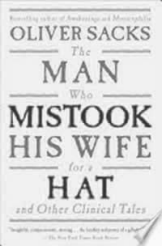
In his most extraordinary book, “one of the great clinical writers of the 20th century” (The New York Times) recounts the case histories of patients lost in the bizarre, apparently inescapable world of neurological disorders. Oliver Sacks’s The Man Who Mistook His Wife for a Hat tells the stories of individuals afflicted with fantastic perceptual and intellectual aberrations: patients who have lost their memories and with them the greater part of their pasts; who are no longer able to recognize people and common objects; who are stricken with violent tics and grimaces or who shout involuntary obscenities; whose limbs have become alien; who have been dismissed as retarded yet are gifted with uncanny artistic or mathematical talents.
If inconceivably strange, these brilliant tales remain, in Dr. Sacks’s splendid and sympathetic telling, deeply human. They are studies of life struggling against incredible adversity, and they enable us to enter the world of the neurologically impaired, to imagine with our hearts what it must be to live and feel as they do. A great healer, Sacks never loses sight of medicine’s ultimate responsibility: “the suffering, afflicted, fighting human subject.”
(Sacks. Oliver. The Man Who Mistook His Wife for a Hat: and Other Clinical Tales. (Summary) First Touchstone edition. New York, NY: Simon & Schuster,1998. IN: VILLA NOVA UNIVERSITY/ Falvey Memorial Library/ Books & Media (online) Disponível em: https://library.villanova.edu/Find/Record/1691762/Description#tabnav Acesso em: 4 março 2022.)
De acordo com o texto, o livro The Man Who Mistook His Wife for a Hat and Other Clinical Tales
Questão 14 9580249
Unilago 2022/1Leia o texto a seguir e responda à questão.

(Disponível em: https://www.unhcr.org/ph/11063-education-refugee-children-focus-new-hm-foundation-campaing.html. Acesso em:
Com base no texto, a expressão in which pode ser mais bem traduzida como
06