


![[Marketing] Questao Topo - deslogado](https://storage.estuda.com.br/banners/0_6b7ebee90b03af1c560c73bb8bcce34a_banner_deslogado_70_dias.png)
Questões de Inglês
19.971 Questões
Questão 42 9774191
IMEPAC Itumbiara 2022/2INSTRUCTION: Read the text to answer question.
Snooze more, eat less? Sleep deprivation may hamper weight control
By Maureen Salamon, Executive Editor, Harvard Women’s Health Watch
Weight loss once was considered a simple calculation: eat less and move more to create a calorie deficit. Now, basic differences between people — in genetics, health conditions, body type, and more — are also thought to play a role in how challenging it is to lose weight. Yet research suggests that some factors may help set the stage for success.
Sleep more to eat less? New research boosts this premise, suggesting that adults who are better rested consume significantly fewer calories than those who are chronically sleep-deprived.
This short-term study of 80 overweight people drives home just how integral slumber — or lack of it — is to our propensity to put on excess pounds, says Dr. Beth Frates, director of lifestyle medicine and wellness in the department of surgery at Massachusetts General Hospital.
“Working to find ways to clean up sleep hygiene may help people to extend sleep time to the recommended seven to nine hours per night,” Dr. Frates says. “This could, in turn, lead to consuming fewer calories and even weight loss in people who are in the overweight category by BMI.”
Available at: https://www.health.harvard.edu/blog/snoozemore-eat-less-sleep-deprivation-may-hamper-weightcontrol-202204042718. Accessed on: April 9, 2022.
According to the text, recent research findings demonstrated that
Questão 22 9706326
UNICID Medicina 2022/1TEXTO:
Could drugs delay the diseases of ageing?
Fergus Walsh
Published19 December 2017
Imagine having to ask a 95-year-old to slow down
— well, I did. Hilda Jaffe was walking so fast there was
a risk that the small group following her would be left
behind.
[5] We had just met in the lobby of the New York
Public Library on Fifth Avenue and 42nd Street,
where Hilda is a volunteer tour guide, and she was
escorting us to the vast, elaborately decorated Rose
Main Reading Room.
[10] Hilda doesn't walk so much as stride. I know
people 60 years her junior who are less nimble on
their feet.
In common with other super-agers, Hilda has
retained her zest for life and knowledge.
[15] Hilda completes the New York Times crossword
each day, belongs to two book clubs, goes to the
opera, classical music concerts and the theatre.
I asked Hilda what was the secret of her long
and healthy life?
[20] She said: "Pick your parents; my father died at
88, my mother at 93, so it has to be genetic."
Samples of Hilda's DNA are stored in a freezer at the
Albert Einstein College of Medicine in the Bronx.
She is among more than 600 people aged over 90 who
[25] are part of the Longevity Genes Project conducted by
the Institute for Aging.
Dr Nir Barzilai, director of the Institute, said what
was striking about the group was what unhealthy lives
many had lived.
[30] He told me: "Almost 50% of them were
overweight. Many were heavy smokers, did not
exercise and had unhealthy diets — they did not do
what their doctors said they should."
His research found several genetic variants
[35] among the group that appeared to confer protection
against the diseases of aging.
He says only about one in 10,000 people is lucky
enough to have these protective super-ager genes,
but believes science could help the rest of us.
[40] Some pharmaceutical companies are exploring
whether these genetic traits could be used to create
anti-aging drugs.
In humans, studies have linked metformin to a
lower risk of heart disease, diabetes and cognitive
[45] decline.
Dr Barzilai, who is also deputy scientific director
of the American Federation for Aging Research
(AFAR), is planning a randomized study of 3,000
adults aged 65-79 — half will take metformin tablets
[50] each day and half a placebo or dummy pill.
About half the $70m dollars needed has been
raised; it is hoped the six-year trial will start in 2022,
but this may depend on the support of one or more
wealthy philanthropists.
[55] At present, the US medicines regulator, the FDA,
does not recognize aging as a medical condition.
But Dr Barzilai says if the metformin trial was
successful it would provide a proof of principle that
aging can be targeted and he believes better drugs
[60] will come in the future.
Disponível em: https://www.bbc.com/news/health-42273362. Acesso em: 4 out. 2021.
Dr Barzilai believes that
Questão 21 9706321
UNICID Medicina 2022/1TEXTO:
Could drugs delay the diseases of ageing?
Fergus Walsh
Published19 December 2017
Imagine having to ask a 95-year-old to slow down
— well, I did. Hilda Jaffe was walking so fast there was
a risk that the small group following her would be left
behind.
[5] We had just met in the lobby of the New York
Public Library on Fifth Avenue and 42nd Street,
where Hilda is a volunteer tour guide, and she was
escorting us to the vast, elaborately decorated Rose
Main Reading Room.
[10] Hilda doesn't walk so much as stride. I know
people 60 years her junior who are less nimble on
their feet.
In common with other super-agers, Hilda has
retained her zest for life and knowledge.
[15] Hilda completes the New York Times crossword
each day, belongs to two book clubs, goes to the
opera, classical music concerts and the theatre.
I asked Hilda what was the secret of her long
and healthy life?
[20] She said: "Pick your parents; my father died at
88, my mother at 93, so it has to be genetic."
Samples of Hilda's DNA are stored in a freezer at the
Albert Einstein College of Medicine in the Bronx.
She is among more than 600 people aged over 90 who
[25] are part of the Longevity Genes Project conducted by
the Institute for Aging.
Dr Nir Barzilai, director of the Institute, said what
was striking about the group was what unhealthy lives
many had lived.
[30] He told me: "Almost 50% of them were
overweight. Many were heavy smokers, did not
exercise and had unhealthy diets — they did not do
what their doctors said they should."
His research found several genetic variants
[35] among the group that appeared to confer protection
against the diseases of aging.
He says only about one in 10,000 people is lucky
enough to have these protective super-ager genes,
but believes science could help the rest of us.
[40] Some pharmaceutical companies are exploring
whether these genetic traits could be used to create
anti-aging drugs.
In humans, studies have linked metformin to a
lower risk of heart disease, diabetes and cognitive
[45] decline.
Dr Barzilai, who is also deputy scientific director
of the American Federation for Aging Research
(AFAR), is planning a randomized study of 3,000
adults aged 65-79 — half will take metformin tablets
[50] each day and half a placebo or dummy pill.
About half the $70m dollars needed has been
raised; it is hoped the six-year trial will start in 2022,
but this may depend on the support of one or more
wealthy philanthropists.
[55] At present, the US medicines regulator, the FDA,
does not recognize aging as a medical condition.
But Dr Barzilai says if the metformin trial was
successful it would provide a proof of principle that
aging can be targeted and he believes better drugs
[60] will come in the future.
Disponível em: https://www.bbc.com/news/health-42273362. Acesso em: 4 out. 2021.
In accordance with the text, it is correct to say that
Questão 20 9706317
UNICID Medicina 2022/1TEXTO:
Could drugs delay the diseases of ageing?
Fergus Walsh
Published19 December 2017
Imagine having to ask a 95-year-old to slow down
— well, I did. Hilda Jaffe was walking so fast there was
a risk that the small group following her would be left
behind.
[5] We had just met in the lobby of the New York
Public Library on Fifth Avenue and 42nd Street,
where Hilda is a volunteer tour guide, and she was
escorting us to the vast, elaborately decorated Rose
Main Reading Room.
[10] Hilda doesn't walk so much as stride. I know
people 60 years her junior who are less nimble on
their feet.
In common with other super-agers, Hilda has
retained her zest for life and knowledge.
[15] Hilda completes the New York Times crossword
each day, belongs to two book clubs, goes to the
opera, classical music concerts and the theatre.
I asked Hilda what was the secret of her long
and healthy life?
[20] She said: "Pick your parents; my father died at
88, my mother at 93, so it has to be genetic."
Samples of Hilda's DNA are stored in a freezer at the
Albert Einstein College of Medicine in the Bronx.
She is among more than 600 people aged over 90 who
[25] are part of the Longevity Genes Project conducted by
the Institute for Aging.
Dr Nir Barzilai, director of the Institute, said what
was striking about the group was what unhealthy lives
many had lived.
[30] He told me: "Almost 50% of them were
overweight. Many were heavy smokers, did not
exercise and had unhealthy diets — they did not do
what their doctors said they should."
His research found several genetic variants
[35] among the group that appeared to confer protection
against the diseases of aging.
He says only about one in 10,000 people is lucky
enough to have these protective super-ager genes,
but believes science could help the rest of us.
[40] Some pharmaceutical companies are exploring
whether these genetic traits could be used to create
anti-aging drugs.
In humans, studies have linked metformin to a
lower risk of heart disease, diabetes and cognitive
[45] decline.
Dr Barzilai, who is also deputy scientific director
of the American Federation for Aging Research
(AFAR), is planning a randomized study of 3,000
adults aged 65-79 — half will take metformin tablets
[50] each day and half a placebo or dummy pill.
About half the $70m dollars needed has been
raised; it is hoped the six-year trial will start in 2022,
but this may depend on the support of one or more
wealthy philanthropists.
[55] At present, the US medicines regulator, the FDA,
does not recognize aging as a medical condition.
But Dr Barzilai says if the metformin trial was
successful it would provide a proof of principle that
aging can be targeted and he believes better drugs
[60] will come in the future.
Disponível em: https://www.bbc.com/news/health-42273362. Acesso em: 4 out. 2021.
It is correct to say about the “Longevity Genes Project” that
Questão 19 9706280
UNICID Medicina 2022/1TEXTO:
Could drugs delay the diseases of ageing?
Fergus Walsh
Published19 December 2017
Imagine having to ask a 95-year-old to slow down
— well, I did. Hilda Jaffe was walking so fast there was
a risk that the small group following her would be left
behind.
[5] We had just met in the lobby of the New York
Public Library on Fifth Avenue and 42nd Street,
where Hilda is a volunteer tour guide, and she was
escorting us to the vast, elaborately decorated Rose
Main Reading Room.
[10] Hilda doesn't walk so much as stride. I know
people 60 years her junior who are less nimble on
their feet.
In common with other super-agers, Hilda has
retained her zest for life and knowledge.
[15] Hilda completes the New York Times crossword
each day, belongs to two book clubs, goes to the
opera, classical music concerts and the theatre.
I asked Hilda what was the secret of her long
and healthy life?
[20] She said: "Pick your parents; my father died at
88, my mother at 93, so it has to be genetic."
Samples of Hilda's DNA are stored in a freezer at the
Albert Einstein College of Medicine in the Bronx.
She is among more than 600 people aged over 90 who
[25] are part of the Longevity Genes Project conducted by
the Institute for Aging.
Dr Nir Barzilai, director of the Institute, said what
was striking about the group was what unhealthy lives
many had lived.
[30] He told me: "Almost 50% of them were
overweight. Many were heavy smokers, did not
exercise and had unhealthy diets — they did not do
what their doctors said they should."
His research found several genetic variants
[35] among the group that appeared to confer protection
against the diseases of aging.
He says only about one in 10,000 people is lucky
enough to have these protective super-ager genes,
but believes science could help the rest of us.
[40] Some pharmaceutical companies are exploring
whether these genetic traits could be used to create
anti-aging drugs.
In humans, studies have linked metformin to a
lower risk of heart disease, diabetes and cognitive
[45] decline.
Dr Barzilai, who is also deputy scientific director
of the American Federation for Aging Research
(AFAR), is planning a randomized study of 3,000
adults aged 65-79 — half will take metformin tablets
[50] each day and half a placebo or dummy pill.
About half the $70m dollars needed has been
raised; it is hoped the six-year trial will start in 2022,
but this may depend on the support of one or more
wealthy philanthropists.
[55] At present, the US medicines regulator, the FDA,
does not recognize aging as a medical condition.
But Dr Barzilai says if the metformin trial was
successful it would provide a proof of principle that
aging can be targeted and he believes better drugs
[60] will come in the future.
Disponível em: https://www.bbc.com/news/health-42273362. Acesso em: 4 out. 2021.
According to the text, it is correct to say that
Questão 18 9706257
UNICID Medicina 2022/1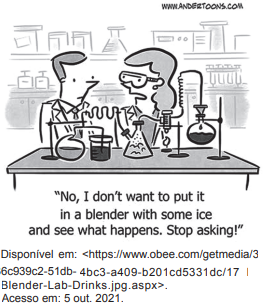
Analyzing the cartoon, it is correct to say that:
06