


![[Marketing] Questao Topo - deslogado](https://storage.estuda.com.br/banners/0_6b7ebee90b03af1c560c73bb8bcce34a_banner_deslogado_70_dias.png)
Questões de Inglês
19.971 Questões
Questão 50 10524765
UFMS Digital 2022
The Curious Incident of the Dog in the Night-time is an incredible rollercoaster of a tale, written in the voice of a fifteen-year-old boy with Asperger’s Syndrome called Christopher Boone. After discovering his neighbour’s dog has been murdered, he sets off to find out who the murderer could be. On this mission, he discovers far more than he anticipated.
Some people struggle to deal with Christopher because he can be so inflexible, but I found him rather loveable. He is also completely true to himself, brilliant and like his hero Sherlock Holmes, driven by logic not emotion.
Without giving away the ending, he manages to solve the mystery of the murdered dog in the most extraordinary way and becomes the unlikely hero of the story. Not only are his detective skills excellent, but he also manages to get brilliant marks in maths exams without a lot of revision!
This is one of the most original and thought-provoking books I have read in the last year. It is one of those stories that I feel everyone should know about. It has had a great impact on me as it has made me think differently about people with autism and understand their ways of thinking. I would recommend this book to anyone who enjoys mystery, moments of heartbreak but ultimately a happy ending and plenty of humour along the way
(www.theguardian.com, 13.06.2016. Adaptado.)
No trecho do segundo parágrafo “but I found him rather loveable”, o termo sublinhado tem o mesmo sentido daquele sublinhado em:
Questão 48 10524707
UFMS Digital 2022Examine a tirinha Pickles de Brian Crane.
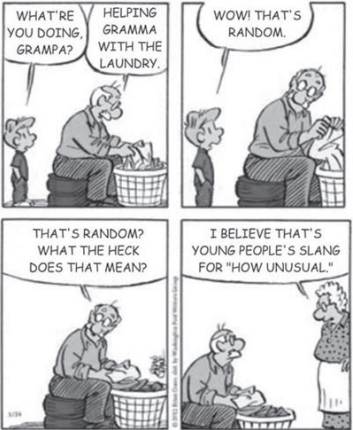
(www.gocomics.com)
As línguas variam de acordo com o tempo, o espaço, as características socioculturais dos falantes, a situação de comunicação, entre outros fatores. Nessa tirinha, a variação linguística se faz evidente
Questão 60 10268797
CEFSA Prova de Conhecimentos Gerais 2022/1Leia o texto para responder à questão.
Agricultural economists study the effect of the ‘warm glow of giving’
More and more products carry ethical labels such as fair-trade or organic, which consumers usually view positively. Nevertheless, the sales figures of these products often remain low, even though they offer advantages for the environment or for society. A team of scientists from the University of Göttingen has investigated to what extent factors which affect consumers’ own benefit ― such as the so-called “Warm Glow of Giving” ― influence consumers’ purchasing intentions. The “warm glow” is the personal benefit that people feel when they do good. The results were published in the Journal of Cleaner Production, an international scientific publication which covers environmental and sustainable research and practice.
The researchers from the working group “Marketing for Food and Agricultural Products” at the University of Göttingen studied how two groups — one from Germany and one from the United Kingdom ― make virtual purchasing decisions. Each group consisted of around 450 consumers. Chocolate was available, which differed in terms of price, country of origin of the cocoa, and country of manufacture, as well as the ethical claims made. The claims were: organic, fair-trade and CO2 -neutral. There was also an alternative which did not make any claims. Consumers then answered questions about their purchasing intentions, values and feelings when buying.
The result: in both countries the price is the most important decision criterion, followed by the ethical claims and the country of manufacture. In addition, the “warm glow” has a comparatively large influence on the purchasing intention ― the prospect of getting a good feeling clearly attracts many consumers to buy products which make ethical claims. But the intention is often not put into practice: during the actual decision to buy, the influence of the “warm glow” is only relevant for fair-trade chocolate. The researchers assume that this is partly due to the strong association with the common good of the fair-trade label, which supports farmers in developing countries. “Other studies have shown that consumers also associate positive health aspects with organic food,” says Sarah Iweala, first author of the study and doctoral student in the “Global Food” research training group. “Of course, this dilutes the label’s association with the common good.”
In addition, the degree of recognition of the logo seems to be important. Although consumers indicated that they felt good when they reduced their CO2 footprint, this good feeling did not lead them to choose the CO2 neutral product. This can be explained by the low profile of this particular ethical logo. In both countries, less than 20 percent of the participants stated that they had already seen “carbon neutral” branding while shopping. In contrast, over 90 percent of consumers were aware of the fair-trade logo. “If consumers don’t know what a label stands for, they can’t feel good about it when they shop and so it can’t become a deciding factor in their shopping choices,” says Professor Achim Spiller, Head of the working group “Marketing for Food and Agricultural Products.”
(www.sciencedaily.com. 22.03.2019. Adaptado.)
No trecho do quarto parágrafo “over 90 percent of consumers were aware of the fair-trade logo”, a expressão sublinhada equivale, em português, a
Questão 59 10268791
CEFSA Prova de Conhecimentos Gerais 2022/1Leia o texto para responder à questão.
Agricultural economists study the effect of the ‘warm glow of giving’
More and more products carry ethical labels such as fair-trade or organic, which consumers usually view positively. Nevertheless, the sales figures of these products often remain low, even though they offer advantages for the environment or for society. A team of scientists from the University of Göttingen has investigated to what extent factors which affect consumers’ own benefit ― such as the so-called “Warm Glow of Giving” ― influence consumers’ purchasing intentions. The “warm glow” is the personal benefit that people feel when they do good. The results were published in the Journal of Cleaner Production, an international scientific publication which covers environmental and sustainable research and practice.
The researchers from the working group “Marketing for Food and Agricultural Products” at the University of Göttingen studied how two groups — one from Germany and one from the United Kingdom ― make virtual purchasing decisions. Each group consisted of around 450 consumers. Chocolate was available, which differed in terms of price, country of origin of the cocoa, and country of manufacture, as well as the ethical claims made. The claims were: organic, fair-trade and CO2 -neutral. There was also an alternative which did not make any claims. Consumers then answered questions about their purchasing intentions, values and feelings when buying.
The result: in both countries the price is the most important decision criterion, followed by the ethical claims and the country of manufacture. In addition, the “warm glow” has a comparatively large influence on the purchasing intention ― the prospect of getting a good feeling clearly attracts many consumers to buy products which make ethical claims. But the intention is often not put into practice: during the actual decision to buy, the influence of the “warm glow” is only relevant for fair-trade chocolate. The researchers assume that this is partly due to the strong association with the common good of the fair-trade label, which supports farmers in developing countries. “Other studies have shown that consumers also associate positive health aspects with organic food,” says Sarah Iweala, first author of the study and doctoral student in the “Global Food” research training group. “Of course, this dilutes the label’s association with the common good.”
In addition, the degree of recognition of the logo seems to be important. Although consumers indicated that they felt good when they reduced their CO2 footprint, this good feeling did not lead them to choose the CO2 neutral product. This can be explained by the low profile of this particular ethical logo. In both countries, less than 20 percent of the participants stated that they had already seen “carbon neutral” branding while shopping. In contrast, over 90 percent of consumers were aware of the fair-trade logo. “If consumers don’t know what a label stands for, they can’t feel good about it when they shop and so it can’t become a deciding factor in their shopping choices,” says Professor Achim Spiller, Head of the working group “Marketing for Food and Agricultural Products.”
(www.sciencedaily.com. 22.03.2019. Adaptado.)
De acordo com o quarto parágrafo, a marca de identificação de carbono neutro em produtos
Questão 58 10268773
CEFSA Prova de Conhecimentos Gerais 2022/1Leia o texto para responder à questão.
Agricultural economists study the effect of the ‘warm glow of giving’
More and more products carry ethical labels such as fair-trade or organic, which consumers usually view positively. Nevertheless, the sales figures of these products often remain low, even though they offer advantages for the environment or for society. A team of scientists from the University of Göttingen has investigated to what extent factors which affect consumers’ own benefit ― such as the so-called “Warm Glow of Giving” ― influence consumers’ purchasing intentions. The “warm glow” is the personal benefit that people feel when they do good. The results were published in the Journal of Cleaner Production, an international scientific publication which covers environmental and sustainable research and practice.
The researchers from the working group “Marketing for Food and Agricultural Products” at the University of Göttingen studied how two groups — one from Germany and one from the United Kingdom ― make virtual purchasing decisions. Each group consisted of around 450 consumers. Chocolate was available, which differed in terms of price, country of origin of the cocoa, and country of manufacture, as well as the ethical claims made. The claims were: organic, fair-trade and CO2 -neutral. There was also an alternative which did not make any claims. Consumers then answered questions about their purchasing intentions, values and feelings when buying.
The result: in both countries the price is the most important decision criterion, followed by the ethical claims and the country of manufacture. In addition, the “warm glow” has a comparatively large influence on the purchasing intention ― the prospect of getting a good feeling clearly attracts many consumers to buy products which make ethical claims. But the intention is often not put into practice: during the actual decision to buy, the influence of the “warm glow” is only relevant for fair-trade chocolate. The researchers assume that this is partly due to the strong association with the common good of the fair-trade label, which supports farmers in developing countries. “Other studies have shown that consumers also associate positive health aspects with organic food,” says Sarah Iweala, first author of the study and doctoral student in the “Global Food” research training group. “Of course, this dilutes the label’s association with the common good.”
In addition, the degree of recognition of the logo seems to be important. Although consumers indicated that they felt good when they reduced their CO2 footprint, this good feeling did not lead them to choose the CO2 neutral product. This can be explained by the low profile of this particular ethical logo. In both countries, less than 20 percent of the participants stated that they had already seen “carbon neutral” branding while shopping. In contrast, over 90 percent of consumers were aware of the fair-trade logo. “If consumers don’t know what a label stands for, they can’t feel good about it when they shop and so it can’t become a deciding factor in their shopping choices,” says Professor Achim Spiller, Head of the working group “Marketing for Food and Agricultural Products.”
(www.sciencedaily.com. 22.03.2019. Adaptado.)
In the excerpt from the third paragraph “Of course, this dilutes the label’s association with the common good”, the underlined word refers to
Questão 57 10268765
CEFSA Prova de Conhecimentos Gerais 2022/1Leia o texto para responder à questão.
Agricultural economists study the effect of the ‘warm glow of giving’
More and more products carry ethical labels such as fair-trade or organic, which consumers usually view positively. Nevertheless, the sales figures of these products often remain low, even though they offer advantages for the environment or for society. A team of scientists from the University of Göttingen has investigated to what extent factors which affect consumers’ own benefit ― such as the so-called “Warm Glow of Giving” ― influence consumers’ purchasing intentions. The “warm glow” is the personal benefit that people feel when they do good. The results were published in the Journal of Cleaner Production, an international scientific publication which covers environmental and sustainable research and practice.
The researchers from the working group “Marketing for Food and Agricultural Products” at the University of Göttingen studied how two groups — one from Germany and one from the United Kingdom ― make virtual purchasing decisions. Each group consisted of around 450 consumers. Chocolate was available, which differed in terms of price, country of origin of the cocoa, and country of manufacture, as well as the ethical claims made. The claims were: organic, fair-trade and CO2 -neutral. There was also an alternative which did not make any claims. Consumers then answered questions about their purchasing intentions, values and feelings when buying.
The result: in both countries the price is the most important decision criterion, followed by the ethical claims and the country of manufacture. In addition, the “warm glow” has a comparatively large influence on the purchasing intention ― the prospect of getting a good feeling clearly attracts many consumers to buy products which make ethical claims. But the intention is often not put into practice: during the actual decision to buy, the influence of the “warm glow” is only relevant for fair-trade chocolate. The researchers assume that this is partly due to the strong association with the common good of the fair-trade label, which supports farmers in developing countries. “Other studies have shown that consumers also associate positive health aspects with organic food,” says Sarah Iweala, first author of the study and doctoral student in the “Global Food” research training group. “Of course, this dilutes the label’s association with the common good.”
In addition, the degree of recognition of the logo seems to be important. Although consumers indicated that they felt good when they reduced their CO2 footprint, this good feeling did not lead them to choose the CO2 neutral product. This can be explained by the low profile of this particular ethical logo. In both countries, less than 20 percent of the participants stated that they had already seen “carbon neutral” branding while shopping. In contrast, over 90 percent of consumers were aware of the fair-trade logo. “If consumers don’t know what a label stands for, they can’t feel good about it when they shop and so it can’t become a deciding factor in their shopping choices,” says Professor Achim Spiller, Head of the working group “Marketing for Food and Agricultural Products.”
(www.sciencedaily.com. 22.03.2019. Adaptado.)
According to the third paragraph, the research showed that purchasing decision was propelled first by
06