


![[Marketing] Questao Topo - deslogado](https://storage.estuda.com.br/banners/0_6b7ebee90b03af1c560c73bb8bcce34a_banner_deslogado_70_dias.png)
Questões de Inglês
19.971 Questões
Questão 52 9517495
PUC-GO Medicina 2023/1Read the text:
Baru is a wild fruit from the wilderness of the Brazilian Cerrado – one of the biggest, most important, and sadly most threatened biomes in the world.
Baru is a traditional food from the indigenous communities from this region. They believe that the nut found in the center of the baru fruit (just one nut per fruit) has incredible nutritional and medicinal power.
The Brazilian health food industry began introducing baru nuts to the general Brazilian market, with great success quite recently, and now this exotic wild nut is becoming recognized internationally for its amazing taste and high nutritional profile.
The density of nutrients present in Baru nuts is surprising and impressing food scientists and ‘super-food’ specialists around theworld. […]
(Source: https://barubaru.com.br/pages/the-incredible-baru-nut. Access on: August 18th, 2022.)
Consider the following sentences:
I - When the indigenous of the Brazilian Cerrado found only one nut in the center of the fruit, they believed it was the reason of its medicinal and nutritional power.
II - The indigenous communities attribute magical powers to the baru fruit.
III - The Brazilian nut now can be bought all around the country, and not just at the regional markets.
IV - Due tothe introductionofthebarunutstothemarket, the consequences were worldwide recognition.
V - Food scientists and super-food specialists have been impressed and surprised by the nut’s density of nutrients.
Choose the alternative with all the statements are according the text:
Questão 24 9517418
PUC-GO Medicina 2023/1Read the text Australia: Parts of Great Barrier Reef record highest coral cover in 36 years:
A new report said the northern and central parts of Australia's Great Barrier Reefshowed the highest levels of hard coral cover since 1985. But experts still warn the UNESCO World Heritage Site is at risk. UNESCO is considering whether to list the Great Barrier Reef as ‘in danger’.
Two-thirds of Australia's Great Barrier Reef showed the highest levels of coral cover seen in decades, but the reefremained vulnerable to increasingly frequent mass bleaching, a new report released on Thursday showed.
The report by the Australian Institute of Marine Science outlined how the survey of 87 sites said northern and central parts of the reef showcased a comeback from damage more quickly than many had expected, mostly because of a fast-growing type of branching coral, called the Acropora.
‘These latest results demonstrate the reef can still recover in periods free of intense disturbances’, said AIMS's CEO Paul Hardisty. But the gains made could easily be reversed by cyclones, new bleaching events, or crown-of-thorns outbreaks.
[…]
(Source: https://www.dw.com/en/australia-parts-of-great-barrierreef-record-highest-coral-cover-in-36-years/a-62703152. Access on: August 17th, 2022. Adapted.)
Choose the alternative with a correct information, according to the text:
Questão 47 9517377
UNIFENAS 2023/1Read the cartoon and answer the question about it.
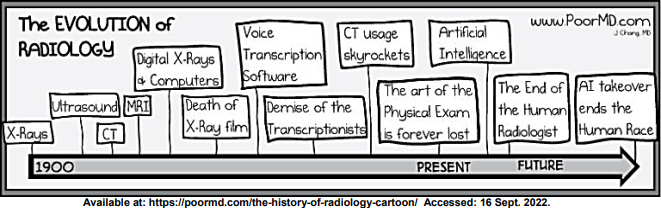
We can infer that the cartoonist is
Questão 46 9517375
UNIFENAS 2023/1The question is based on the following text.
History of Medicine
Medicine and surgery before 1800
Early medicine and folklore
Unwritten history is not easy to interpret, and, although much may be learned from a study of the drawings, bony remains, and surgical tools of early humans, it is difficult to reconstruct their mental attitude toward the problems of disease and death. It seems probable that, as soon as they reached the stage of reasoning, they discovered by the process of trial and error which plants might be used as foods, which of them were poisonous, and which of them had some medicinal value. Folk medicine or domestic medicine, consisting largely in the use of vegetable products, or herbs, originated in this fashion and still persists.
But that is not the whole story. Humans did not at first regard death and disease as natural phenomena. Common maladies, such as colds or constipation, were accepted as part of existence and dealt with by means of such herbal remedies as were available. Serious and disabling diseases, however, were placed in a very different category. These were of supernatural origin. They might be the result of a spell cast upon the victim by some enemy, visitation by a malevolent demon, or the work of an offended god who had either projected some object—a dart, a stone, a worm—into the body of the victim or had abstracted something, usually the soul of the patient. The treatment then applied was to lure the errant soul back to its proper habitat within the body or to extract the evil intruder, be it dart or demon, by counterspells, incantations, potions, suction, or other means.
One curious method of providing the disease with means of escape from the body was by making a hole, 2.5 to 5 cm across, in the skull of the victim—the practice of trepanning, or trephining. Trepanned skulls of prehistoric date have been found in Britain, France, and other parts of Europe and in Peru. Many of them show evidence of healing and, presumably, of the patient’s survival. The practice still exists among some tribal people in parts of Algeria, in Melanesia, and perhaps elsewhere, though it is fast becoming extinct.
Magic and religion played a large part in the medicine of prehistoric or early human society. Administration of a vegetable drug or remedy by mouth was accompanied by incantations, dancing, grimaces, and all the tricks of the magician. Therefore, the first doctors, or “medicine men,” were witch doctors or sorcerers. The use of charms and talismans, still prevalent in modern times, is of ancient origin.
Apart from the treatment of wounds and broken bones, the folklore of medicine is probably the most ancient aspect of the art of healing, for primitive physicians showed their wisdom by treating the whole person, soul as well as body. Treatments and medicines that produced no physical effects on the body could nevertheless make a patient feel better when both healer and patient believed in their efficacy. This so-called placebo effect is applicable even in modern clinical medicine.
Available at: https://www.britannica.com/science/history-of-medicine Accessed: 16 Sept. 2022.
According to the text, it’s correct to affirm that
Questão 44 9517371
UNIFENAS 2023/1The question is based on the following text.
History of Medicine
Medicine and surgery before 1800
Early medicine and folklore
Unwritten history is not easy to interpret, and, although much may be learned from a study of the drawings, bony remains, and surgical tools of early humans, it is difficult to reconstruct their mental attitude toward the problems of disease and death. It seems probable that, as soon as they reached the stage of reasoning, they discovered by the process of trial and error which plants might be used as foods, which of them were poisonous, and which of them had some medicinal value. Folk medicine or domestic medicine, consisting largely in the use of vegetable products, or herbs, originated in this fashion and still persists.
But that is not the whole story. Humans did not at first regard death and disease as natural phenomena. Common maladies, such as colds or constipation, were accepted as part of existence and dealt with by means of such herbal remedies as were available. Serious and disabling diseases, however, were placed in a very different category. These were of supernatural origin. They might be the result of a spell cast upon the victim by some enemy, visitation by a malevolent demon, or the work of an offended god who had either projected some object—a dart, a stone, a worm—into the body of the victim or had abstracted something, usually the soul of the patient. The treatment then applied was to lure the errant soul back to its proper habitat within the body or to extract the evil intruder, be it dart or demon, by counterspells, incantations, potions, suction, or other means.
One curious method of providing the disease with means of escape from the body was by making a hole, 2.5 to 5 cm across, in the skull of the victim—the practice of trepanning, or trephining. Trepanned skulls of prehistoric date have been found in Britain, France, and other parts of Europe and in Peru. Many of them show evidence of healing and, presumably, of the patient’s survival. The practice still exists among some tribal people in parts of Algeria, in Melanesia, and perhaps elsewhere, though it is fast becoming extinct.
Magic and religion played a large part in the medicine of prehistoric or early human society. Administration of a vegetable drug or remedy by mouth was accompanied by incantations, dancing, grimaces, and all the tricks of the magician. Therefore, the first doctors, or “medicine men,” were witch doctors or sorcerers. The use of charms and talismans, still prevalent in modern times, is of ancient origin.
Apart from the treatment of wounds and broken bones, the folklore of medicine is probably the most ancient aspect of the art of healing, for primitive physicians showed their wisdom by treating the whole person, soul as well as body. Treatments and medicines that produced no physical effects on the body could nevertheless make a patient feel better when both healer and patient believed in their efficacy. This so-called placebo effect is applicable even in modern clinical medicine.
Available at: https://www.britannica.com/science/history-of-medicine Accessed: 16 Sept. 2022.
The main idea of the article is that in the past the practice of medicine
Questão 43 9517370
UNIFENAS 2023/1The question is based on the following text.
History of Medicine
Medicine and surgery before 1800
Early medicine and folklore
Unwritten history is not easy to interpret, and, although much may be learned from a study of the drawings, bony remains, and surgical tools of early humans, it is difficult to reconstruct their mental attitude toward the problems of disease and death. It seems probable that, as soon as they reached the stage of reasoning, they discovered by the process of trial and error which plants might be used as foods, which of them were poisonous, and which of them had some medicinal value. Folk medicine or domestic medicine, consisting largely in the use of vegetable products, or herbs, originated in this fashion and still persists.
But that is not the whole story. Humans did not at first regard death and disease as natural phenomena. Common maladies, such as colds or constipation, were accepted as part of existence and dealt with by means of such herbal remedies as were available. Serious and disabling diseases, however, were placed in a very different category. These were of supernatural origin. They might be the result of a spell cast upon the victim by some enemy, visitation by a malevolent demon, or the work of an offended god who had either projected some object—a dart, a stone, a worm—into the body of the victim or had abstracted something, usually the soul of the patient. The treatment then applied was to lure the errant soul back to its proper habitat within the body or to extract the evil intruder, be it dart or demon, by counterspells, incantations, potions, suction, or other means.
One curious method of providing the disease with means of escape from the body was by making a hole, 2.5 to 5 cm across, in the skull of the victim—the practice of trepanning, or trephining. Trepanned skulls of prehistoric date have been found in Britain, France, and other parts of Europe and in Peru. Many of them show evidence of healing and, presumably, of the patient’s survival. The practice still exists among some tribal people in parts of Algeria, in Melanesia, and perhaps elsewhere, though it is fast becoming extinct.
Magic and religion played a large part in the medicine of prehistoric or early human society. Administration of a vegetable drug or remedy by mouth was accompanied by incantations, dancing, grimaces, and all the tricks of the magician. Therefore, the first doctors, or “medicine men,” were witch doctors or sorcerers. The use of charms and talismans, still prevalent in modern times, is of ancient origin.
Apart from the treatment of wounds and broken bones, the folklore of medicine is probably the most ancient aspect of the art of healing, for primitive physicians showed their wisdom by treating the whole person, soul as well as body. Treatments and medicines that produced no physical effects on the body could nevertheless make a patient feel better when both healer and patient believed in their efficacy. This so-called placebo effect is applicable even in modern clinical medicine.
Available at: https://www.britannica.com/science/history-of-medicine Accessed: 16 Sept. 2022.
“They might be the result of a spell cast upon the victim by some enemy, visitation by a malevolent
demon, or the work of an offended god who had either projected some object—a dart, a stone, a worm—
into the body of the victim or had abstracted something, usually the soul of the patient.”
We can infer that the word abstracted, as it is used in the sentence above, means
06