


![[Marketing] Questao Topo - deslogado](https://storage.estuda.com.br/banners/0_6b7ebee90b03af1c560c73bb8bcce34a_banner_deslogado_70_dias.png)
Questões de Inglês
19.971 Questões
Questão 47 14828845
PAS - UFLA 1 Etapa 2023-2025Read Passage 1 carefully, and then answer the question.
PASSAGE 1
HOW TO INCORPORATE WORLD ENGLISHES IN THE CLASSROOM?
[1] How to teach World Englishes? There is not a single definite answer to this question, as there is no “one
size fits all” approach for incorporating the different varieties of English in the classroom. However, generally,
teachers can take a World Englishes approach in their lessons by working to pluralize students’ perceptions. This
can be accomplished, for example, by accepting cultural, rhetorical, and stylistic variations as well as by treating
[5] students fairly when they use different English varieties in the classroom. Matsuda and Matsuda (2010) offer
five principles that can guide teachers to incorporate World Englishes in a writing classroom:
• Teach the dominant language forms and functions.
• Teach the non-dominant language forms and functions.
• Teach the boundary between what works and what does not.
[10] • Teach the principles and strategies of discourse negotiation.
• Teach the risks involved in using deviational features.
The other strategy Matsuda and Matsuda mention is teacher collaboration. This focuses on designing
opportunities for students to interact in socially-diverse activities and reflect deeply on their communication
experiences. It also requires teachers to identify key concepts students can use to make sense of the complex
[15] communication experiences in their specific contexts.
Available at: https://owl.purdue.edu/owl/english_as_a_second_language/world_englishes/classroom_applications_and_activities.html . Accessed on 18 July, 2022.
According to the passage, “accepting cultural, rhetorical, and stylistic variations as well as by treating students fairly when they use different English varieties in the classroom.” (lines 4-6), are attitudes to
Questão 5 14742792
UFMS PASSE - 2 Etapa 2023-2025Observe a imagem a seguir de um artista anônimo; a cantiga infantil (nursery rhyme) também de autoria anônima, e coletado em As únicas melodias verdadeiras da Mamãe Gansa (século XIX); e o trecho do poema “Woman in a shoe” da poetisa estadunidense Marge Piercy, parte da sua obra The art of blessing the day, de 1999, e responda a pergunta.
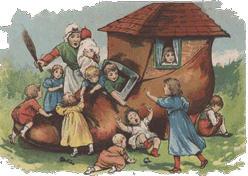
There was an old woman who lived in a shoe. She had so many children, she didn’t know what to do. She gave them some broth without any bread; Then whipped them all soundly and put them to bed.
Woman in a shoe
There was an old woman who lived
in a shoe, her own two shoes,
men’s they were, brown and worn.
They flapped when she hobbled along.
There was an old woman who lived
in a refrigerator box, under
the expressway, with her cat.
January, they died curled together.
(…)
Too hot, too cold, too poor,
too old. Invisible unless
she annoys you, invisible
unless she gets in your way.
In fairy tales if you are kind
to an old woman, she gives you
the thing you desperately need:
an unconquerable sword, a purse
bottomless and always filled,
a magical ring. We don’t believe
that anymore. (...)
(PIERCY, Marge. Figura e Fragmento do Poema “Woman in a shoe”. Disponíveis em: https://mothergoosesmiles. wordpress.com/2011/11/19/the-woman-in-a-shoe/ e https://allpoetry.com/poem/15333727-Woman-in-a-shoe--by-Marge-Piercy. Acesso em 20. out. 2024)
Levando em consideração o trecho do poema “In fairy tales if you are kind to an old woman, she gives you the thing you desperately need”, temos uma situação em que a condição e a consequência são bem prováveis de acontecer (ainda que em um contexto imaginado do conto de fada). Se a gente quisesse tornar a condição mais improvável ou hipotética, qual seria a forma correta de transformar o conditional em inglês?
Questão 20 14725140
UNESP 2 Fase - Conhecimentos Específicos 2023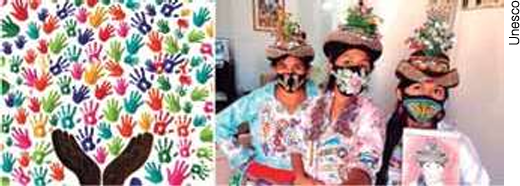
Why does cultural diversity matter?
Three-quarters of the world's major conflicts have a cultural dimension. Bridging the gap between cultures is urgent and necessary for peace, stability and development.
Cultural diversity is a driving force of development, not only with respect to economic growth, but also as a means of leading a more fulfilling intellectual, emotional, moral and spiritual life. Cultural diversity is thus an asset that is indispensable for poverty reduction and the achievement of sustainable development.
At the same time, acceptance and recognition of cultural diversity — in particular through innovative use of media and Information and Communications Technologies (ICTs) — are conducive to dialogue among civilizations and cultures, respect and mutual understanding.
(www.un.org. Adaptado.)
O trecho do texto que apresenta meios para a promoção e a valorização da diversidade cultural é
Questão 18 14725138
UNESP 2 Fase - Conhecimentos Específicos 2023Leia o texto para responder à questão.
Black authors shake up Brazil's literary scene
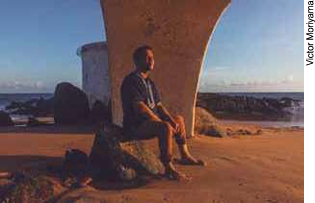
Itamar Vieira Junior, an author, says a major reason Black Brazilian writers are making their mark is because of a shift in how race and racism are being discussed in the country today.
Itamar Vieira Junior, whose day job working for the Brazilian government on land reform took him deep into the impoverished countryside, knew next to nothing about the mainstream publishing industry when he put the final touches on a novel he had been writing on and off for decades. On a whim, in April 2018, he sent the manuscript for Torto Arado, which means crooked plow, to a literary contest in Portugal, wondering what the jury would make of the hardscrabble tale of two sisters in a rural district in northeastern Brazil where the legacy of slavery remains palpable.
To his astonishment, Torto Arado won the 2018 LeYa award, a major Portuguese-language literary prize focused on discovering new voices. The recognition jump-started Mr. Vieira's career, making him a leading voice among the Black authors who have jolted Brazil's literary establishment in recent years with imaginative and searing works that have found commercial success and critical acclaim.
Torto Arado was the best-selling book in Brazil in 2021, with more than 300,000 copies sold to date. The previous year, that distinction went to Djamila Ribeiro's A Little Anti-Racist Handbook (Pequeno Manual Antirracista), a succinct and plainly written dissection of systemic racism in Brazil.
Mr. Vieira, a geographer, and Ms. Ribeiro, who studied philosophy, are part of a generation of Black Brazilians who became the first in their families to get a college degree, taking advantage of Federal Government programs. Mr. Vieira managed to use his day job at Brazil's land reform agency, where he has worked since 2006, to do field research. He studied the politics and power dynamics that shape the lives of rural workers, including some who toil in conditions analogous to modern-day slavery. That experience, he said, made the characters in his novel more layered and their fictional hometown, Água Negra, which means black water, feel authentic.
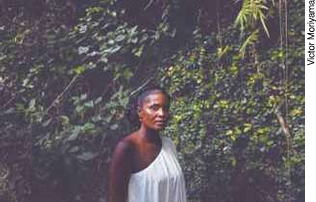
"I felt a calling to be generous enough to write in the same accessible way that generous authors before me wrote," Djamila Ribeiro said, "because otherwise you only legitimize the power spheres of those who are privileged."
The two authors are among the highest profile figures of a literary boom that includes Black contemporary writers and authors who are experiencing a revival. The clearest example is Carolina Maria de Jesus, who died in 1977 and whose memoir, Child of the Dark (Quarto de Despejo), is now a literary sensation, as it was when it was published in 1960. The book, a compilation of diary entries by Ms. Jesus, a single mother of three, offers a raw account of daily life in a São Paulo slum where dwellers picked through garbage for food and slept in shacks patched together with slabs of cardboard.
(Ernesto Londoño. www.nytimes.com, 12.02.2022. Adaptado.)
According to the fifth paragraph, Child of the Dark, by Carolina Maria de Jesus,
Questão 17 14725137
UNESP 2 Fase - Conhecimentos Específicos 2023Leia o texto para responder à questão.
Black authors shake up Brazil's literary scene
Itamar Vieira Junior, an author, says a major reason Black Brazilian writers are making their mark is because of a shift in how race and racism are being discussed in the country today.
Itamar Vieira Junior, whose day job working for the Brazilian government on land reform took him deep into the impoverished countryside, knew next to nothing about the mainstream publishing industry when he put the final touches on a novel he had been writing on and off for decades. On a whim, in April 2018, he sent the manuscript for Torto Arado, which means crooked plow, to a literary contest in Portugal, wondering what the jury would make of the hardscrabble tale of two sisters in a rural district in northeastern Brazil where the legacy of slavery remains palpable.
To his astonishment, Torto Arado won the 2018 LeYa award, a major Portuguese-language literary prize focused on discovering new voices. The recognition jump-started Mr. Vieira's career, making him a leading voice among the Black authors who have jolted Brazil's literary establishment in recent years with imaginative and searing works that have found commercial success and critical acclaim.
Torto Arado was the best-selling book in Brazil in 2021, with more than 300,000 copies sold to date. The previous year, that distinction went to Djamila Ribeiro's A Little Anti-Racist Handbook (Pequeno Manual Antirracista), a succinct and plainly written dissection of systemic racism in Brazil.
Mr. Vieira, a geographer, and Ms. Ribeiro, who studied philosophy, are part of a generation of Black Brazilians who became the first in their families to get a college degree, taking advantage of Federal Government programs. Mr. Vieira managed to use his day job at Brazil's land reform agency, where he has worked since 2006, to do field research. He studied the politics and power dynamics that shape the lives of rural workers, including some who toil in conditions analogous to modern-day slavery. That experience, he said, made the characters in his novel more layered and their fictional hometown, Água Negra, which means black water, feel authentic.
"I felt a calling to be generous enough to write in the same accessible way that generous authors before me wrote," Djamila Ribeiro said, "because otherwise you only legitimize the power spheres of those who are privileged."
The two authors are among the highest profile figures of a literary boom that includes Black contemporary writers and authors who are experiencing a revival. The clearest example is Carolina Maria de Jesus, who died in 1977 and whose memoir, Child of the Dark (Quarto de Despejo), is now a literary sensation, as it was when it was published in 1960. The book, a compilation of diary entries by Ms. Jesus, a single mother of three, offers a raw account of daily life in a São Paulo slum where dwellers picked through garbage for food and slept in shacks patched together with slabs of cardboard.
(Ernesto Londoño. www.nytimes.com, 12.02.2022. Adaptado.)
In the excerpt from the fourth paragraph "That experience", he said, made the characters in his novel more layered, the underlined expression refers to
Questão 15 14725135
UNESP 2 Fase - Conhecimentos Específicos 2023Leia o texto para responder à questão.
Black authors shake up Brazil's literary scene
Itamar Vieira Junior, an author, says a major reason Black Brazilian writers are making their mark is because of a shift in how race and racism are being discussed in the country today.
Itamar Vieira Junior, whose day job working for the Brazilian government on land reform took him deep into the impoverished countryside, knew next to nothing about the mainstream publishing industry when he put the final touches on a novel he had been writing on and off for decades. On a whim, in April 2018, he sent the manuscript for Torto Arado, which means crooked plow, to a literary contest in Portugal, wondering what the jury would make of the hardscrabble tale of two sisters in a rural district in northeastern Brazil where the legacy of slavery remains palpable.
To his astonishment, Torto Arado won the 2018 LeYa award, a major Portuguese-language literary prize focused on discovering new voices. The recognition jump-started Mr. Vieira's career, making him a leading voice among the Black authors who have jolted Brazil's literary establishment in recent years with imaginative and searing works that have found commercial success and critical acclaim.
Torto Arado was the best-selling book in Brazil in 2021, with more than 300,000 copies sold to date. The previous year, that distinction went to Djamila Ribeiro's A Little Anti-Racist Handbook (Pequeno Manual Antirracista), a succinct and plainly written dissection of systemic racism in Brazil.
Mr. Vieira, a geographer, and Ms. Ribeiro, who studied philosophy, are part of a generation of Black Brazilians who became the first in their families to get a college degree, taking advantage of Federal Government programs. Mr. Vieira managed to use his day job at Brazil's land reform agency, where he has worked since 2006, to do field research. He studied the politics and power dynamics that shape the lives of rural workers, including some who toil in conditions analogous to modern-day slavery. That experience, he said, made the characters in his novel more layered and their fictional hometown, Água Negra, which means black water, feel authentic.
"I felt a calling to be generous enough to write in the same accessible way that generous authors before me wrote," Djamila Ribeiro said, "because otherwise you only legitimize the power spheres of those who are privileged."
The two authors are among the highest profile figures of a literary boom that includes Black contemporary writers and authors who are experiencing a revival. The clearest example is Carolina Maria de Jesus, who died in 1977 and whose memoir, Child of the Dark (Quarto de Despejo), is now a literary sensation, as it was when it was published in 1960. The book, a compilation of diary entries by Ms. Jesus, a single mother of three, offers a raw account of daily life in a São Paulo slum where dwellers picked through garbage for food and slept in shacks patched together with slabs of cardboard.
(Ernesto Londoño. www.nytimes.com, 12.02.2022. Adaptado.)
De acordo com a legenda da imagem que retrata Djamila Ribeiro, a escritora
06