


![[Marketing] Questao Topo - deslogado](https://storage.estuda.com.br/banners/0_6b7ebee90b03af1c560c73bb8bcce34a_banner_deslogado_70_dias.png)
Questões de Inglês
19.971 Questões
Questão 61 16419350
FACERES Medicina 2023/2Use the comic strip bellow to answer the question
Callous

(Disponível em: https://www.callouscomics.com/index/tag/%20clinic. Acesso em 02 set. 2023)
In the stretch “Just apply a warm compress on it! the words apply, warm, compress and it are, respectively:
Questão 58 16419345
FACERES Medicina 2023/2Use the comic strip bellow to answer the question.
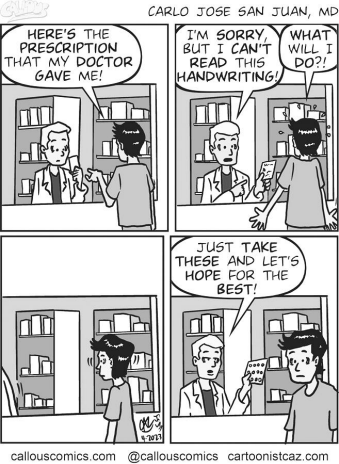
(Disponível em: https://www.callouscomics.com/index/22-june2023. Acesso em 02 set. 2023)
Taking into account the same stretch, “Here’s the prescription that my doctor gave me”, what does that refer to?
Questão 4 16197428
UFMS PASSE - 3 Etapa 2023-2025Leia o texto a seguir para responder à questão.
Tourism as an economic possibility for the sustainable development of the quilombola community of furnas dos baianos, Aquidauana, Mato Grosso do Sul
Tourism as a social phenomenon and economic activity can contribute to sustainable development in traditional communities, in addition to improving their access to public services. The territory occupied by these communities generally offers natural resources that, added to their traditional culture, can make up a unique tourist product..The objective of this research was to analyze tourism as a possibility for local development in the quilombola community of Furnas dos Baianos, in Aquidauana, Mato Grosso do Sul. Specifically, contextualize the tourist activity in the municipal dimension, present the perspective of the community on tourism and identify if there are and which are the enterprises that develop tourist activity in the researched area. The field research was carried out in two phases, with the application of forms in 2018, to collect data that evidenced available tourist resources; and conducting interviews in 2019, to record the community's perspective on tourism and the possibilities for developing the activity in its territory. Although important, only natural resources or traditional culture are not enough for tourism to develop sustainably. At the time of research, tourism did not represent a common interest of the group, in addition to stressing that they are not prepared to work with this activity.
Keywords: Regional development. Tourism in natural areas. Community-based tourism.
(Sustainability. Public policy. OPPLIGER, E. A.; OLIVEIRA, A. K. М. de. Tourism as an economic possibility for the sustainable development of the quilombola community of furnas dos baianos, Aquidauana, Mato Grosso do Sul. Revista Brasileira de Gestão e Desenvolvimento Regional, Taubaté, v. 18, n. 2, p. 84-97, maio/ago. 2022)
Leia a frase: "The field research was carried out in two phases, with the application of forms in 2018, to collect data that evidenced available tourist resources".
Que característica gramatical é destacada na frase?
Questão 2 16197397
UFMS PASSE - 3 Etapa 2023-2025Leia o texto a seguir para responder à questão.
Tourism as an economic possibility for the sustainable development of the quilombola community of furnas dos baianos, Aquidauana, Mato Grosso do Sul
Tourism as a social phenomenon and economic activity can contribute to sustainable development in traditional communities, in addition to improving their access to public services. The territory occupied by these communities generally offers natural resources that, added to their traditional culture, can make up a unique tourist product..The objective of this research was to analyze tourism as a possibility for local development in the quilombola community of Furnas dos Baianos, in Aquidauana, Mato Grosso do Sul. Specifically, contextualize the tourist activity in the municipal dimension, present the perspective of the community on tourism and identify if there are and which are the enterprises that develop tourist activity in the researched area. The field research was carried out in two phases, with the application of forms in 2018, to collect data that evidenced available tourist resources; and conducting interviews in 2019, to record the community's perspective on tourism and the possibilities for developing the activity in its territory. Although important, only natural resources or traditional culture are not enough for tourism to develop sustainably. At the time of research, tourism did not represent a common interest of the group, in addition to stressing that they are not prepared to work with this activity.
Keywords: Regional development. Tourism in natural areas. Community-based tourism.
(Sustainability. Public policy. OPPLIGER, E. A.; OLIVEIRA, A. K. М. de. Tourism as an economic possibility for the sustainable development of the quilombola community of furnas dos baianos, Aquidauana, Mato Grosso do Sul. Revista Brasileira de Gestão e Desenvolvimento Regional, Taubaté, v. 18, n. 2, p. 84-97, maio/ago. 2022)
Qual foi o principal objetivo da pesquisa realizada na comunidade quilombola de Furnas dos Baianos?
Questão 1 16197379
UFMS PASSE - 3 Etapa 2023-2025Leia o texto a seguir para responder à questão.
Tourism as an economic possibility for the sustainable development of the quilombola community of furnas dos baianos, Aquidauana, Mato Grosso do Sul
Tourism as a social phenomenon and economic activity can contribute to sustainable development in traditional communities, in addition to improving their access to public services. The territory occupied by these communities generally offers natural resources that, added to their traditional culture, can make up a unique tourist product..The objective of this research was to analyze tourism as a possibility for local development in the quilombola community of Furnas dos Baianos, in Aquidauana, Mato Grosso do Sul. Specifically, contextualize the tourist activity in the municipal dimension, present the perspective of the community on tourism and identify if there are and which are the enterprises that develop tourist activity in the researched area. The field research was carried out in two phases, with the application of forms in 2018, to collect data that evidenced available tourist resources; and conducting interviews in 2019, to record the community's perspective on tourism and the possibilities for developing the activity in its territory. Although important, only natural resources or traditional culture are not enough for tourism to develop sustainably. At the time of research, tourism did not represent a common interest of the group, in addition to stressing that they are not prepared to work with this activity.
Keywords: Regional development. Tourism in natural areas. Community-based tourism.
(Sustainability. Public policy. OPPLIGER, E. A.; OLIVEIRA, A. K. М. de. Tourism as an economic possibility for the sustainable development of the quilombola community of furnas dos baianos, Aquidauana, Mato Grosso do Sul. Revista Brasileira de Gestão e Desenvolvimento Regional, Taubaté, v. 18, n. 2, p. 84-97, maio/ago. 2022)
Qual foi a principal conclusão da pesquisa sobre turismo na comunidade quilombola de Furnas dos Baianos?
Questão 15 16103019
IDOMED Medicina 2023/2THE WORLD HEALTH ORGANIZATION (WHO) ISSUES FIRST GLOBAL REPORT ON ARTIFICIAL INTELLIGENCE (AI) IN HEALTH
Growing use of AI for health presents governments, providers, and communities with opportunities and challenges
28 June 2021
Artificial Intelligence (AI) holds great promise for improving the delivery of healthcare and medicine worldwide, but only if ethics and human rights are put at the heart of its design, deployment, and use, according to new WHO guidance published today.
“Like all new technology, artificial intelligence holds enormous potential for improving the health of millions of people around the world, but like all technology it can also be misused and cause harm,” said Dr Tedros Adhanom Ghebreyesus, WHO Director-General. “This important new report provides a valuable guide for countries on how to maximize the benefits of AI, while minimizing its risks and avoiding its pitfalls.”
WHO’s new report cautions against overestimating the benefits of AI for health, especially when this occurs at the expense of core investments and strategies required to achieve universal health coverage. It also points out that opportunities are linked to challenges and risks, including unethical collection and use of health data, biases encoded in algorithms, and risks of AI to patient safety, cybersecurity and the environment.
AI systems should therefore be carefully designed to reflect the diversity of socio-economic and health-care settings. They should be accompanied by training in digital skills, community engagement and awareness-raising, especially for millions of healthcare workers who will require digital literacy or retraining, if their roles and functions are automated, and who must contend with machines that could challenge the decision-making and autonomy of providers and patients.
Ultimately, guided by existing laws and human rights obligations, and new laws and policies that enshrine ethical principles, governments, providers, and designers must work together to address ethics and human rights concerns at every stage of an AI technology’s design, development, and deployment.
Adapted from: who.int. Accessed April 10 2023.
The function of the word “ultimately”, in the last paragraph is:
06