


![[Marketing] Questao Topo - deslogado](https://storage.estuda.com.br/banners/0_6b7ebee90b03af1c560c73bb8bcce34a_banner_deslogado_70_dias.png)
Questões de Inglês
19.971 Questões
Questão 13 12000132
Albert Einstein 2024Read the text to answer question.
Rescuers spotted debris from the tourist submarine Titan on the ocean floor near the wreck of the Titanic on June 22, 2023, indicating that the vessel suffered a catastrophic failure and the five people aboard were killed. Below, Purdue University professor Nina Mahmoudian talks about vehicles for deep ocean research.
Nina Mahmoudian: When we talk about water studies, we’re talking about vast areas. And covering vast areas requires tools that can work for extended periods of time, sometimes months. Having people aboard underwater vehicles, especially for such long periods, is expensive and dangerous.
One of the tools researchers use is remotely operated vehicles, or ROVs. Basically, there is a cable between the vehicle and operator that allows the operator to command and move the vehicle, and the vehicle can transmit data in real time. ROVs can reach deep ocean — up to a depth of 6,000 meters. It’s also better able to provide the mobility necessary for observing the sea bed and gathering data.
Autonomous underwater vehicles provide another opportunity for underwater exploration. They are usually not tied to a ship. They are typically programmed ahead of time to do a specific mission. And while they are underwater they usually don’t have constant communication. At some interval, they surface, relay the data that they have gathered, change the battery or recharge and receive renewed instructions before again submerging.
Crewed1 submersibles will be exciting for the public and those involved. However, they will be much more expensive compared with uncrewed explorations because of the required size of the platforms and the need for life-support systems. So, uncrewed vehicles provide better opportunities for exploration at less cost and risk in operating in inhospitable locations. Using remotely operated and autonomous underwater vehicles gives operators the opportunity to perform tasks that are unsafe for humans, like observing under ice and detecting underwater mines.
(https://theconversation.com, 23.06.2023. Adapted.)
1crewed: carrying or operated by a person or people on board.
In the third and fourth paragraphs, the descriptions of the remotely operated vehicle and the autonomous underwater vehicle tell us that they both
Questão 12 12000128
Albert Einstein 2024Read the text to answer question.
Rescuers spotted debris from the tourist submarine Titan on the ocean floor near the wreck of the Titanic on June 22, 2023, indicating that the vessel suffered a catastrophic failure and the five people aboard were killed. Below, Purdue University professor Nina Mahmoudian talks about vehicles for deep ocean research.
Nina Mahmoudian: When we talk about water studies, we’re talking about vast areas. And covering vast areas requires tools that can work for extended periods of time, sometimes months. Having people aboard underwater vehicles, especially for such long periods, is expensive and dangerous.
One of the tools researchers use is remotely operated vehicles, or ROVs. Basically, there is a cable between the vehicle and operator that allows the operator to command and move the vehicle, and the vehicle can transmit data in real time. ROVs can reach deep ocean — up to a depth of 6,000 meters. It’s also better able to provide the mobility necessary for observing the sea bed and gathering data.
Autonomous underwater vehicles provide another opportunity for underwater exploration. They are usually not tied to a ship. They are typically programmed ahead of time to do a specific mission. And while they are underwater they usually don’t have constant communication. At some interval, they surface, relay the data that they have gathered, change the battery or recharge and receive renewed instructions before again submerging.
Crewed1 submersibles will be exciting for the public and those involved. However, they will be much more expensive compared with uncrewed explorations because of the required size of the platforms and the need for life-support systems. So, uncrewed vehicles provide better opportunities for exploration at less cost and risk in operating in inhospitable locations. Using remotely operated and autonomous underwater vehicles gives operators the opportunity to perform tasks that are unsafe for humans, like observing under ice and detecting underwater mines.
(https://theconversation.com, 23.06.2023. Adapted.)
1crewed: carrying or operated by a person or people on board.
Professor Nina Mahmoudian, mainly,
Questão 11 12000089
Albert Einstein 2024Read the text to answer question.
Rescuers spotted debris from the tourist submarine Titan on the ocean floor near the wreck of the Titanic on June 22, 2023, indicating that the vessel suffered a catastrophic failure and the five people aboard were killed. Below, Purdue University professor Nina Mahmoudian talks about vehicles for deep ocean research.
Nina Mahmoudian: When we talk about water studies, we’re talking about vast areas. And covering vast areas requires tools that can work for extended periods of time, sometimes months. Having people aboard underwater vehicles, especially for such long periods, is expensive and dangerous.
One of the tools researchers use is remotely operated vehicles, or ROVs. Basically, there is a cable between the vehicle and operator that allows the operator to command and move the vehicle, and the vehicle can transmit data in real time. ROVs can reach deep ocean — up to a depth of 6,000 meters. It’s also better able to provide the mobility necessary for observing the sea bed and gathering data.
Autonomous underwater vehicles provide another opportunity for underwater exploration. They are usually not tied to a ship. They are typically programmed ahead of time to do a specific mission. And while they are underwater they usually don’t have constant communication. At some interval, they surface, relay the data that they have gathered, change the battery or recharge and receive renewed instructions before again submerging.
Crewed1 submersibles will be exciting for the public and those involved. However, they will be much more expensive compared with uncrewed explorations because of the required size of the platforms and the need for life-support systems. So, uncrewed vehicles provide better opportunities for exploration at less cost and risk in operating in inhospitable locations. Using remotely operated and autonomous underwater vehicles gives operators the opportunity to perform tasks that are unsafe for humans, like observing under ice and detecting underwater mines.
(https://theconversation.com, 23.06.2023. Adapted.)
1crewed: carrying or operated by a person or people on board.
The fact which motivated the publication of this article on the specific date of June 23, 2023 was the
Questão 5 11999940
Albert Einstein 2024Examine a tirinha publicada pelo perfil “Safely Endangered Comics” no Instagram em 07.07.2023.
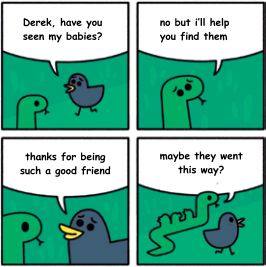
A tirinha permite caracterizar Derek como
Questão 47 11723110
UNIFENAS Tarde 2024Read the article and answer the questions.
Real-Life stories – why I chose medicine
We asked several medical students why they chose to study medicine and to give some advice to those considering it as a career choice.
Read their stories below
"A career in medicine has always been at the forefront of my mind, I may not have got there in the orthodox way by leaving school and heading straight to medical school, but finally I am there!
After school I went to university to study biology at both BSc and MSc level. I was not the kind of student at my school that was deemed academically good enough to study medicine. I enjoyed the degree but knew a career in biological research was not for me, and on completion of my thesis I started a job with a pharmaceutical company as a sales representative. I enjoyed my job, it was straightforward, social and well-paid, it was a role I was able to fill well, but it was not in any way what I saw myself doing for the rest of my working life. After much debate and advice, I had nothing to lose in making a massive effort to get into medical school. The only job I knew that I wanted to do was medicine. I secured a place on an Access to Medicine course, which got me back up to speed and into the swing of studying again, and from there I secured a place at medical school. Getting the acceptance letter was a very emotional and life-changing day. One I will never forget.
Studying medicine is a privilege, to me medicine is the ultimate career. What other career can you chose which provides constant mental stimulation, a continuous opportunity to learn and progress, flexible working and a decent salary. But most importantly, a career in medicine empowers you to help people, to be respected by others and to feel job satisfaction in a way that is impossible to feel in many other careers. The opportunities are endless, and the choice vast, however along with this comes huge responsibility to individual patients, the population as a whole and the team in which you are working. In addition, the NHS may receive a great deal of press about its status, but at a time where many people are being made redundant, doctors are still in the same demand. I had to put a great deal of thought into the viability of studying medicine at the age of 27, although jobs are not guaranteed they are still readily available." (Kate, Brighton)
"Why medicine? I'm a geek; I love science, and I love challenges. I also really enjoy working with and understanding people. I chose medicine because it offered me the opportunity to integrate these interests and apply them in a very practical profession. From examining patients to phlebotomy to suturing, it's not just about memorizing information, medicine is very much about applied skills. I'm now in my fourth year and I find it hugely rewarding to put together all the pieces of the puzzle- the history elicited with good communication skills, the knowledge of human biology and the findings from examination and investigations to suggest a diagnosis and be told it was the right one! Medicine is my second degree and the decision to stay a student for another 5 years when my friends were all in gainful employment wasn't an easy one. But it was the right one for me." (Catherine, Aberdeen)
Available at: https://www.healthcareers.nhs.uk/explore-roles/doctors/why-study-medicine/why-i-chose-medicine Accessed: September 7, 2023.
The word although in the phrase, “... although jobs are not guaranteed they are still readily available.” is a connecting word that indicates
Questão 45 11723097
UNIFENAS Tarde 2024Read the article and answer the questions.
Real-Life stories – why I chose medicine
We asked several medical students why they chose to study medicine and to give some advice to those considering it as a career choice.
Read their stories below
"A career in medicine has always been at the forefront of my mind, I may not have got there in the orthodox way by leaving school and heading straight to medical school, but finally I am there!
After school I went to university to study biology at both BSc and MSc level. I was not the kind of student at my school that was deemed academically good enough to study medicine. I enjoyed the degree but knew a career in biological research was not for me, and on completion of my thesis I started a job with a pharmaceutical company as a sales representative. I enjoyed my job, it was straightforward, social and well-paid, it was a role I was able to fill well, but it was not in any way what I saw myself doing for the rest of my working life. After much debate and advice, I had nothing to lose in making a massive effort to get into medical school. The only job I knew that I wanted to do was medicine. I secured a place on an Access to Medicine course, which got me back up to speed and into the swing of studying again, and from there I secured a place at medical school. Getting the acceptance letter was a very emotional and life-changing day. One I will never forget.
Studying medicine is a privilege, to me medicine is the ultimate career. What other career can you chose which provides constant mental stimulation, a continuous opportunity to learn and progress, flexible working and a decent salary. But most importantly, a career in medicine empowers you to help people, to be respected by others and to feel job satisfaction in a way that is impossible to feel in many other careers. The opportunities are endless, and the choice vast, however along with this comes huge responsibility to individual patients, the population as a whole and the team in which you are working. In addition, the NHS may receive a great deal of press about its status, but at a time where many people are being made redundant, doctors are still in the same demand. I had to put a great deal of thought into the viability of studying medicine at the age of 27, although jobs are not guaranteed they are still readily available." (Kate, Brighton)
"Why medicine? I'm a geek; I love science, and I love challenges. I also really enjoy working with and understanding people. I chose medicine because it offered me the opportunity to integrate these interests and apply them in a very practical profession. From examining patients to phlebotomy to suturing, it's not just about memorizing information, medicine is very much about applied skills. I'm now in my fourth year and I find it hugely rewarding to put together all the pieces of the puzzle- the history elicited with good communication skills, the knowledge of human biology and the findings from examination and investigations to suggest a diagnosis and be told it was the right one! Medicine is my second degree and the decision to stay a student for another 5 years when my friends were all in gainful employment wasn't an easy one. But it was the right one for me." (Catherine, Aberdeen)
Available at: https://www.healthcareers.nhs.uk/explore-roles/doctors/why-study-medicine/why-i-chose-medicine Accessed: September 7, 2023.
According to Catherine, one of the hard things about studying medicine is that the people she knows are
06