


![[Marketing] Questao Topo - deslogado](https://storage.estuda.com.br/banners/0_6b7ebee90b03af1c560c73bb8bcce34a_banner_deslogado_70_dias.png)
Questões de Inglês
19.971 Questões
Questão 29 14516399
UPE SSA 3ª Fase - 1º Dia 2024Why travel should be considered an essential human activity
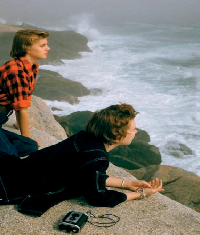
Photography by Volkmar Wentzel (1961). From the National Geographic image collection.
[1] It is not natural for us to be this sedentary. Travel is in our genes. For most of the time our species has existed, “we’ve lived as nomadic hunter-gatherers moving about in small bands of 150 or fewer people,” writes Christopher Ryan in Civilized to Death. This nomadic life was no accident. It was useful. “Moving to a neighboring band is always an option to avoid brewing conflict or just for a change in social scenery,” says Ryan. Robert Louis Stevenson put it more succinctly: “The great affair is to move.”
[2] I think travel entails wishful thinking. It demands a leap of faith, and of imagination, to board a plane for some faraway land, hoping, wishing, for a taste of the ineffable. Travel is one of the few activities we engage in not knowing the outcome and reveling in that uncertainty. Nothing is more forgettable than the trip that goes exactly as planned.
[3] That’s one reason why I’m bullish on travel’s future. In fact, I’d argue travel is an essential industry, an essential activity. It’s not essential the way hospitals and grocery stores are essential. Travel is essential the way books and hugs are essential. Food for the soul. Right now, we’re between courses, savoring where we’ve been, anticipating where we’ll go.
[4] It’s not the place that is special but what we bring to it and, crucially, how we interact with it. Travel is not about the destination, or the journey. It is about stumbling across “a new way of looking at things,” as writer Henry Miller observed. We need not travel far to gain a fresh perspective.
[5] In our rush to return to the world, we should be mindful of the impact of mass tourism on the planet. Now is the time to embrace the fundamental values of sustainable tourism and let them guide your future journeys. Go off the beaten path. Linger longer in destinations. Travel in the off-season. Connect with communities and spend your money in ways that support locals. Consider purchasing carbon offsets.
[6] “One of the great benefits of travel is meeting new people and coming into contact with different points of view,” says Pauline Frommer, travel expert and radio host. So go ahead and plan that trip. It’s good for you, scientists say. Plotting a trip is nearly as enjoyable as actually taking one.
[7] I’ve witnessed first-hand the frisson of anticipatory travel. My wife, not usually a fan of travel photography, now spends hours on Instagram, gazing longingly at photos of Alpine lodges and Balinese rice fields. “What’s going on?” I asked one day. “They’re just absolutely captivating,” she replied. “They make me remember that there is a big, beautiful world out there.”
Disponível em: https://www.nationalgeographic.com/travel/article/why-travel-should-be-considered-an-essential-human-activity. Acesso em: 19/05/2023. (Texto adaptado).
No 5º parágrafo, o autor aborda, de forma transversal, uma questão atual e relevante.
Entre as proposições a seguir, assinale a que apresenta a resposta CORRETA.
Questão 28 14516155
UPE SSA 3ª Fase - 1º Dia 2024Why travel should be considered an essential human activity
Photography by Volkmar Wentzel (1961). From the National Geographic image collection.
[1] It is not natural for us to be this sedentary. Travel is in our genes. For most of the time our species has existed, “we’ve lived as nomadic hunter-gatherers moving about in small bands of 150 or fewer people,” writes Christopher Ryan in Civilized to Death. This nomadic life was no accident. It was useful. “Moving to a neighboring band is always an option to avoid brewing conflict or just for a change in social scenery,” says Ryan. Robert Louis Stevenson put it more succinctly: “The great affair is to move.”
[2] I think travel entails wishful thinking. It demands a leap of faith, and of imagination, to board a plane for some faraway land, hoping, wishing, for a taste of the ineffable. Travel is one of the few activities we engage in not knowing the outcome and reveling in that uncertainty. Nothing is more forgettable than the trip that goes exactly as planned.
[3] That’s one reason why I’m bullish on travel’s future. In fact, I’d argue travel is an essential industry, an essential activity. It’s not essential the way hospitals and grocery stores are essential. Travel is essential the way books and hugs are essential. Food for the soul. Right now, we’re between courses, savoring where we’ve been, anticipating where we’ll go.
[4] It’s not the place that is special but what we bring to it and, crucially, how we interact with it. Travel is not about the destination, or the journey. It is about stumbling across “a new way of looking at things,” as writer Henry Miller observed. We need not travel far to gain a fresh perspective.
[5] In our rush to return to the world, we should be mindful of the impact of mass tourism on the planet. Now is the time to embrace the fundamental values of sustainable tourism and let them guide your future journeys. Go off the beaten path. Linger longer in destinations. Travel in the off-season. Connect with communities and spend your money in ways that support locals. Consider purchasing carbon offsets.
[6] “One of the great benefits of travel is meeting new people and coming into contact with different points of view,” says Pauline Frommer, travel expert and radio host. So go ahead and plan that trip. It’s good for you, scientists say. Plotting a trip is nearly as enjoyable as actually taking one.
[7] I’ve witnessed first-hand the frisson of anticipatory travel. My wife, not usually a fan of travel photography, now spends hours on Instagram, gazing longingly at photos of Alpine lodges and Balinese rice fields. “What’s going on?” I asked one day. “They’re just absolutely captivating,” she replied. “They make me remember that there is a big, beautiful world out there.”
Disponível em: https://www.nationalgeographic.com/travel/article/why-travel-should-be-considered-an-essential-human-activity. Acesso em: 19/05/2023. (Texto adaptado).
Considerando o contexto e a gramática da língua inglesa, assinale a alternativa que apresenta a análise linguística CORRETA.
Questão 23 14507410
UPE SSA 2ª Fase - 1º Dia 2024Driving an electric car in New Zealand
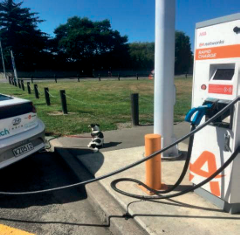
I'm just back from a trip to Timaru in the shared electric car. It turns out that Timaru is about as far as you can get from Lyttelton on a single charge. I hadn't realized that even having the air blower on does reduce the range (I knew not to use the AC), so I drove into the campground with only 10% battery. I'd also forgotten that campgrounds require you to have those weird blue plug things but luckily the owner lent me one for free. He also let me charge for free which was very generous. I left the car parked up for most of the weekend, as we were able to walk to a dog friendly park and a very dog friendly beach (where we launched the paddleboard).
On the way back, Molly and I stopped in Rakaia for a fast charger and a coffee. It was so efficient I charged it up more than I expected to. When I got home, I made the most of the extra charge by heading over the hill for a surf. A nice way to end a holiday weekend.
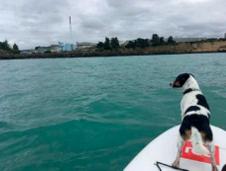
Disponível em: https://www.alexhallatt.com/blog/arctic-circle-cartoon-charging an-electric-car-is-easy Acesso em: maio de 2023. Adaptado.
O Texto consiste num pequeno relato de viagem. Considerando as informações nele apresentadas, é CORRETO afirmar que
Questão 22 14507403
UPE SSA 2ª Fase - 1º Dia 2024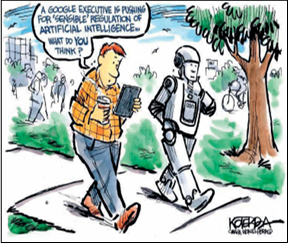
By Jeff Koterba. Disponível em: https://www.cagle.com/tag/artificial-intelligence/page/2/ Acesso: maio, 2023.
No cartum, um humano caminha ao lado de uma forma de Inteligência Artificial (IA), interagindo com ela. Pode-se afirmar que o sentido humorístico do texto é produzido pelo/a
Questão 21 14507397
UPE SSA 2ª Fase - 1º Dia 2024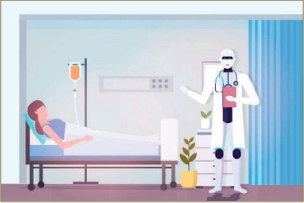
Artificial intelligence in intensive care units
Image: LinkedIn bank.
1 In the future, artificial intelligence will play an important role in medicine. In diagnostics, successful tests have already been performed: for example, the computer can learn to categorize images with great accuracy according to whether they show pathological changes or not. However, it is more difficult to train an artificial intelligence to examine the time-varying conditions of patients and to calculate treatment suggestions -- this is precisely what has now been achieved at TU Wien in cooperation with the Medical University of Vienna.
2 With the help of extensive data from intensive care units of various hospitals, an artificial intelligence was developed that provides suggestions for the treatment of people who require intensive care due to sepsis. Analyses show that artificial intelligence already surpasses the quality of human decisions. However, it is now important also to discuss the legal aspects of such methods.
3 "In an intensive care unit, a lot of different data is collected around the clock. The patients are constantly monitored medically. We wanted to investigate whether these data could be used even better than before," says Prof. Clemens Heitzinger from the Institute for Analysis and Scientific Computing at TU Wien (Vienna).
4 Medical staff make their decisions on the basis of well-founded rules. Most of the time, they know very well which parameters they have to take into account in order to provide the best care. However, the computer can easily take many more parameters than a human into account -- and in some cases this can lead to even better decisions. [...]
5 Analysis shows that AI capabilities are already outperforming humans: "Cure rates are now higher with an AI strategy than with purely human decisions. In one of our studies, the cure rate in terms of 90-day mortality was increased by about 3% to about 88%," says Prof. Heitzinger.
6 Of course, this does not mean that one should leave medical decisions in an intensive care unit to the computer alone. But the artificial intelligence may run along as an additional device at the bedside -- and the medical staff can consult it and compare their own assessment with the artificial intelligence's suggestions.
Disponível em: https://www.sciencedaily.com/releases/2023/05/230511164553.htm. Acesso em: maio/2023. Texto adaptado.
Observe os trechos a seguir.
“Medical staff make their decisions on the basis of well-founded rules. Most of the time, they know very well which parameters they have to take into account in order to provide the best care.”(4ºparágrafo)
“Analysis shows that AI capabilities are already outperforming humans: Cure rates are now higher with an AI strategy than with purely human decisions.” (5º parágrafo)
Considerando o contexto e a gramática da língua inglesa, é CORRETO afirmar que, em ambos os trechos,
Questão 20 14507377
UPE SSA 2ª Fase - 1º Dia 2024
Artificial intelligence in intensive care units
Image: LinkedIn bank.
1 In the future, artificial intelligence will play an important role in medicine. In diagnostics, successful tests have already been performed: for example, the computer can learn to categorize images with great accuracy according to whether they show pathological changes or not. However, it is more difficult to train an artificial intelligence to examine the time-varying conditions of patients and to calculate treatment suggestions -- this is precisely what has now been achieved at TU Wien in cooperation with the Medical University of Vienna.
2 With the help of extensive data from intensive care units of various hospitals, an artificial intelligence was developed that provides suggestions for the treatment of people who require intensive care due to sepsis. Analyses show that artificial intelligence already surpasses the quality of human decisions. However, it is now important also to discuss the legal aspects of such methods.
3 "In an intensive care unit, a lot of different data is collected around the clock. The patients are constantly monitored medically. We wanted to investigate whether these data could be used even better than before," says Prof. Clemens Heitzinger from the Institute for Analysis and Scientific Computing at TU Wien (Vienna).
4 Medical staff make their decisions on the basis of well-founded rules. Most of the time, they know very well which parameters they have to take into account in order to provide the best care. However, the computer can easily take many more parameters than a human into account -- and in some cases this can lead to even better decisions. [...]
5 Analysis shows that AI capabilities are already outperforming humans: "Cure rates are now higher with an AI strategy than with purely human decisions. In one of our studies, the cure rate in terms of 90-day mortality was increased by about 3% to about 88%," says Prof. Heitzinger.
6 Of course, this does not mean that one should leave medical decisions in an intensive care unit to the computer alone. But the artificial intelligence may run along as an additional device at the bedside -- and the medical staff can consult it and compare their own assessment with the artificial intelligence's suggestions.
Disponível em: https://www.sciencedaily.com/releases/2023/05/230511164553.htm. Acesso em: maio/2023. Texto adaptado.
Em termos da organização textual, percebe-se que, paralelamente às informações sobre a Inteligência Artificial (IA), alguns parágrafos apresentam argumentos marcados por conectores (linking words) de oposição. Essa argumentação se encontra nos
06