


![[Marketing] Questao Topo - deslogado](https://storage.estuda.com.br/banners/0_6b7ebee90b03af1c560c73bb8bcce34a_banner_deslogado_70_dias.png)
Questões de Inglês
19.971 Questões
Questão 13 14589082
FATEC 2024/2Leia o texto para responder à questão.
Latin America in 2024
Despite mediocre growth, political risk is declining and cautious optimism is increasingly warranted.
SÃO PAULO — Despite a challenging macroeconomic and geopolitical scenario, 2023 was not a bad year for Latin America. Throughout the past twelve months, a cautiously optimistic outlook among analysts has become increasingly common. Economic growth in 2023 is expected to end up at 2.2 % — somewhat better than the 1.7 % initially projected, but still below the global average of 3.2 %. Most analysts expect growth to decline slightly to 1.9 % this year, too little to decisively overcome the deep-seated public discontent that has been so prevalent across Latin America in recent years.
https://tinyurl.com/2zpnfdct Acesso em: 16.01.2024. Adaptado.
A partir da leitura do texto, infere-se que, na América Latina,
Questão 8 14570957
EBMSP Medicina 2024/2Research by the Institute for Economics & Peace (IEP) provides a comprehensive analysis of the factors that build, predict, and sustain peace. IEP’s research highlights the transformative power of Positive Peace, drawing parallels with medical science’s shift from pathology to the study of health. Just as understanding what keeps us healthy has revolutionized medicine, focusing on the conditions that create and sustain peace can transform societies. Sport, with its emphasis on fair play, teamwork, and respect, encapsulates these conditions, serving as a microcosm of a peaceful society.
Countries with higher levels of Positive Peace experience more rapid recoveries from crises, such as the Covid-19 pandemic. Sport has played a pivotal role in these recoveries, providing a sense of normalcy and community in times of instability. The resilience of high peace societies is mirrored in the resilience of athletes and sports teams, who often become symbols of hope and unity during recovery periods.
The research also includes a deep dive into systems thinking, which is essential for understanding the multifaceted nature of societies and their development. Sport, as a system, reflects this complexity, with its interconnectedness and ability to influence various aspects of society, from health and education to diplomacy and social cohesion.
Positive Peace – defined as the attitudes, institutions and structures that create and sustain peaceful societies – can offer us a unique perspective on the role of sport in helping to create societal resilience, and long-term sustainable peace. As the world grapples with global challenges like climate change, social inequality, instability and conflict, Positive Peace and its systemic approach serves as a reminder of the importance of holistic approaches to problem-solving. Sport, with its capacity to inspire, motivate, and unite, is a vital component of this holistic approach, offering a blueprint for peace that extends far beyond the playing field.
RESEARCH... Disponível em: www.visionofhumanity.org/ Acesso em: maio2024. Adaptado.
According to the research mentioned in the text, it’s correct to say:
I) It carries out a thorough analysis of different kinds of sports practiced around the world today.
II) It recognizes that sport has shown to be unable to break down such barriers as racism and socioeconomic status.
III) As sport stresses the importance of teamwork and fair play, it is seen as a major tool to peace building.
IV) It points out that sport has played a relevant part in times of crisis, encouraging peaceful procedures.
The correct statements are only
Questão 9 14570711
EBMSP Medicina 2024/1The Zeigarnik effect is a theory attributed to Lithuanian psychologist Bluma Zeigarnik describing the tendency of the human memory to remember interrupted or incomplete tasks more easily than completed ones. For example, you might remember more about things you’re currently working on or are not quite f inished with yet. If you become interrupted while working on something, you may remember more about that task, too. However, you could also be more likely to forget the details of tasks completed in full, uninterrupted. This is because the human brain has a tendency to “dump” or erase information that may no longer be needed, removing it from your memory.
The best way to understand the Zeigarnik effect is to look at some real-life examples. Picture yourself at home watching your favorite TV show. At the end of the episode, it ends with a cliff-hanger. You might be eager to learn more because the story is unfinished. That’s the Zeigarnik effect. Another example of the Zeigarnik effect is typically found in education. It’s common for students to take exams in school that require studying and cramming before the exam. But once the exam is over, they might experience difficulty recalling the information they learned. This lapse in memory is because the student’s brain might tell them they no longer have use for the information learned for the test and remove it from memory.
The Zeigarnik effect theory may point to a positive impact on mental health. First, the subconscious mind will urge your conscious mind to make a detailed plan when presented with a task. As soon as the plan comes to fruition, the subconscious no longer needs to remind the conscious mind to work toward the goal. The result is a more relaxed mind. When the Zeigarnik effect is active in the brain, you may constantly be setting goals for yourself. So, you might be focused on making plans to accomplish those goals. You might be so focused on your goals, you don’t stop planning and following those plans until the task is complete.
The downside of the Zeigarnik effect may be that when active, someone might never stop setting goals or tasks. Your mind may become “stuck,” always preoccupied with looking for the next accomplishment to tackle.
THE ZEIGARNICK. Disponível em: psychcentral.com>health>zeigarnik-effect# Acesso em: out. 2023. Adaptado.
The word or expression underlined in the text has not been correctly defined in
Questão 33 14516505
UPE SSA 3ª Fase - 1º Dia 2024The circular economy
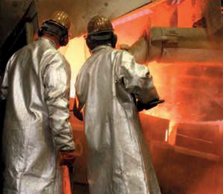
Workers at Umicore in Brussels separate out precious metals from electronic waste. Credit: Umicore
When my battered 1969 Toyota car approached the age of 30, I decided that her body deserved to be remanufactured. After 2 months and 100 hours of work, she returned home in her original beauty. “I am so glad you finally bought a new car,” my neighbour remarked. Quality is still associated with newness not with caring; long-term use as undesirable, not resourceful.
Cycles, such as of water and nutrients, abound in nature — discards become resources for others. Yet humans continue to 'make, use, dispose'. One-third of plastic waste globally is not collected or managed. [...]
There is an alternative. A 'circular economy' would turn goods that are at the end of their service life into resources for others, closing loops in industrial ecosystems and minimizing waste. It would change economic logic because it replaces production with sufficiency: reuse what you can, recycle what cannot be reused, repair what is broken, remanufacture what cannot be repaired. A study of seven European nations found that a shift to a circular economy would reduce each nation's greenhouse-gas emissions by up to 70% and grow its workforce by about 4% — the ultimate low-carbon economy.
Circular-economy business models fall in two groups: those that foster reuse and extend service life through repair, remanufacture, upgrades and retrofits; and those that turn old goods into as-new resources by recycling the materials. People — of all ages and skills — are central to the model. [...]
Yet a lack of familiarity and fear of the unknown mean that the circular-economy idea has been slow to gain traction. As a holistic concept, it collides with the silo structures of academia, companies and administrations. For economists who work with gross domestic product (GDP), creating wealth by making things last is the opposite of what they learned in school. GDP measures a financial flow over a period of time; circular economy preserves physical stocks. But concerns over resource security, ethics and safety as well as greenhouse-gas reductions are shifting our approach to seeing materials as assets to be preserved, rather than continually consumed.
By Walter R. Stahel
Disponível em: https://www.nature.com/articles/531435a Acesso: 16 abr. 2023. (Texto adaptado).
Analise o trecho a seguir.
Cycles, such as of water and nutrients, abound in nature — discards become resources for others.
Yet humans continue to 'make, use, dispose'. One-third of plastic waste globally is not collected or managed. (2º parágrafo)
Considerando o contexto e a gramática da língua inglesa, é CORRETO afirmar que os termos sublinhados são, respectivamente,
Questão 32 14516497
UPE SSA 3ª Fase - 1º Dia 2024The circular economy
Workers at Umicore in Brussels separate out precious metals from electronic waste. Credit: Umicore
When my battered 1969 Toyota car approached the age of 30, I decided that her body deserved to be remanufactured. After 2 months and 100 hours of work, she returned home in her original beauty. “I am so glad you finally bought a new car,” my neighbour remarked. Quality is still associated with newness not with caring; long-term use as undesirable, not resourceful.
Cycles, such as of water and nutrients, abound in nature — discards become resources for others. Yet humans continue to 'make, use, dispose'. One-third of plastic waste globally is not collected or managed. [...]
There is an alternative. A 'circular economy' would turn goods that are at the end of their service life into resources for others, closing loops in industrial ecosystems and minimizing waste. It would change economic logic because it replaces production with sufficiency: reuse what you can, recycle what cannot be reused, repair what is broken, remanufacture what cannot be repaired. A study of seven European nations found that a shift to a circular economy would reduce each nation's greenhouse-gas emissions by up to 70% and grow its workforce by about 4% — the ultimate low-carbon economy.
Circular-economy business models fall in two groups: those that foster reuse and extend service life through repair, remanufacture, upgrades and retrofits; and those that turn old goods into as-new resources by recycling the materials. People — of all ages and skills — are central to the model. [...]
Yet a lack of familiarity and fear of the unknown mean that the circular-economy idea has been slow to gain traction. As a holistic concept, it collides with the silo structures of academia, companies and administrations. For economists who work with gross domestic product (GDP), creating wealth by making things last is the opposite of what they learned in school. GDP measures a financial flow over a period of time; circular economy preserves physical stocks. But concerns over resource security, ethics and safety as well as greenhouse-gas reductions are shifting our approach to seeing materials as assets to be preserved, rather than continually consumed.
By Walter R. Stahel
Disponível em: https://www.nature.com/articles/531435a Acesso: 16 abr. 2023. (Texto adaptado).
Observe a passagem que se encontra no início do texto:
“When my battered 1969 Toyota car approached the age of 30, I decided that her body deserved to be remanufactured. After 2 months and 100 hours of work, she returned home in her original beauty. “I am so glad you finally bought a new car,” my neighbour remarked.”
Sobre esse trecho, é CORRETO afirmar que o autor
Questão 31 14516460
UPE SSA 3ª Fase - 1º Dia 2024The circular economy
Workers at Umicore in Brussels separate out precious metals from electronic waste. Credit: Umicore
When my battered 1969 Toyota car approached the age of 30, I decided that her body deserved to be remanufactured. After 2 months and 100 hours of work, she returned home in her original beauty. “I am so glad you finally bought a new car,” my neighbour remarked. Quality is still associated with newness not with caring; long-term use as undesirable, not resourceful.
Cycles, such as of water and nutrients, abound in nature — discards become resources for others. Yet humans continue to 'make, use, dispose'. One-third of plastic waste globally is not collected or managed. [...]
There is an alternative. A 'circular economy' would turn goods that are at the end of their service life into resources for others, closing loops in industrial ecosystems and minimizing waste. It would change economic logic because it replaces production with sufficiency: reuse what you can, recycle what cannot be reused, repair what is broken, remanufacture what cannot be repaired. A study of seven European nations found that a shift to a circular economy would reduce each nation's greenhouse-gas emissions by up to 70% and grow its workforce by about 4% — the ultimate low-carbon economy.
Circular-economy business models fall in two groups: those that foster reuse and extend service life through repair, remanufacture, upgrades and retrofits; and those that turn old goods into as-new resources by recycling the materials. People — of all ages and skills — are central to the model. [...]
Yet a lack of familiarity and fear of the unknown mean that the circular-economy idea has been slow to gain traction. As a holistic concept, it collides with the silo structures of academia, companies and administrations. For economists who work with gross domestic product (GDP), creating wealth by making things last is the opposite of what they learned in school. GDP measures a financial flow over a period of time; circular economy preserves physical stocks. But concerns over resource security, ethics and safety as well as greenhouse-gas reductions are shifting our approach to seeing materials as assets to be preserved, rather than continually consumed.
By Walter R. Stahel
Disponível em: https://www.nature.com/articles/531435a Acesso: 16 abr. 2023. (Texto adaptado).
Com base nas informações apresentadas sobre a economia circular, é CORRETO afirmar que essa atividade
06