


![[Marketing] Questao Topo - deslogado](https://storage.estuda.com.br/banners/0_6b7ebee90b03af1c560c73bb8bcce34a_banner_deslogado_70_dias.png)
Questões de Inglês
19.971 Questões
Questão 14 14712794
Mackenzie 2 Dia 2024Read Text and answer question
The curlous and Iesser-known facts about Queen Elizabeth II
From washing her own dishes to sending a message to the moon... Queen Elizabeth II hadpassed away at the age of96. The announcement has saddened the nation, with droves of royal fans and celebrities taking to social media to share their condolences.
As the world mourns the loss of the longest-reigning monarch in British history, many of us are fondly looking back at her life. From her loving relationship with Prince Philip (who passed away last year at the age of 99) to her most memorable fashion moments and iconic feminist moves, there’s so much to remember about Her Majesty — and there’s still more to learn, too.
Despite being perhaps one of the most famous people on the planet, surprisingly there are still plenty of lesser-known and unexpected facts about Queen Elizabeth II, from world records to her role in WWII...
Unknown facts about Queen Elizabeth II
The Queen didn’t need a driving license to drive
Unlike the rest of us, who have to take a test (or five) in order to legally drive a car, Her Majesty followed no such rule. ln fact, the monarch is the only person in the UK who did not need to have a driver’s license in order to drive on public roads. Not only that, but The Queen did not hold a passport either — that’s because both documents were issued in her name, meaning she was not required to have either: a privilege held by the sovereign alone.
(...)
The Queen had her own private ATM
Whie it’s rare that the Queen would need access to cash, she did have a private ATM in the basement of Buckingham Palace. Courtesy of Coutts bank, the ATM is strictly for members of the Royal Family only. Fancy one for yourself? Tatler reports that banking at Coutts is free of charge, as long as you have around £1.3 million to pop into your account. That sadly rules us out, then.
The Queen volunteered as a truck driver during World War II
Before taking the throne overfrom her father, the then-Princess El,zabetlj’t volunteered as a truck driver and mechanic during World War II — making the first female member of the Royal FamiIy to serve in the military.
The Queen bought her wedding dress with ration coupons
Speaking of V’/orld War II, due to post-war austerity measures in the UK, the then-Princess Elizabeth hadto use clothing ration coupons to purchase the material for her wedding dress. According to British Heritage,, i1f~ government allowed her 200 extra ration coupons to make the purchashe.
The Queen washed her own dishes
Given that she was more often associated with the Crown Jewels thàh~ :; a pair of Marigolds, you might be surprised to f,nd out that on m~~f occasions HerMajesty actually washed herown dishes Speak,ng toTl~tz Telegraph, royal expert and author Harry Mount recalled that a fo~?mÇer royal courtier once told him: “1 was once at a shooting lunch. At of lunch, I heard someone say, ‘I'll do the washing-up’. I turned and there was the Queen in her yellow washing-up gloves”
The Queen .sent out over 300,000 cards to her royal fans
As part of her role as head of the British Monarchy, Queen ElizabJth1ll sent over 300,000 congratulatory cards to people celebrating their 100th birthdays, and over 900,000 messages to couples marking their diamond (6Oth) wedding anniversary.
(...)
The Queen bathed every morning in seven inches of water
Yep, sounds very specific, we know. But, turns out, Her Majesty was a very specific woman In fact, every morning whilst she drank her cup on breakfast tea, the Queen’s maid would run her a bath. “The bath [had] to be exactly the right temperature: tested with a wooden-cased thermometer and no more than seven inches of water,” revealed Angela Kelly, the Queen’s former personal assistant.
(...)
The Queen sent a message to the Moon
To congratulate the Apollo 11 astronauts on the first moon lading (21 July 1969), a pre-recorded message from HerMajesty was deposited. the Moon in a metal container.
(...)
(Adapted from Cosmopolitan. Abril 22, 2022. www.cosmopolitan.com: Access Abril, 2023)
According to the text, choose the alternative that is INCORRECT:
Questão 12 14712785
Mackenzie 2 Dia 2024Read Text and answer the question
The Queen’s Gambit follows the life ofan orphan chess prodigy, Elizabeth Harmon, during herquest to becorne an elite chess player while struggling with emotional problerns, drugs and alcohol dependency. The title ofthe series refers to a chess opening of the sarne name. The story is set in the rnid-1950s and 1960s.
In the 1950s in Lexington, Kentucky, an eight-year-old Beth, having lost her motherin a carcrash, is taken to an orphanage where she is taught chess by the building’s custodian, Mr. Shaibel. As was cornmon at the time, the orphanage dispenses daily tranquilizer pills to the giris to “balance their disposition’, whichturnsinto an addiction forBeth. She quicklybecornes a strong chess player due to her visualization skills. A few years later, Beth is adopted by childless suburban couple Alrna andAllston Wheatley. As she adjusts to her new home, Beth enters a chess tournament and wins, despite having no prior experience in competitive chess. Alma is initially resistant to Beth’s interest in chess, but after Beth wins her first tournament, Alrna is fully supportive of her adoptive daughter’s sojourns to enter various chess competitions. She develops friendships with several people, including former Kentucky State Charnpion Harry Beltik, United States National Champion Benny Watts, andjournalist and fellow player D.L. Townes.
As Beth rises to the top ofthe chess world and reaps the financial benefits of her success, her drug and alcohol dependency worsens. With help from her oldest friend Jolene, whorn she grew up with in the orphanage, she prepares for her biggest challenge yet, a major international chess tournarnent against the world’s best players in Moscow.
Source: https://en.wikipedia.org/wiki/The Queen%27s Gambit (miniseries) On April 23/23.
In the second paragraph of the text, we are informed that the giris in Beth’s orphanage were given daily tranquiiizer pills to “balance their disposition”.
Consequenty:
Questão 14 14709738
Mackenzie 1 Dia 2024Read the text below and answer question.
Dinogorgon SkuII
A dinogorgon skull protrudes from a rock with the South African scrubland in the background
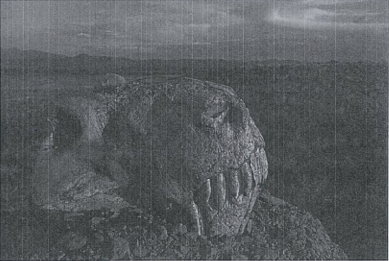
PHOTOGRAPH BY .JONATHAN BLAIR A dinogorgon skull protrudes from a rock with the South African scrubland in the background.
When a species disappears, bioiogists say that the species has become extinct. By making room for new species, extination helps drive the evolution oflife. Overlong periods oftime, the numberofspecies becoming extinct can remam fairly constant, meaning that an average number of species 90 extinct each year, century, ormillennium. However, during the history of ilfe on Earth, there have been periods ofmass extmnction, when large percentages of the planet’s species became extinct in a reiativeiy shart amount oftime. These extinctions have had wideiy different causes.
About 541 milhlon years ego, a great expansion occurred in the diversity of multiceilular organisms. Paleobiologists, scientists who study the fosslls of plants and animais to Icem how hfe evolved, cai! this event the Cambrian Explosion. Since the Cambrian Explosion, there have been five mass extinctions, each of which is named for the geoiogicai period in which it occurred, ar for the periods that immediately preceded and followed II.
The first mass extinction is called the Ordovician-Silurian Extinotion. It occurred about 440 milhon years ago, at the end of the period that pa!eontoiogists and geoiogists cali the Ordovician, and followed by the start of the Silurian period. in this extinetion event, many smaii ordanisms of the sea became extinct. The next mass extinction is cailed Devonian extinction, occurring 365 mil!ion years ago during the Devonian period. This extinction also saw the end of numerous sea organisms.
The iargest extinction took piace around 250 mililon years ego. Known as the Permian-Triassic extinction, or the Great Dying, this event saw the end of more than 90 percent of Earth’s species. Aithough life an Earth waà nearly wiped out, the Great Dying mede room fornew organisms, inciuding the first dinosaurs. About 210 mililon years ego, between the Triassic and .Jurassic periods, came another mass extinction. By eiiminating many large animais, this extinction event cieared the way for dinosaurs to fiourish. Finaliy, about 65.5 miiiion years ago, at the end of the Cretaceous period came the fifth mass extinction. This is the famous extinction event that brought the age of the dinosaurs to an end.
In each ofthese cases, the mass extinction created niches or openings in the Earth’s ecosystems. Those niches ailowed for newgroups oforganisms to thrive and diversify, which produced a range of new species. Iri the case of the Cretaceous extinction, the demise of the dinosaurs allowed mammals to thrive and grow larger.
Scientists refer to the current time as the Anthropocene period, meaning the period ofhumanity. They warn that, because ofhuman activities such as poilution, overfishing, and the cutting down of forests, the Earth might be on the verge of—oraiready in—a sixth mass extinction. if that is true, what new ilfe wouid rise up to fiJi the niche that we currently occupy?
(Taken from https://education.nationalgeographic.org/lresource/extinction/ Access: Septerhber/2023)
Choose the alternative that is grammatically correct:
Questão 13 14709733
Mackenzie 1 Dia 2024Read the text below and answer question.
Dinogorgon SkuII
A dinogorgon skull protrudes from a rock with the South African scrubland in the background.
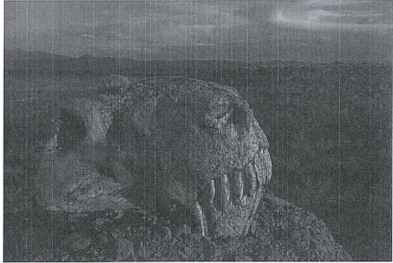
PHOTOGRAPH BY .JONATHAN BLAIR A dinogorgon skull protrudes from a rock with the South African scrubland in the background.
When a species disappears, bioiogists say that the species has become extinct. By making room for new species, extination helps drive the evolution oflife. Overlong periods oftime, the numberofspecies becoming extinct can remam fairly constant, meaning that an average number of species 90 extinct each year, century, ormillennium. However, during the history of ilfe on Earth, there have been periods ofmass extmnction, when large percentages of the planet’s species became extinct in a reiativeiy shart amount oftime. These extinctions have had wideiy different causes.
About 541 milhlon years ego, a great expansion occurred in the diversity of multiceilular organisms. Paleobiologists, scientists who study the fosslls of plants and animais to Icem how hfe evolved, cai! this event the Cambrian Explosion. Since the Cambrian Explosion, there have been five mass extinctions, each of which is named for the geoiogicai period in which it occurred, ar for the periods that immediately preceded and followed II.
The first mass extinction is called the Ordovician-Silurian Extinotion. It occurred about 440 milhon years ago, at the end of the period that a!eontoiogists and geoiogists cali the Ordovician, and followed by the start of the Silurian period. in this extinetion event, many smaii ordanisms of the sea became extinct. The next mass extinction is cailed Devonian extinction, occurring 365 mil!ion years ago during the Devonian period. This extinction also saw the end of numerous sea organisms.
the Permian-Triassic extinction, or the Great Dying, this event saw the end of more than 90 percent of Earth’s species. Aithough life an Earth waà nearly wiped out, the Great Dying mede room fornew organisms, inciuding the first dinosaurs. About 210 mililon years ego, between the Triassic and .Jurassic periods, came another mass extinction. By eiiminating many large animais, this extinction event cieared the way for dinosaurs to fiourish. Finaliy, about 65.5 miiiion years ago, at the end of the Cretaceous period came the fifth mass extinction. This is the famous extinction event that brought the age of the dinosaurs to an end.
In each ofthese cases, the mass extinction created niches or openings in the Earth’s ecosystems. Those niches ailowed for newgroups oforganisms to thrive and diversify, which produced a range of new species. Iri the case of the Cretaceous extinction, the demise of the dinosaurs allowed mammals to thrive and grow larger.
Scientists refer to the current time as the Anthropocene period, meaning the period ofhumanity. They warn that, because ofhuman activities such as poilution, overfishing, and the cutting down of forests, the Earth might be on the verge of—oraiready in—a sixth mass extinction. if that is true, what new ilfe wouid rise up to fiJi the niche that we currently occupy?
(Taken from https://education.nationalgeographic.orglresourceextinction/ Access: Septerhber/2023)
Choose the alternative that is equivalent in meaning to the sentence “By eliminating many large animais, this extinclion event cleared the way for dinosaurs toflourish.”
Questão 12 14709730
Mackenzie 1 Dia 2024Read the text below and answer question.
Dinogorgon SkuII
A dinogorgon skull protrudes from a rock with the South African scrubland in the background
PHOTOGRAPH BY .JONATHAN BLAIR A dinogorgon skull protrudes from a rock with the South African scrubland in the background.
When a species disappears, bioiogists say that the species has become extinct. By making room for new species, extination helps drive the evolution oflife. Overlong periods oftime, the numberofspecies becoming extinct can remam fairly constant, meaning that an average number of species 90 extinct each year, century, ormillennium. However, during the history of ilfe on Earth, there have been periods ofmass extmnction, when large percentages of the planet’s species became extinct in a reiativeiy shart amount oftime. These extinctions have had wideiy different causes.
About 541 milhlon years ego, a great expansion occurred in the diversity of multiceilular organisms. Paleobiologists, scientists who study the fosslls of plants and animais to Icem how hfe evolved, cai! this event the Cambrian Explosion. Since the Cambrian Explosion, there have been five mass extinctions, each of which is named for the geoiogicai period in which it occurred, ar for the periods that immediately preceded and followed II.
The first mass extinction is called the Ordovician-Silurian Extinotion. It occurred about 440 milhon years ago, at the end of the period that pa!eontoiogists and geoiogists cali the Ordovician, and followed by the start of the Silurian period. in this extinetion event, many smaii ordanisms of the sea became extinct. The next mass extinction is cailed Devonian extinction, occurring 365 mil!ion years ago during the Devonian period. This extinction also saw the end of numerous sea organisms.
The iargest extinction took piace around 250 mililon years ego. Known as the Permian-Triassic extinction, or the Great Dying, this event saw the end of more than 90 percent of Earth’s species. Aithough life an Earth waà nearly wiped out, the Great Dying mede room fornew organisms, inciuding the first dinosaurs. About 210 mililon years ego, between the Triassic and .Jurassic periods, came another mass extinction. By eiiminating many large animais, this extinction event cieared the way for dinosaurs to fiourish. Finaliy, about 65.5 miiiion years ago, at the end of the Cretaceous period came the fifth mass extinction. This is the famous extinction event that brought the age of the dinosaurs to an end.
In each ofthese cases, the mass extinction created niches or openings in the Earth’s ecosystems. Those niches ailowed for newgroups oforganisms to thrive and diversify, which produced a range of new species. Iri the case of the Cretaceous extinction, the demise of the dinosaurs allowed mammals to thrive and grow larger.
Scientists refer to the current time as the Anthropocene period, meaning the period ofhumanity. They warn that, because ofhuman activities such as poilution, overfishing, and the cutting down of forests, the Earth might be on the verge of—oraiready in—a sixth mass extinction. if that is true, what new ilfe wouid rise up to fiJi the niche that we currently occupy?
(Taken from https://education.nationalgeographic.org/lresource/extinction/ Access: Septerhber/2023)
Based on the text, choose the INCORRECT alternative:
Questão 11 14709670
Mackenzie 1 Dia 2024Read the text below and answer question.
Dinogorgon SkuII
A dinogorgon skull protrudes from a rock with the South African scrubland in the background
PHOTOGRAPH BY .JONATHAN BLAIR A dinogorgon skull protrudes from a rock with the South African scrubland in the background.
When a species disappears, bioiogists say that the species has become extinct. By making room for new species, extination helps drive the evolution oflife. Overlong periods oftime, the numberofspecies becoming extinct can remam fairly constant, meaning that an average number of species 90 extinct each year, century, ormillennium. However, during the history of ilfe on Earth, there have been periods ofmass extmnction, when large percentages of the planet’s species became extinct in a reiativeiy shart amount oftime. These extinctions have had wideiy different causes.
About 541 milhlon years ego, a great expansion occurred in the diversity of multiceilular organisms. Paleobiologists, scientists who study the fosslls of plants and animais to Icem how hfe evolved, cai! this event the Cambrian Explosion. Since the Cambrian Explosion, there have been five mass extinctions, each of which is named for the geoiogicai period in which it occurred, ar for the periods that immediately preceded and followed II.
The first mass extinction is called the Ordovician-Silurian Extinotion. It occurred about 440 milhon years ago, at the end of the period that pa!eontoiogists and geoiogists cali the Ordovician, and followed by the start of the Silurian period. in this extinetion event, many smaii ordanisms of the sea became extinct. The next mass extinction is cailed Devonian extinction, occurring 365 mil!ion years ago during the Devonian period. This extinction also saw the end of numerous sea organisms.
The iargest extinction took piace around 250 mililon years ego. Known as the Permian-Triassic extinction, or the Great Dying, this event saw the end of more than 90 percent of Earth’s species. Aithough life an Earth waà nearly wiped out, the Great Dying mede room fornew organisms, inciuding the first dinosaurs. About 210 mililon years ego, between the Triassic and .Jurassic periods, came another mass extinction. By eiiminating many large animais, this extinction event cieared the way for dinosaurs to fiourish. Finaliy, about 65.5 miiiion years ago, at the end of the Cretaceous period came the fifth mass extinction. This is the famous extinction event that brought the age of the dinosaurs to an end.
In each ofthese cases, the mass extinction created niches or openings in the Earth’s ecosystems. Those niches ailowed for newgroups oforganisms to thrive and diversify, which produced a range of new species. Iri the case of the Cretaceous extinction, the demise of the dinosaurs allowed mammals to thrive and grow larger.
Scientists refer to the current time as the Anthropocene period, meaning the period ofhumanity. They warn that, because ofhuman activities such as poilution, overfishing, and the cutting down of forests, the Earth might be on the verge of—oraiready in—a sixth mass extinction. if that is true, what new ilfe wouid rise up to fiJi the niche that we currently occupy?
(Taken from https://education.nationalgeographic.org/lresource/extinction/ Access: Septerhber/2023)
Aecording to the text, choose the correct alternative:
06