


![[Marketing] Questao Topo - deslogado](https://storage.estuda.com.br/banners/0_6b7ebee90b03af1c560c73bb8bcce34a_banner_deslogado_70_dias.png)
Questões de Inglês
19.971 Questões
Questão 48 14764743
ESPM 2024/2GEN Z NEVER LEARNED TO READ CURSIVE
How will they interpret the past?
By Drew Gilpin Faust
(1) It was a good book, the student told the 14 others in the undergraduate seminar I was teaching, and it included a number of excellent illustrations, such as photographs of relevant Civil War manuscripts. But, he continued, those weren’t very helpful to him, because of course he couldn’t read cursive.
(2) Had I heard him correctly? Who else can’t read cursive? I asked the class. The answer: about two-thirds. And who can’t write it? Even more. What did they do about signatures? They had invented them by combining vestiges of whatever cursive instruction they may have had with creative squiggles and flourishes.
(3) In 2010, cursive was omitted from the new national Common Core standards for K–12 education. The students in my class, and their peers, were then somewhere in elementary school. Handwriting instruction had already been declining as laptops and tablets and lessons in “keyboarding” assumed an ever more prominent place in the classroom. Most of my students remembered getting no more than a year or so of somewhat desultory cursive training, which was often pushed aside by a growing emphasis on “teaching to the test.” Now in college, they represent the vanguard of a cursiveless world.
(4) Although I was unaware of it at the time, the 2010 Common Core policy on cursive had generated an uproar. Defenders of script argued variously that knowledge of cursive was “a basic right,” a key connection between hand and brain, an essential form of self-discipline, and a fundamental expression of identity. Its disappearance would represent a craven submission to “the tyranny of ‘relevance.”
(5) Within a decade, cursive’s embattled advocates had succeeded in passing measures requiring some sort of cursive instruction in more than 20 states. At the same time, the struggle for cursive became part of a growing, politicized nostalgia for a lost past. In 2016, Louisiana’s state senators reminded their constituents that the Declaration of Independence had been written in cursive and cried out “America!” as they unanimously voted to restore handwriting instruction across the state.
(6) Yet the decline in cursive seems inevitable. Writing is, after all, a technology, and most technologies are sooner or later surpassed and replaced.
(7) By the turn of the 20th century, the typewriter had become sufficiently established to prompt the first widespread declarations of the obsolescence of handwriting. But it would be a long demise. In 1956, Look magazine pronounced handwriting “out-of-date,” yet cursive still claimed a secure place in the curriculum for decades.
(8) Given a current generation of students in which so few can read or write cursive, one cannot assume it will ever again serve as an effective form of communication. I asked my students about the implications of what they had told me, focusing first on their experience as students. No, most of these history students admitted, they could not read manuscripts.
(9) I continued questioning: Didn’t professors make handwritten comments on their papers and exams? Many of the students found these illegible. Sometimes they would ask a teacher to decipher the comments; more often they just ignored them. Most faculty, especially after the remote instruction of the pandemic, now grade online. But I wondered how many of my colleagues have been dutifully offering handwritten observations without any clue that they would never be read.
(10) What about handwriting in your personal lives? I went on. One student reported that he had to ask his parents to “translate” handwritten letters from his grandparents. I asked the students if they made grocery lists, kept journals, or wrote thank-you or condolence letters. Almost all said yes. Almost all said they did so on laptops and phones or sometimes on paper in block letters.
(11) During my years as Harvard president, I regarded the handwritten note as a kind of superpower. I wrote hundreds of them and kept a pile of note cards in the upper-left-hand drawer of my desk. They provided a way to reach out and say: I am noticing you. This message of thanks or congratulations or sympathy comes not from some staff person or some machine but directly from me. I touched it and hope it touches you. Now I wonder how many recipients of these messages could not read them.
(12) All of us, not just students and scholars, will be affected by cursive’s loss. The inability to read handwriting deprives society of direct access to its own past. We will become reliant on a small group of trained translators and experts to report what history—including the documents and papers of our own families—was about. The spread of literacy in the early modern West was driven by people’s desire to read God’s word for themselves, to be empowered by an experience of unmediated connection. The abandonment of cursive represents a curious reverse parallel: We are losing a connection, and thereby disempowering ourselves.
(13) On the last day of class, a student came up to me with a copy of one of my books and asked me to sign it. I wrote an inscription that included not just his name and mine, but thanks for his many contributions to the seminar. Then I asked, a little wistfully, if he’d like me to read it to him.
Adapted from https://www.theatlantic.com/magazine/ archive/2022/10/gen-z-handwriting-teaching-cursive- -history/671246/ Accessed on 31/01/2024.
In the last paragraph, the author mentions an episode that happened in one of her classes.
She adds this remark because:
Questão 47 14764740
ESPM 2024/2GEN Z NEVER LEARNED TO READ CURSIVE
How will they interpret the past?
By Drew Gilpin Faust
(1) It was a good book, the student told the 14 others in the undergraduate seminar I was teaching, and it included a number of excellent illustrations, such as photographs of relevant Civil War manuscripts. But, he continued, those weren’t very helpful to him, because of course he couldn’t read cursive.
(2) Had I heard him correctly? Who else can’t read cursive? I asked the class. The answer: about two-thirds. And who can’t write it? Even more. What did they do about signatures? They had invented them by combining vestiges of whatever cursive instruction they may have had with creative squiggles and flourishes.
(3) In 2010, cursive was omitted from the new national Common Core standards for K–12 education. The students in my class, and their peers, were then somewhere in elementary school. Handwriting instruction had already been declining as laptops and tablets and lessons in “keyboarding” assumed an ever more prominent place in the classroom. Most of my students remembered getting no more than a year or so of somewhat desultory cursive training, which was often pushed aside by a growing emphasis on “teaching to the test.” Now in college, they represent the vanguard of a cursiveless world.
(4) Although I was unaware of it at the time, the 2010 Common Core policy on cursive had generated an uproar. Defenders of script argued variously that knowledge of cursive was “a basic right,” a key connection between hand and brain, an essential form of self-discipline, and a fundamental expression of identity. Its disappearance would represent a craven submission to “the tyranny of ‘relevance.”
(5) Within a decade, cursive’s embattled advocates had succeeded in passing measures requiring some sort of cursive instruction in more than 20 states. At the same time, the struggle for cursive became part of a growing, politicized nostalgia for a lost past. In 2016, Louisiana’s state senators reminded their constituents that the Declaration of Independence had been written in cursive and cried out “America!” as they unanimously voted to restore handwriting instruction across the state.
(6) Yet the decline in cursive seems inevitable. Writing is, after all, a technology, and most technologies are sooner or later surpassed and replaced.
(7) By the turn of the 20th century, the typewriter had become sufficiently established to prompt the first widespread declarations of the obsolescence of handwriting. But it would be a long demise. In 1956, Look magazine pronounced handwriting “out-of-date,” yet cursive still claimed a secure place in the curriculum for decades.
(8) Given a current generation of students in which so few can read or write cursive, one cannot assume it will ever again serve as an effective form of communication. I asked my students about the implications of what they had told me, focusing first on their experience as students. No, most of these history students admitted, they could not read manuscripts.
(9) I continued questioning: Didn’t professors make handwritten comments on their papers and exams? Many of the students found these illegible. Sometimes they would ask a teacher to decipher the comments; more often they just ignored them. Most faculty, especially after the remote instruction of the pandemic, now grade online. But I wondered how many of my colleagues have been dutifully offering handwritten observations without any clue that they would never be read.
(10) What about handwriting in your personal lives? I went on. One student reported that he had to ask his parents to “translate” handwritten letters from his grandparents. I asked the students if they made grocery lists, kept journals, or wrote thank-you or condolence letters. Almost all said yes. Almost all said they did so on laptops and phones or sometimes on paper in block letters.
(11) During my years as Harvard president, I regarded the handwritten note as a kind of superpower. I wrote hundreds of them and kept a pile of note cards in the upper-left-hand drawer of my desk. They provided a way to reach out and say: I am noticing you. This message of thanks or congratulations or sympathy comes not from some staff person or some machine but directly from me. I touched it and hope it touches you. Now I wonder how many recipients of these messages could not read them.
(12) All of us, not just students and scholars, will be affected by cursive’s loss. The inability to read handwriting deprives society of direct access to its own past. We will become reliant on a small group of trained translators and experts to report what history—including the documents and papers of our own families—was about. The spread of literacy in the early modern West was driven by people’s desire to read God’s word for themselves, to be empowered by an experience of unmediated connection. The abandonment of cursive represents a curious reverse parallel: We are losing a connection, and thereby disempowering ourselves.
(13) On the last day of class, a student came up to me with a copy of one of my books and asked me to sign it. I wrote an inscription that included not just his name and mine, but thanks for his many contributions to the seminar. Then I asked, a little wistfully, if he’d like me to read it to him.
Adapted from https://www.theatlantic.com/magazine/ archive/2022/10/gen-z-handwriting-teaching-cursive- -history/671246/ Accessed on 31/01/2024.
The adjective embattled, boldfaced in the sentence “Within a decade, cursive’s embattled advocates had succeeded in passing measures requiring some sort of cursive instruction in more than 20 states.” is formed with the addition of a prefix to the noun/verb form.
A similar word formation occurs in all lexical items below, except:
Questão 46 14764737
ESPM 2024/2GEN Z NEVER LEARNED TO READ CURSIVE
How will they interpret the past?
By Drew Gilpin Faust
(1) It was a good book, the student told the 14 others in the undergraduate seminar I was teaching, and it included a number of excellent illustrations, such as photographs of relevant Civil War manuscripts. But, he continued, those weren’t very helpful to him, because of course he couldn’t read cursive.
(2) Had I heard him correctly? Who else can’t read cursive? I asked the class. The answer: about two-thirds. And who can’t write it? Even more. What did they do about signatures? They had invented them by combining vestiges of whatever cursive instruction they may have had with creative squiggles and flourishes.
(3) In 2010, cursive was omitted from the new national Common Core standards for K–12 education. The students in my class, and their peers, were then somewhere in elementary school. Handwriting instruction had already been declining as laptops and tablets and lessons in “keyboarding” assumed an ever more prominent place in the classroom. Most of my students remembered getting no more than a year or so of somewhat desultory cursive training, which was often pushed aside by a growing emphasis on “teaching to the test.” Now in college, they represent the vanguard of a cursiveless world.
(4) Although I was unaware of it at the time, the 2010 Common Core policy on cursive had generated an uproar. Defenders of script argued variously that knowledge of cursive was “a basic right,” a key connection between hand and brain, an essential form of self-discipline, and a fundamental expression of identity. Its disappearance would represent a craven submission to “the tyranny of ‘relevance.”
(5) Within a decade, cursive’s embattled advocates had succeeded in passing measures requiring some sort of cursive instruction in more than 20 states. At the same time, the struggle for cursive became part of a growing, politicized nostalgia for a lost past. In 2016, Louisiana’s state senators reminded their constituents that the Declaration of Independence had been written in cursive and cried out “America!” as they unanimously voted to restore handwriting instruction across the state.
(6) Yet the decline in cursive seems inevitable. Writing is, after all, a technology, and most technologies are sooner or later surpassed and replaced.
(7) By the turn of the 20th century, the typewriter had become sufficiently established to prompt the first widespread declarations of the obsolescence of handwriting. But it would be a long demise. In 1956, Look magazine pronounced handwriting “out-of-date,” yet cursive still claimed a secure place in the curriculum for decades.
(8) Given a current generation of students in which so few can read or write cursive, one cannot assume it will ever again serve as an effective form of communication. I asked my students about the implications of what they had told me, focusing first on their experience as students. No, most of these history students admitted, they could not read manuscripts.
(9) I continued questioning: Didn’t professors make handwritten comments on their papers and exams? Many of the students found these illegible. Sometimes they would ask a teacher to decipher the comments; more often they just ignored them. Most faculty, especially after the remote instruction of the pandemic, now grade online. But I wondered how many of my colleagues have been dutifully offering handwritten observations without any clue that they would never be read.
(10) What about handwriting in your personal lives? I went on. One student reported that he had to ask his parents to “translate” handwritten letters from his grandparents. I asked the students if they made grocery lists, kept journals, or wrote thank-you or condolence letters. Almost all said yes. Almost all said they did so on laptops and phones or sometimes on paper in block letters.
(11) During my years as Harvard president, I regarded the handwritten note as a kind of superpower. I wrote hundreds of them and kept a pile of note cards in the upper-left-hand drawer of my desk. They provided a way to reach out and say: I am noticing you. This message of thanks or congratulations or sympathy comes not from some staff person or some machine but directly from me. I touched it and hope it touches you. Now I wonder how many recipients of these messages could not read them.
(12) All of us, not just students and scholars, will be affected by cursive’s loss. The inability to read handwriting deprives society of direct access to its own past. We will become reliant on a small group of trained translators and experts to report what history—including the documents and papers of our own families—was about. The spread of literacy in the early modern West was driven by people’s desire to read God’s word for themselves, to be empowered by an experience of unmediated connection. The abandonment of cursive represents a curious reverse parallel: We are losing a connection, and thereby disempowering ourselves.
(13) On the last day of class, a student came up to me with a copy of one of my books and asked me to sign it. I wrote an inscription that included not just his name and mine, but thanks for his many contributions to the seminar. Then I asked, a little wistfully, if he’d like me to read it to him.
Adapted from https://www.theatlantic.com/magazine/ archive/2022/10/gen-z-handwriting-teaching-cursive- -history/671246/ Accessed on 31/01/2024.
How did the writer use handwritten messages during the years she was the president of a prestigious school?
Questão 44 14764733
ESPM 2024/2GEN Z NEVER LEARNED TO READ CURSIVE
How will they interpret the past?
By Drew Gilpin Faust
(1) It was a good book, the student told the 14 others in the undergraduate seminar I was teaching, and it included a number of excellent illustrations, such as photographs of relevant Civil War manuscripts. But, he continued, those weren’t very helpful to him, because of course he couldn’t read cursive.
(2) Had I heard him correctly? Who else can’t read cursive? I asked the class. The answer: about two-thirds. And who can’t write it? Even more. What did they do about signatures? They had invented them by combining vestiges of whatever cursive instruction they may have had with creative squiggles and flourishes.
(3) In 2010, cursive was omitted from the new national Common Core standards for K–12 education. The students in my class, and their peers, were then somewhere in elementary school. Handwriting instruction had already been declining as laptops and tablets and lessons in “keyboarding” assumed an ever more prominent place in the classroom. Most of my students remembered getting no more than a year or so of somewhat desultory cursive training, which was often pushed aside by a growing emphasis on “teaching to the test.” Now in college, they represent the vanguard of a cursiveless world.
(4) Although I was unaware of it at the time, the 2010 Common Core policy on cursive had generated an uproar. Defenders of script argued variously that knowledge of cursive was “a basic right,” a key connection between hand and brain, an essential form of self-discipline, and a fundamental expression of identity. Its disappearance would represent a craven submission to “the tyranny of ‘relevance.”
(5) Within a decade, cursive’s embattled advocates had succeeded in passing measures requiring some sort of cursive instruction in more than 20 states. At the same time, the struggle for cursive became part of a growing, politicized nostalgia for a lost past. In 2016, Louisiana’s state senators reminded their constituents that the Declaration of Independence had been written in cursive and cried out “America!” as they unanimously voted to restore handwriting instruction across the state.
(6) Yet the decline in cursive seems inevitable. Writing is, after all, a technology, and most technologies are sooner or later surpassed and replaced.
(7) By the turn of the 20th century, the typewriter had become sufficiently established to prompt the first widespread declarations of the obsolescence of handwriting. But it would be a long demise. In 1956, Look magazine pronounced handwriting “out-of-date,” yet cursive still claimed a secure place in the curriculum for decades.
(8) Given a current generation of students in which so few can read or write cursive, one cannot assume it will ever again serve as an effective form of communication. I asked my students about the implications of what they had told me, focusing first on their experience as students. No, most of these history students admitted, they could not read manuscripts.
(9) I continued questioning: Didn’t professors make handwritten comments on their papers and exams? Many of the students found these illegible. Sometimes they would ask a teacher to decipher the comments; more often they just ignored them. Most faculty, especially after the remote instruction of the pandemic, now grade online. But I wondered how many of my colleagues have been dutifully offering handwritten observations without any clue that they would never be read.
(10) What about handwriting in your personal lives? I went on. One student reported that he had to ask his parents to “translate” handwritten letters from his grandparents. I asked the students if they made grocery lists, kept journals, or wrote thank-you or condolence letters. Almost all said yes. Almost all said they did so on laptops and phones or sometimes on paper in block letters.
(11) During my years as Harvard president, I regarded the handwritten note as a kind of superpower. I wrote hundreds of them and kept a pile of note cards in the upper-left-hand drawer of my desk. They provided a way to reach out and say: I am noticing you. This message of thanks or congratulations or sympathy comes not from some staff person or some machine but directly from me. I touched it and hope it touches you. Now I wonder how many recipients of these messages could not read them.
(12) All of us, not just students and scholars, will be affected by cursive’s loss. The inability to read handwriting deprives society of direct access to its own past. We will become reliant on a small group of trained translators and experts to report what history—including the documents and papers of our own families—was about. The spread of literacy in the early modern West was driven by people’s desire to read God’s word for themselves, to be empowered by an experience of unmediated connection. The abandonment of cursive represents a curious reverse parallel: We are losing a connection, and thereby disempowering ourselves.
(13) On the last day of class, a student came up to me with a copy of one of my books and asked me to sign it. I wrote an inscription that included not just his name and mine, but thanks for his many contributions to the seminar. Then I asked, a little wistfully, if he’d like me to read it to him.
Adapted from https://www.theatlantic.com/magazine/ archive/2022/10/gen-z-handwriting-teaching-cursive- -history/671246/ Accessed on 31/01/2024.
The topics below are all mentioned in the article, except for one. It is:
Questão 41 14763390
ESPM 2024/2GEN Z NEVER LEARNED TO READ CURSIVE
How will they interpret the past?
By Drew Gilpin Faust
(1) It was a good book, the student told the 14 others in the undergraduate seminar I was teaching, and it included a number of excellent illustrations, such as photographs of relevant Civil War manuscripts. But, he continued, those weren’t very helpful to him, because of course he couldn’t read cursive.
(2) Had I heard him correctly? Who else can’t read cursive? I asked the class. The answer: about two-thirds. And who can’t write it? Even more. What did they do about signatures? They had invented them by combining vestiges of whatever cursive instruction they may have had with creative squiggles and flourishes.
(3) In 2010, cursive was omitted from the new national Common Core standards for K–12 education. The students in my class, and their peers, were then somewhere in elementary school. Handwriting instruction had already been declining as laptops and tablets and lessons in “keyboarding” assumed an ever more prominent place in the classroom. Most of my students remembered getting no more than a year or so of somewhat desultory cursive training, which was often pushed aside by a growing emphasis on “teaching to the test.” Now in college, they represent the vanguard of a cursiveless world.
(4) Although I was unaware of it at the time, the 2010 Common Core policy on cursive had generated an uproar. Defenders of script argued variously that knowledge of cursive was “a basic right,” a key connection between hand and brain, an essential form of self-discipline, and a fundamental expression of identity. Its disappearance would represent a craven submission to “the tyranny of ‘relevance.”
(5) Within a decade, cursive’s embattled advocates had succeeded in passing measures requiring some sort of cursive instruction in more than 20 states. At the same time, the struggle for cursive became part of a growing, politicized nostalgia for a lost past. In 2016, Louisiana’s state senators reminded their constituents that the Declaration of Independence had been written in cursive and cried out “America!” as they unanimously voted to restore handwriting instruction across the state.
(6) Yet the decline in cursive seems inevitable. Writing is, after all, a technology, and most technologies are sooner or later surpassed and replaced.
(7) By the turn of the 20th century, the typewriter had become sufficiently established to prompt the first widespread declarations of the obsolescence of handwriting. But it would be a long demise. In 1956, Look magazine pronounced handwriting “out-of-date,” yet cursive still claimed a secure place in the curriculum for decades.
(8) Given a current generation of students in which so few can read or write cursive, one cannot assume it will ever again serve as an effective form of communication. I asked my students about the implications of what they had told me, focusing first on their experience as students. No, most of these history students admitted, they could not read manuscripts.
(9) I continued questioning: Didn’t professors make handwritten comments on their papers and exams? Many of the students found these illegible. Sometimes they would ask a teacher to decipher the comments; more often they just ignored them. Most faculty, especially after the remote instruction of the pandemic, now grade online. But I wondered how many of my colleagues have been dutifully offering handwritten observations without any clue that they would never be read.
(10) What about handwriting in your personal lives? I went on. One student reported that he had to ask his parents to “translate” handwritten letters from his grandparents. I asked the students if they made grocery lists, kept journals, or wrote thank-you or condolence letters. Almost all said yes. Almost all said they did so on laptops and phones or sometimes on paper in block letters.
(11) During my years as Harvard president, I regarded the handwritten note as a kind of superpower. I wrote hundreds of them and kept a pile of note cards in the upper-left-hand drawer of my desk. They provided a way to reach out and say: I am noticing you. This message of thanks or congratulations or sympathy comes not from some staff person or some machine but directly from me. I touched it and hope it touches you. Now I wonder how many recipients of these messages could not read them.
(12) All of us, not just students and scholars, will be affected by cursive’s loss. The inability to read handwriting deprives society of direct access to its own past. We will become reliant on a small group of trained translators and experts to report what history—including the documents and papers of our own families—was about. The spread of literacy in the early modern West was driven by people’s desire to read God’s word for themselves, to be empowered by an experience of unmediated connection. The abandonment of cursive represents a curious reverse parallel: We are losing a connection, and thereby disempowering ourselves.
(13) On the last day of class, a student came up to me with a copy of one of my books and asked me to sign it. I wrote an inscription that included not just his name and mine, but thanks for his many contributions to the seminar. Then I asked, a little wistfully, if he’d like me to read it to him.
Adapted from https://www.theatlantic.com/magazine/ archive/2022/10/gen-z-handwriting-teaching-cursive- -history/671246/ Accessed on 31/01/2024.
The general tone of the text is:
Questão 43 14760774
ESPM 2024/1Can Nature Lie?
The lying that we humans do requires a more sophisticated kind of cognition than a bird, flower, or fungus can muster.
By Robin Marantz Henig
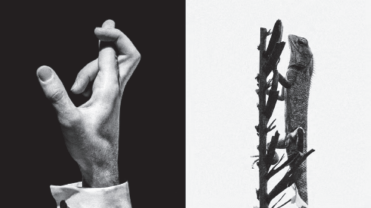
Analyzing animals to better understand Homo sapiens has become a sub-genre in the field of science writing. Sometimes this works well, as when Sabrina Imbler uses a purple octopus, starving to death while incubating her eggs, as a metaphor for disordered eating in How Far the Light Reaches. But other times, the enterprise feels downright Procrustean:
An author amasses a wide swath of animal activities, even down to the level of the cell, and describes them in ways that might give the impression that some human quality has an analogue out there in the biosphere.
The compression is most strained when the activity being explained is complex and quintessentially human, such as deception. This makes the enterprise of writing The Liars of Nature and the Nature of Liars, a recent book by Lixing Sun, especially difficult. Sun, a professor of animal behavior, ecology, and evolution at Central Washington University, presents a string of entertaining facts about the many ways plants and animals use trickery to survive. But the language is too casually anthropomorphic, undermining the points he’s trying to make about cheating in the natural world. At the outset, Sun acknowledges that ascribing intentionality to animal behavior is “neither easy nor necessary,” and admits that deceptive adaptations arise from the unplanned march of evolution. “Cheating flourishes in nature as a direct result of natural selection,” he writes. It also “serves as a potent selective force that drives evolution on its own.” But his word choices and awkward phrasing often leave the reader with only a partial understanding of how flora and fauna actually “lie” and “deceive.”
The behavior we think of as lying requires a more sophisticated kind of cognition than telling the truth does—and certainly a more sophisticated kind of cognition than a bird, flower, or fungus can muster. Years ago, when I was reporting an article about the science of deception, the psychologist Paul Ekman told me that a liar needs three qualities to succeed: the ability to think strategically, like a good chess player; the ability to read the needs of others, like a talented therapist; and the ability to manage emotions, like a grown-up. In other words, a good liar needs a high level of both cognitive and emotional intelligence.
And though lying—at least in humans—might be an ingenious skill, the evolution through which cheating arises in the natural world is not smart in the least. The way Sun describes each example makes it seem that plants and animals develop particular traits of fakery or mimicry out of some sort of mischievous, cunning impulse. But there’s nothing deliberate about evolutionary adaptation, which is the perpetuation of traits, arising randomly, that improve an organism’s chance of staying alive, reproducing, and passing along the same advantageous traits to the next generation. It’s a stupid process, lacking not only intentionality but also any kind of end goal beyond helping a particular organism survive and reproduce.
Sun knows this; he’s a biology professor, after all. But the diction he deploys suggest otherwise. Sun, like others, falls into the science-writing trap of stretching biological phenomena to fit the contours of human understanding. As a result, the reader can be forgiven for coming away with the impression that cheating fauna and flora—right down to the level of bacteria—are clever enough to always have, as he puts it in one of his many awkward attempts to be engaging, a few new “tricks up their sleeves.”
His colorful word choices—no doubt employed to make his writing more accessible and fun—seem to elide randomness altogether. He uses terms such as imposters, hustlers, and con artists to describe the book’s animals, including Pacific tree frogs, and talks of the “tricks” that were “invented” by the duplicitous cuckoo. He uses words like these to characterize cheats that don’t even have nervous systems, such as the South American passion flower. It has evolved spots on its leaves that resemble the eggs of the Heliconius butterfly, which cause the butterfly to avoid laying its clutch there and instead move on to a plant that looks unoccupied—a handy deflection, what Sun calls a “most peculiar form of plant mimicry,” because newly hatched Heliconius caterpillars can be quite destructive to the passion flower. As Sun chooses to describe it, those yellow spots arose because “these plants can ‘read the mind’ of Heliconius butterflies.” But in truth, no plant ESP is involved; those fake-out butterfly eggs are the result of a random mutation in leaf coloration that turned out to have a benefit for the mutant plant. And using scare quotes around “read the mind” doesn’t get the author off the hook.
If you’re looking for a compilation of weird facts about the splendors of the natural world—something that’s been called the “gee-whiz” approach to science writing— this book delivers. It is an often-enlightening collection of some stunning acts of animal trickery that have evolved in the brutal Darwinian struggle for survival. Dropping some of the tidbits you picked up here would make you the hit of the cocktail party. Did you know, for instance, that the stripes of a zebra create a confusing effect called “razzle dazzle,” and that their advantage may be in keeping away tsetse flies?
In the last chapters of the book, Sun tries to draw a straight line from these many organisms to humans. We can, he writes, “use our newly acquired evolutionary understanding of how cheaters operate to design novel strategies to combat cheating in our society.” Sun’s desire to draw lessons from the natural world about human lies has a subtler danger: Other living things are not just furry or feathery little proto-people, and comparing their behavior to ours risks underappreciating them as the amazing organisms they are. The astounding variety of the biosphere, evolved through random mutations over the course of eons, is reason enough to marvel at all the ways that certain surprising conduct has helped plants and animals thrive. So my recommendation is to read The Liars of Nature and the Nature of Liars for its great cocktail-party fodder, and to leave lessons about human deception to the psychologists, neuroscientists, and philosophers.
Robin Marantz Henig is a freelance science writer whose books include The Monk in the Garden, Pandora’s Baby, and Twentysomething.
https://www.theatlantic.com/books/archive/2023/07/ evolution-liars-of-nature-lixing-sun-review/674808/ Acesso em 26/07/2023.
From the reading of the text, we can assert that Sabrina Imbler, Robin Marantz Henig and Lixing Sun:
06