


![[Marketing] Questao Topo - deslogado](https://storage.estuda.com.br/banners/0_6b7ebee90b03af1c560c73bb8bcce34a_banner_deslogado_70_dias.png)
Questões de Inglês
19.971 Questões
Questão 16 14365949
UNICAMP Conhecimentos Gerais 2025A imagem a seguir apresenta a transcrição de um diálogo em um vídeo publicado no Instagram.

(Adaptado de https://www.instagram.com/dhar.mann. Acesso em 12/04/2024.)
No diálogo, a principal característica da reformulação da fala da médica é a inserção de
Questão 15 14365948
UNICAMP Conhecimentos Gerais 2025Leia o texto a seguir.
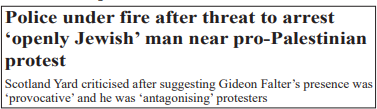
(https://www.telegraph.co.uk/news/2024/04/19/. Acesso em 20/04/2024.)
Depende-se, da leitura desse texto, que
Questão 5 14326744
UEL 1ª Dia - Conhecimentos Gerais 2025
The seeds in a sunflower exhibit a golden spiral, which is tied to the Fibonacci sequence. (Image credit: belterz/Getty Images)
The Fibonacci sequence is a series of numbers in which each number is the sum of the two that precede it. Starting at 0 and 1, the first 10 numbers of the sequence look like this: 0, 1, 1, 2, 3, 5, 8, 13, 21, 34, and so on forever. The Fibonacci sequence can be described using a mathematical equation: Xn+2 = Xn+1 + Xn. People claim there are many special properties about the numerical sequence, such as the fact that it is “nature’s secret code” for building perfect structures, like the Great Pyramid at Giza or the iconic seashell that likely graced the cover of your school mathematics textbook. But much of that is incorrect and the true history of the series is a bit more down-to-earth. The first thing to know is that the sequence is not originally Fibonacci’s, who in fact never went by that name. The Italian mathematician who we call Leonardo Fibonacci was born around 1170, and originally known as Leonardo of Pisa, said Keith Devlin, a mathematician at Stanford University. (...)
“Liber Abaci” first introduced the sequence to the Western world. But after a few scant paragraphs on breeding rabbits, Leonardo of Pisa never mentioned the sequence again. In fact, it was mostly forgotten until the 19th century, when mathematicians worked out more about the sequence’s mathematical properties. In 1877, French mathematician Édouard Lucas officially named the rabbit problem “the Fibonacci sequence”, Devlin said. Other than being a neat teaching tool, the Fibonacci sequence shows up in a few places in nature. However, it’s not some secret code that governs the architecture of the universe, Devlin said.
It’s true that the Fibonacci sequence is tightly connected to what’s now known as the golden ratio, phi, an irrational number that has a great deal of its own dubious lore. The ratio of successive numbers in the Fibonacci sequence gets ever closer to the golden ratio, which is 1.6180339887498948482. The golden ratio manages to capture some types of plant growth, Devlin said. For instance, the spiral arrangement of leaves or petals on some plants follows the golden ratio. Pinecones exhibit a golden spiral, as do the seeds in a sunflower, according to "Phyllotaxis: A Systemic Study in Plant Morphogenesis"(Cambridge University Press, 1994). But there are just as many plants that do not follow this rule.
Adaptado de: What “is the Fibonacci sequence”?, Deblin said | Live Science.
Analise a imagem, leia o texto a seguir e responda a questão abaixo.
Com base no texto, considere as afirmativas a seguir.
I. O objetivo principal do texto é desmitificar algumas concepções sobre a sequência de Fibonacci.
II. O desenvolvimento das plantas tem como regra a proporção áurea.
III. As propriedades especiais sobre a sequência numérica é compartilhada por toda a área científica.
IV. A imagem das sementes de girassol é escolhida porque exibe a proporção áurea, ligada à sequência de Fibonacci.
Assinale a alternativa correta.
Questão 4 14326734
UEL 1ª Dia - Conhecimentos Gerais 2025
The seeds in a sunflower exhibit a golden spiral, which is tied to the Fibonacci sequence. (Image credit: belterz/Getty Images)
The Fibonacci sequence is a series of numbers in which each number is the sum of the two that precede it. Starting at 0 and 1, the first 10 numbers of the sequence look like this: 0, 1, 1, 2, 3, 5, 8, 13, 21, 34, and so on forever. The Fibonacci sequence can be described using a mathematical equation: Xn+2 = Xn+1 + Xn. People claim there are many special properties about the numerical sequence, such as the fact that it is “nature’s secret code” for building perfect structures, like the Great Pyramid at Giza or the iconic seashell that likely graced the cover of your school mathematics textbook. But much of that is incorrect and the true history of the series is a bit more down-to-earth. The first thing to know is that the sequence is not originally Fibonacci’s, who in fact never went by that name. The Italian mathematician who we call Leonardo Fibonacci was born around 1170, and originally known as Leonardo of Pisa, said Keith Devlin, a mathematician at Stanford University. (...)
“Liber Abaci” first introduced the sequence to the Western world. But after a few scant paragraphs on breeding rabbits, Leonardo of Pisa never mentioned the sequence again. In fact, it was mostly forgotten until the 19th century, when mathematicians worked out more about the sequence’s mathematical properties. In 1877, French mathematician Édouard Lucas officially named the rabbit problem “the Fibonacci sequence”, Devlin said. Other than being a neat teaching tool, the Fibonacci sequence shows up in a few places in nature. However, it’s not some secret code that governs the architecture of the universe, Devlin said.
It’s true that the Fibonacci sequence is tightly connected to what’s now known as the golden ratio, phi, an irrational number that has a great deal of its own dubious lore. The ratio of successive numbers in the Fibonacci sequence gets ever closer to the golden ratio, which is 1.6180339887498948482. The golden ratio manages to capture some types of plant growth, Devlin said. For instance, the spiral arrangement of leaves or petals on some plants follows the golden ratio. Pinecones exhibit a golden spiral, as do the seeds in a sunflower, according to "Phyllotaxis: A Systemic Study in Plant Morphogenesis"(Cambridge University Press, 1994). But there are just as many plants that do not follow this rule.
Adaptado de: What “is the Fibonacci sequence”?, Deblin said | Live Science.
Analise a imagem, leia o texto a seguir e responda a questão abaixo.
Com base no texto e nos conhecimentos de língua inglesa, atribua V (Verdadeiro) ou F (Falso) às afirmativas a seguir.
( ) Na frase "For instance, the spiral arrangement of leaves or petals on some plants follows the golden ratio", a função da expressão "For instance" é a de acrescentar informação ao argumento apresentado anteriormente.
( ) Na frase "However, its not some secret code that governs the architecture of the universe, Devlin said", a função de However é a mesma função exercida por but na frase: "But there are just as many plants that do not follow this rule".
( ) Na frase "The first thing to know is that the sequence is not originally Fibonaccis", a função da expressão "the first thing to know" é organizar a ordem das informações a serem apresentadas.
( ) Na frase "Other than being a neat teaching tool, the Fibonacci sequence shows up in a few places in nature" a função da expressão "other than being" é exemplificar o argumento apresentado anteriormente.
( ) Na frase "in fact, it was mostly forgotten until the 19th century", "in fact" tem a mesma função de "the first thing to know": organizar a ordem das informações a serem apresentadas.
Assinale a alternativa que contém, de cima para baixo, a sequência correta.
Questão 78 14290248
FUVEST (USP) Conhecimento Gerais 2025/1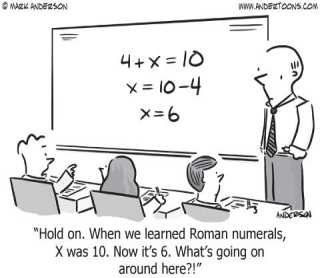
Disponível em https://andertoons.com/math/cartoon/7359/.
Contribui para o efeito de comicidade do cartum a
Questão 61 14290225
FUVEST (USP) Conhecimento Gerais 2025/1Os versos a seguir pertencem à canção Fall on Me, da banda norte-americana R.E.M., lançada em 1986.
“There's a problem, feathers, iron
Bargain buildings, weights and pulleys
Feathers hit the ground before the weight can leave the air”
Bill Berry, Peter Buck, Mike Mills e Michael Stipe.
A qual episódio (real ou hipotético) da história da física o trecho da música faz alusão?
06