


![[Marketing] Questao Topo - deslogado](https://storage.estuda.com.br/banners/0_6b7ebee90b03af1c560c73bb8bcce34a_banner_deslogado_70_dias.png)
Questões de Inglês
19.971 Questões
Questão 41 14516507
FGV-SP Administração - UNIFICADO 2025/1Texto para a pergunta.
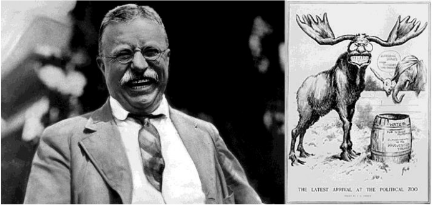
THE ATTEMPTED ASSASSINATION OF THEODORE ROOSEVELT
(Historical Note: In 1912, as the candidate of the Progressive Party, whose symbol was a magnificent bull moose [alce macho], Theodore Roosevelt ran unsuccessfully for an unprecedented third term [terceiro mandato] as president of the United States.)
[1] On October 14, 1912, while arriving at a campaign event in Milwaukee, Wisconsin, Theodore Roosevelt was shot by the deranged John Schrank, who believed the ghost of the assassinated U.S. president William McKinley had directed him to kill Roosevelt. The bullet lodged [se alojou] in his chest after penetrating his steel eyeglass case [estojo] and passing through a 50-page single-folded copy of the speech he intended to give that night. Schrank was disarmed and captured by Roosevelt's stenographer, Elbert E. Martin, as he attempted to fire a second time, and might have been lynched had Roosevelt not shouted for Schrank to remain unharmed. Roosevelt assured the crowd that he was all right, then ordered the police to take Schrank and make sure no violence was done to him.
[2] As an experienced hunter and knowledgeable about anatomy, Roosevelt correctly assumed that since he was not coughing blood, the bullet had not reached his lung. He refused to go to a hospital immediately and insisted on proceeding to the auditorium where ten thousand people waited to hear his speech. After mounting the stage [depois de subir no palco], he showed the audience his bloody shirt and said: "I have just been shot, but it takes more than that to kill a bull moose."
[3] Roosevelt then delivered a 90-minute speech with blood seeping [se infiltrando] into his shirt. Only afterwards did he accept medical attention. Probes [apalpações] and an X-ray showed the bullet embedded [cravada, enfiada] in Roosevelt's chest muscle. Doctors concluded that it would be less dangerous to leave it than attempt to remove it, and SO Roosevelt carried the bullet in him for the rest of his life. Once he wrote a friend about the bullet: "I do not mind it any more than if it were in my waistcoat-pocket [bolso de colete]."
Adapted from Wikipedia.
The information in the article most likely supports all of the following except
Questão 39 14516502
FGV-SP Administração - UNIFICADO 2025/1Texto para a pergunta.
TRIAL BY JURY
[1] One institution of government that many people will take part in at some time is the jury trial. It's a system with sources in medieval England, especially in actions by King Henry II, who ruled from 1154 to 1189. To settle disputes over land and inheritance, Henry introduced the practice of "assizes." Twelve local men with knowledge of the dispute would be called to testify as to who was the rightful owner or heir. They differed from a modern jury in that they were expected to arrive in court already knowing the facts of the case, instead of having evidence of the two sides presented to them there.
[2] In Henry's time, people suspected of crimes (often punishable by death) were subjected to trial by ordeal [julgamento por meio de provações]. In one variety, a priest would be summoned to bless a pond [lagoinha] or river, and the accused would be thrown in. If he or she floated, guilt would be assumed, since the blessed water had "rejected" them. In 1215 the Catholic Church forbade clergymen [membros do clero] to assist in trial by ordeal. The decision delegitimized the procedure, which rested on an assumption that God protected the innocent. So the assize panels were adapted to serve as something more like modern juries - bodies that decide guilt and innocence, and by the 15th century they were more commonly hearing evidence presented to them in court rather than working entirely on the basis of their own information about the case. Though the right to a jury trial is guaranteed in the U.S. Constitution, juries have become less common in the land of their birth. In England, both civil and criminal cases are now more likely to be tried before judges alone.
Adapted from 100 Ideas That Changed The World, published by Time.
The information in the article most likely supports all of the following except
Questão 38 14516501
FGV-SP Administração - UNIFICADO 2025/1Texto para a pergunta.
TRIAL BY JURY
[1] One institution of government that many people will take part in at some time is the jury trial. It's a system with sources in medieval England, especially in actions by King Henry II, who ruled from 1154 to 1189. To settle disputes over land and inheritance, Henry introduced the practice of "assizes." Twelve local men with knowledge of the dispute would be called to testify as to who was the rightful owner or heir. They differed from a modern jury in that they were expected to arrive in court already knowing the facts of the case, instead of having evidence of the two sides presented to them there.
[2] In Henry's time, people suspected of crimes (often punishable by death) were subjected to trial by ordeal [julgamento por meio de provações]. In one variety, a priest would be summoned to bless a pond [lagoinha] or river, and the accused would be thrown in. If he or she floated, guilt would be assumed, since the blessed water had "rejected" them. In 1215 the Catholic Church forbade clergymen [membros do clero] to assist in trial by ordeal. The decision delegitimized the procedure, which rested on an assumption that God protected the innocent. So the assize panels were adapted to serve as something more like modern juries - bodies that decide guilt and innocence, and by the 15th century they were more commonly hearing evidence presented to them in court rather than working entirely on the basis of their own information about the case. Though the right to a jury trial is guaranteed in the U.S. Constitution, juries have become less common in the land of their birth. In England, both civil and criminal cases are now more likely to be tried before judges alone.
Adapted from 100 Ideas That Changed The World, published by Time.
With respect to "trial by ordeal", as described in the article, you can most logically conclude that
Questão 36 14516495
FGV-SP Administração - UNIFICADO 2025/1Texto para a pergunta.
FROM THE AMERICAN WRITER DAVID McCLOSKEY
I find it depressing that there's a gulf between Russian and western (specifically American) views of freedom. We Americans have a tendency to "mirror-image" the Russian people, to assume that they want the same things we do, that the hopes and desires of Americans are an acceptable proxy [substituto] for what most Russian's hope and desire. I'm not sure it's true, or at least it's not true often enough. It's one of the reasons there has not been much sustained, energetic, and organized opposition inside Russia to the war in Ukraine. In general, Americans would protest and scream for freedom, but many (most?) Russians put their heads down and just try to get by, or get their dose of autonomy in some other, more limited way.
Adapted from Prospect, March 2024.
By saying "Im not sure its true, or its not true often enough," David McCloskey is most likely
Questão 35 14516494
FGV-SP Administração - UNIFICADO 2025/1Texto para a pergunta.
FROM THE AMERICAN WRITER DAVID McCLOSKEY
I find it depressing that there's a gulf between Russian and western (specifically American) views of freedom. We Americans have a tendency to "mirror-image" the Russian people, to assume that they want the same things we do, that the hopes and desires of Americans are an acceptable proxy [substituto] for what most Russian's hope and desire. I'm not sure it's true, or at least it's not true often enough. It's one of the reasons there has not been much sustained, energetic, and organized opposition inside Russia to the war in Ukraine. In general, Americans would protest and scream for freedom, but many (most?) Russians put their heads down and just try to get by, or get their dose of autonomy in some other, more limited way.
Adapted from Prospect, March 2024.
When David McCloskey mentions "the gulf between Russian and western (specifically American) views of freedom", he is most likely referring to which of the following?
Questão 32 14516490
FGV-SP Administração - UNIFICADO 2025/1Texto para a pergunta.
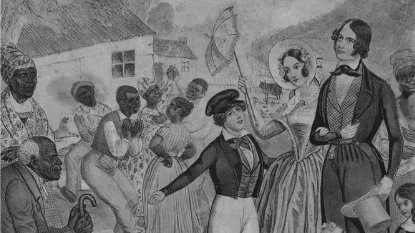
WHITE WOMEN AND SLAVERY
(Historical Note: Based on English common law, coverture laws in the United States forbade a married woman to own property, sign legal documents or enter into a contract, obtain an education against her husband's wishes, or keep a salary for herself.)
[1] They didn't know how bad it was. That was how James Redpath, a northern journalist who toured the U.S. South in the 1850s, explained white southern women's support for slavery to his readers. He reckoned [pensava] that women were shielded [protegidas] from the "most obnoxious features" - rarely witnessing the auctions [leilões] and punishments - and were oblivious to the "gigantic commerce" that it had become. Historians came to agree that slavery was the business of men.
[2] Research published last month shatters [destrói] that narrative. Economists at Ohio State University analyzed data from the New Orleans slave market, the biggest. They found that women were buyers or sellers in 30% of all transactions and 38% of those that involved female slaves.
[3] These are the first hard [concretos] numbers building on qualitative work by Stephanie Jones-Rogers at the University of California, Berkeley, showing just how instrumental women were to the slave economy. In the travel logs of foreigners she recently uncovered descriptions of southern belles bidding [mulheres sulistas finas dando lances] at the slave markets dressed in their finest silks and "glittering in precious jewels." For the ladies of the antebellum South [0 Sul antes da Guerra Civil (1861-1865)], slavery was more than business - it was their ticket to economic freedom. Coverture laws compelled women to relinquish [ceder] property and money to men when they married, but exceptions were made for slaves. Fathers hoping to secure their daughters' futures gave them slaves at baptisms, birthdays, and engagements [noivados].
[4] Women put slaves to work selling cakes or dresses and pocketed the profits in secret. Some ran slave brothels [bordeis]. They then used the cash to reinvest in the slave market. But unlike their husbands, who often bought men to work the fields, women bought more women, who were cheaper but paid dividends later on when they reproduced. After the Civil War it would be decades before the women of the South gained the right to control their earnings, have property, and vote. Ms. Jones-Rogers contends [argumenta] that their fight for segregation into the 20th century was fuelled by the sense of power they had known and lost. In the subjugation of others they had tasted freedom.
Adapted from The Economist, Jume 22,2024.
The information in the article most likely supports which of the following?
06