


![[Marketing] Questao Topo - deslogado](https://storage.estuda.com.br/banners/0_6b7ebee90b03af1c560c73bb8bcce34a_banner_deslogado_70_dias.png)
Questões de Inglês
19.971 Questões
Questão 19 14529358
UEMA PAES 2025This text refers to question.
PARIS 2024 JUDO: ALL RESULTS, AS BEATRIZ SOUZA OF BRAZIL TAKES HOME GOLD MEDAL IN WOMEN´S +78KG
By Michael Charles
Beatriz Souza of Brazil captured gold in women’s judo+78kg at the Olympic Games Paris 2024 by a final score of 1-0, defeating Israel’s Raz Hershko, who took home silver.
Souza’s victory secured the first gold medal of the Games for the Brazil team. Prior to Paris 2024, the 26-year-old won bronze in this weight class at the 2023 World Championships and the 2023 Pan American Games.
Hershko previously competed at Tokyo 2020, winning a bronze medal in the mixed team event. She most recently won gold in the +78kg weight class at the 2024 European Championships.
Kim Hayun of the Republic of Korea beat Kayra Ozdemir of Türkiye in bronze medal match A by a final tally of 10-0. Romane Dicko of France defeated Serbia’s Milica Zabic by ippon in bronze medal match B by a score of 10-0. Hayun most recently won bronze in this weight class at the 2024 World Championships. Dicko won bronze in this event at Tokyo 2020, also taking home gold in the mixed team competition, making this her third Olympic medal.
https://Olympics.com/en/news/beatriz-souza-wins-gold-paris-2024-judo-women-78kg. Accessed on August 12, 2024]
According to the text, the competitor who has won silver and bronze medals at the Olympic Games was
Questão 18 14529352
UEMA PAES 2025This text refers to question.

McDonald’s unveils details of its $5 meal deal, but are you lovin’ it?
On Thursday, McDonald’s revealed its highly anticipated $5 meal deal.
Earlier this year the fast food giant came under fire after the receipt from a location in Connecticut went viral for its “outrageous pricing”. Ever since, the company has been working to find ways to win back its customers. Beginning June 25 and lasting for a limited time, McDonald’s will sell a “$5 Meal Deal” that will include: a McDouble cheeseburger, a McChicken sandwich, small French fries, 4-piece chicken nuggets, and small soft drink.
“We heard our fans loud and clear — they’re looking for even more great value from us, and this summer that’s exactly what they’ll get,” McDonald’s USA President Joe Erlinger said in a statement.
The fast food chain also announced that customers would be able to receive a free medium French fries on “Free Fries Friday” when they make a minimum $1 purchase.
McDonald’s deal comes on the heels of several viral posts claiming the price of a Big Mac has significantly increased in the past several years.
“The average price of a Big Mac in the US was $4.39 in 2019,” Erlinger stated. “Despite a global pandemic and historic rises in supply chain costs, wages and other inflationary pressures in the years that followed, the average cost is now $5.29. That’s an increase of 21% (not 100%).”
https://en.newsner.com/taste/mcdonalds-unveils-details-of-its-5-meal-deal-but-are-you-lovin-it
According to the text, which two words are synonym to each other?
Questão 45 14516520
FGV-SP Administração - UNIFICADO 2025/1Texto para a pergunta.
ANOTHER GREAT FLOOD
(Historical Note: 1 cubit = 44 centimeters)
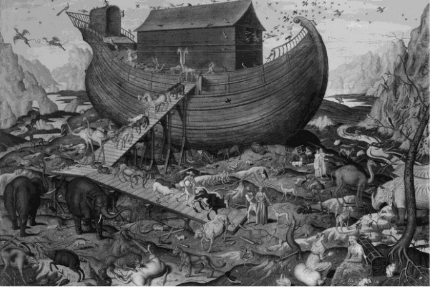
[1] Well before the Book of Genesis was written down, a similar story about a great flood was recorded in ancient Mesopotamia, that historical region situated within the Tigris-Euphrates river system. In this earlier account, the gods had grown unhappy with humankind. They had made people out of clay [argila] to labor at building canals and raising crops to save the lesser gods from the drudgery [trabalho penoso]. But humans, headstrong [obstinados, teimosos] and irritating, had caused SO much trouble that the gods, led by Anu, the king of the gods, decided to wash them away by flooding Mesopotamia. However, the lesser god Hea, feeling sorry for the humans, came to a man named Adrakhasis (also "Atrahasis") in his city on the Euphrates River and told him to build a great boat, 600 cubits long and 60 wide, and to fill it with "thy grain [teus grãos], thy furniture, thy goods [bens], they wealth, thy women slaves, thy handmaids [criadas], and the sons of the people, the beasts of the field, and the wild animals of the field." The door was sealed and a great storm began, driven by the gods of wind and rain. It lasted for seven days and nights. When the rain stopped, the people in the boat found a flooded world, with corpses floating on the water like reeds [juncos - um tipo de planta]. The ship came to rest on Mt. Nizir. Adrakhasis sent out a dove [pomba], a sparrow [pardal], and a raven [corvo] to find the land, and when the flood receded, he released all his animals to repopulate the world. He built an altar on the mountain and made a sacrifice to the gods, who all came around and were so impressed that they granted Adrakhasis immortality.
[2] This story is in cuneiform on Table XI of the Epic of Gilgamesh, written around 2100 BCE ["Before the Common Era," i.e., "Before Christ"].
Adapted from Natural History, February 2024.
The story in cuneiform on Table XI of the Epic of Gilgamesh most likely suggests which of the following?
Questão 44 14516519
FGV-SP Administração - UNIFICADO 2025/1Texto para a pergunta.
ANOTHER GREAT FLOOD
(Historical Note: 1 cubit = 44 centimeters)
[1] Well before the Book of Genesis was written down, a similar story about a great flood was recorded in ancient Mesopotamia, that historical region situated within the Tigris-Euphrates river system. In this earlier account, the gods had grown unhappy with humankind. They had made people out of clay [argila] to labor at building canals and raising crops to save the lesser gods from the drudgery [trabalho penoso]. But humans, headstrong [obstinados, teimosos] and irritating, had caused SO much trouble that the gods, led by Anu, the king of the gods, decided to wash them away by flooding Mesopotamia. However, the lesser god Hea, feeling sorry for the humans, came to a man named Adrakhasis (also "Atrahasis") in his city on the Euphrates River and told him to build a great boat, 600 cubits long and 60 wide, and to fill it with "thy grain [teus grãos], thy furniture, thy goods [bens], they wealth, thy women slaves, thy handmaids [criadas], and the sons of the people, the beasts of the field, and the wild animals of the field." The door was sealed and a great storm began, driven by the gods of wind and rain. It lasted for seven days and nights. When the rain stopped, the people in the boat found a flooded world, with corpses floating on the water like reeds [juncos - um tipo de planta]. The ship came to rest on Mt. Nizir. Adrakhasis sent out a dove [pomba], a sparrow [pardal], and a raven [corvo] to find the land, and when the flood receded, he released all his animals to repopulate the world. He built an altar on the mountain and made a sacrifice to the gods, who all came around and were so impressed that they granted Adrakhasis immortality.
[2] This story is in cuneiform on Table XI of the Epic of Gilgamesh, written around 2100 BCE ["Before the Common Era," i.e., "Before Christ"].
Adapted from Natural History, February 2024.
With respect to the gods, which of the following is most likely not supported by the information in the article?
Questão 43 14516518
FGV-SP Administração - UNIFICADO 2025/1Texto para a pergunta.
ANOTHER GREAT FLOOD
(Historical Note: 1 cubit = 44 centimeters)
[1] Well before the Book of Genesis was written down, a similar story about a great flood was recorded in ancient Mesopotamia, that historical region situated within the Tigris-Euphrates river system. In this earlier account, the gods had grown unhappy with humankind. They had made people out of clay [argila] to labor at building canals and raising crops to save the lesser gods from the drudgery [trabalho penoso]. But humans, headstrong [obstinados, teimosos] and irritating, had caused SO much trouble that the gods, led by Anu, the king of the gods, decided to wash them away by flooding Mesopotamia. However, the lesser god Hea, feeling sorry for the humans, came to a man named Adrakhasis (also "Atrahasis") in his city on the Euphrates River and told him to build a great boat, 600 cubits long and 60 wide, and to fill it with "thy grain [teus grãos], thy furniture, thy goods [bens], they wealth, thy women slaves, thy handmaids [criadas], and the sons of the people, the beasts of the field, and the wild animals of the field." The door was sealed and a great storm began, driven by the gods of wind and rain. It lasted for seven days and nights. When the rain stopped, the people in the boat found a flooded world, with corpses floating on the water like reeds [juncos - um tipo de planta]. The ship came to rest on Mt. Nizir. Adrakhasis sent out a dove [pomba], a sparrow [pardal], and a raven [corvo] to find the land, and when the flood receded, he released all his animals to repopulate the world. He built an altar on the mountain and made a sacrifice to the gods, who all came around and were so impressed that they granted Adrakhasis immortality.
[2] This story is in cuneiform on Table XI of the Epic of Gilgamesh, written around 2100 BCE ["Before the Common Era," i.e., "Before Christ"].
Adapted from Natural History, February 2024.
As presented in the article, this story of a great flood probably least supports which of the following?
Questão 42 14516508
FGV-SP Administração - UNIFICADO 2025/1Texto para a pergunta.
THE ATTEMPTED ASSASSINATION OF THEODORE ROOSEVELT
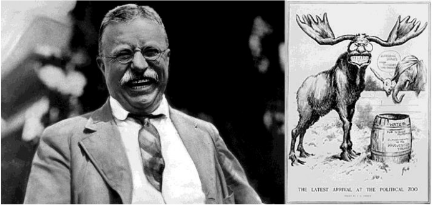
(Historical Note: In 1912, as the candidate of the Progressive Party, whose symbol was a magnificent bull moose [alce macho], Theodore Roosevelt ran unsuccessfully for an unprecedented third term [terceiro mandato] as president of the United States.)
[1] On October 14, 1912, while arriving at a campaign event in Milwaukee, Wisconsin, Theodore Roosevelt was shot by the deranged John Schrank, who believed the ghost of the assassinated U.S. president William McKinley had directed him to kill Roosevelt. The bullet lodged [se alojou] in his chest after penetrating his steel eyeglass case [estojo] and passing through a 50-page single-folded copy of the speech he intended to give that night. Schrank was disarmed and captured by Roosevelt's stenographer, Elbert E. Martin, as he attempted to fire a second time, and might have been lynched had Roosevelt not shouted for Schrank to remain unharmed. Roosevelt assured the crowd that he was all right, then ordered the police to take Schrank and make sure no violence was done to him.
[2] As an experienced hunter and knowledgeable about anatomy, Roosevelt correctly assumed that since he was not coughing blood, the bullet had not reached his lung. He refused to go to a hospital immediately and insisted on proceeding to the auditorium where ten thousand people waited to hear his speech. After mounting the stage [depois de subir no palco], he showed the audience his bloody shirt and said: "I have just been shot, but it takes more than that to kill a bull moose."
[3] Roosevelt then delivered a 90-minute speech with blood seeping [se infiltrando] into his shirt. Only afterwards did he accept medical attention. Probes [apalpações] and an X-ray showed the bullet embedded [cravada, enfiada] in Roosevelt's chest muscle. Doctors concluded that it would be less dangerous to leave it than attempt to remove it, and SO Roosevelt carried the bullet in him for the rest of his life. Once he wrote a friend about the bullet: "I do not mind it any more than if it were in my waistcoat-pocket [bolso de colete]."
Adapted from Wikipedia.
The information in the article most likely suggests that, after Theodore Roosevelt was shot,
06