


![[Marketing] Questao Topo - deslogado](https://storage.estuda.com.br/banners/0_6b7ebee90b03af1c560c73bb8bcce34a_banner_deslogado_70_dias.png)
Questões de Inglês
19.971 Questões
Questão 19 99735
FCM PB Medicina 2010/1
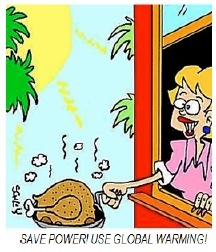
Look at the picture below and answer: We can say the cartoon author sounds:
Questão 52 95271
UFTM 2010/2Brazil’s huge river diversion project divides opinion
By Henry Mance
Outside his house by the São Francisco river, Emanoel de Souza toys with the skin of a crocodile he hunted a month earlier. “There are plenty out there. You leave a cow’s heart on a hook by the river, and by morning a crocodile will have bitten,” he smiles. The meat makes for a good meal and the skin provides an amusing decoration.
But Mr. de Souza gets much more than crocodiles from the São Francisco. The river also provides water for him to farm fish and rice. The profits of the last harvest alone paid for a new motorbike. This makes him one of the lucky ones. Just a few kilometres away, out of reach of the São Francisco’s water, Raquel Torres has lost a crop of beans and maize due to lack of rain. “This is the second consecutive year. There is no irrigation here,” she says. The water she uses for drinking, cooking and washing arrives every few weeks by lorry. Like many residents of Brazil’s dry north-east, she knows that water can be the scarcest commodity.
The national government’s solution is to divert part of the São Francisco – the only major river that starts and finishes in Brazil – through the sertão, the semi-arid backlands. Two large canals, one of 400km and another of 220 km, will deliver water to cities and to agriculture. The basic idea is not new – it has been mooted for centuries and seriously mulled over for decades – but its implementation is. Works began in 2009 and are scheduled for completion in 2025. Then, the government claims, the project will benefit more than 12 million “people who are thirsty”.
And the north-east feels thirsty. Looking over the potentially fertile soils of the sertão under the intense sun, locals are prone to echo a single sentiment: all that is lacking is water. They point to the example of Petrolina, a nearby city that, thanks to irrigation, has become one of Brazil’s leading producers of fruit for export. Indeed, it is the only place in the world where grapes can be harvested twice a year.
Not everyone is so optimistic. Environmentalists say the São Francisco is already overused. The current project, they say, threatens the river’s capacity to generate the North East’s hydroelectricity, as well as the livelihoods of those who, like Emanoel de Souza, currently depend on it for agriculture. “The diversion won’t resolve the water supply problem of the most-at-need people in the sertão, because they are geographically so spread out,” argues João Suassuna, a long-time critic. “And the São Francisco River, because it has multiple uses, won’t be able to supply the volumes of water necessary to ensure the viability of the venture.” Instead, he points to a 2005 study, the Northeast Atlas, which concluded that reservoirs and rainfall could supply three times as many people as the diversion, for about half the cost.
Both supporters and opponents of the diversion project agree that, when it comes to the north-east and water, technical arguments only explain so much. The diversion project is as much political as it is agronomical. For President Lula da Silva, it is his chance to show his commitment to his native north-east.(http://news.bbc.co.uk/2/hi/americas/8575010.stm. Adaptado.)
No trecho do quinto parágrafo – as well as the livelihoods of those who, like Emanoel de Souza – a palavra like introduz uma
Questão 6 92737
PUC- RJ Inverno - Manhã 2010Cell phones Now Used More for Data Than for Calls
By JENNA WORTHAM
Published: May 13, 2010
[1] For many Americans, cell phones have become irreplaceable tools to manage their lives and
stay connected to the outside world, their families and networks of friends online. But
increasingly, by several measures, that does not mean talking on them very much.
For example, although almost 90 percent of households in the United States now have a cell
[5] phone, the growth in voice minutes used by consumers has stagnated, according to government
and industry data. This is true even though more households each year are disconnecting their
landlines in favor of cell phones.
Instead of talking on their cell phones, people are making use of all the extras that iPhones,
BlackBerrys and other smartphones were also designed to do — browse the Web, listen to
[10] music, watch television, play games and send e-mail and text messages.
The number of text messages sent per user increased by nearly 50 percent nationwide last year,
according to the CTIA, the wireless industry association. And for the first time in the United
States, the amount of data in text, e-mail messages, streaming video, music and other services
on mobile devices in 2009 surpassed the amount of voice data in cell phone calls, industry
[15] executives and analysts say.
“Originally, talking was the only cell phone application,” said Dan Hesse, chief executive of a
large American telecommunications company. “But now it’s less than half of the traffic on
mobile networks.”
Of course, talking on the cell phone isn’t disappearing entirely. But figures from the CTIA show
[20] that over the last two years, the average number of voice minutes per user in the United States
has fallen. When people do talk on their phones, their conversations are shorter and the unused
voice minutes mount up.
“I have thousands of rollover minutes,” said Zach Frechette, 28, editor of Good magazine in Los
Angeles, who explained that he dialed only when he needed to get in touch with someone
[25] instantly, and limited those calls to 30 seconds.
Mr. Frechette said part of the reason he rarely talked on his phone was that he had an iPhone.
But also, he said, most of his day was spent swapping short messages through services like
Gmail, Facebook and Twitter. That way, he said, “you can respond when it’s convenient, rather
than impose your schedule on someone else.”
[30] Others say talking on the phone is intrusive and time-consuming, while others seem to have no
patience for talking to just one person at a time.
“Even though in theory, it might take longer to send a text than pick up the phone, it seems less
disruptive than a call,” said Jefferson Adams, a 44-year-old freelance writer living in San
Francisco. By texting, he said, “you can multitask between two or three conversations at once.”
[35] American teenagers have been ahead 35 of the curve for a while, turning their cell phones into
texting machines; more than half of them send about 1,500 text messages each month,
according to a recent study by the Pew Research Center’s Internet and American Life Project.
Mrs. Colburn, from Massachusetts, said she caved to the pleading of her 12-year-old daughter
Abigail for a cell phone to send text messages with her friends after she and her husband
[40] discovered it was hindering her from developing bonds with her classmates. “We realized she
was being excluded from party invitations and being in the know with her peers,” she said.
Mrs. Colburn said texting had also become a much easier way to stay in touch with her daughter
and receive quick updates about after-school plans. “The other night she texted me from upstairs
to ask a vocabulary question,” she said with a laugh. “But I drew the line there. I went upstairs
[45] to answer it.”
Adapted from HTTP://WWW.NYTIMES.COM/2010/05/14/TECHNOLOGY/PERSONALTECH/14TALK.HTML?REF=TECHNOLOGY ACCESS ON MAY 15TH , 2010
In the sentence “Even though in theory, it might take longer …” (line 32), “might” is correctly substituted by
Questão 33 90845
UEFS Caderno 1 2010/1TEXTO:
Multitasking harmful to productivity

Scientists have found that focusing on multiple
media sources, such as email, phone, the internet, and
television, all at once does not make you more efficient.
In fact, multitaskers find it harder to concentrate.
5 Researchers at Stanford University in the United
States divided a group of over 250 students into light or
heavy media multitaskers. Light multitaskers focus on
just one or two sources at a time — listening to music
while working for example. Heavy multitaskers watch
10 online videos, surf the web, talk or text on their mobiles,
and write or read, all at the same time. Lead researcher
Cliff Nass wanted to see how this would affect the way
their brains work. “You would think that people who are
multitasking with all these media at once would be great
15 at ignoring irrelevant information. However, we discovered
they are suckers for irrelevant information, so they’re
much worse than low multitaskers at ignoring the
irrelevant”, says Nass.
Not only that, but multitaskers are worse at
20 organizing and sorting information, and worse at switching
from one task to another. The findings have left the
scientists with something of a mystery — why do people
multitask at all? They say that in an increasingly
demanding work environment, expecting staff to be
25 constantly available by email and instant message while
doing their jobs may actually mean that productivity falls.
MULTITASKING, harmful to productivity. Disponível em: . Acesso em: 2 jan. 2010.
The expression “surf the web” (l. 10) means
Questão 37 90607
UEFS Caderno 1 2010/2TEXTO:
Record blow for teenage sailor
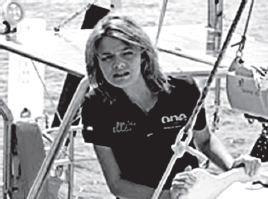
A 16-year-old Australian girl is nearly home after
sailing around the world. But she may not have sailed
far enough to get the record as the youngest person to
make the journey.
5 After more than six months at sea Jessica Watson
is in the final stretch of her epic voyage around the globe.
She’s hoping to reach Sydney Harbor later this month a
couple of days shy of her seventeenth birthday.
But although there’s no question that she’s
10 circumnavigated the globe, sailing experts say she hasn’t
gone far enough to claim the record of being the youngest
person to sail solo non-stop and unassisted around the
world.
The influential Sail World website has praised her heroic
15 achievement but is a stickler for the rules of what it calls
“true circumnavigation”. To have achieved that, it says,
the teenager should have sailed much farther north into
the Atlantic to a point in line with France, rather than
simply crossing the Equator and then returning south.
20 “We don’t want to take away from what the kid’s
done,” said the editor of the website “but it’s one thing to
be a hero and another to be a record holder. Had she
sailed three thousand seven hundred kilometers further
she could have made that boast.”
BRYANT, Nick. Record blow for teenage sailor. Disponível em: . Acesso em: 5 jun.
The correct sign for the number “three thousand seven hundred” (l. 23) is in
Questão 27 88523
UNCISAL 1° Dia 2010
A tradução adequada para underestimate na sentença – Never Underestimate a Housewife – é
06