


![[Marketing] Questao Topo - deslogado](https://storage.estuda.com.br/banners/0_6b7ebee90b03af1c560c73bb8bcce34a_banner_deslogado_70_dias.png)
Questões de Inglês
19.971 Questões
Questão 86 44286
FUVEST (USP) 2013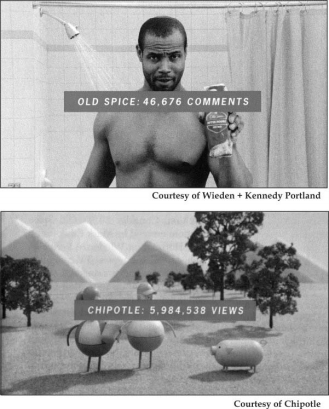
Time was, advertising was a relatively simple undertaking: buy some print space and airtime, create the spots, and blast them at a captive audience. Today it’s chaos: while passive viewers still exist, mostly we pick and choose what to consume, ignoring ads with a touch of the DVR remote. Ads are forced to become more like content, and the best aim to engage consumers so much that they pass the material on to friends – by email, Twitter, Facebook – who will pass it on to friends, who will… you get the picture. In the industry, “viral” has become a usefully vague way to describe any campaign that spreads from person to person, acquiring its own momentum.
It’s not that online advertising has eclipsed TV, but it has become its full partner – and in many ways the more substantive one, a medium in which the audience must be earned, not simply bought.
Newsweek, March 26 & April 2, 2012. Adaptado.
De acordo com o texto, a indústria publicitária
Questão 21 42917
UERJ 2013/1Reflections on being a critic
Recently, I was seriously criticized in the comments section of my blog for being careless in some
of my criticisms of a mid 70s Mingus release, Changes One (I actually like the record, by the way).
This made me wonder why I bother being critical of anything.
If you go on Amazon.com and look at how the critics are rated, the top 100 critics are the ones
[5] who give positive reviews 99% of the time. It’s human nature that if you praise something to the
skies, and someone likes that something too, they will find your review “helpful”. On the other
hand, even if you give a mild criticism of something that’s thought to be a classic, you run the risk
of being given a beat down, not to mention losing the popularity contest which, let’s face it, is what
success on the Internet is all about.
[10] Actually, I like nothing better than to rave about music and I prefer to write raves because: 1)
they’re easier to write, 2) they result in links to my site, 3) readers like them and comment on
them and, last but not least, 4) my major purpose in writing reviews is to steer my readers to
music that I love.
So why write negative or mildly critical reviews at all? Well, I’d be the first to admit that guys like
[15] Charles Mingus, Miles Davis, John McLaughlin and John Coltrane are master jazz musicians. In
fact, they are my heroes. But that doesn’t mean that every note they played was equally great.
In my opinion, each one of these giants has put out lousy albums. So what? Everyone has an off
day now and then, or even an off album... So, I’m just hoping to guide readers to the best records
of these giants first, and if they love these guys so much that they want to be completists like me,
[20] that’s their call.
Which brings up another subject. How do I judge how many stars to give a recording? Am I
comparing each musician to the greats? If I am reviewing one of the greats, like Mingus, am I only
comparing him to his greatest accomplishments? How about my personal taste? It’s certainly
possible for a recording to be technically excellent, but I just don’t like it for some reason.
[25] Well, first of all, I have to be honest enough to admit that I am the one listening to the recording,
bringing my personal history and prejudices to my criticism. If I personally don’t enjoy something,
I’m not going to rate it five stars, no matter how good it is. Of course, it’s my responsibility to point
out the discrepancy between the technical excellence of the recording and my personal taste in
that case.
[30] And second of all, any and all of the criteria discussed in this article might come into play when
rating a date. You might say that results in me comparing apples to oranges, and you’d be right.
For example, how could I possibly justify that a seriously flawed John McLaughlin album like
Floating Point and a consistently good Mingus album like Changes One both rate three stars?
I don’t know what to tell you except to read both reviews. I hope that by reading the reviews,
[35] looking at the star ratings, and listening to the samples, and factoring in your own taste, you can
come to some reasonable conclusion for yourself. That conclusion might be that I’m off my rocker
and that you can depend on me to pan recordings that you love, in which case you might want to
pay special attention to things I pan. Or it may be that you agree with me a lot of the time. Or it may
be that you find my criticism completely inconsistent and worthless, in which case you probably
won’t be visiting this site very often. Whichever conclusion you come to is fine with me.
Michael Kydonieus jazzbonotes.com
The language used in blogs can often be characterized as informal.
Two examples of informal use of language, present in the text, can be identified in:
Questão 16 42906
UERJ 2013/1Reflections on being a critic
Recently, I was seriously criticized in the comments section of my blog for being careless in some
of my criticisms of a mid 70s Mingus release, Changes One (I actually like the record, by the way).
This made me wonder why I bother being critical of anything.
If you go on Amazon.com and look at how the critics are rated, the top 100 critics are the ones
[5] who give positive reviews 99% of the time. It’s human nature that if you praise something to the
skies, and someone likes that something too, they will find your review “helpful”. On the other
hand, even if you give a mild criticism of something that’s thought to be a classic, you run the risk
of being given a beat down, not to mention losing the popularity contest which, let’s face it, is what
success on the Internet is all about.
[10] Actually, I like nothing better than to rave about music and I prefer to write raves because: 1)
they’re easier to write, 2) they result in links to my site, 3) readers like them and comment on
them and, last but not least, 4) my major purpose in writing reviews is to steer my readers to
music that I love.
So why write negative or mildly critical reviews at all? Well, I’d be the first to admit that guys like
[15] Charles Mingus, Miles Davis, John McLaughlin and John Coltrane are master jazz musicians. In
fact, they are my heroes. But that doesn’t mean that every note they played was equally great.
In my opinion, each one of these giants has put out lousy albums. So what? Everyone has an off
day now and then, or even an off album... So, I’m just hoping to guide readers to the best records
of these giants first, and if they love these guys so much that they want to be completists like me,
[20] that’s their call.
Which brings up another subject. How do I judge how many stars to give a recording? Am I
comparing each musician to the greats? If I am reviewing one of the greats, like Mingus, am I only
comparing him to his greatest accomplishments? How about my personal taste? It’s certainly
possible for a recording to be technically excellent, but I just don’t like it for some reason.
[25] Well, first of all, I have to be honest enough to admit that I am the one listening to the recording,
bringing my personal history and prejudices to my criticism. If I personally don’t enjoy something,
I’m not going to rate it five stars, no matter how good it is. Of course, it’s my responsibility to point
out the discrepancy between the technical excellence of the recording and my personal taste in
that case.
[30] And second of all, any and all of the criteria discussed in this article might come into play when
rating a date. You might say that results in me comparing apples to oranges, and you’d be right.
For example, how could I possibly justify that a seriously flawed John McLaughlin album like
Floating Point and a consistently good Mingus album like Changes One both rate three stars?
I don’t know what to tell you except to read both reviews. I hope that by reading the reviews,
[35] looking at the star ratings, and listening to the samples, and factoring in your own taste, you can
come to some reasonable conclusion for yourself. That conclusion might be that I’m off my rocker
and that you can depend on me to pan recordings that you love, in which case you might want to
pay special attention to things I pan. Or it may be that you agree with me a lot of the time. Or it may
be that you find my criticism completely inconsistent and worthless, in which case you probably
won’t be visiting this site very often. Whichever conclusion you come to is fine with me.
Michael Kydonieus jazzbonotes.com
This made me wonder why I bother being critical of anything. (l. 3)
The fragment above points to what motivated the blog writer to develop his reflection.
His motivation is related to the:
Questão 74 42101
UFPR 2013Neil Armstrong, US astronaut, dies aged 82

Armstrong underwent a heart-bypass surgery earlier this month to relieve blocked coronary arteries.
As commander of the Apollo 11 mission, Armstrong became the first human to set foot on the moon, hours after Apollo's Eagle lunar module had touched down on July 20 1969. He radioed back to Earth the historic statement: "That's one small step for man, one giant leap for mankind". He then spent nearly three hours walking on the moon with fellow astronaut Edwin "Buzz" Aldrin.
Praising Armstrong his family said in a statement on Saturday: “Neil was our loving husband, father, grandfather, brother and friend. Neil Armstrong was also a reluctant American hero who always believed he was just doing his job. He served his Nation proudly, as a navy fighter pilot, test pilot, and astronaut". The statement also said that he died following complications resulting from cardiovascular procedures, at the age of 82.
Armstrong was born in Wapakoneta, Ohio, on August 5, 1930. On July 20, 1936, when he was 6, he experienced his first airplane flight in Warren, Ohio, when he and his father Stephen, an auditor for the Ohio state government, took a ride in a Ford Trimotor, a three-engined transport plane that was also known as the "Tin Goose".
After serving as a naval pilot from 1949 to 1952, and serving in the Korean War, Armstrong joined the National Advisory Committee for Aeronautics (NACA) – the precursor to NASA, the National Aeronautics and Space Administration – in 1955. As a research pilot at NASA's Flight Research Center, Edwards, Calif., he was a project pilot on many pioneering high speed aircraft, including the well-known, 4000-mph X-15.
Armstrong joined the NASA astronaut corps in 1962. He was assigned as command pilot for the Gemini 8 mission. Gemini 8 was launched on March 16, 1966, and Armstrong performed the first successful manned docking of two vehicles in space. His second and last spaceflight was as mission commander for the Apollo 11 moon landing.
After commanding the Apollo 11 mission, Armstrong subsequently held the position of Deputy Associate Administrator for Aeronautics, NASA Headquarters, in Washington D.C. In this position, he was responsible for the coordination and management of overall NASA research and technology work related to aeronautics. He was Professor of Aerospace Engineering at the University of Cincinnati between 1971-1979.
Armstrong and his wife, Carol, married in 1999, made their home in the Cincinnati suburb of Indian Hill, but he had largely stayed out of public view in recent years. He spoke at Ohio State University during a February event honouring fellow astronaut John Glenn and the 50th anniversary of Glenn becoming the first American to orbit the Earth.
(Adapted from and )
What does the text say about Armstrong’s experiences before joining the astronaut corps at NASA? Mark the correct alternative.
Questão 6 9637462
UEG 2012/1Leia o cartum abaixo.

Analisando-se o cartum, conclui-se que
Questão 83 8016732
FMJ 2012Leia o texto e responda à questão.
Life on a Desert Island
Most of us have formed an unrealistic picture of life on a desert island. We sometimes imagine a desert island to be a sort of paradise where the sun always shines. Life there is simple and good. Ripe fruit falls from the trees and you never have to work. There is also the other side of the picture: Life in a desert island is wretched – you either starve to death or live like Robinson Crusoe waiting for a boat which never comes. Perhaps there is an element of truth in both these pictures, but few of us have had the opportunity to find out.
Two men who recently spentfive days on a coral island wished they stayed there longer. They were taking a badly damaged boat from the Virgin Islands to Miami to have it repaired. During the journey, their boat began to sink. They quickly loaded a small rubber dinghy with food, matches, and cans of beer and rowed for a few miles across the Caribbean until they arrived at a tiny coral island. There were hardly any trees on the island and there was no water, but this didn’t prove to a problem since the men collected rain-water in their rubber dinghy.As they had brought a spear gun with them, they had plenty to eat. They caught lobster and fish every day, and, as one of them put it, “ate like kings!” When a passing tanker rescued them five days later, both men were genuinely sorry that they had to leave.
( L. G. Alexander, Developing Skills, Longman. Adaptado)
O trecho do segundo parágrafo – There were hardly any trees on the island – tem o mesmo sentido, em português, que
06