


![[Marketing] Questao Topo - deslogado](https://storage.estuda.com.br/banners/0_6b7ebee90b03af1c560c73bb8bcce34a_banner_deslogado_70_dias.png)
Questões de Inglês
19.971 Questões
Questão 56 767478
UFN Verão 2013Baby boomer1 alcohol harm 'more likely than in young'
By Nick Triggle Health correspondent, BBC News 12 October 2012 Last updated at 01:52 GMT
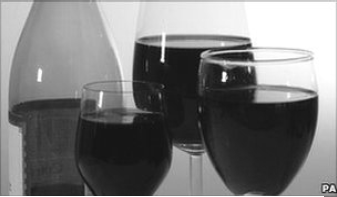
A variety of methods have been used by countries to try to curb problem drinking
[1] More National Health Service money is
spent treating alcohol-related illness in baby
boomers than young people, a study says.
The Alcohol Concern report found the cost of
[5] hospital admissions linked to heavy drinking 55 to
74-year-olds in 2010-11 was more than £825m.
That was 10 times the figure for 16 to 24-year-
olds.
In total, nearly £2bn was spent on alcohol-
[10] related in-patient admissions in England, the report
found.
This comes as more than 10 million people in
England are drinking above the recommended
levels, according to the report.
[15] The sum spent on treating the baby boomer
generation went on 454,317 patients, compared
with the 54,682 under-24s who were treated at a
cost of £64m.
Problem drinking is a contributing factor for a
[20] host of diseases, including liver, kidney and heart
disease, as well as increasing the risk of injury.
In many ways the findings are not surprising as
the effects of drinking are more likely to catch up
with people later in life.
[25] 'Expensive care'
But the charity said part of the reason for
compiling the report, which was based on NHS
figures, was to break down the data by individual
local authority area.
[30] It hopes the information, compiled with funding
from drug company Lundbeck, will be used by
councils next year when they take responsibility
for problem drinking as part of their new remit
covering public health under the shake-up of the
[35] NHS.
Alcohol Concern chief executive Eric Appleby
said he hoped they would use the findings to help
them focus their energy on schemes to tackle
problem drinking.
[40] "It is a common perception that young people
are responsible for the increasing cost of alcohol
misuse, but our findings show that in reality this is
not the case.
"It is the middle-aged, and often middle-class
[45] drinker, regularly drinking above recommended
limits, who are actually requiring this complex and
expensive NHS care."
Liver disease expert Sir Ian Gilmore, a former
president of the Royal College of Physicians, who
[50] has long campaigned about alcohol misuse,
agreed. He said: "It is the unwitting chronic middle-
aged drinkers who are taking serious risks with
their health."
http://www.menshealth.com/travel-center/travel-stress
1- A baby boomer is a person who was born during the demographic post-World War II baby boom between the years 1946 and 1964, according to the U.S. Census Bureau.
O verbo “to curb”, conforme aparece na legenda abaixo da figura, é sinônimo de
Questão 50 601848
UCPEL Verão 2013Leia o texto e responda a pergunta.
[1] GIVEN TABLETS BUT NO TEACHERS, ETHIOPIAN CHILDREN TEACH THEMSELVES
[2] A bold experiment by the One Laptop Per Child organization has shown “encouraging” results.
[3] With 100 million first-grade-aged children worldwide having no access to schooling, the One Laptop Per Child
[4] (OLPC) organization is trying something new in two remote Ethiopian villages−simply dropping off tablet computers
[5] with preloaded programs and seeing what happens.
[6] The goal: to see if illiterate kids with no previous exposure to written words can learn how to read all by themselves,
[7] by experimenting with the tablet and its preloaded alphabet-training games, e-books, movies, cartoons, paintings,
[8] and other programs. Early observations are encouraging, said Nicholas Negroponte, OLPC’s founder, at MIT Technology
[9] Review’s EmTech conference last week.
[10] The devices involved are Motorola Zoom tablets−used together with a solar charging system, which OLPC workers
[11] had taught adults in the village to use. Once a week, an OLPC worker visits the villages and swaps out memory cards
[12] so that researchers can study how the machines were actually used.
[13] After several months, the kids in both villages were still heavily engaged in using and recharging the machines, and
[14] had been observed reciting the “alphabet song,” and even spelling words. One boy, exposed to literacy games with
[15] animal pictures, opened up a paint program and wrote the word “Lion.”
[16] The experiment is being done in two isolated rural villages with about 20 first-grade-aged children each, about 50
[17] miles from Addis Ababa. One village is called Wonchi, on the rim of a volcanic crater at 11,000 feet; the other is
[18] called Wolonchete, in the Rift Valley. Children there had never previously seen printed materials, road signs, or even
[19] packaging that had words on them, Negroponte said.
[20] Earlier this year, OLPC workers dropped off closed boxes containing the tablets, taped shut, with no instruction. “I
[21] thought the kids would play with the boxes. Within four minutes, one kid not only opened the box, found the on-off
[22] switch… powered it up. Within five days, they were using 47 apps per child, per day. Within two weeks, they were
[23] singing ABC songs in the village, and within five months, they had hacked Android,” Negroponte said. “Some idiot
[24] in our organization or in the Media Lab had disabled the camera, and they figured out the camera, and had hacked
[25] Android.”
[26] Elaborating later on Negroponte’s hacking comment, ED McNierney, OLPC’s chief technology officer, said that the
[27] kids had gotten around OLPC’s effort to freeze desktop settings. “The kids had completely customized the desktop−so
[28] every kids’ tablet looked different. We had installed software to prevent them from doing that,” McNierney said. “And
[29] the fact they worked around it was clearly the kind of creativity, the kind of inquiry, the kind of discovery that we think
[30] is essential to learning.”
[31] “If they can learn to read, then they can read to learn,” Negroponte said (see “Emtech Preview: Another Way to Think
[32] About Learning”).
[33] In an interview after his talk, Negroponte said that while the early results are promising, reaching conclusions about
[34] whether children could learn to read this way would require more time. “If it gets funded, it would need to continue for
[35] another a year and a half to two years to come to a conclusion that the scientific community would accept,” Negroponte
[36] said. “We’d have to start with a new village and make a clean start.”
[37] Giving computers directly to poor kids without any instruction is even more ambitious than OLPC’s earlier pushes.
[38] “What can we do for these 100 million kids around the world who don’t go to school?” McNierney said. “Can we
[39] give them tool to read and learn−without having to provide schools and teachers and textbooks and all that?”
[40] Technology Review published by MIT, 29/10/2012
[41] Adapted from http://www.technologyreview.com/news/506466/given-tablets-but-no-teachers-ethiopian-children teach-themselves/
O pronome “them”, destacado na linha 28, refere-se a
Questão 15 391369
IFSulDeMinas 2013/1
Na charge do gato Garfield, ele diz que não pode fazer seu dever de casa por razões que o deixam:
Questão 12 391183
IFSulDeMinas 2013/2Walk-to-burn-calorie menu 'diet aid'
By Michelle Roberts Health editor, BBC
News online
24 April 2013 Last updated at 10:03 GMT

“A quarter-pound double cheeseburger takes a woman about two hours to walk off and a man slightly less”
Menus displaying the exercise needed to burn calories in meals can help people consume less, a US study suggests.
Diners given this extra information ordered and ate less calorific food than other customers, a team at Texas Christian University found.
Knowing it takes two hours of brisk walking to burn off a cheeseburger may be more of a warning than being told how many calories it contains, the researchers say. They now plan larger trials.
Researchers Dr Meena Shah and Ashlei James divided 300 volunteers aged 18 to 30 randomly into three groups.
One received a menu without any calorie information, another menus with the calories displayed, and the third menus that showed both calories and the amount of exercise needed to burn them off. All of the menus offered the same choice of food and drink, which included burgers, sandwiches, salad, chips, soft drinks and water.
None of the volunteers was aware of the reason for the study and the researchers took into account hunger levels when interpreting their findings. The group given the menus with the extra information about how much brisk walking would be needed to burn off the food ordered and ate much less than the group who had menus with no calorie information.
They consumed 100 fewer calories, on average, as a result. Dr Shah said: "This is the first study to look at the effects of displaying minutes of brisk walking needed to burn food calories on the calories ordered and consumed.
"This study suggests there are benefits."The researchers say brisk walking is something nearly everyone can relate to.
Calorie counting
"We can't generalize to a population over age 30, so we will further investigate this in an older and more diverse group," Dr Shah added.
They will present their findings at the Experimental Biology 2013 meeting in Boston.
Victoria Taylor, senior dietician at the British Heart Foundation, said clearly sign posting healthy options and nutritional content helped people make informed choices when ordering food.But she added: "While displaying the amount of exercise needed to burn calories is an interesting idea, there's more to a hearthealthy diet than calorie counting.
"Restaurants can also take steps to make meals healthier by serving appropriate portion sizes and reducing the amount of salt, saturated fatand sugar in their dishes.
"Whether eating at home or dining out, a balanced diet with plenty of fruit and veg is the best way to protect your heart."
Fonte: http://www.bbc.co.uk/news/health - Acessado em Abril de 2013
Observe a frase extraída do texto:
“One received a menu without any calorie information, another menus with the calories displayed, and the third menus that showed both calories and the amount of exercise needed to burn them off.”
O Pronome objetivo “them” se refere a que?
Questão 18 388702
UFAM PSC 2013/1[1] Travel guides and websites are filled with advice for
[2] tourists on how not to get ripped off when visiting the
[3] world’s great attractions. But maybe it’s the attractions
[4] that need tips on not getting pilfered by tourists. From
[5] pieces of the Great Wall to live penguins, travelers
[6] looking for unique souvenirs will stuff almost anything
[7] they can into their luggage. The latest uproar over theft of
[8] a public attraction comes from Boracay Island in the
[9] Philippines, where the magnificent white beach sands are
[10] suffering “blatant extraction” at the hands of the kinds of
[11] tourists that give the rest of us a bad name. Responding
[12] to the threat to its most valuable natural resource, local
[13] officials passed an ordinance last week that greatly
[14] toughens the existing law for being caught carting off
[15] sand or pebbles from the Philippines’ top tourist
[16] destination. As reported by the Manila Bulletin, the
[17] ordinance states that: “Boracay Island, a masterpiece of
[18] nature endowed by the Almighty with powdery white
[19] sand, is being gradually dissipated by man’s selfish
[20] interests without due regard to the consequences”. The
[21] new penalty for first-time sand thieves in Boracay will be
[22] 2,500 pesos (US$60) or a prison sentence of not less
[23] than one month and not more than six months.
[24] Subsequent offenses will bring stiffer minimum penalties.
[25] The new punishments may or may not work, but one
[26] thing is certain: greedy tourists will continue to commit
[27] selfish acts around the globe. In June, The Telegraph
[28] reported that visitors in Italy have been pinching
[29] cobblestones, marble mile markers and mosaic pieces
[30] from ancient Roman sites. Italian officials have reported
[31] an increase this year in cases of theft of Roman relics,
[32] with pieces of 2,000-year-old stone and other artifacts
[33] often discovered in travelers’ luggage at major airports. In
[34] April, the Daily Mail reported that three British citizens
[35] had been accused of stealing a penguin from an
[36] Australian marine park, though, surprise, a night of
[37] partying may have been involved in that absurd heist.
[38] Exhausted but unharmed, the seven-year-old fairy
[39] penguin, named Dirk, was discovered and returned to his
[40] park home and mate, Peaches. Officials and
[41] archaeologists in China have long been concerned about
[42] major destruction and diminution of large sections of the
[43] Great Wall due to casual looting .Regrettably little, it
[44] seems, is off limits to the dedicated souvenir hunter.
http://www.cnngo.com/explorations/life/world-tourists-stop-stealing-everything-
702763?hpt=hp_bn8 no dia 03 de setembro de 2012
A tradução da palavra “GREEDY”, na linha 26, é:
Questão 26 369524
UNIMONTES 2013/1Obesity in Children and Teens
[1] The problem of childhood obesity in the United States has grown considerably in recent years. Between 16
and 33 percent of children and adolescents are obese. Obesity is among the easiest medical conditions to
recognize but most difficult to treat. Unhealthy weight gain due to poor diet and lack of exercise is
responsible for over 300,000 deaths each year. The annual cost to society for obesity is estimated at nearly
[5] $100 billion. Overweight children are much more likely to become overweight adults unless they adopt and
maintain healthier patterns of eating and exercise.
What is obesity?
A few extra pounds does not suggest obesity. However they may indicate a tendency to gain weight easily
and a need for changes in diet and/or exercise. Generally, a child is not considered obese until the weight is
[10] at least 10 percent higher than what is recommended for their height and body type. Obesity most
commonly begins between the ages of 5 and 6, or during adolescence. Studies have shown that a child who
is obese between the ages of 10 and 13 has an 80 percent chance of becoming an obese adult.
What causes obesity?
The causes of obesity are complex and include genetic, biological, behavioral and cultural factors. Obesity
[15] occurs when a person eats more calories than the body burns up. If one parent is obese, there is a 50 percent
chance that their children will also be obese. However, when both parents are obese, their children have an
80 percent chance of being obese. Although certain medical disorders can cause obesity, less than 1 percent
of all obesity is caused by physical problems. Obesity in childhood and adolescence can be related to:
• poor eating habits
[20] • overeating or binging
• lack of exercise (i.e., couch potato kids)
• family history of obesity
• medical illnesses (endocrine, neurological problems)
• medications (steroids, some psychiatric medications)
[25] • stressful life events or changes (separations, divorce, moves, deaths, abuse)
• family and peer problems
• low self-esteem
• depression or other emotional problems
What are risks and complications of obesity?
[30] There are many risks and complications with obesity. Physical consequences include:
• increased risk of heart disease
• high blood pressure
• diabetes
• breathing problems
[35] • trouble sleeping
Child and adolescent obesity is also associated with increased risk of emotional problems. Teens with
weight problems tend to have much lower self-esteem and be less popular with their
peers. Depression, anxiety, and obsessive compulsive disorder can also occur. […]
(Disponível em: http://www.aacap.org/cs/root/facts_for_families/obesity_in_children_and_teens, acesso em: 21 ago. 2012.)
“Teens with weight problems tend to have much lower self-esteem and be less popular with their peers.” (Linhas 36-38)
A palavra “their”, em destaque acima, está relacionada a qual termo a seguir?
06