


![[Marketing] Questao Topo - deslogado](https://storage.estuda.com.br/banners/0_6b7ebee90b03af1c560c73bb8bcce34a_banner_deslogado_70_dias.png)
Questões de Inglês
19.971 Questões
Questão 16 94682
Mackenzie 2014/2BREAKING BAD
Breaking Bad is an American crime drama television series created and produced by Vince Gilligan. Set and produced in Albuquerque, New Mexico, Breaking Bad is the __ ( I )__ story of Walter White (Bryan Cranston), a struggling high school chemistry teacher who is diagnosed with __ ( II )__ lung cancer at the beginning of the series. He turns to a life of crime, producing and selling methamphetamine, in order to secure his family’s financial future before he dies, teaming with his former student, Jesse Pinkman (Aaron Paul). The series has been labeled a contemporary western by its creator.
The series premiered on January 20, 2008 in the United States and Canada on the cable channel AMC, and the series finale aired on September 29, 2013. Breaking Bad received __ ( III )__ critical acclaim, and is widely regarded as one of the greatest television series of all time. By its end, the series was among the __ ( IV ) _ _ cable shows on American television, with audience numbers that doubled in the fifth season from the previous year’s episodes.
Breaking Bad was created by Vince Gilligan, who spent several years writing the Fox series The X-Files. Gilligan wanted to create a series in which the protagonist became the antagonist. “Television is historically good at keeping its characters in a self-imposed stasis so that shows can go on for years or even decades,” he said. “When I realized this, the __ ( V )__ next step was to think, how can I do a show in which the fundamental drive is toward change?” He added that his goal with Walter White was to turn him from Mr. Chips into Scarface.
While Gilligan defines the term “breaking bad” as “to raise hell”, it apparently means more than that. According to Lily Rothman, it is an old phrase which “connotes more violence than ‘raising hell’ does.... The words possess a wide variety of nuances: to ‘break bad’ can mean to ‘go __ ( VI )__ ‘, to ‘defy authority’ and break the law, to be verbally ‘combative, belligerent, or _ _ ( VII )__ or, followed by the preposition ‘on,’ to ‘completely dominate or humiliate.’”
The concept emerged as Gilligan talked with his fellow writer Thomas Schnauz regarding their _ _ ( VIII )__ unemployment and joked that the solution was for them to put a “meth lab in the back of an RV and drive around the country cooking meth and making money.”
http://en.wikipedia.org/wiki/Breaking_Bad
The adjectives that properly fill in blanks I, II, III, IV, V, VI, VII and VIII, in the text, are
Questão 27 88984
UEFS Caderno 1 2014/1TEXTO:
Globish: the new international language?
A French author and ex-vice president of IBM has
come up with a new reduced form of English to help
non-English speakers get by when they are abroad. In
his books Don’t Speak English, Parlez Globish and
5 Découvrez le Globish, Jean Paul Nerrière advocates the
use of Globish as the common language of international
communication.
Globish involves a vocabulary limited to 1,500
words. Other features include short sentences, an
10 absence of idiomatic expressions, and extensive hand
gestures to get the point across. It is not aimed at cultural
eloquence, Mr. Nerrière points out, but at “linguistic
efficiency, always, everywhere, with everyone.”
Mr. Nerrière originally started his investigations into
15 Globish in an effort to help other French men and women
sitting in business meetings held in English. He advised
them to content themselves with Globish instead of trying
to master the intricacies of formal English. Now his
globalized version of English is so common, he says,
20 that Americans, Britons, and other English speakers
should learn it, too.
Mr Nerrière says that native speakers of English
tend to stand out as strange in international business
meetings. This is due to their refusal to use the
25 elementary English adopted by colleagues from other
countries. He suggests they should make an effort to
speak like everybody else to appear less arrogant and
more open to doing business. He warns that commercial
ventures could depend upon the mastery of Globish: “If
30 you lose a contract to a rival because you’re speaking
an English that no one except another Anglophone
understands, then you’ve got a problem.”
Quick to dispel fears that Globish will mean the
end of other languages, Mr. Nerrière recommends that it
35 should only be used in international exchanges. It should
not, he insists, be used as a vehicle of culture. In other
words, he believes we should keep on learning languages
to read the great literary works of Molière, Shakespeare,
and Cervantes. He claims, however, that the best
40 language to talk about the price of steel in China is
Globish.
OXENDEN, C. & Latham-Koenig, C. American English File ,Workbook 4 p.71 Oxford University Press
Considering language use in the text, it’s correct to say:
Questão 23 88033
UNCISAL 2° Dia 2014Primary-Care Doctors Don’t Have the Best Tools for Treating
Depression
Not all doctors are able to treat depression effectively, including those who are most likely to see patients’ first symptoms.
Even though patients may turn first to their primary-care physicians with any concerns about depression, the tools that those doctors use to evaluate their patients for mental-health disorders aren’t necessarily helping to improve their patients’ symptoms, according to the latest study published in the Journal of the American Medical Association of some of the most common practices used by these physicians.
[…]
Disponível em: www.healthland.time.com. Acesso em: 25 nov. 2013 (adaptado).
No texto, o significado das palavras em destaque são, respectivamente,
Questão 94 80766
ENEM 2° Dia (zul) 2014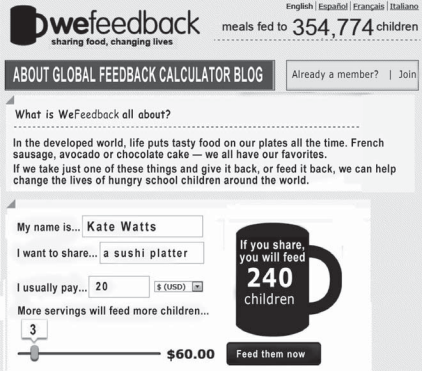
Disponível em: http://wefeedback.org. Acesso em: 30 jul. 2012.
A internet tem servido a diferentes interesses, ampliando, muitas vezes, o contato entre pessoas e instituições.
Um exemplo disso é o site WeFeedback, no qual a internauta Kate Watts
Questão 29 80312
UNESP 2014/2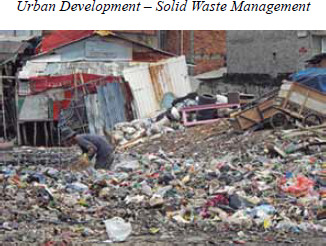
Ask a mayor of a developing country city about his or her most pressing problems, and solid waste management generally will be high on the list. For many cities, solid waste management is their single largest budget item and largest employer.
It is also a critical matter of public health, environmental quality, quality of life, and economic development. A city that cannot effectively manage its waste is rarely able to manage more complex services such as health, education or transportation. And no one wants to live in a city surrounded by garbage.
As the world urbanizes, the situation is becoming more acute. More people mean more garbage, especially in fastgrowing cities where the bulk of waste is generated. We estimate that cities currently generate roughly 1.3 billion tonnes of solid waste per year; with current urbanization trends, this figure will grow to 2.2 billion tonnes per year by 2025 – an increase of 70 percent.
Managing waste will also become more expensive. Expenditures that today total $205 billion will grow to $375 billion. The cost impacts will be most severe in low income countries already struggling to meet basic social and infrastructure needs, particularly for their poorest residents.
Because it is such a major issue, waste management also represents a great opportunity for cities. Managed well, solid waste management practices can reduce greenhouse gas emission levels in a city, including short-lived climate pollutants that are far more potent than carbon dioxide. A city’s ability to keep solid waste out of drainage ditches can also influence whether a neighborhood floods after a heavy storm.
(www.worldbank.org. Adaptado.)
De acordo com o texto, quando há uma boa gestão de resíduos sólidos,
Questão 26 80309
UNESP 2014/2
Ask a mayor of a developing country city about his or her most pressing problems, and solid waste management generally will be high on the list. For many cities, solid waste management is their single largest budget item and largest employer.
It is also a critical matter of public health, environmental quality, quality of life, and economic development. A city that cannot effectively manage its waste is rarely able to manage more complex services such as health, education or transportation. And no one wants to live in a city surrounded by garbage.
As the world urbanizes, the situation is becoming more acute. More people mean more garbage, especially in fastgrowing cities where the bulk of waste is generated. We estimate that cities currently generate roughly 1.3 billion tonnes of solid waste per year; with current urbanization trends, this figure will grow to 2.2 billion tonnes per year by 2025 – an increase of 70 percent.
Managing waste will also become more expensive. Expenditures that today total $205 billion will grow to $375 billion. The cost impacts will be most severe in low income countries already struggling to meet basic social and infrastructure needs, particularly for their poorest residents.
Because it is such a major issue, waste management also represents a great opportunity for cities. Managed well, solid waste management practices can reduce greenhouse gas emission levels in a city, including short-lived climate pollutants that are far more potent than carbon dioxide. A city’s ability to keep solid waste out of drainage ditches can also influence whether a neighborhood floods after a heavy storm.
(www.worldbank.org. Adaptado.)
De acordo com o texto, o aumento na produção de resíduos sólidos ocorre, principalmente, devido
06