


![[Marketing] Questao Topo - deslogado](https://storage.estuda.com.br/banners/0_6b7ebee90b03af1c560c73bb8bcce34a_banner_deslogado_70_dias.png)
Questões de Inglês
19.971 Questões
Questão 94 122984
ENEM PPL 2° Dia 2014I read a study that measured the efficiency of locomotion for various species on the planet. The condor used the least energy to move a kilometer. Humans carne in with a rather unimpressive showing about a third of the way down the list ... That didn't look so good, but then someone at Scientific American had the insight to test the efficiency of locomotion for a man on a bicycle. And a man on a bicycle blew the condor away. That's what a computer is to me: the computer is the most remarkable tool that we've ever come up with. It's the equivalent of a bicycle for our minds. JOBS, S. Disponível em: www.msnbc.msn.com. Acesso em: 28 fev. 2012 (adaptado).
Ao abordar o deslocamento de várias espécies, com base em um estudo que leu, Steve Jobs apresenta o computador como uma ferramenta que
Questão 93 122982
ENEM PPL 2° Dia 2014Tennesse Mountain Properties
Description
Own a renovated house for less than $290 per monthwifill New windows, siding, flooring (laminate throughout and tile in entry way and bathroom), kitchen cabinets, counter top, back door, fresh paint and laundry on main floor. Heat billsare very low due to a good solid house and an energy efficient furnace.
Disponível em: www.freerealestaeads.net . Acesso em: 30 nov. 2011(adaptado).
Em jornais, há diversos anúncios que servem aos leitores. O conteúdo do anúncio veiculado por este texto interessará a alguém que esteja procurando
Questão 43 111492
UEMA PAES 2014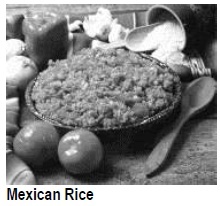
Mexican rice belongs to an unusual
category of Mexican dishes called dry
soups. To make a dry soup,
a starchy food such as rice, noodles, or
cut-up tortillas is cooked slowly in a soup
broth. Eventually the broth is completely
absorbed by the starch, leaving a "dry"
soup. Dry soups are served as a separate
course before the meat course.
1cup white rice, uncooked
2 tablespoons of vegetable oil
4 cups tomato juice
4 tablespoons butter or margarine
½ teaspoon ground cumin
1 teaspoon salt
½ green pepper, cleaned out and chopped
1 ½ cups chopped onion
2 large tomatoes, chopped, or 1 8 ounce can (1 cup) tomatoes cut up with a spoon
From: CORONADO, R. Cooking the Mexican Way. USA: Lerner Publications Company, 1982.
O texto Mexican Rice, por suas características de forma e por seu propósito comunicativo, é exemplo do gênero
Questão 41 111489
UEMA PAES 2014
This quintessential ready to move in home boasts an upgraded kitchen with granite counter-tops and updated appliances, new floors with baseboards throughout, and a playground protected by a white aluminum fence. Nestled in a wonderfully peaceful neighborhood and situated on a gorgeous preserve, perfect for bird watching in the winter time, this gem is sure to be a quick sale. Also located in the exclusive Estates of Pembroke Shores, a security guard gated community.
O texto, pelo seu propósito comunicativo, é
Questão 21 109760
UERJ 2014/2Brazilian protest songs: “Peace without a voice is no peace but fear”
I was born a year after the military coup in Brazil. The dictatorship that followed lasted from
1964 until 1985 - all my childhood and teenage years. But until I was 13 or 14 years old, I had
no clue of what was going on in my country. I lived in a small town and my parents were not
involved in politics. We listened to the radio, watched the news on TV and had a subscription to
[5] a national newspaper, but all the media were completely censored at that time. The fact that the
newspaper was sometimes printed with a blank space or a cake recipe in the middle of the news
never really caught my attention. It was always like that and I didn’t know any better.
I had my first glimpse of what it really meant to have a military government and what kind
of things were going on through songs. There was a song that I liked a lot, O bêbado e a
[10] equilibrista, although the lyrics didn’t make much sense to me: “My Brazil… / that dreams of the
return / of Henfil’s brother / and so many people that left / on rocket fins”. Henfil was a famous
cartoonist, but who was his brother? Who were the people who left? What were they singing
about? This was in 1979 and I was 13.
Thanks to this song by João Bosco and Aldir Blanc (sung by Elis Regina) and the questions I
[15] started to ask, I heard for the first time about all the artists, journalists and activists that had
been persecuted, imprisoned, tortured and exiled. Many had disappeared or been killed by the
military regime. This song became an anthem for the amnesty of political prisoners and activists
in exile, which was announced later in that same year.
In fact, due to the extreme censorship during the period of military dictatorship in Brazil, songs
[20] were one of the few ways to send political messages. Despite the tight surveillance of the censors,
they flourished, giving a voice to the resistance movement. Like Para não dizer que não falei das
flores, by Geraldo Vandré, which was interpreted as a call for armed struggle.
Words and phrases with double meanings were used to escape censorship and persecution. The
greatest master in this art was Chico Buarque de Holanda. His clever lyrics were often approved
[25] by the censors, who would only later realise what the songs were really about. But then, of
course, it was too late. That was the case with Apesar de você, which was censored only after it
had already become an anthem on the streets. At first sight, it appears to be a samba about a
lover’s quarrel. Actually, it was a sharp critique of the authoritarian regime and an act of direct
defiance aimed at the dictators.
[30] With the advent of democracy and the new freedom of expression in the late 1980s, protest
songs played less of a role in Brazil for a while, but in the 1990s they once again became a
powerful channel to voice social discontent. One of bands active in this period was O Rappa, with
the song A paz que eu não quero. The fight against social inequality, urban and police violence
and racial discrimination are the most common themes. Nowadays, the lyrics are explicit and the
messages are clear.
Mariângela Guimarães rnw.nl
The context often helps if one needs to guess the meaning of an unknown word. For example, the word lyrics appears in three sentences from the text:
although the lyrics didn’t make much sense to me: (l. 10)
His clever lyrics were often approved by the censors, (l. 24-25)
Nowadays, the lyrics are explicit (l. 34)
Based on these examples, lyrics is translated as:
Questão 19 109756
UERJ 2014/2Brazilian protest songs: “Peace without a voice is no peace but fear”
I was born a year after the military coup in Brazil. The dictatorship that followed lasted from
1964 until 1985 - all my childhood and teenage years. But until I was 13 or 14 years old, I had
no clue of what was going on in my country. I lived in a small town and my parents were not
involved in politics. We listened to the radio, watched the news on TV and had a subscription to
[5] a national newspaper, but all the media were completely censored at that time. The fact that the
newspaper was sometimes printed with a blank space or a cake recipe in the middle of the news
never really caught my attention. It was always like that and I didn’t know any better.
I had my first glimpse of what it really meant to have a military government and what kind
of things were going on through songs. There was a song that I liked a lot, O bêbado e a
[10] equilibrista, although the lyrics didn’t make much sense to me: “My Brazil… / that dreams of the
return / of Henfil’s brother / and so many people that left / on rocket fins”. Henfil was a famous
cartoonist, but who was his brother? Who were the people who left? What were they singing
about? This was in 1979 and I was 13.
Thanks to this song by João Bosco and Aldir Blanc (sung by Elis Regina) and the questions I
[15] started to ask, I heard for the first time about all the artists, journalists and activists that had
been persecuted, imprisoned, tortured and exiled. Many had disappeared or been killed by the
military regime. This song became an anthem for the amnesty of political prisoners and activists
in exile, which was announced later in that same year.
In fact, due to the extreme censorship during the period of military dictatorship in Brazil, songs
[20] were one of the few ways to send political messages. Despite the tight surveillance of the censors,
they flourished, giving a voice to the resistance movement. Like Para não dizer que não falei das
flores, by Geraldo Vandré, which was interpreted as a call for armed struggle.
Words and phrases with double meanings were used to escape censorship and persecution. The
greatest master in this art was Chico Buarque de Holanda. His clever lyrics were often approved
[25] by the censors, who would only later realise what the songs were really about. But then, of
course, it was too late. That was the case with Apesar de você, which was censored only after it
had already become an anthem on the streets. At first sight, it appears to be a samba about a
lover’s quarrel. Actually, it was a sharp critique of the authoritarian regime and an act of direct
defiance aimed at the dictators.
[30] With the advent of democracy and the new freedom of expression in the late 1980s, protest
songs played less of a role in Brazil for a while, but in the 1990s they once again became a
powerful channel to voice social discontent. One of bands active in this period was O Rappa, with
the song A paz que eu não quero. The fight against social inequality, urban and police violence
and racial discrimination are the most common themes. Nowadays, the lyrics are explicit and the
messages are clear.
Mariângela Guimarães rnw.nl
According to the author, Chico Buarque de Holanda was an expert in the art of writing songs with double meanings.
He did that with the following aim:
06