


![[Marketing] Questao Topo - deslogado](https://storage.estuda.com.br/banners/0_6b7ebee90b03af1c560c73bb8bcce34a_banner_deslogado_70_dias.png)
Questões de Inglês
19.971 Questões
Questão 63 97915
FACERES Medicina 2015/1Politicians face investigation in Brazil's biggest ever corruption scandal
Saturday 7 March 2015 04.00 GMT
The Guardian
Brazil’s supreme court has approved the investigation of dozens of senior politicians, including a former president and leaders of congress, for alleged connections to what prosecutors call the country’s biggest ever corruption scandal.
In total, 54 people are to be investigated by the attorney general, including 21 federal deputies and 12 senators — though that figure is expected to grow as evidence is gathered on corruption involving the state energy company Petrobras.
The investigations and any possible trials will take years to play out, but the action announced on Friday throws the second term of president Dilma Rousseff into further disarray as she faces dueling political and economic crises. She is not being investigated despite serving as chair of the Petrobras board for several years as the kickback scheme played out.
Experts say the investigations could create further gridlock in congress just as Brazil and its sputtering economy desperately need fiscal and political reform measures passed.
But the investigation is widely viewed as necessary for the nation’s democracy to advance and shake off deep-rooted impunity for the rich and powerful.
“You can’t put this genie back in the bottle. People are going to have to face the consequences,” said Paulo Sotero, director of the Brazil Institute at the Woodrow Wilson International Center for Scholars in Washington. “There used to be the idea that people in positions of power in Brazil were untouchable. They’re no longer untouchable.”
Federal investigators revealed a year ago that they had started an investigation into the scheme, and efforts until now focused efforts on big construction and engineering firms that allegedly paid over $800m in bribes and other funds. The money purportedly won them inflated contracts with Petrobras, and prosecutors say some of that cash flowed into the campaign coffers of the president’s Workers’ Party and its allies. (…)
http://www.theguardian.com/world/2015/mar/07/brazilian-court-approves-investigation-into-politicians-in-petrobras-scanda
According to the reporting, who was investigated in the corruption scandal?
Questão 29 96715
FATEC 2015/1Wearable tech for kids coming from LeapFrog
By Doug Gross, CNN
updated 12:57 PM EDT, Thu May 1, 2014
(CNN) – The wearable technology movement is in full effect, and exercise-based activity trackers lead the way. Now, it’s becoming child’s play.
LeapFrog, the maker of education-oriented tablets and apps for children, has unveiled1 LeapBand, a wearable activity tracker designed with kids in mind.
The band fits around the user’s wrist and looks a lot like a kids version of a smartwatch. By performing actions like “walk like a crab,” “spin like a helicopter” or “pop like popcorn,” kids can unlock new games and a group of Pokemon-like “digital pets” on the device.
The band connects to a website or app that lets parents monitor their children’s activities and choose which challenges they can select, and which they can’t.
Moving past smartphones and tablets, wearable tech has become arguably the hottest digital trend in the past year or so.
(http://tinyurl.com/noswsfc Acesso em: 20.07.2014. Adaptado)
Glossário
1 unveil: revelar, apresentar.
Assinale a alternativa que apresenta o termo like usado como uma conjunção, tal qual em “walk like a crab”, “spin like a helicopter” , “pop like popcorn”.
Questão 4 96137
ESCS 1° Dia 20151 Climate change may not be responsible for the recent
skyrocketing cost of natural disasters, but it is very likely that
it will impact future catastrophes. Climate models provide a
4 glimpse of the future, and while they do not agree on all of the
details, most models predict a few general trends. According to
the Intergovernmental Panel on Climate Change, an increase of
7 greenhouse gases in the atmosphere will probably boost
temperatures over most land surfaces, though the exact change
will vary regionally. More uncertain — but possible —
10 outcomes of an increase in global temperatures include
increased risk of drought and increased intensity of storms,
including tropical cyclones with higher wind speeds, a wetter
13 Asian monsoon, and, possibly, more intense mid-latitude
storms.
Internet: <http://earthobservatory.nasa.gov> (adapted).
The word “skyrocketing” (l.2) means
Questão 15 94808
Mackenzie 2015/2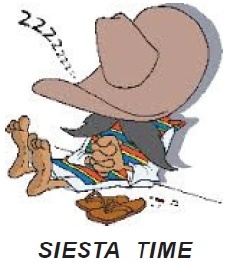
Finally, vindication for power nappers. Far from being lazy louts, siesta-takers are actually doing their bit for the firm. According to Sara Mednick and her colleagues at Harvard, just 60 minutes of shut-eye in the middle of the day can make you perform like the fresh daisy you were first thing in the morning. But it has to be bona fide sleep; a mere rest, they found, has no effect.
Dr. Mednick, whose results have just been published in Nature Neuroscience, wanted to know what effect power napping would have on people’s visual perception. She asked 30 student volunteers to come into her laboratory. Four times on the same day, at 9am, noon, 4pm and 7pm, they were required to stare at a computer screen for an hour. Their task was to pick out a vertical or horizontal bar from a striped background - an established test of visual perceptiveness. The more quickly they picked out the bar, the more acute their perception.
All the volunteers had slept well in the days before the test, and had been warned off alcohol. During the test day, nicotine addicts were allowed to indulge their habits, but everyone had to remain uncaffeinated. Despite this cosseting, the performance of the ten volunteers who went straight through the day without a nap deteriorated rapidly. Their best scores were first thing in the morning, and it was downhill from there on. By the last session, they were taking 52% longer, on average, to identify the orientation of the bar than they had in the first.
The Economist
A alternativa que melhor expressa a idéia da frase “All the volunteers had slept well in the days before the test, and had been warned off alcohol” é:
Questão 45 94090
UNIFESP 2015The Rise of Antibiotic Resistance
By The Editorial Board
May 10, 2014
The World Health Organization has surveyed the growth of antibiotic-resistant germs around the world – the first such survey it has ever conducted – and come up with disturbing findings. In a report issued late last month, the organization found that antimicrobial resistance in bacteria (the main focus of the report), fungi, viruses and parasites is an increasingly serious threat in every part of the world. “A problem so serious that it threatens the achievements of modern medicine,” the organization said. “A post-antibiotic era, in which common infections and minor injuries can kill, far from being an apocalyptic fantasy, is instead a very real possibility for the 21st century.”
The growth of antibiotic-resistant pathogens means that in ever more cases, standard treatments no longer work, infections are harder or impossible to control, the risk of spreading infections to others is increased, and illnesses and hospital stays are prolonged. All of these drive up the costs of illnesses and the risk of death. The survey sought to determine the scope of the problem by asking countries to submit their most recent surveillance data (114 did so). Unfortunately, the data was glaringly incomplete because few countries track and monitor antibiotic resistance comprehensively, and there is no standard methodology for doing so.
Still, it is clear that major resistance problems have already developed, both for antibiotics that are used routinely and for those deemed “last resort” treatments to cure people when all else has failed. Carbapenem antibiotics, a class of drugs used as a last resort to treat life-threatening infections caused by a common intestinal bacterium, have failed to work in more than half the people treated in some countries. The bacterium is a major cause of hospital-acquired infections such as pneumonia, bloodstream infections, and infections in newborns and intensive-care patients. Similarly, the failure of a last-resort treatment for gonorrhoea has been confirmed in 10 countries, including many with advanced health care systems, such as Australia, Canada, France, Sweden and Britain. And resistance to a class of antibiotics that is routinely used to treat urinary tract infections caused by E. coli is widespread; in some countries the drugs are now ineffective in more than half of the patients treated. This sobering report is intended to kick-start a global campaign to develop tools and standards to track drug resistance, measure its health and economic impact, and design solutions.
The most urgent need is to minimize the overuse of antibiotics in medicine and agriculture, which accelerates the development of resistant strains. In the United States, the Food and Drug Administration (FDA) has issued voluntary guidelines calling on drug companies, animal producers and veterinarians to stop indiscriminately using antibiotics that are important for treating humans on livestock; the drug companies have said they will comply. But the agency, shortsightedly, has appealed a court order requiring it to ban the use of penicillin and two forms of tetracycline by animal producers to promote growth unless they provide proof that it will not promote drug-resistant microbes.
The pharmaceutical industry needs to be encouraged to develop new antibiotics to supplement those that are losing their effectiveness. The Royal Pharmaceutical Society, which represents pharmacists in Britain, called this month for stronger financial incentives. It said that no new class of antibiotics has been discovered since 1987, largely because the financial returns for finding new classes of antibiotics are too low. Unlike lucrative drugs to treat chronic diseases like cancer and cardiovascular ailments, antibiotics are typically taken for a short period of time, and any new drug is apt to be used sparingly and held in reserve to treat patients resistant to existing drugs.
Antibiotics have transformed medicine and saved countless lives over the past seven decades. Now, rampant overuse and the lack of new drugs in the pipeline threaten to undermine their effectiveness.
(www.nytimes.com. Adaptado.)
Segundo o último parágrafo do texto,
Questão 45 93911
PUC-SP Inverno 2015Dementia campaign to give families open access wins cross-party support
http://www.theguardian.com/society/2015/mar/07/dementia-johns-campaign-hospital-visit-norman-lamb-andy-burnham

Politicians commit to John's Campaign to allow people 24-hour hospital access to vulnerable patients with dementia, following deluge of support
[1] A campaign to allow friends and family open access to people with dementia while they are in
hospital has seen a significant victory this weekend with backing from senior politicians. The
Observer-backed campaign has won the
support of health minister Norman Lamb, who
has promised to write to all NHS trusts promoting
the idea, while the shadow health secretary,
Andy Burnham, has committed to strengthening
the NHS constitution on the issue and including it
in Labour's election manifesto.
[2] “I could have wept with gratitude and relief,” said
novelist Nicci Gerrard, whose experiences with
her father's hospital care led her to launch John's
Campaign. It calls for the families and carers of
people with dementia to be allowed to remain
with them in hospital for as many hours of the day
and night as necessary. The campaign has been
deluged with support, not only from families but
from doctors, nurses and charities working with people with dementia. Several NHS trusts have
agreed to start implementing changes within their own hospitals and letting staff know what is
expected of them.
[3] Gerrard said cross-party support showed it was not a political issue but one of common sense and
compassion. It is, she writes in the Observer today, “a rare instance where the costs in both
financial and human terms are none and the benefits enormous”.
[4] More than a quarter of hospital beds in the UK are now occupied by people with dementia. Athird
will never return to their own homes and just under half will leave hospital in a worse condition than
when they entered. Gerrard's father, Dr John Gerrard, who was diagnosed with Alzheimer's in his
70s, deteriorated significantly during his hospital stay last year, something his family felt could
have been avoided had they been allowed to spend more time supporting him while he was there.
[5] The campaigners, backed by Labour MP Valerie Vaz among others, believe the current NHS
advice to parents with children in hospital that they should stay with their child as much as possible
should also apply to people with dementia, who are often vulnerable and very easily distressed.
[6] On Wednesday, which is NHS Change Day – a chance for positive changes at grassroots level to
be highlighted more widely – NHS England is organizing what it is calling a “Thunderclap” on
behalf of John's Campaign, across thousands of social media accounts, including Twitter and
Facebook, at 11am.
No parágrafo 5, o conselho do National Health Service (NHS) é que
06