


![[Marketing] Questao Topo - deslogado](https://storage.estuda.com.br/banners/0_6b7ebee90b03af1c560c73bb8bcce34a_banner_deslogado_70_dias.png)
Questões de Inglês
19.971 Questões
Questão 5 123264
ENEM PPL 2° Dia 2015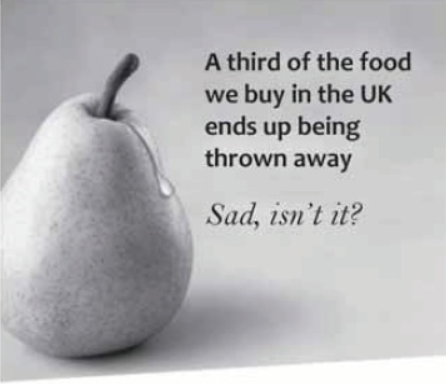
Disponível em: www.barhampc.kentparishes gov.uk. Acesso em: 31 jul. 2012.
Uma campanha pode ter por objetivo conscientizar a população sobre determinada questão social. Na campanha realizada no Reino Unido, a frase "A third of the we buy in the UK ends up being thrown away" foi utilizada para enfatizar o(a)
Questão 4 123263
ENEM PPL 2° Dia 2015
A emissão de gases tóxicos na atmosfera traz diversas consequências para nosso planeta. De acordo com o o gráfico, retirado do texto Global warming is an international issue, observa-se que
Questão 3 123260
ENEM PPL 2° Dia 201536 hours in Buenos Aires
Contemporary Argentine history is a roller coaster of financial booms and cracks, set to the gripping political soap operas. But through all the highs and lows, one thing has remained constant: Buenos Aires’s graceful elegance and cosmopolitan cool. This attractive city continues to draw food lovers, design buffs and party people with its riotous night life, fashion-forward styling and a favorable exchange rate. Even with the uncertain economy, the creative energy and enterprising spirit of Porteños, as residents are called, prevail — just look to the growing ranks of art spaces, boutiques, restaurants and hotels.
SINGER, P. Disponível em: www.nytimes.com. Acesso em: 30 jul. 2012.
Nesse artigo de jornal, Buenos Aires é apresentada como a capital argentina, que
Questão 1 123256
ENEM PPL 2° Dia 2015Horse or cow
Prior to taking retirement and selling off his land, a farmer needed to get rid of all the animals he owned, so he decided to call on every house in his village. At houses where the man was the boss, he gave a horse; at houses where the woman was the boss, he gave a dairy cow.
Approaching one cottage, he saw a couple gardening and called out, ‘Who’s the boss around here?’
‘I am,’ said the man.
The farmer said: ‘I have a black horse and a brown horse. Which one would you like?’
The man thought for a minute and said, ‘The black one.’
‘No, no, get the brown one,’ said his wife. The farmer said, ‘Here’s your cow.’
TIBBALLS, G. The book of senior jokes. Great Britain: Michael O’Mara, 2009 (adaptado).
O texto relata o caso de um fazendeiro prestes a se aposentar e vender sua fazenda. O aspecto cômico desse texto provém da
Questão 24 113068
UNESP 2015/2Oxfam study finds richest 1% is likely to control
half of global wealth by 2016
By Patricia Cohen
January 19, 2015

The richest 1 percent is likely to control more than half of the globe’s total wealth by next year, the anti-poverty charity Oxfam reported in a study released on Monday. The warning about deepening global inequality comes just as the world’s business elite prepare to meet this week at the annual World Economic Forum in Davos, Switzerland.
The 80 wealthiest people in the world altogether own $1.9 trillion, the report found, nearly the same amount shared by the 3.5 billion people who occupy the bottom half of the world’s income scale. (Last year, it took 85 billionaires to equal that figure.) And the richest 1 percent of the population controls nearly half of the world’s total wealth, a share that is also increasing.
The type of inequality that currently characterizes the world’s economies is unlike anything seen in recent years, the report explained. “Between 2002 and 2010 the total wealth of the poorest half of the world in current U.S. dollars had been increasing more or less at the same rate as that of billionaires,” it said. “However since 2010, it has been decreasing over that time.”
Winnie Byanyima, the charity’s executive director, noted in a statement that more than a billion people lived on less than $1.25 a day. “Do we really want to live in a world where the 1 percent own more than the rest of us combined?” Ms.Byanyima said. “The scale of global inequality is quite simply staggering.”
Investors with interests in finance, insurance and health saw the biggest windfalls, Oxfam said. Using data from Forbes magazine’s list of billionaires, it said those listed as having interests in the pharmaceutical and health care industries saw their net worth jump by 47 percent. The charity credited those individuals’ rapidly growing fortunes in part to multimillion-dollar lobbying campaigns to protect and enhance their interests.
(www.nytimes.com. Adaptado.)
Segundo o texto, o relatório da Oxfam
Questão 19 109883
UERJ 2015/1Global protest grows as citizens lose faith in politics and the state
[1] The demonstrations in Brazil began after a small rise in bus fares that triggered mass
protests. Within days this had become a nationwide movement whose concerns had
spread far beyond fares: more than a million people were on the streets shouting about
everything − from corruption to the cost of living to the amount of money being spent on
[5] the World Cup.
In Turkey, it was a similar story. A protest over the future of a city park in Istanbul snowballed
too into something bigger, a wider-ranging political confrontation with prime minister.
If the recent scenes have seemed familiar, it is because they shared common features: viral,
loosely organised with fractured messages and mostly taking place in urban public locations.
[10] Unlike the protest movement of 1968, or even the end of Soviet influence in Eastern Europe
in 1989, these are movements with few discernible leaders and often conflicting ideologies.
Their points of reference are not even necessarily ideological, but take inspiration from
other protests, including those of the Arab Spring and the Occupy movement. The result
has seen a wave of social movements − sometimes short-lived − from Wall Street to Tel
[15] Aviv and from Istanbul to Rio de Janeiro, often engaging younger, better educated and
wealthier members of society.
In Brazil, the varied banners underlined the difficulty of easy categorisation as protesters
held aloft signs expressing a range of demands from education reforms to free bus fares,
while denouncing the billions of public dollars spent on stadiums for the 2014 World Cup
[20] and the Olympics.
“It’s sort of a Catch-22”, Rodrigues da Cunha, a 63-year-old protester told the Associated
Press. “On the one hand, we need some sort of leadership; on the other, we don’t want
this to be compromised by being affiliated with any political party.”
As the Economist pointed out, while mass movements in Britain, France, Sweden and Turkey
[25] have been inspired by a variety of causes, including falling living standards, authoritarian
government and worries about immigration, Brazil does not fit the picture, with youth
unemployment at a record low and enjoying the biggest leap in living standards in the
country’s history.
So what’s going on? “This is a very peculiar moment”, Saskia Sassen, a sociology professor
[30] at Columbia University, New York, told the Observer. She argues that one distinguishing
factor is that many of the protest movements of the past decade have been defined
by the involvement of what she calls “the modest middle class”, who have often been
beneficiaries of the systems they are protesting against, but whose positions have been
eroded by neoliberal economic policies that have seen both distribution of wealth and
[35] opportunities captured by a narrowing minority. As people have come to feel more distant
from government and economic institutions, a large part of the new mass forms of dissent
has come to be seen as an opportunity to demonstrate ideas of “citizenship”.
Sassen’s belief that many of the recent protests are middle-class-driven appeared to be
confirmed overtly − in the case of Brazil, at least.
theguardian.com
In the fourth paragraph (l. 10-16), the author characterizes the typical members of the Brazilian society engaging in the protests.
This characterization is based on the criteria of:
06