


![[Marketing] Questao Topo - deslogado](https://storage.estuda.com.br/banners/0_6b7ebee90b03af1c560c73bb8bcce34a_banner_deslogado_70_dias.png)
Questões de Inglês
19.971 Questões
Questão 79 158710
FMJ 2015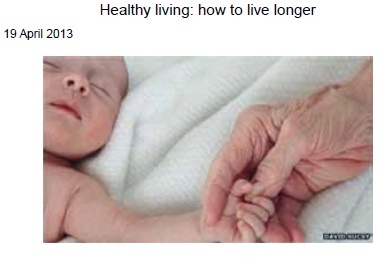
Some aspects of our health and vitality are governed by our genes and how our mother behaves during pregnancy, but many lifestyle factors, including fitness, diet and weight all impact on our ability to live a long and healthy life.
Even before we are born, our health can be affected by the lifestyle choices our mother makes. Studies have shown that if an expectant mother is highly stressed this may impact on their baby, leaving them less able to handle stress later in life.
Heavy drinking during pregnancy can lead to foetal alcohol syndrome in babies – which can cause a life-long learning disability as well as physical problems. Smoking can also affect their development. Research also suggests a pregnant woman’s diet can increase her child’s risk of obesity by changing the unborn baby’s DNA. Having a happy childhood may boost longevity, as a study suggests those who are unhappy in their youth have a greater risk of heart disease as adults.
Getting outdoors is also key, as sunlight is an important source of vitamin D. At present one in four children are deficient in this vitamin, which is needed for building strong and healthy bones. Vitamin D helps our bodies to absorb calcium and phosphorus from our diets.
The pressures of home and family life can make it feel like there’s little time to exercise. Aside from weight loss, there is a lot to gain from exercise and it can make a huge difference to staying healthy:
• Exercise means a healthier heart because it reduces several cardiovascular risks, including high blood pressure and heart disease.
• Being physically active can bolster good mental health and help you manage stress, anxiety and even depression.
• Regular exercise can help you achieve and maintain an ideal weight and reduce the risk of diabetes.
• Weight bearing exercise, such as running is especially good in promoting bone density and protecting against osteoporosis – which is when bones become thin, weak and break easily.
Although there are measures we can take to help us live a long and healthy life, there may be an element of luck involved – depending on our DNA. Much research into ageing has been focused on the role of telomeres. These are the protective tips found at the end of chromosomes, sometimes likened to the tips of shoelaces. Their role is to safeguard the end of the chromosome and to prevent the loss of genetic information during cell division.
Each time our cells divide, the tips of our telomeres become shorter. Eventually they become so short, they stop our cells dividing which means the cells die, which is how we age. Studies have revealed that longer telomeres have been linked to a longer lifespan, while shorter telomeres have been linked to diseases such as heart disease and dementia. Longer telomeres can also be inherited by the next generation. Maybe one day in the future, we will be able to predict how long we will live for.
(www.bbc.co.uk. Adaptado.)
No segundo parágrafo, o termo “expectant” pode ser substituído, sem prejuízo de sentido, por
Questão 5 156610
UNIFAE 2015Can acupuncture treat depression?
The alternative practice may be able to replace medication or alleviate its side effects
Tori Rodriguez
June 12, 2014
A growing number of people are seeking alternatives to
antidepressant medications, and new research suggests that
acupuncture could be a promising option. One new study
found the traditional Chinese practice to be as effective as
antidepressants, and a different study found that acupuncture
may help treat the medications’ side effects.
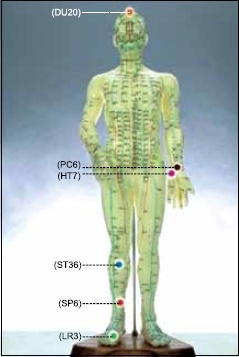
In acupuncture, a practitioner inserts needles into the
skin at points of the body thought to correspond with specific
organs. Western medicine suggests the needles may activate
natural painkillers in the brain; in traditional Chinese medicine,
the process is believed to improve functioning by correcting
energy blocks or imbalances in the organs.
A study published last fall in the Journal of Alternative
and Complementary Medicine found that electroacupuncture
– in which a mild electric current is transmitted through the
needles – was just as effective as fluoxetine (the generic
name of Prozac) in reducing symptoms of depression. For
six weeks, patients underwent either electroacupuncture
five times weekly or a standard daily dose of fluoxetine. The
researchers, the majority of whom specialize in traditional
Chinese medicine, assessed participants’ symptoms every
two weeks and tracked their levels of glial cell line-derived
neurotrophic factor (GDNF), a neuroprotective protein.
Previous studies have found lower amounts of GDNF among
patients with major depressive disorder, and in another
research, levels of the protein rose after treatment with
antidepressant medication.
After six weeks, both groups showed a similar improvement
in symptoms, and both treatments restored GDNF to a normal
concentration. But the acupuncture began to work faster,
reducing symptoms more dramatically at weeks two and four
than the drug did. Among the patients who got better, a higher
percentage of the acupuncture recipients showed “great
improvement.”
Another study suggests that acupuncture may help with
one particularly difficult aspect of depression treatment:
the sexual side effects of some medications. Twelve weeks
of acupuncture helped both men and women with several
aspects of sexual functioning, according to the work, also
in the Journal of Alternative and Complementary Medicine.
These findings add to a growing body of research suggesting
acupuncture may be useful for a variety of ailments, including
chronic pain, anxiety and nausea.
(www.scientificamerican.com. Adaptado.)
O trecho do terceiro parágrafo “in which a mild electric current is transmitted through the needles”
Questão 16 155971
UFT 2015The trip that transformed me: The university graduate By Mia Simon
Australian Vanessa Costanzo expected her university
experience to prepare her for adulthood, but in reality, she
said, it prepared her only for a job. So after she graduated
from Curtin University in Western Australia in February
2013, she decided to travel.
Costanzo hoped to gain worldly knowledge that she
craved by spending seven months exploring Europe and
parts of the Middle East. Starting in 2014, the lessons
came fast and furious.
Her first stop was Dubai. Not long after she arrived,
she recalled watching men from Pakistan and India in blue
jumpsuits working tirelessly in the sweltering heat1 to
manage the upkeep of Sheikh Zayed Road, a major city
thoroughfare2.
Unlike Costanzo, they were not in a foreign country on
holiday. A cab driver told her that most were working for
minimal pay and living in substandard conditions. Much of
the money they earned they sent home to their families.
How did he know? He had a wife and child back home
in his native India. He hadn’t seen them in a year.
The lesson hit her hard: If you have the means to
travel, as she did, you’re fortunate. And you don’t need
material possessions to be happy.
Glossary:
1. sweltering heat: oppressively hot
2. thoroughfare: a main road
Source: http://www.bbc.com/travel/story/20150224-the-trip-that-transformed-me-the-universitygraduate. Adapted.
According to the text, it is CORRECT to affirm that the word “fortunate”, in line 22, is equivalent to:
Questão 58 154732
AFA 2015
There is no future in any job. The future lies in the person who holds the job.” – George W. Crane
education is that they tend to prepare students for jobs of
the past. Similarly, the best paying jobs of the future are
all jobs that currently exist today. Many of them will still
[5] exist in the future, but with some changes as technology
and communication systems make their impact.
As a rule of thumb, 60% of the jobs 10 years
from now haven’t been invented yet. With that in mind,
I’ve decided to put together a list of some jobs that will be
[10] in high demand in the future.
Jobs before 2020
Many of the changes we see today will cause
new jobs to materialize quickly. This first section deals
[15] with new positions that will likely be developed within the
next 10 years.
3D printing engineers – Classes in 3D printing are
already being introduced into high schools and the
demand for printer-produced products will rise quickly.
[20] The trend will be for these worker-less workshops to
enter virtually different fields, at the same time, driving
the need for competent technicians and engineers to
design and maintain the next wave of this technology.
Nano-medics – Health professionals capable of working
[25] on the nano-level, both in designing diagnostics systems,
remedies, and monitoring solutions will be in high
demand.
Organ agents – The demand for transplantable organs
is exploding and people who can track down and deliver
[30] healthy organs will be in hot demand.
Octogenarian service providers – As the population
continues to age we will have record numbers of people
living into their 80s, 90s, and 100s. This growing group of
active oldsters will provide a demand for goods and
[35] services currently not being addressed in today’s
marketplace.
Jobs in 2030 and beyond
A number of technologies currently on the
drawing board will require a bit longer lead time before
[40]the industry comes into its own. Here are a few examples
of these kinds of jobs:
Body part & limb makers – The organ agents listed
before will quickly find themselves out of work as soon as
we figure out how to efficiently grow and mass produce
[45] our own organs from scratch.
Earthquake forecasters – While scientists are
developing skills to work with nanoscale precision on the
earth’s surface, the best we can know about below the
surface is blindfolded guesswork done with 100-mile
[50] precision. What we don’t know is literally killing us – over
226,000 killed in 2010 alone. But that will change over
time as we begin to understand the inner working of the
earth and accurately forecast when the next big quakes
are about to hit.
[55] “Heavy air” engineers – Compressed air is useful in a
wide variety of ways. However, we have yet to figure out
how to compress streams of air as they pass through our
existing atmosphere. Once we do, it will create untold
opportunity for non-surface based housing and
[60] transportation system, weather control, and other kinds
of experimentation.
Final thoughts
The jobs and occupations listed above are just
scratching the surface. This list is intended to help
[65] stretch your imagination and start you down a path of
imagining your own future.
(Adapted from http://www.futuristspeaker.com/2011/11/55-jobs-of-the-future)
The text's main goal is to
Questão 50 154722
AFA 2015TEXT I
JOBS AT HIGH RISK
It is an invisible force that goes by many names.
Computerization. Automation. Artificial intelligence.
Technology. Innovation. And, everyone's favorite,
ROBOTS.
[5] Whatever name you prefer, some form of it has
been stimulating progress and killing jobs — from tailors
to paralegals — for centuries. But this time is different:
nearly half of American jobs today could be automated in
"a decade or two". The question is: which half?
[10] Another way of posing the same question is:
Where do machines work better than people? Tractors
are more powerful than farmers. Robotic arms are
stronger and more tireless than assembly-line workers.
But in the past 30 years, software and robots have
[15] succeeded replacing a particular kind of occupation: the
average-wage, middle-skill, routine-heavy worker,
especially in manufacturing and office administration.
Indeed, it's projected that the next wave of
computer progress will continue to endanger human
[20] work where it already has: manufacturing, administrative
support, retail, and transportation. Most remaining
factory jobs are "likely to diminish over the next
decades". Cashiers, counter clerks, and telemarketers
are similarly endangered. On the other hand, health care
[25] workers, people responsible for our safety, and
management positions are the least likely to be
automated.
The next big thing
[30] We might be on the edge of an innovating
moment in robotics and artificial intelligence. Although
the past 30 years have reduced the middle, high- and
low-skill jobs have actually increased, as if protected
from the invading armies of robots by their own moats.
[35] Higher-skill workers have been protected by a kind of
social-intelligence moat. Computers are historically good
at executing routines, but they're bad at finding patterns,
communicating with people, and making decisions,
which is what managers are paid to do. This is why
[40] some people think managers are, for the moment, one of
the largest categories immune to the fast wave of AI.
Meanwhile, lower-skill workers have been
protected by the Moravec moat. Hans Moravec was a
futurist who pointed out that machine technology copied
[45] a savant infant: Machines could do long math equations
instantly and beat anybody in chess, but they can't
answer a simple question or walk up a flight of stairs. As
a result, not skilled work done by people without much
education (like home health care workers, or fast-food
[50] attendants) have been saved, too.
The human half
In the 19th century, new manufacturing
technology replaced what was then skilled labor. In the
[55] second half of the 20th century, however, software
technology took the place of median-salaried office work.
The first wave showed that machines are better at
assembling things. The second showed that machines
are better at organizing things. Now data analytics and
[60] self-driving cars suggest they might be better at patternrecognition
and driving. So what are we better at?
The safest industries and jobs are dominated by
managers, health-care workers, and a super-category
that includes education, media, and community service.
[65] One conclusion to draw from this is that humans are,
and will always be, superior at working with, and caring
for other humans. In this light, automation doesn't make
the world worse. Far from it: it creates new opportunities
for human creativity.
[70] But robots are already creeping into diagnostics
and surgeries. Schools are already experimenting with
software that replaces teaching hours. The fact that
some industries have been safe from automation for the
last three decades doesn't guarantee that they'll be safe
[75] for the next one.
It would be anxious enough if we knew exactly
which jobs are next in line for automation. The truth is
scarier. We don't really have a clue.
(Adapted from http://www.businessinsider.com/robots-overtakingamerican- jobs-2014-1)
According to the first paragraph, robots can be _____ by many names.
Questão 45 148158
EPCAR 2015Directions: Answer question according to TEXT.
TEXT
DANCING EFFECTS ON THE HUMAN BODY
These days, people love to watch other people
dance. Competitive dance shows, like “So you think you
can dance” and “Dancing with the stars”, are dominating
the world of reality television. So, if you get off the sofa
[5] and dance, you can keep your body and mind healthy.
Studies show that dancing can improve your heart
health, helps you lose weight and stay flexible, reduces
stress and can also help you get old in a pleasant way.
Dancing, as an aerobic exercise, can reduce the
[10] risk of heart problems and high blood pressure. You can
learn ballroom dancing, participate in a dance-fitness
class or dance with a video in your house. There are
many ways to enjoy dancing and get a good aerobic
exercise at the same time.
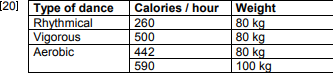
[15] Dance training helps you to lose weight. The
number of calories burned per hour depends on the type
of dance and the weight of the dancer. Observe the chart
below.
[25]
Another good effect is that dancing works on the
part of the brain that controls memory – hippocampus.
So, what are you waiting for? Let's dance!
(Adapted from www.everydayhealth.com and www.livestrong.com)
Glossary:
health - “saúde”
ballroom dancing - “dança de salão”
to lose weight - “perder peso”
to improve - “melhorar”
calories burned – “calorias queimadas”
The opposite of never (line 9) is
06