


![[Marketing] Questao Topo - deslogado](https://storage.estuda.com.br/banners/0_6b7ebee90b03af1c560c73bb8bcce34a_banner_deslogado_70_dias.png)
Questões de Inglês
19.971 Questões
Questão 38 138805
UNIFESP 2017Reducing food waste would mitigate
climate change, study shows
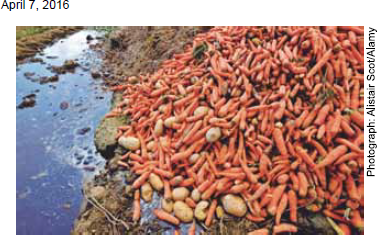
Reducing food waste around the world would help curb emissions of planet-warming gases, lessening some of the impacts of climate change such as more extreme weather and rising seas, scientists said on Thursday.
Up to 14% of emissions from agriculture in 2050 could be avoided by managing food use and distribution better, according to a new study from the Potsdam Institute for Climate Impact Research (PIK). “Agriculture is a major driver of climate change, accounting for more than 20% of overall global greenhouse gas emissions in 2010,” said co-author Prajal Pradhan. “Avoiding food loss and waste would therefore avoid unnecessary greenhouse gas emissions and help mitigate climate change.”
Between 30 and 40% of food produced around the world is never eaten, because it is spoiled after harvest and during transportation, or thrown away by shops and consumers. The share of food wasted is expected to increase drastically if emerging economies like China and India adopt western food habits, including a shift to eating more meat, the researchers warned. Richer countries tend to consume more food than is healthy or simply waste it, they noted.
As poorer countries develop and the world’s population grows, emissions associated with food waste could soar from 0.5 gigatonnes (GT) of carbon dioxide equivalent per year to between 1.9 and 2.5 GT annually by mid-century, showed the study published in the Environmental Science & Technology journal. It is widely argued that cutting food waste and distributing the world’s surplus food where it is needed could help tackle hunger in places that do not have enough - especially given that land to expand farming is limited.
But Jürgen Kropp, another of the study’s co-authors and PIK’s head of climate change and development, told the Thomson Reuters Foundation the potential for food waste curbs to reduce emissions should be given more attention. “It is not a strategy of governments at the moment,” he said.
(www.theguardian.com. Adaptado.)
The text
Questão 22 138209
FUVEST (USP) 2017A study carried out by Lauren Sherman of the University of California and her colleagues investigated how use of the “like” button in social media affects the brains of teenagers lying in body scanners
Thirtytwo teens who had Instagram accounts were asked to lie down in a functional magnetic resonance imaging (fMRI) scanner. This let Dr. Sherman monitor their brain activity while they were perusing both their own Instagram photos and photos that they were told had been added by other teenagers in the experiment. In reality, Dr. Sherman had collected all the other photos, which included neutral images of food and friends as well as many depicting risky behaviours like drinking, smoking and drug use, from other peoples’ Instagram accounts. The researchers told participants they were viewing photographs that 50 other teenagers had already seen and endorsed with a “like” in the laboratory
The participants were more likely themselves to “like” photos already depicted as having been “liked” a lot than they were photos depicted with fewer previous “likes”. When she looked at the fMRI results, Dr. Sherman found that activity in the nucleus accumbens, a hub of reward circuitry in the brain, increased with the number of “likes” that a photo had
The Economist, June 13, 2016. Adaptado.
Segundo o texto, como resultado parcial da pesquisa, observou-se que
Questão 19 138206
FUVEST (USP) 2017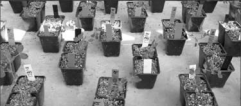
Plants not only remember when you touch them, but they can also make risky decisions that are as sophisticated as those made by humans, all without brains or complex nervous systems
Researchers showed that when faced with the choice between a pot containing constant levels of nutrients or one with unpredictable levels, a plant will pick the mystery pot when conditions are sufficiently poo
In a set of experiments, Dr. Shemesh, from TelHai College in Israel, and Alex Kacelnik, from Oxford University, grew pea plants and split their roots between two pots. Both pots had the same amount of nutrients on average, but in one, the levels were constant; in the other, they varied over time. Then the researchers switched the conditions so that the average nutrients in both pots would be equally high or low, and asked: Which pot would a plant prefer
When nutrient levels were low, the plants laid more roots in the unpredictable pot. But when nutrients were abundant, they chose the one that always had the same amount
The New York Times, June 30, 2016. Adaptado.
Segundo uma das conclusões dos experimentos relatados no texto, as plantas de ervilha demonstraram
Questão 76 135254
IFMT Vestibular 2017TEXTO II
NASA to make all its research available free on the Internet
David Millward, US CORRESPONDENT
22 AUGUST 2016
[1] The American space agency, NASA, is to make all its research available free of charge. It is a move which will
delight science enthusiasts and aspiring astronauts. Normally such material is hidden behind a paywall, meaning
that it is often out of reach for the lay enthusiast.
The EU has also said it hopes to make all its research available free from 2020. “At NASA, we are celebrating
[5] this opportunity to extend access to our extensive portfolio of scientific and technical publications,” said Dava
Newman, NASA’s Deputy Administrator.
“Through open access and innovation we invite the global community to join us in exploring Earth, air and
space.”
The Obama administration has been pressing its science agencies to make its research more accessible
[10] believing it increase the popularity of science and advance public knowledge.
In 2013, the White House Office of Science and Technology Policy directed a number of agencies, including
NASA, to increase access to their research.
Under the plans, the research will be made available by a web portal. Any research funded by NASA will have to
be posted on Pubspace within a year of publication. “Making our research data easier to access will greatly
[15] magnify the impact of our research,” NASA Chief
Scientist Ellen Stofan said. “As scientists and engineers, we work by building upon a foundation laid by others.”
A administração de Obama:
Questão 53 130634
UEMG 2017How a young student’s innovative idea hopes to boost response times for EMTs
By Woody Brown on June 1, 2015
Drones have been at the forefront of the national conversation for years now. As the components needed to create them grow smaller and more affordable, many companies and organizations have started exploring the potential that drones could have to improve our daily lives. Whether by delivering a product with unprecedented speed or taking photographs and video from new heights, drones have many capabilities, most of which we have yet to discover.
One young man, however, has envisioned a new way to use drones that could save thousands of lives. One of the greatest obstacles facing first responders and emergency medical technicians [EMTs] when it comes to the difficult business of saving lives is time. Think of your daily commute: people in the United States spend an average of 25.5 minutes traveling one-way to work every day. In bumperto- bumper traffic, blaring sirens and flashing lights are often not enough to clear a fast path for an ambulance to reach someone in need. During cardiac arrest, there are, at most, a few minutes to save a person’s life. After that, the mortality rate rises steeply. With stakes this high, every second counts.
Alec Momont, a graduate student in engineering at Delft University of Technology in the Netherlands, recognized this problem and saw a way to significantly reduce deaths that result from delayed emergency care. What if ambulances could fly? Or rather, what if we could make a drone that functioned like a stripped-down, lightweight automatic external defibrillator [AED]? AEDs, which can be found in schools, sports arenas and many government buildings, are significantly more effective than cardiopulmonary resuscitation [CPR] at preventing fatalities resulting from cardiac arrest. CPR can be helpful, but an AED is better, and very few people have AEDs in their cars or homes.
As his master’s degree project, Momont built a prototype of this lifesaving drone. It contained an AED, a microphone and speakers. The average travel time, according to him, could be cut by 90 percent. Here’s how it works: In the event of cardiac arrest, a paramedic would respond to a call by flying the drone at a speed of 60 mph to the scene of the emergency. The paramedic would then give instructions to someone near the victim, who would position the AED. Once in place, the AED would operate automatically. The paramedic would be able to see through the camera whether or not the pads on the AED have been correctly positioned, and how the victim responds.
A dramatized video released by Momont’s university demonstrates all of this functionality. In it, a young woman calls emergency services in a panic because her father has had a heart attack. A calm-voiced EMT answers and guides her through the surprisingly simple process of finding and using the drone. Fewer than two minutes after she makes the call, her father sits up and hugs her.
The ambulance drone can increase the chances of surviving cardiac arrest from eight percent to 80 percent, Momont says in the video. The drone’s ability to travel as the crow flies frees it from infrastructural limitations that currently impede road-bound ambulances. “Using advanced production techniques such as 3D printed microstructures and carbon fiber frame construction, we were able to achieve a very lightweight design,” Momont says. “The result is an integrated solution that is clear in its orientation and friendly in appearance.”
Momont’s aim is to rapidly expand the existing framework of emergency services by constructing many of these drones over the next five years. Expenses are low: each drone is relatively cheap to make, about $18,600. By comparison, a typical ambulance costs more than $100,000, and a ride in one usually costs more than $1,000.
The ambulance drones can even fly autonomously (though legislation in many countries does not permit this yet). Several emergency service providers have already expressed interest. If the technology continues to receive financial support from other parties in the healthcare industry, Momont’s dream could very easily become a reality.
We live in a world where drones have, so far, been used mostly in armed conflict. Momont, however, has a different vision. In the near future that he describes, tens of thousands of needless deaths will be prevented with his ingenious invention. That is certainly welcome news, especially in the United States, which deals with skyrocketing numbers of heart-related ailments and disabilities. “Let’s use drones for a good purpose,” Momont says. “Let us use drones to save lives.”
Adapted from: <http://www.verizonwireless.com/news/article/2015/05/ambulance-dronescould-save-thousands-of-lives.html>. Access on: 03 Oct. 2016.
The main purpose of this text is to
Questão 52 130633
UEMG 2017How a young student’s innovative idea hopes to boost response times for EMTs
By Woody Brown on June 1, 2015
Drones have been at the forefront of the national conversation for years now. As the components needed to create them grow smaller and more affordable, many companies and organizations have started exploring the potential that drones could have to improve our daily lives. Whether by delivering a product with unprecedented speed or taking photographs and video from new heights, drones have many capabilities, most of which we have yet to discover.
One young man, however, has envisioned a new way to use drones that could save thousands of lives. One of the greatest obstacles facing first responders and emergency medical technicians [EMTs] when it comes to the difficult business of saving lives is time. Think of your daily commute: people in the United States spend an average of 25.5 minutes traveling one-way to work every day. In bumperto- bumper traffic, blaring sirens and flashing lights are often not enough to clear a fast path for an ambulance to reach someone in need. During cardiac arrest, there are, at most, a few minutes to save a person’s life. After that, the mortality rate rises steeply. With stakes this high, every second counts.
Alec Momont, a graduate student in engineering at Delft University of Technology in the Netherlands, recognized this problem and saw a way to significantly reduce deaths that result from delayed emergency care. What if ambulances could fly? Or rather, what if we could make a drone that functioned like a stripped-down, lightweight automatic external defibrillator [AED]? AEDs, which can be found in schools, sports arenas and many government buildings, are significantly more effective than cardiopulmonary resuscitation [CPR] at preventing fatalities resulting from cardiac arrest. CPR can be helpful, but an AED is better, and very few people have AEDs in their cars or homes.
As his master’s degree project, Momont built a prototype of this lifesaving drone. It contained an AED, a microphone and speakers. The average travel time, according to him, could be cut by 90 percent. Here’s how it works: In the event of cardiac arrest, a paramedic would respond to a call by flying the drone at a speed of 60 mph to the scene of the emergency. The paramedic would then give instructions to someone near the victim, who would position the AED. Once in place, the AED would operate automatically. The paramedic would be able to see through the camera whether or not the pads on the AED have been correctly positioned, and how the victim responds.
A dramatized video released by Momont’s university demonstrates all of this functionality. In it, a young woman calls emergency services in a panic because her father has had a heart attack. A calm-voiced EMT answers and guides her through the surprisingly simple process of finding and using the drone. Fewer than two minutes after she makes the call, her father sits up and hugs her.
The ambulance drone can increase the chances of surviving cardiac arrest from eight percent to 80 percent, Momont says in the video. The drone’s ability to travel as the crow flies frees it from infrastructural limitations that currently impede road-bound ambulances. “Using advanced production techniques such as 3D printed microstructures and carbon fiber frame construction, we were able to achieve a very lightweight design,” Momont says. “The result is an integrated solution that is clear in its orientation and friendly in appearance.”
Momont’s aim is to rapidly expand the existing framework of emergency services by constructing many of these drones over the next five years. Expenses are low: each drone is relatively cheap to make, about $18,600. By comparison, a typical ambulance costs more than $100,000, and a ride in one usually costs more than $1,000.
The ambulance drones can even fly autonomously (though legislation in many countries does not permit this yet). Several emergency service providers have already expressed interest. If the technology continues to receive financial support from other parties in the healthcare industry, Momont’s dream could very easily become a reality.
We live in a world where drones have, so far, been used mostly in armed conflict. Momont, however, has a different vision. In the near future that he describes, tens of thousands of needless deaths will be prevented with his ingenious invention. That is certainly welcome news, especially in the United States, which deals with skyrocketing numbers of heart-related ailments and disabilities. “Let’s use drones for a good purpose,” Momont says. “Let us use drones to save lives.”
Adapted from: <http://www.verizonwireless.com/news/article/2015/05/ambulance-dronescould-save-thousands-of-lives.html>. Access on: 03 Oct. 2016.
The use of CAN in paragraphs 3 and 6 reveals the idea of
06