


![[Marketing] Questao Topo - deslogado](https://storage.estuda.com.br/banners/0_6b7ebee90b03af1c560c73bb8bcce34a_banner_deslogado_70_dias.png)
Questões de Inglês
19.971 Questões
Questão 30 16239911
FATEC 2026/1Leia o texto para responder à questão
Rocket man (Elton John)
I miss the Earth so much, I miss my wife
It’s lonely out in space
On such a timeless flight
(…)
Mars ain’t the kind of place to raise your kids
In fact, it’s cold as hell
And there’s no one there to raise them if you did
https://tinyurl.com/2b5acwut> Acesso em: 13.09.2025.
A música de Elton John foi composta em 1972 e refere-se ao desenvolvimento da
Questão 27 16239708
FATEC 2026/1Leia a tirinha.
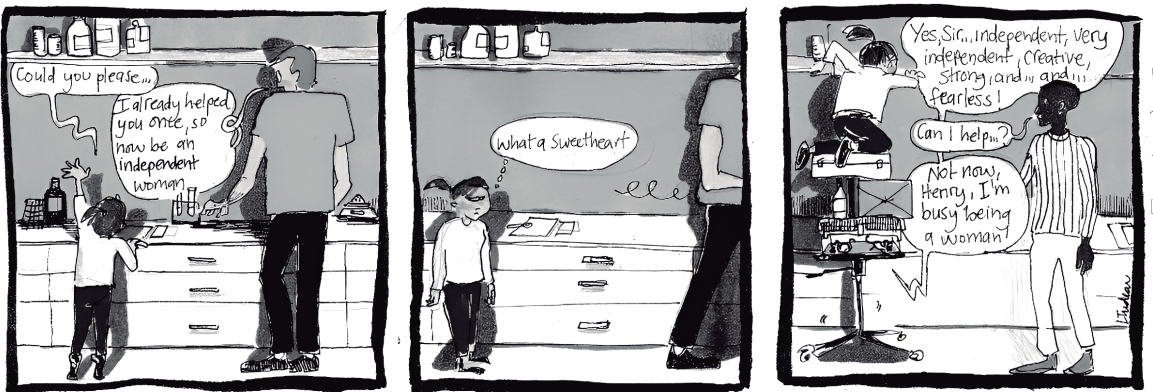
https://tinyurl.com/4htnsnbb> Acesso em: 12.09.2025.
A: Could you please... B: I already helped you once, so now be an independent woman. / A: What a sweetheart /
A: Yes, Sir…independent, very independent, creative, strong, and … fearless! C: Can I help…? A: Not now, Henry, I’m busy being a woman!
De acordo com a garota da tirinha, pressupõe-se que uma mulher é
Questão 26 16239685
FATEC 2026/1Leia o quadrinho para responder à questão
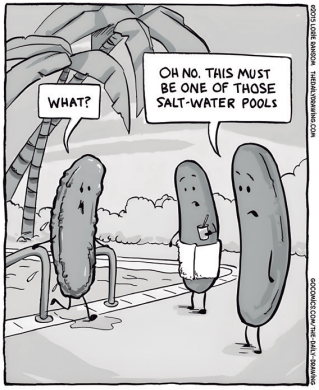
https://tinyurl.com/45wd4hf5> Acesso em: 11.09.2025. Original colorido
A ocorrência do verbo must no quadrinho expressa
Questão 25 16239671
FATEC 2026/1Leia o quadrinho para responder à questão
https://tinyurl.com/45wd4hf5> Acesso em: 11.09.2025. Original colorido
Os pepinos acreditam que seu amigo, ao sair da piscina, está
Questão 5 16216051
UFMS PSV 2026Leia o Texto para responder à questão.
AI Dependence: Are We Losing Our Ability to Think?
In recent years, Artificial Intelligence (AI) stopped being just a technological promise to become part of the daily lives of millions of people. Tools like chatbots and generative systems started to produce texts, images and even decisions that previously depended exclusively on human intellect. If, on the one hand, this transformation awakens fascination, on the other hand, it raises a growing concern: to what extent are we becoming dependent on AI to the point of compromising our own ability to think?
Human beings’ greatest characteristics have always been their capacity for reasoning and creativity. However, recent studies warn that the excessive and passive use of AI may be weakening precisely these abilities. A study conducted by the Massachusetts Institute of Technology (MIT), in 2025, showed that students who used AI systems intensively had lower brain activity on memory and critical analysis tasks, when compared to groups who did not use the technology (INFO VERUS, 2025).
This risk manifests itself clearly in education: young people turn to AI to solve exercises, write essays or interpret texts, but they often don’t understand the generated content, accepting it without reflection. In some cases, students submitted papers written by AI without even knowing how to explain the concepts contained therein (FORBES, 2025). This practice, in addition to compromising learning, creates an illusion of competence, in which intellectual autonomy is replaced by blind trust in the machine.
(SANTOS, L. M. dos. A dependência das IAS, 2025. Disponível em: https://ufsm.br/r-791-3644. Acesso em: 13 out.2025)
Qual é a análise sintática correta sobre a oração: “In recent years, Artificial Intelligence (AI) stopped being just a technological promise to become part of the daily lives of millions of people”?
Questão 4 16216003
UFMS PSV 2026Leia o Texto para responder à questão.
AI Dependence: Are We Losing Our Ability to Think?
In recent years, Artificial Intelligence (AI) stopped being just a technological promise to become part of the daily lives of millions of people. Tools like chatbots and generative systems started to produce texts, images and even decisions that previously depended exclusively on human intellect. If, on the one hand, this transformation awakens fascination, on the other hand, it raises a growing concern: to what extent are we becoming dependent on AI to the point of compromising our own ability to think?
Human beings’ greatest characteristics have always been their capacity for reasoning and creativity. However, recent studies warn that the excessive and passive use of AI may be weakening precisely these abilities. A study conducted by the Massachusetts Institute of Technology (MIT), in 2025, showed that students who used AI systems intensively had lower brain activity on memory and critical analysis tasks, when compared to groups who did not use the technology (INFO VERUS, 2025).
This risk manifests itself clearly in education: young people turn to AI to solve exercises, write essays or interpret texts, but they often don’t understand the generated content, accepting it without reflection. In some cases, students submitted papers written by AI without even knowing how to explain the concepts contained therein (FORBES, 2025). This practice, in addition to compromising learning, creates an illusion of competence, in which intellectual autonomy is replaced by blind trust in the machine.
(SANTOS, L. M. dos. A dependência das IAS, 2025. Disponível em: https://ufsm.br/r-791-3644. Acesso em: 13 out.2025)
Leia o período a seguir: “Human beings’ greatest characteristics have always been their capacity for reasoning and creativity. However, recent studies warn that the excessive and passive use of AI may be weakening precisely these abilities”.
Assinale a alternativa correta que expressa o que as palavras destacadas representam, respectivamente.
06