


![[Marketing] Questao Topo - deslogado](https://storage.estuda.com.br/banners/0_6b7ebee90b03af1c560c73bb8bcce34a_banner_deslogado_70_dias.png)
Questões de Inglês
19.971 Questões
Questão 46 3160405
UFN Inverno 2018Observe a imagem que segue para responder às questão.

O cartaz apresenta preocupações de abrangência mundial que demandam muitas discussões, mas principalmente ações.
A alternativa que identifica o foco das propostas do evento, nessa edição, é:
Questão 13 2667257
UNIMONTES 3° Etapa 2018Psychopaths can’t tell if a person is genuinely sad or afraid, study suggests
People with psychopathic traits find it harder to tell the difference between genuine and fake emotions, a
study has suggested.
Researchers based in Australia arrived at this conclusion by asking people to look at photographs of faces
showing different emotions, such as fear or sadness.
[5] Study author Dr. Amy Dawel, of the Australian National University Research School of Psychology,
explained in a statement: “For most people, if we see someone who is genuinely upset, you feel bad for
them and it motivates you to help them. People who are very high on the psychopathy spectrum don’t show
this response.”
Psychopathy is a personality disorder characterized by amoral behavior, such as callousness, poor empathy
[10] skills and shallow affect: — the inability to experience deep emotions even when in scenarios where the
average person might be distressed. They might lack remorse or guilt in appropriate situations, and have a
disregard for social conventions and law. Balancing this is their superficial charm and ability to mimic
emotional behavior, which can help them function in society. Patrick Bateman, the murderous Wall Street
banker in American Psycho, is one of the most famous fictional depictions of psychopathy.
 [15] The team behind the study published in the journal Personality Disorders recruited 140 participants, and
tested them for psychopathic traits. They were also shown photos of facial expressions. In some images, the
emotions where genuine, while others were faked.
Those who scored low on the psychopathy report were better able to pick up genuine and fabricated
emotions. The higher a participant scored, the harder they found it to differentiate between genuine and fake
[20] feelings of sadness or fear. They could, however, detect genuine happiness, anger, and disgust.
“The results were very specific to expressions of distress,” said Dawel. “We found people with high levels
of psychopathic traits don’t feel any worse for someone who is genuinely upset than someone who is faking
it.”
“They also seem to have problems telling if the upset is real or fake. As a result, they are not nearly as
[25] willing to help someone who is expressing genuine distress as most people are.”
The researchers hope their paper will form the basis of further work into pinpointing and treat psychopathy,
particularly by identifying it in childhood.
“There seems to be a genetic contribution to these traits, we see the start of them quite early in childhood,”
said Dawel.
[30] “Understanding exactly what is going wrong with emotions in psychopathy will help us to identify these
problems early and hopefully intervene in ways that promote moral development.”
The research is the latest to delve into psychopathic traits. Last year, Harvard University researchers
published the results of a study into almost 50 prisoners. They found the brains of those with psychopathic
traits were wired to value immediate reward, while not considering long-term consequences.
[35] Commenting on the paper published in Neuron, study author Josh Buckholtz, associate professor of
psychology at Harvard University, said in a statement: “For years, we have been focused on the idea that
psychopaths are people who cannot generate emotion and that’s why they do all these terrible things.
“But what we care about with psychopaths is not the feelings they have or don’t have, it’s the choices they
make. Psychopaths commit an astonishing amount of crime, and this crime is both devastating to victims
[40] and astronomically costly to society as a whole.”
Fonte: GANDER, Kashmira. Psychopaths can’t tell if a person is genuinely sad or afraid, study sugests. Disponível em: http://www.newsweek.com/psychopaths-cant-tell-if-person-genuinely-sad-or-afraid-study suggests-1055599. Publicado em: 8 março 2018. Acesso em: 14 out. 2018.
No trecho “They found the brains of those with psychopathic traits were wired to value immediate reward, while not considering long-term consequences.” (linhas 33-34), o pronome “they” substitui:
Questão 19 2646917
UNIMONTES 1° Etapa 2018The age you feel means more than your actual birthdate
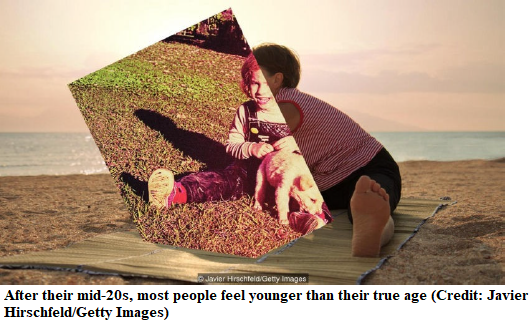
Most people feel younger or older than they really are – and this ‘subjective age’ has a big effect on their physical and mental health.
Imagine, for a moment, that you had no birth certificate and your age was simply based on the way you feel
inside. How old would you say you are?
Like your height or shoe size, the number of years that have passed since you first entered the world is an
unchangeable fact. But everyday experience suggests that we often don’t experience ageing the same way,
[5] with many people feeling older or younger than they really are.
Scientists are increasingly interested in this quality. They are finding that your ‘subjective age’ may be
essential for understanding the reasons that some people appear to flourish as they age – while others fade.
“The extent to which older adults feel much younger than they are may determine important daily or life
decisions for what they will do next,” says Brian Nosek at the University of Virginia.
[10] Its importance doesn’t end there. Various studies have even shown that your subjective age also can predict
various important health outcomes, including your risk of death. In some very real ways, you really are
‘only as old as you feel’.
Given these enticing results, many researchers are now trying to unpick the many biological, psychological,
and social factors that shape the individual experience of ageing – and how this knowledge might help us
[15] live longer, healthier lives.
 This new understanding of the ageing process has been decades in the making. Some of the earliest studies
charting the gap between felt and chronological age appeared in the 1970s and 1980s. That trickle of initial
interest has now turned into a flood. A torrent of new studies during the last 10 years have explored the
potential psychological and physiological consequences of this discrepancy.
One of the most intriguing strands of this research has explored the way subjective age interacts with our
[20] personality. It is now well accepted that people tend to mellow as they get older, becoming less extroverted
and less open to new experiences – personality changes which are less pronounced in people who are
younger at heart and accentuated in people with older subjective ages.
Interestingly, however, the people with younger subjective ages also became more conscientious and less
neurotic – positive changes that come with normal ageing. So they still seem to gain the wisdom that comes
[25] with greater life experience. But it doesn’t come at the cost of the energy and exuberance of youth. It’s not
as if having a lower subjective age leaves us frozen in a state of permanent immaturity.
Feeling younger than your years also seems to come with a lower risk of depression and greater mental
wellbeing as we age. It also means better physical health, including your risk of dementia, and less of a
chance that you will be hospitalised for illness.
[30] Yannick Stephan at the University of Montpellier examined the data from three longitudinal studies which
together tracked more than 17,000 middle-aged and elderly participants. […]
Fonte: ROBSON, David. The age you feel means more than your actual birthdate. Disponível em: http://www.bbc.com/future/story/20180712-the-age-you-feel-means-more-than-your-actual-birthdate. Publicado em: 19 jul. 2018. Acesso em: 21 jul. 2018.
We may affirm that Brian Nosek
Questão 17 2646908
UNIMONTES 1° Etapa 2018The age you feel means more than your actual birthdate
Most people feel younger or older than they really are – and this ‘subjective age’ has a big effect on their physical and mental health.
Imagine, for a moment, that you had no birth certificate and your age was simply based on the way you feel
inside. How old would you say you are?
Like your height or shoe size, the number of years that have passed since you first entered the world is an
unchangeable fact. But everyday experience suggests that we often don’t experience ageing the same way,
[5] with many people feeling older or younger than they really are.
Scientists are increasingly interested in this quality. They are finding that your ‘subjective age’ may be
essential for understanding the reasons that some people appear to flourish as they age – while others fade.
“The extent to which older adults feel much younger than they are may determine important daily or life
decisions for what they will do next,” says Brian Nosek at the University of Virginia.
[10] Its importance doesn’t end there. Various studies have even shown that your subjective age also can predict
various important health outcomes, including your risk of death. In some very real ways, you really are
‘only as old as you feel’.
Given these enticing results, many researchers are now trying to unpick the many biological, psychological,
and social factors that shape the individual experience of ageing – and how this knowledge might help us
[15] live longer, healthier lives.
This new understanding of the ageing process has been decades in the making. Some of the earliest studies
charting the gap between felt and chronological age appeared in the 1970s and 1980s. That trickle of initial
interest has now turned into a flood. A torrent of new studies during the last 10 years have explored the
potential psychological and physiological consequences of this discrepancy.
One of the most intriguing strands of this research has explored the way subjective age interacts with our
[20] personality. It is now well accepted that people tend to mellow as they get older, becoming less extroverted
and less open to new experiences – personality changes which are less pronounced in people who are
younger at heart and accentuated in people with older subjective ages.
Interestingly, however, the people with younger subjective ages also became more conscientious and less
neurotic – positive changes that come with normal ageing. So they still seem to gain the wisdom that comes
[25] with greater life experience. But it doesn’t come at the cost of the energy and exuberance of youth. It’s not
as if having a lower subjective age leaves us frozen in a state of permanent immaturity.
Feeling younger than your years also seems to come with a lower risk of depression and greater mental
wellbeing as we age. It also means better physical health, including your risk of dementia, and less of a
chance that you will be hospitalised for illness.
[30] Yannick Stephan at the University of Montpellier examined the data from three longitudinal studies which
together tracked more than 17,000 middle-aged and elderly participants. […]
Fonte: ROBSON, David. The age you feel means more than your actual birthdate. Disponível em: http://www.bbc.com/future/story/20180712-the-age-you-feel-means-more-than-your-actual-birthdate. Publicado em: 19 jul. 2018. Acesso em: 21 jul. 2018.
According to the text, “subjective age” is:
Questão 13 2426748
FCMSCSP - Santa Casa Enfermagem e Fonoaudiologia 2018Leia o texto para responder à questão.
Sleep is important, so dreams must be, too, right?
Over the last few days, I’ve shared stories of how aggravating dreams about work can be. But sometimes good things happen. “As a computer engineer for over 40 years, sometimes my work does find its way into my dreams,” wrote Fred Myers of South Bend, Ind. “Occasionally, I’ll work out an approach to solving a problem in a dream, wake up, write it down, and then it actually pans out when I get to work.”
Sleep: There’s a reason we spend a third of our lives doing it, even if we aren’t sure what that reason is. “It must be important,” said Rachel Salas, a Johns Hopkins Medicine neurologist who studies sleep and treats sleep disorders. “And if sleeping is important, that would suggest that dreaming is important.”
However, scientists aren’t sure exactly why. “There are a lot of theories out there,” Salas said. “The bottom line is we just don’t know. There is some research suggesting that dreams are the brain processing or getting rid of unwanted memories, kind of consolidating memories as we’re sleeping.” Also, some scientists think they can play a role in creativity. “There’s some research showing that musicians have been inspired during their dreams and have actually composed music during sleep,” Salas said. So maybe those job dreams aren’t so bad!
(John Kelly. www.washingtonpost.com, 12.07.2017. Adaptado.)
No trecho do último parágrafo “However, scientists aren’t sure exactly why”, o termo em destaque estabelece com o parágrafo anterior uma relação de
Questão 58 2415948
UNINOVE 2018Leia o texto para responder à questão..
Facebook: where do you belong?
A team of communication professors from the Brigham Young University, USA, revealed that people using the social media platform Facebook can be classified into categories, depending on their posts and use of additional Facebook features. Their findings basically answer why an average of 1.28 billion users check on their Facebook accounts every day, with majority of them spending about 35 minutes daily on the platform. “What is it about this social-media platform that has taken over the world?” asked lead author Tom Robinson. “Why are people so willing to put their lives on display? Nobody has ever really asked the question, ‘Why do you like this?’”
To identify different kinds of Facebook user, the researchers compiled a list of 48 statements that identify potential reasons why people use Facebook. They then recruited study subjects and asked them to reflect their personal connection to the statements, rating each on a scale from “most like me” to “least like me”. The researchers also interviewed each subject. Based on the responses, the researchers identified four categories of Facebook users: relationship builders, town criers, selfies and window shoppers.
Relationship builders and selfies tend to post pictures, videos and text updates on their Facebook. While relationship builders post and use additional Facebook features primarily to further strengthen the relationships they have beyond the virtual world, selfies are more focused on getting more attention, likes and comments.
On the other hand, town criers and window shoppers both feel a sense of social obligation to be on Facebook and are mostly indifferent about posting stories or other information about themselves. Town criers tend to share news stories and post events; window shoppers were more likely to be onlookers that prefer watching what other people do.
The researchers noted that Facebook users may see themselves in more than one of the categories. For example, most people have the tendency to be selfies. However, users can identify more with one category than the others.
(John Raphael. www.natureworldnews.com, 31.07.2017. Adaptado.)
No excerto do primeiro parágrafo “with majority of them”, o termo sublinhado refere-se a
06