


![[Marketing] Questao Topo - deslogado](https://storage.estuda.com.br/banners/0_6b7ebee90b03af1c560c73bb8bcce34a_banner_deslogado_70_dias.png)
Questões de Inglês
19.971 Questões
Questão 45 14771110
UNIFENAS Tarde 2025/1TEXT 1
Read the following excerpt from the book The Emperor of All Maladies and answer the questions which follow.
On the morning of May 19, 2004, Carla Reed, a thirty-year-old kindergarten teacher from Ipswich, Massachusetts, a mother of three young children, woke up in bed with a headache. “Not just any headache,” she would recall later, “but a sort of numbness in my head. The kind of numbness that instantly tells you that something is terribly wrong.”
Something had been terribly wrong for nearly a month. Late in April, Carla had discovered a few bruises on her back. They had suddenly appeared one morning, like strange stigmata, then grown and vanished over the next month, leaving large map-shaped marks on her back. Almost indiscernibly, her gums had begun to turn white. By early May, Carla, a vivacious, energetic woman accustomed to spending hours in the classroom chasing down five- and six-year-olds, could barely walk up a flight of stairs. Some mornings, exhausted and unable to stand up, she crawled down the hallways of her house on all fours to get from one room to another. She slept fitfully for twelve or fourteen hours a day, then woke up feeling so overwhelmingly tired that she needed to haul herself back to the couch again to sleep.
Carla and her husband saw a general physician and a nurse twice during those four weeks, but she returned each time with no tests and without a diagnosis. Ghostly pains appeared and disappeared in her bones. The doctor fumbled about for some explanation. Perhaps it was a migraine, she suggested, and asked Carla to try some aspirin. The aspirin simply worsened the bleeding in Carla’s white gums.
Outgoing, gregarious, and ebullient, Carla was more puzzled than worried about her waxing and waning illness. She had never been seriously ill in her life. The hospital was an abstract place for her; she had never met or consulted a medical specialist, let alone an oncologist. She imagined and concocted various causes to explain her symptoms—overwork, depression, dyspepsia, neuroses, insomnia. But in the end, something visceral arose inside her—a seventh sense—that told Carla something acute and catastrophic was brewing within her body.
On the afternoon of May 19, Carla dropped her three children with a neighbor and drove herself back to the clinic, demanding to have some blood tests. Her doctor ordered a routine test to check her blood counts. As the technician drew a tube of blood from her vein, he looked closely at the blood’s color, obviously intrigued. Watery, pale, and dilute, the liquid that welled out of Carla’s veins hardly resembled blood.
Carla waited the rest of the day without any news. At a fish market the next morning, she received a call.
“We need to draw some blood again,” the nurse from the clinic said.
“When should I come?” Carla asked, planning her hectic day. She remembers looking up at the clock on the wall. A half-pound steak of salmon was warming in her shopping basket, threatening to spoil if she left it out too long.
In the end, commonplace particulars make up Carla’s memories of illness: the clock, the car pool, the children, a tube of pale blood, a missed shower, the fish in the sun, the tightening tone of a voice on the phone. Carla cannot recall much of what the nurse said, only a general sense of urgency. “Come now,” she thinks the nurse said. “Come now.”
Excerpted from: Siddhartha Mukherjee, M.D. The Emperor of All Maladies, Scribner 2010
The adverb barely in the phrase “could barely walk up a flight of stairs” means the same thing as
Questão 43 14771102
UNIFENAS Tarde 2025/1TEXT 1
Read the following excerpt from the book The Emperor of All Maladies and answer the questions which follow.
On the morning of May 19, 2004, Carla Reed, a thirty-year-old kindergarten teacher from Ipswich, Massachusetts, a mother of three young children, woke up in bed with a headache. “Not just any headache,” she would recall later, “but a sort of numbness in my head. The kind of numbness that instantly tells you that something is terribly wrong.”
Something had been terribly wrong for nearly a month. Late in April, Carla had discovered a few bruises on her back. They had suddenly appeared one morning, like strange stigmata, then grown and vanished over the next month, leaving large map-shaped marks on her back. Almost indiscernibly, her gums had begun to turn white. By early May, Carla, a vivacious, energetic woman accustomed to spending hours in the classroom chasing down five- and six-year-olds, could barely walk up a flight of stairs. Some mornings, exhausted and unable to stand up, she crawled down the hallways of her house on all fours to get from one room to another. She slept fitfully for twelve or fourteen hours a day, then woke up feeling so overwhelmingly tired that she needed to haul herself back to the couch again to sleep.
Carla and her husband saw a general physician and a nurse twice during those four weeks, but she returned each time with no tests and without a diagnosis. Ghostly pains appeared and disappeared in her bones. The doctor fumbled about for some explanation. Perhaps it was a migraine, she suggested, and asked Carla to try some aspirin. The aspirin simply worsened the bleeding in Carla’s white gums.
Outgoing, gregarious, and ebullient, Carla was more puzzled than worried about her waxing and waning illness. She had never been seriously ill in her life. The hospital was an abstract place for her; she had never met or consulted a medical specialist, let alone an oncologist. She imagined and concocted various causes to explain her symptoms—overwork, depression, dyspepsia, neuroses, insomnia. But in the end, something visceral arose inside her—a seventh sense—that told Carla something acute and catastrophic was brewing within her body.
On the afternoon of May 19, Carla dropped her three children with a neighbor and drove herself back to the clinic, demanding to have some blood tests. Her doctor ordered a routine test to check her blood counts. As the technician drew a tube of blood from her vein, he looked closely at the blood’s color, obviously intrigued. Watery, pale, and dilute, the liquid that welled out of Carla’s veins hardly resembled blood.
Carla waited the rest of the day without any news. At a fish market the next morning, she received a call.
“We need to draw some blood again,” the nurse from the clinic said.
“When should I come?” Carla asked, planning her hectic day. She remembers looking up at the clock on the wall. A half-pound steak of salmon was warming in her shopping basket, threatening to spoil if she left it out too long.
In the end, commonplace particulars make up Carla’s memories of illness: the clock, the car pool, the children, a tube of pale blood, a missed shower, the fish in the sun, the tightening tone of a voice on the phone. Carla cannot recall much of what the nurse said, only a general sense of urgency. “Come now,” she thinks the nurse said. “Come now.”
Excerpted from: Siddhartha Mukherjee, M.D. The Emperor of All Maladies, Scribner 2010
Carla Reed had various symptoms leading up to her cancer diagnosis, including
Questão 25 14759082
UNIFESP 1 Dia 2025Leia o texto e examine o infográfico para responder à questão.
Year after year, illegal fires consume thousands of hectares of Brazilian biomes, threatening biodiversity and all life on the planet. Data from the end of August 2024 shows a dramatic and alarming increase in fire outbreaks compared to the same period in 2023 in the Amazon, Cerrado, and Pantanal. In this distressing scenario, impunity acts as fuel for this destruction, and the Brazilian authorities must respond quickly: investigate and hold those responsible for illegal fires accountable, while also strengthening prevention measures and adopting strategies to deal with the reality of extreme events.
The consequences of fires know no borders. In addition to causing harm to people living nearby, the smoke from fires in the Amazon and Pantanal travelled to distant regions. The state of São Paulo experienced its worst August since INPE’s (Instituto Nacional de Pesquisas Espaciais) measurements began in 1998, with 3,612 heat spots recorded — something never seen before. The reasons are still being investigated, as on a single day (August 23), the number of fire outbreaks in the state surpassed those recorded across the entire Amazon biome, where illegal fires are common at this time of year.
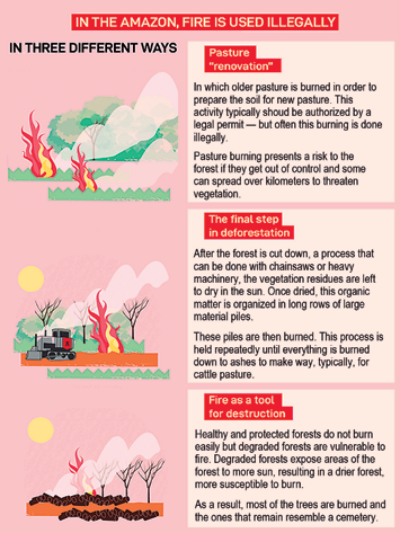
(www.greenpeace.org, 05.09.2024. Adaptado.)
According to the infographic, a direct consequence of exposing deforested areas to the sun is:
Questão 23 14759073
UNIFESP 1 Dia 2025Leia o texto e examine o infográfico para responder à questão.
Year after year, illegal fires consume thousands of hectares of Brazilian biomes, threatening biodiversity and all life on the planet. Data from the end of August 2024 shows a dramatic and alarming increase in fire outbreaks compared to the same period in 2023 in the Amazon, Cerrado, and Pantanal. In this distressing scenario, impunity acts as fuel for this destruction, and the Brazilian authorities must respond quickly: investigate and hold those responsible for illegal fires accountable, while also strengthening prevention measures and adopting strategies to deal with the reality of extreme events.
The consequences of fires know no borders. In addition to causing harm to people living nearby, the smoke from fires in the Amazon and Pantanal travelled to distant regions. The state of São Paulo experienced its worst August since INPE’s (Instituto Nacional de Pesquisas Espaciais) measurements began in 1998, with 3,612 heat spots recorded — something never seen before. The reasons are still being investigated, as on a single day (August 23), the number of fire outbreaks in the state surpassed those recorded across the entire Amazon biome, where illegal fires are common at this time of year.
(www.greenpeace.org, 05.09.2024. Adaptado.)
No trecho do primeiro parágrafo “In this distressing scenario, impunity acts as fuel for this destruction, and the Brazilian authorities must respond quickly”, o termo sublinhado expressa
Questão 21 14759046
UNIFESP 1 Dia 2025Leia o texto e examine a imagem para responder à questão.
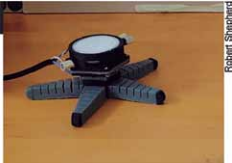
Eat your heart out, Victor Frankenstein1! Researchers have succeeded in creating living machines made from electronic parts and living fungi. In the past, so-called biohybrid robots ― which combine living tissue with robotic materials — have generally employed animal cells, but these are hard to keep alive. Fungi, by contrast, are incredibly resilient. Their branching networks of rootlike filaments, called mycelia, which allow mushrooms to connect and communicate underground, can both sense the environment and fire off electrical signals in response — just like neurons in the human brain.
The team behind the project cultured these filaments from the king oyster mushroom (Pleurotus eryngii) onto electrodes in a 3D-printed platform, then hooked them up to a computer interface — allowing electrical impulses from the fungi to be converted into digital commands.
The end result was the above pictured soft, starfish- -shaped walking robot, as well as another hard robot with wheels. In both cases, the team used ultraviolet light to stimulate the mycelium2, triggering electrical signals that directed the robots to walk and roll at different speeds, the researchers report in Science Robotics. Experts tell National Geographic that the advance lays the groundwork for building robust, sustainable robots. In the future, these hardy, light- -activated cyborgs could be employed in harsh environments on Earth or even on missions outside our planet.
(Phie Jacobs. www.science.org, 28.08.2024. Adaptado.)
1Victor Frankenstein: young scientist and protagonist of a novel and a film, who becomes obsessed with the idea of creating life. Frankenstein constructs the Monster, a living creature with human-like appearance, from parts of deceased bodies.
2mycelium: singular form of mycelia.
No trecho do primeiro parágrafo “Fungi, by contrast, are incredibly resilient”, a expressão sublinhada pode ser substituída, sem alteração de sentido, por:
Questão 20 14759042
UNIFESP 1 Dia 2025Leia o texto e examine a imagem para responder à questão.
Eat your heart out, Victor Frankenstein1! Researchers have succeeded in creating living machines made from electronic parts and living fungi. In the past, so-called biohybrid robots ― which combine living tissue with robotic materials — have generally employed animal cells, but these are hard to keep alive. Fungi, by contrast, are incredibly resilient. Their branching networks of rootlike filaments, called mycelia, which allow mushrooms to connect and communicate underground, can both sense the environment and fire off electrical signals in response — just like neurons in the human brain.
The team behind the project cultured these filaments from the king oyster mushroom (Pleurotus eryngii) onto electrodes in a 3D-printed platform, then hooked them up to a computer interface — allowing electrical impulses from the fungi to be converted into digital commands.
The end result was the above pictured soft, starfish- -shaped walking robot, as well as another hard robot with wheels. In both cases, the team used ultraviolet light to stimulate the mycelium2, triggering electrical signals that directed the robots to walk and roll at different speeds, the researchers report in Science Robotics. Experts tell National Geographic that the advance lays the groundwork for building robust, sustainable robots. In the future, these hardy, light- -activated cyborgs could be employed in harsh environments on Earth or even on missions outside our planet.
(Phie Jacobs. www.science.org, 28.08.2024. Adaptado.)
1Victor Frankenstein: young scientist and protagonist of a novel and a film, who becomes obsessed with the idea of creating life. Frankenstein constructs the Monster, a living creature with human-like appearance, from parts of deceased bodies.
2mycelium: singular form of mycelia.
The excerpt from the first paragraph “which combine living tissue with robotic materials”
06