


![[Marketing] Questao Topo - deslogado](https://storage.estuda.com.br/banners/0_6b7ebee90b03af1c560c73bb8bcce34a_banner_deslogado_70_dias.png)
Questões de Inglês
19.971 Questões
Questão 34 605098
UNIFESP 2019Leia o texto para responder à questão.
Words that define the present
At a time when the world is changing more quickly than ever before, we need a new vocabulary to help us grasp what’s happening.
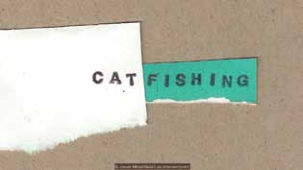
Catfishing. This word would make more sense if it referred to fishing for cats, but in fact, it refers to people who construct false identities online. Whether out of boredom, loneliness or malice, they lure other people into continued messaging correspondence, thereby building false relationships with them (the apparent source of the term “catfish” is a 2010 documentary called Catfish, whose verity, ironically enough, has been questioned).
There are two ways of looking at this: 1) The internet/ cyberspace is wonderful, because it gives people the freedom to augment or totally change their identities, and this is a marvellous new dawn for human expression, a new step in human evolution. 2) Nah, it’s a false dawn, because the internet is essentially a libertarian arena, and, as such, an amoral one (lots of “freedoms” but with no attendant social obligations); it is a new jungle where we must watch our backs and struggle for survival, surely a backward step in evolution. I lean toward the latter.
(Cameron Laux. www.bbc.com, 08.08.2018. Adaptado.)
O trecho do terceiro parágrafo “we must watch our backs” significa que devemos
Questão 33 605097
UNIFESP 2019Leia o texto para responder à questão.
Words that define the present
At a time when the world is changing more quickly than ever before, we need a new vocabulary to help us grasp what’s happening.
Catfishing. This word would make more sense if it referred to fishing for cats, but in fact, it refers to people who construct false identities online. Whether out of boredom, loneliness or malice, they lure other people into continued messaging correspondence, thereby building false relationships with them (the apparent source of the term “catfish” is a 2010 documentary called Catfish, whose verity, ironically enough, has been questioned).
There are two ways of looking at this: 1) The internet/ cyberspace is wonderful, because it gives people the freedom to augment or totally change their identities, and this is a marvellous new dawn for human expression, a new step in human evolution. 2) Nah, it’s a false dawn, because the internet is essentially a libertarian arena, and, as such, an amoral one (lots of “freedoms” but with no attendant social obligations); it is a new jungle where we must watch our backs and struggle for survival, surely a backward step in evolution. I lean toward the latter.
(Cameron Laux. www.bbc.com, 08.08.2018. Adaptado.)
No trecho do segundo parágrafo “they lure other people into continued messaging correspondence”, o termo sublinhado tem sentido, em português, de
Questão 25 604431
UNESP 2019/1Leia o texto para responder à questão.
Prescriptions for fighting epidemics

Epidemics have plagued humanity since the dawn of settled life. Yet, success in conquering them remains patchy. Experts predict that a global one that could kill more than 300 million people would come round in the next 20 to 40 years. What pathogen would cause it is anybody’s guess. Chances are that it will be a virus that lurks in birds or mammals, or one that that has not yet hatched. The scariest are both highly lethal and spread easily among humans. Thankfully, bugs that excel at the first tend to be weak at the other. But mutations – ordinary business for germs – can change that in a blink. Moreover, when humans get too close to beasts, either wild or packed in farms, an animal disease can become a human one.
A front-runner for global pandemics is the seasonal influenza virus, which mutates so much that a vaccine must be custom-made every year. The Spanish flu pandemic of 1918, which killed 50 million to 100 million people, was a potent version of the “swine flu” that emerged in 2009. The H5N1 “avian flu” strain, deadly in 60% of cases, came about in the 1990s when a virus that sickened birds made the jump to a human. Ebola, HIV and Zika took a similar route.
(www.economist.com, 08.02.2018. Adaptado.)
No trecho do primeiro parágrafo “or one that that has not yet hatched”, o termo sublinhado refere-se a
Questão 24 604430
UNESP 2019/1Leia o texto para responder à questão.
Prescriptions for fighting epidemics
Epidemics have plagued humanity since the dawn of settled life. Yet, success in conquering them remains patchy. Experts predict that a global one that could kill more than 300 million people would come round in the next 20 to 40 years. What pathogen would cause it is anybody’s guess. Chances are that it will be a virus that lurks in birds or mammals, or one that that has not yet hatched. The scariest are both highly lethal and spread easily among humans. Thankfully, bugs that excel at the first tend to be weak at the other. But mutations – ordinary business for germs – can change that in a blink. Moreover, when humans get too close to beasts, either wild or packed in farms, an animal disease can become a human one.
A front-runner for global pandemics is the seasonal influenza virus, which mutates so much that a vaccine must be custom-made every year. The Spanish flu pandemic of 1918, which killed 50 million to 100 million people, was a potent version of the “swine flu” that emerged in 2009. The H5N1 “avian flu” strain, deadly in 60% of cases, came about in the 1990s when a virus that sickened birds made the jump to a human. Ebola, HIV and Zika took a similar route.
(www.economist.com, 08.02.2018. Adaptado.)
De acordo com o primeiro parágrafo,
Questão 20 604086
UNESP 2019/1Entre 11 de fevereiro e 03 de junho de 2018, o Museu de Arte Moderna de Nova Iorque (MoMA) abrigou a primeira exposição nos Estados Unidos dedicada à pintora brasileira Tarsila do Amaral. Leia a apresentação de uma das pinturas expostas para responder à questão.
The painting Sleep (1928) is a dreamlike representation of tropical landscape, with this major motif of her repetitive figure that disappears in the background.
This painting is an example of Tarsila’s venture into surrealism. Elements such as repetition, random association, and dreamlike figures are typical of surrealism that we can see as main elements of this composition. She was never a truly surrealist painter, but she was totally aware of surrealism’s legacy.
(www.moma.org. Adaptado.)
A apresentação sublinha a influência de uma determinada vanguarda europeia sobre a pintura de Tarsila do Amaral. A influência dessa vanguarda europeia também se encontra nos seguintes versos do poeta modernista Murilo Mendes:
Questão 46 603974
FMC 2019/1Fake news: What exactly is it – and how can you spot it?
By: James Carson, 28 sep 2018
"Fake news" was not a term many people used two years ago, but it is now seen as one of the greatest threats to democracy, free debate and the Western order.
As well as being a favourite term of Donald Trump, it was also named 2017's word of the year, raising tensions between nations, and may lead to regulation of social media.
And yet, nobody can agree on what it is, the extent of the problem, and what to do about it.
How do you spot it?
Spotting fake news isn't easy: a Stanford study last year found that students were shockingly bad at distinguishing between different types of material online, whether paid for, fake or legitimate.
Facebook has a useful list of ways to spot fake news, which include checking other sources and a site's URL.
Facebook’s tips for spotting fake news
1. Be sceptical of headlines. The headlines of fake news stories are often catchy, and contain lots of capital letters and exclamation marks. If claims in the headline sound unbelievable, they may well be.
2. Look closely at the URL. Many false news stories mimic authentic news sources by making small changes to the URL. You can go to the site to compare the URL to established sources.
3. Check the source. Ensure the story comes from a source with a reputation for accuracy. If the story comes from a site you have not heard of, check their “About” section to learn more.
4. Watch for unusual formatting. Many false news stories often contain spelling and grammar errors, as well as an awkward looking layout.
5. Check the photos. False news stories often contain manipulated images or videos. Sometimes the photo may be authentic, but taken out of context. You can do an internet search of the image to find out where it came from.
6. Check the dates. Fake news stories may contain timelines that make no sense, or event dates which are wrong or have been altered.
7. Check the evidence. Check the author‟s sources to confirm they are accurate. Lack of evidence, or a reliance on unnamed experts may indicate false news.
8. Look at other reports. If no other news source is reporting the same story, it could indicate that it is false.
9. Is the story a joke? Sometimes false news stories can be hard to distinguish from humourous articles. Check whether the source is known for parody, and whether the story‟s details and tone suggest it may be just for fun.
10. Some stories are intentionally false. Think critically about the stories that you read, and only share articles which you know to be credible. News stories are often described as so good you couldn't make it up, which is often what makes them great news stories. But it's worth expressing scepticism about everything: could this really happen?
Disponível em: . Access: 23 Oct, 2018. Adapted.
Glossary: threats: ameaças; sceptical: cético; mimic: copiar; awkward: estranho.
According to Facebook‟s list of tips to spot fake news, people should search images on the internet because fake news stories usually
06