


![[Marketing] Questao Topo - deslogado](https://storage.estuda.com.br/banners/0_6b7ebee90b03af1c560c73bb8bcce34a_banner_deslogado_70_dias.png)
Questões de Inglês
19.971 Questões
Questão 21 355484
UNICENTRO 2009/2Read the text and answer the question that follow.
Violence Against the Homeless: Is It a Hate Crime?
By Alison Stateman / Los Angeles - Wednesday, Oct. 22, 2008
§1 The chapel at Immanuel Presbyterian Church was filled to capacity last Saturday afternoon, with mourners moving up to the balcony. Much to the surprise of his family, hundreds — from infants to senior citizens — came to honor John Robert McGraham, a homeless man who was brutally murdered on Oct. 9. McGraham, 55, was doused with gasoline and set ablaze. Despite efforts of residents and shopkeepers to extinguish the flames, he died at the scene, on a sidewalk in front of a boarded up dental office on the corner of West 3rd and Berendo Street in the Mid-Wilshire area of Los Angeles. "They targeted him in my mind and that's the worst kind of person," says his sister Susanne McGraham-Paisley of the suspects, who remain at large. "I hope they give them the full scope of the law because that person went to a gas station, filled up the gas can, drove to the site, poured gasoline on him and then set him on fire. That person had so many opportunities to change [his] mind and... didn't."
§2 California has the dubious distinction of ranking second, just behind Florida, in the number of lethal and non-lethal attacks against homeless people last year. It recorded 22 but, says Maria Foscarinis, executive director of the National Law Center on Homelessness & Poverty, the actual number of attacks is likely even higher because many are never reported. After a huge increase in 2006 — 65% some of which is attributed to the video Bumfights where people who live on the street are pitted against each other — last year still saw an increase of 13%. Street people, says Foscarinis, live "outside so they can be attacked by anyone for any reason. There are a couple of more subtle factors that are leading to this as well and one of them is that there are increasingly punitive actions taken by cities against homeless people. So that also sends a message that these people are less than human and that attacking them is ok."
§3 The attacks on homeless street people are particularly vicious. "They are the most vulnerable people in the country," says Tony Taylor, a research associate at the National Coalition for the Homeless. "Over one in 4 attacks that are reported against the homeless end in murder. That's huge compared to one-tenth of a percent of other protected classes," he said, referring to categories of individuals currently protected under federal Hate Crime legislation. These typically include bias-motivated violence and intimidation against individuals based on their sexual orientation, race or religion. Being homeless on the street is not one of the existing categories. In 2006, the last year that FBI figures are available for hate crime fatalities, three individuals in the protected classes were killed versus 20 homeless individuals.
§4 Hence, there is a movement to get them covered by existing hate crime legislation. The Coalition and Law Center are lobbying members of Congress to pass two bills, sponsored by Texas Rep. Eddie Bernice Johnson, which would amend two Hate Crime acts. The first bill, H.R. 2216, introduced in Congress on May 8, 2007 seeks to amend the Hate Crime Statistics Act to include crimes against the homeless. This would require the FBI to collect data on crimes against the homeless — data sorely needed by homeless advocates — in order to determine if they are hate-motivated attacks. The second bill, H.R. 2217, introduced on the same date, seeks to include the homeless in the list of classes protected under the Violent Crime Control and Law Enforcement Act of 1994. Both bills have been referred to the House Subcommittee on Crime, Terrorism, and Homeland Security.
§5 Foscarinis says the legislation proposed seeks to increase the punishment for hate crimes against the homeless by three offense levels. "At the same time we are lobbying for real solutions, which are housing and social services for homeless people, we have to make sure their lives and dignity are respected," says Foscarinis. "The point of hate crime legislation to act as a deterrent. It becomes a more serious crime when it's considered a hate crime and there is a harsher sentence that's imposed. We want to send a message that homeless people's lives are just as valuable as anyone else's life."
§6 That has certainly been the unintended consequence of McGraham's murder. It has stirred outrage in the wider Los Angeles community. The Los Angeles City Council is offering a $75,000 reward for information leading to the arrest and conviction of the individuals responsible for the crime. But it is the people who actually saw him on the streets through 20 years who have been most affected by his violent end. Poignant notes have been left at a shrine erected at the site of his murder. "You didn't know me but I saw you on my frequent drives... you touched me so deeply...I am so sorry such cruelty took your life," read one letter. Another simply stated, "The neighborhood will not be the same without you." His sister Susanne was touched. "So many times when my family would go to see John, our hearts would be filled with so much sadness. My children would feel sad that we were leaving him all alone. I'm very grateful to hear that he was not alone, that his life had an effect on so many people in the neighborhood."
§7 McGraham's death will be prosecuted as first-degree murder, a capital offense, according to Los Angeles Police Deputy Chief Charlie Beck. Even as she mourned, Susanne McGraham-Paisley said, "the people who did this to him did the cause of understanding homelessness a great service. Because the way in which they killed him and the way in which he died and the community's response has clearly shown that people do have an interest in someone like our brother." Available at:
<http://www.time.com/time/nation/article/0,8599,185 2825,00.html>. Access in Out. 22, 2008.
According to the text, John Robert McGraham was killed in Los Angeles probably because
Questão 70 304429
UFRR Módulo 3 2009Text IV
The decade of the 2000s saw a commodities boom, in which the prices of primary commodities rose again after the Great Commodities Depression of 1980-2000. But in 2008, the prices of many commodities, notably oil and food, rose so high as to cause genuine economic damage, threatening stagflation and a reversal of globalization.
In January 2008, oil prices surpassed $100 a barrel for the first time, the first of many price milestones to be passed in the course of the year. By July the price of oil reached as high as $147 a barrel although prices fell soon after.
The food and fuel crises were both discussed at the 34th G8 summit in July.
Sulfuric acid (an important chemical commodity used in processes such as steel processing, copper production and bioethanol production) increased in price 6-fold in less than 1 year whilst producers of sodium hydroxide have declared force major due to flooding, precipitating similarly steep price increases.
In the second half of 2008, the prices of mo st commodities fell dramatically on expectations of diminished demand in a world recession.
According to this text. What is it talking about?
Questão 20 304207
UFRR Módulo 2 2009É um dispositivo que tem por objetivo aplicar uma política de segurança a um determinado ponto de controle da rede. Sua função consiste em regular o tráfego de dados entre redes distintas e impedir a transmissão e/ou recepção de acessos nocivos ou não autorizados de uma rede para outra.
Questão 49 275230
CESUPA 2009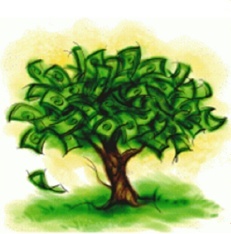
Carbon Credits: what are they?
The inconvenience of the sky being darkened is nothing when compared to the lasting effects of all the carbon being thrown into the atmosphere and radically changing our climate by trapping the heat from the sun. In fact, many gases are responsible for the global warming but CO2 is considered the main contributor. For this reason, greenhouse gases became known collectively as CO2 emissions. The good news is that the process of reducing pollution from CO2 emissions is well under way. After the signature of the Kyoto Protocol by several countries in 2004, it was decided that CO2 production in each country must be contained by tree-planting or other processes that can absorb it, such as sequestration and changing farming methods. Or, it can be reduced in the first place. If one country produces more CO2 than it can absorb, it must purchase an ‘absorption ability’ from another nation. The Carbon Credit is this new currency and one Carbon Credit is equal to one Tonne of CO2 and is called a CO2e (CO2 equivalent). A nation that presents a shortfall in absorbing 500,000T of CO2 must seek to purchase those from another nation that has been planting trees for such a consideration, says the agreement. Costs are between US $10 to 40 per credit.
Adapted from http://savetheplanet.co.nz/carbon-wave-power.html
VOCABULARY
lasting – duráveis
trapping – prendendo, retendo
greenhouse – estufa
currency – moeda
tonne – tonelada
shortfall – déficit
seek – procurar
purchase – comprar
consideration – razão
Check the correct alternative:
So, a Carbon Credit is the __________.
Questão 20 183958
ITA 2009Ten Questions Over a Cell Phone
Milton Hatoum is the award winning author of Dois Irmãos (Two Brothers) and Cinzas do Norte (Ashes from the North). His new novel, Órfãos do Eldorado (Eldorado Orphans), will be released next April.
[1] Which was your best trip ever?
The trip I took with my father to Lebanon, in July 1992. He had not seen his Lebanese family for over 30 years. Visiting Lebanon and meeting dozens of relatives was a very emotional experience.
[2] What is your dream trip?
To go to Kashmir and some parts of India. I also would like to visit several African countries
[3] In what other country would you like to live?
Well, I have already lived in three countries and eight different cities. I now just want to stay around here. But when I think of Provence or Tuscany, I feel like spending some time in France and Italy.
[4] What do you admire most about a person?
His or her character. What elevates or demeans a human being is not religion, gender, color, ethnicity – none of that. It’s the character.
[5] What do you hate most in a person?
I think an arrogant person looks ridiculous. I hate meanness, deceit, dishonest people.
[6] Would you be happy without friends?
I would be unhappier without them.
[7] What animal would you like to be?
The very same one I was destined to be. Our fate is to be human
[8] What do you do when you have nothing to do?
I get bored when I don’t do anything. Right now, after finishing a novel, I feel a bit like I’m hanging in mid-air, aimless. But there’s always a book to read or re-read.
[9] Who is your favorite film director?
I love Rossellini, Visconti and the directors of Italian neo-realism
[10] What character would you like to be?
It’s hard to say... I would be a terrible actor. But all the characters in my novels have a bit of me in them
Ano no2 OceanAir em revista, 2008 (adapted).
Marque a opção incorreta.
Questão 19 183956
ITA 2009Ten Questions Over a Cell Phone
Milton Hatoum is the award winning author of Dois Irmãos (Two Brothers) and Cinzas do Norte (Ashes from the North). His new novel, Órfãos do Eldorado (Eldorado Orphans), will be released next April.
[1] Which was your best trip ever?
The trip I took with my father to Lebanon, in July 1992. He had not seen his Lebanese family for over 30 years. Visiting Lebanon and meeting dozens of relatives was a very emotional experience.
[2] What is your dream trip?
To go to Kashmir and some parts of India. I also would like to visit several African countries
[3] In what other country would you like to live?
Well, I have already lived in three countries and eight different cities. I now just want to stay around here. But when I think of Provence or Tuscany, I feel like spending some time in France and Italy.
[4] What do you admire most about a person?
His or her character. What elevates or demeans a human being is not religion, gender, color, ethnicity – none of that. It’s the character.
[5] What do you hate most in a person?
I think an arrogant person looks ridiculous. I hate meanness, deceit, dishonest people.
[6] Would you be happy without friends?
I would be unhappier without them.
[7] What animal would you like to be?
The very same one I was destined to be. Our fate is to be human
[8] What do you do when you have nothing to do?
I get bored when I don’t do anything. Right now, after finishing a novel, I feel a bit like I’m hanging in mid-air, aimless. But there’s always a book to read or re-read.
[9] Who is your favorite film director?
I love Rossellini, Visconti and the directors of Italian neo-realism
[10] What character would you like to be?
It’s hard to say... I would be a terrible actor. But all the characters in my novels have a bit of me in them
Ano no2 OceanAir em revista, 2008 (adapted).
Considere as seguintes traduções das respostas de Milton Hatoum:
I. What elevates or demeans a human being is not religion, gender, color, ethnicity - none of that. O que enaltece ou descaracteriza um ser humano não é a religião, o sexo, a cor, a ética - nada disso.
II. I hate meanness, deceit, dishonest people. Eu odeio mesquinharia, falsidade, pessoas desonestas.
III. Right now, after finishing a novel, I feel a bit like I’m hanging in mid-air, aimless.” Agora, depois de terminar uma novela, eu me sinto totalmente no ar, sem rumo.
Está(ão) correta(s)
06