


![[Marketing] Questao Topo - deslogado](https://storage.estuda.com.br/banners/0_6b7ebee90b03af1c560c73bb8bcce34a_banner_deslogado_70_dias.png)
Questões de Inglês
19.971 Questões
Questão 43 48902
ESPM 2010/1Judging by headlines on the U.S.’s and Europe’s retirement crisis, you’d think the specter of aging populations plagued only rich countries. But a top French demographer says that developing nations will actually be the hardest hit by the gray wave.
Experts have long warned about the confluence of two trends in the industrialized world: an aging boomer population, which will strain social-security systems; and falling birthrates, which will cause a lack of strong and healthy workers to support the elderly. Anxiety over these issues crops up regularly in Western politics, most recently in the American health-care debate, where alarmist cries about unplugging Grandma to save money mirror an underlying truth: there will be many grandmas, and they will require expensive care. And the U.S. is far less gray than countries such as Italy, Germany, and Japan, where more than 20 percent of the people are already over 65. By contrast, the developing world is seen as a wellspring of high birthrates and a replenishable supply of young workers.
But a recent study by Gilles Pison, of the French National Institute of Demographic Studies, says that developing nations are also staring down the barrel of an aging crisis— albeit one that’s slightly further off. While Asian and African populations are younger for now, Pison says, many developing countries are starting to experience the same combination of declining mortality and falling -birthrates.
Take France and China. France halved its fertility rate from five to 2.5 over a span of 150 years (from 1760 to 1910). The same change in China took only 12 years, from 1972 to 1984. Even in countries without a one-child policy, birthrates are slowing at a remarkable rate. In 1984, Iranian women had, on average, seven children; in 2006, they had 1.9. At the same time, elderly populations are burgeoning. It took 114 years for France’s over-65 set to double, from 7 to 14 percent of its populace. It’s taken 71 years to double in the United States. But that transition will happen in 20 years in Iran and Tunisia, and only 17 in Vietnam and Syria.
While developed countries have had generations to build up and tweak their institutional safety nets for aging populations, the developing world is much less prepared— and they have less time to get it right. As family support structures erode, Pison says, there aren’t the pension systems to pick up the slack. The good news is, for a few more decades at least, the proportion of working-age adults in developing countries is larger than ever before—an opportunity they must seize to the fullest to prepare for their graying future.(http://blog.newsweek.com/blogs/wealthofnations/archive/2009)
Which title best expresses the main idea of this passage?
Questão 41 48900
ESPM 2010/1When it comes to what makes us happy at work, job satisfaction surveys have been showing for years that the size of our paycheck is losing ground to intangibles like autonomy, mobility, low stress, flexible hours, job security, health coverage, paid time off and other benefits. Does pay matter? Of course it does. But as China and other emerging markets have gained ground on the U.S. economically, American workers have begun to come to grips with what that means: in many cases, finding a standard of living that is declining relative to other nations and saying bye-bye to generous and automatic pay raises across industries. The recession has only deepened this trend. Workers who are elated to simply have a job aren’t complaining about money, and according to a Randstad survey, they now name job security and benefits among the top factors in their happiness.
(www.time.com TIME in partnership with CNN, May 29, 2009)
You can infer from the text that American workers:
Questão 37 48510
UFMG 1ª Fase 2010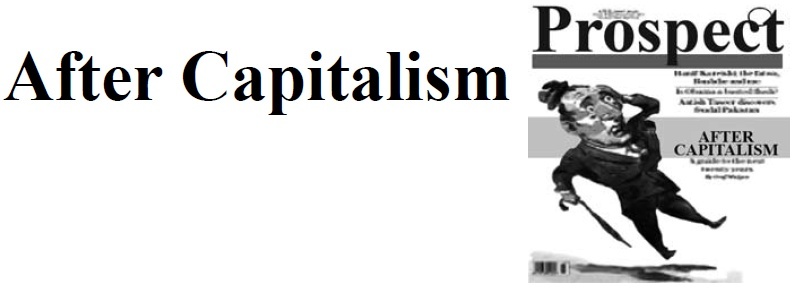
The era of transition that we are entering will be disruptive – but
it may bring a world where markets are servants, not masters.
To understand what capitalism might become, we first have
to understand what it is. This is not so simple. Capitalism includes
a market economy, but many traditional market economies are
not capitalistic. It includes trade, but trade, too, long precedes
capitalism. It includes capital – but Egyptian pharaohs and fascist
dictators commanded surpluses too.
The French historian Fernand Braudel offered perhaps the best
description of capitalism when he wrote of it as a series of layers
built on top of the everyday market economy of onions and wood,
plumbing and cooking. These layers, local, regional, national and
global, are characterised by ever greater abstraction, until at the top
sits disembodied finance, seeking returns anywhere, uncommitted
to any particular place or industry, and commodifying anything
and everything.
Only a few decades ago there was great interest in what would
supersede capitalism. The answers ranged from communism
to managerialism, and from hopes of a golden age of leisure to
dreams of a return to community and ecological harmony. Today
these utopias can be found in the movements around the World
Social Forum, on the edges of all of the major religions, in the
radical sub-cultures that surround the net, and in moderated form
in thousands of civic ventures across the world.
MULGAN, Geoff. Available at: <http://www.prospect-magazine.co.uk/article_details.php?id=10680> Access on June 17th, 2009
The word disembodied (line 15) can be best understood as
Questão 50 47456
UDESC Manhã 2010/1Text 2
Seasons
(by wikipedia)
[1] A season is a division of the year, marked by changes in weather.
Seasons result from the yearly revolution of the Earth around the Sun and the tilt of the
Earth's axis relative to the plane of revolution. In temperate and polar regions, the
seasons are marked by changes in the intensity of sunlight that reaches the Earth's
[5] surface, variations of which may cause animals to go into hibernation or to migrate, and
plants to be dormant.
During June, July and August, the northern hemisphere is exposed to more direct
sunlight because the hemisphere faces the sun. The same is true of the southern
hemisphere in December, January, and February. It is the tilt of the Earth that causes the
[10] Sun to be higher in the sky during the summer months which increases the solar flux.
In temperate and polar regions generally four seasons are recognized: spring, summer,
autumn, winter.
In some tropical and subtropical regions it is more common to speak of the rainy (or wet,
or monsoon) season versus the dry season, because the amount of precipitation may
[15] vary more dramatically than the average temperature. For example, in Nicaragua, the dry
season is called Summer (Oct to May) and the rainy season is called Winter (Apr to Nov)
even though it is located in the northern hemisphere.
In other tropical areas a three-way division into hot, rainy and cool season is used.
In some parts of the world, special "seasons" are loosely defined based upon important
[20] events such as a hurricane season, tornado season or a wildfire season.
Chinese seasons are traditionally based on 24 periods known as solar terms, and begin
at the midpoint of solstices and equinoxes.
The words “even though” (line 17), “a three-way” (line 18), “upon” (line 19), are used consecutively in the text as:
Questão 48 47454
UDESC Manhã 2010/1Text 2
Seasons
(by wikipedia)
[1] A season is a division of the year, marked by changes in weather.
Seasons result from the yearly revolution of the Earth around the Sun and the tilt of the
Earth's axis relative to the plane of revolution. In temperate and polar regions, the
seasons are marked by changes in the intensity of sunlight that reaches the Earth's
[5] surface, variations of which may cause animals to go into hibernation or to migrate, and
plants to be dormant.
During June, July and August, the northern hemisphere is exposed to more direct
sunlight because the hemisphere faces the sun. The same is true of the southern
hemisphere in December, January, and February. It is the tilt of the Earth that causes the
[10] Sun to be higher in the sky during the summer months which increases the solar flux.
In temperate and polar regions generally four seasons are recognized: spring, summer,
autumn, winter.
In some tropical and subtropical regions it is more common to speak of the rainy (or wet,
or monsoon) season versus the dry season, because the amount of precipitation may
[15] vary more dramatically than the average temperature. For example, in Nicaragua, the dry
season is called Summer (Oct to May) and the rainy season is called Winter (Apr to Nov)
even though it is located in the northern hemisphere.
In other tropical areas a three-way division into hot, rainy and cool season is used.
In some parts of the world, special "seasons" are loosely defined based upon important
[20] events such as a hurricane season, tornado season or a wildfire season.
Chinese seasons are traditionally based on 24 periods known as solar terms, and begin
at the midpoint of solstices and equinoxes.
The correct meaning of “tilt” (line 2) is:
Questão 47 47453
UDESC Manhã 2010/1Text 2
Seasons
(by wikipedia)
[1] A season is a division of the year, marked by changes in weather.
Seasons result from the yearly revolution of the Earth around the Sun and the tilt of the
Earth's axis relative to the plane of revolution. In temperate and polar regions, the
seasons are marked by changes in the intensity of sunlight that reaches the Earth's
[5] surface, variations of which may cause animals to go into hibernation or to migrate, and
plants to be dormant.
During June, July and August, the northern hemisphere is exposed to more direct
sunlight because the hemisphere faces the sun. The same is true of the southern
hemisphere in December, January, and February. It is the tilt of the Earth that causes the
[10] Sun to be higher in the sky during the summer months which increases the solar flux.
In temperate and polar regions generally four seasons are recognized: spring, summer,
autumn, winter.
In some tropical and subtropical regions it is more common to speak of the rainy (or wet,
or monsoon) season versus the dry season, because the amount of precipitation may
[15] vary more dramatically than the average temperature. For example, in Nicaragua, the dry
season is called Summer (Oct to May) and the rainy season is called Winter (Apr to Nov)
even though it is located in the northern hemisphere.
In other tropical areas a three-way division into hot, rainy and cool season is used.
In some parts of the world, special "seasons" are loosely defined based upon important
[20] events such as a hurricane season, tornado season or a wildfire season.
Chinese seasons are traditionally based on 24 periods known as solar terms, and begin
at the midpoint of solstices and equinoxes.
Mark (T) true or (F) false accordingly:
( ) There are two basic seasons all over the world.
( ) In some regions the seasons are called dry and wet.
( ) Special seasons are based on celebrations all over the world.
( ) The chinese have 24 seasons.
( ) A season separates the months.
Mark the correct alternative.
06