


![[Marketing] Questao Topo - deslogado](https://storage.estuda.com.br/banners/0_6b7ebee90b03af1c560c73bb8bcce34a_banner_deslogado_70_dias.png)
Questões de Inglês
19.971 Questões
Questão 21 124161
UPF Inverno 2010"My little brother is really little, and he does have a
disability. Many, many people don\\'t have the heart to
realize that he didn’t choose to be disabled. I look up to
my little brother 100% and nobody deserves to be
mistreated or looked down on. He\\'s amazing, and I love
him dearly, and he will change the world one day. Stand
up for everyone who you know has been bullied,
because it really hurts."
Amanda, 15, AZ
Adapted from http://www.pacerteensagainstbullying.org/
Considere as afirmações: Amanda
I. traz à tona um problema recorrente nas escolas: o desrespeito e a violência entre crianças e adolescentes, gerado pela intolerância e pela incompreensão entre eles próprios, recentemente conhecido como bullying.
II. relata as dificuldades de acessibilidade na escola e nas ruas, enfrentadas pelo irmão menor da adolescente, em razão de problemas causados por uma deficiência.
III. descreve as dificuldades enfrentadas por ela própria na convivência diária com seu irmão deficiente. Contudo, afirma que o ama.
IV. expressa sua indignação diante do desrespeito com seu irmão, afirmando que a situação a fere emocionalmente.
Só não é verdadeiro o que se afirma em:
Questão 17 124153
UPF Inverno 2010Transcrição do texto do cartaz:
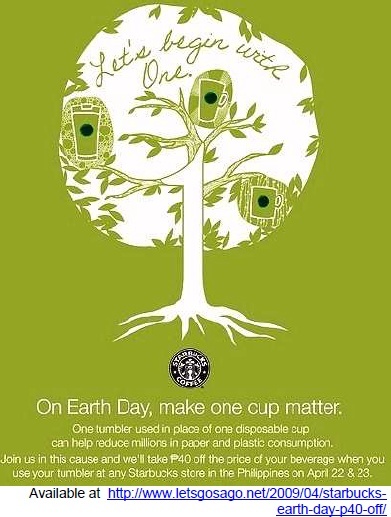
On Earth Day, make one cup matter. One tumbler used in place of one disposable cupcan help reduce millions in paper and plastic consumption. Join us in this cause and we’ll take P40 off the price of your beverage when you use your tumbler at any Starbucks store in the Philippines on April 22 & 23.
Sobre o cartaz pode-se afirmar:
Questão 24 124032
UPF Prova de verão 2010By HENRY FOUNTAIN
Published: October 19, 2009
It takes more than sunscreen to keep the sun’s ultraviolet rays from harming your skin. The type of clothing you wear can offer
protection, too — or not. Studies have shown that some lightweight fabrics do not provide enough UV protection.
But it is not just the type of fiber and the weave of the fabric that matters, but also the color. Ascención Riva of the Polytechnic
University of Catalonia and colleagues have addressed the color issue, studying the effects of different dyes on the UV
protection provided by lightweight woven cottons.
The researchers chose three fabrics, not dyed, with different initial levels of UV protection based on the weave and other factors.
Then they dyed them in varying shades of blue, red and yellow and measured how much UV radiation was absorbed and
transmitted.
They found that red and blue shades performed better than yellow, particularly in blocking UV-B rays, which are the most
harmful. Protection increased as the shades were made darker and more intense. And if the initial protection level of the fabric
was higher, the darker shades offered even greater improvement.
The researchers say the findings, reported in Industrial and Engineering Chemistry Research, should help fabric and garment
manufacturers optimize their products for UV protection.
(Texto retirado de http://www.nytimes.com/2009/10/20/science/20obsun.html?ref=science, em 26/10/2009).
O oposto do vocábulo better na sentença “They found that red and blue shades performed better than yellow]” (linha 12) é:
Questão 22 124030
UPF Prova de verão 2010By HENRY FOUNTAIN
Published: October 19, 2009
It takes more than sunscreen to keep the sun’s ultraviolet rays from harming your skin. The type of clothing you wear can offer
protection, too — or not. Studies have shown that some lightweight fabrics do not provide enough UV protection.
But it is not just the type of fiber and the weave of the fabric that matters, but also the color. Ascención Riva of the Polytechnic
University of Catalonia and colleagues have addressed the color issue, studying the effects of different dyes on the UV
protection provided by lightweight woven cottons.
The researchers chose three fabrics, not dyed, with different initial levels of UV protection based on the weave and other factors.
Then they dyed them in varying shades of blue, red and yellow and measured how much UV radiation was absorbed and
transmitted.
They found that red and blue shades performed better than yellow, particularly in blocking UV-B rays, which are the most
harmful. Protection increased as the shades were made darker and more intense. And if the initial protection level of the fabric
was higher, the darker shades offered even greater improvement.
The researchers say the findings, reported in Industrial and Engineering Chemistry Research, should help fabric and garment
manufacturers optimize their products for UV protection.
(Texto retirado de http://www.nytimes.com/2009/10/20/science/20obsun.html?ref=science, em 26/10/2009).
Dentre as informações abaixo, não é possível identificar no texto:
Questão 44 113830
UFGD 2010While in Copenhagen, Lula was also very strategic in his country's presentation before the committee. He brushed aside concerns of violence and crime in Rio, and to the president's credit, the Olympic Committee praised Brazil for recent security improvements. Lula also claimed that the Olympics would help build Brazil, and especially the city of Rio de Janeiro, by providing jobs for the poor, integrating civil society, and building a spirit of peace and cooperation through sport. Such a prospect no doubt appealed to the committee as this goal was one of the original touted benefits of the modern Olympics Games, dating back to their genesis at the end of the 19th century. Most important, though, was Lula's argument that Brazil deserved and needed the Olympics. Richer countries had had their turn, Lula said, and now it was Brazil's chance. Brazil ranks 10th among the world's wealthiest countries, but it is the only one of them never to have hosted the games. It will be the first South American country to do so. International sports tend to mirror politics. Today's decision will reveal, yet again, that Brazil is an emerging power, and that it has the talent, infrastructural capacity, and political commitment needed to play competitively in global political (and athletic) games. Such an endorsement will only boost Lula's ability to shape international discussions and forge closer ties with other foreign leaders. Perhaps since Lula visited Beijing in 2008 and publicly supported the government's efforts, the president of China will return the favor in 2016. There's also a larger story to tell about today's decision, one that speaks to other emerging nations on the brink of global power. Like Brazil, India's and South Africa's governments still confront a high degree of poverty, inequality, and weak infrastructure -- especially in rural areas. Like South Africa, recent winning bid for the soccer World Cup, Brazil's win shows that effective presidential stewardship, fearless competition, and a bit of strategy pays off at the international level and at home. Let the games begin!
All the sentences below are grammatical wrong, EXCEPT
Questão 38 113824
UFGD 2010While in Copenhagen, Lula was also very strategic in his country's presentation before the committee. He brushed aside concerns of violence and crime in Rio, and to the president's credit, the Olympic Committee praised Brazil for recent security improvements. Lula also claimed that the Olympics would help build Brazil, and especially the city of Rio de Janeiro, by providing jobs for the poor, integrating civil society, and building a spirit of peace and cooperation through sport. Such a prospect no doubt appealed to the committee as this goal was one of the original touted benefits of the modern Olympics Games, dating back to their genesis at the end of the 19th century. Most important, though, was Lula's argument that Brazil deserved and needed the Olympics. Richer countries had had their turn, Lula said, and now it was Brazil's chance. Brazil ranks 10th among the world's wealthiest countries, but it is the only one of them never to have hosted the games. It will be the first South American country to do so. International sports tend to mirror politics. Today's decision will reveal, yet again, that Brazil is an emerging power, and that it has the talent, infrastructural capacity, and political commitment needed to play competitively in global political (and athletic) games. Such an endorsement will only boost Lula's ability to shape international discussions and forge closer ties with other foreign leaders. Perhaps since Lula visited Beijing in 2008 and publicly supported the government's efforts, the president of China will return the favor in 2016. There's also a larger story to tell about today's decision, one that speaks to other emerging nations on the brink of global power. Like Brazil, India's and South Africa's governments still confront a high degree of poverty, inequality, and weak infrastructure -- especially in rural areas. Like South Africa, recent winning bid for the soccer World Cup, Brazil's win shows that effective presidential stewardship, fearless competition, and a bit of strategy pays off at the international level and at home. Let the games begin!
What does the text read about Lula?
06