


![[Marketing] Questao Topo - deslogado](https://storage.estuda.com.br/banners/0_6b7ebee90b03af1c560c73bb8bcce34a_banner_deslogado_70_dias.png)
Questões de Inglês
19.971 Questões
Questão 22 304041
UFRR Módulo 2 2010Text I
EPA: TOXIC AIR IN 600 U.S. NEIGHBORHOODS By AP / DINA CAPPIELLO Wednesday, Jun. 24, 2009 http://www.time.com/time/health/article/0,8599,1906717,00.html
WASHINGTON — Millions of people living in nearly 600 neighborhoods across the country are breathing concentrations of toxic air pollutants that put them at a much greater risk of contracting cancer, according to new data from the Environmental Protection Agency.
The levels of 80 cancer-causing substances released by automobiles, factories, and other sources in these areas exceed a 100 in 1 million cancer risk. That means that if 1 million people breathed air with similar concentrations over their lifetime, about 100 additional people would be expected to develop cancer because of their exposure to the pollution.
The average cancer risk across the country is 36 in 1 million, according to the National-Scale Air Toxics Assessment, which will be released by the EPA on Wednesday.
Since the last update in 2006, which covered 1999 emissions, cancer risk nationwide has declined from 41.5 people in 1 million to 36 people in 1 million. "If we are in between 10 in 1 million and 100 in 1 million we want to look more deeply at that. If the risk is greater than 100 in 1 million, we don't like that at all ... we want to investigate that risk and do something about it," said Kelly Rimer, an environmental scientist with the EPA, in an interview with The Associated Press on Tuesday.
Parts of Los Angeles, California and Madison County, Illinois had the highest cancer risks in the nation — 1200 in 1 million and 1100 in 1 million, according to the EPA data. They were followed by two neighborhoods in Allegheny County, Pennsylvania and one in Tuscaloosa County, Alabama.
People living in parts of Coconino County, Arizona and Lyon County, Nevada had the lowest cancer risk from air toxics. The counties with the least toxic air are Kalawao County, Hawaii and Golden Valley County in Montana. "Air toxic risks are local. They are a function of the sources nearest to you," said Dave Guinnup, who leads the groups that perform the risk assessments for toxic air pollutants at EPA. "If you are out in the Rocky Mountains, you are going to be closer to 2 in a million. If you are in an industrial area with a lot of traffic, you are going to be closer to 1100 in 1 million."
The analysis predicts the concentrations of 124 different hazardous air pollutants, which are known to cause cancer, respiratory problems and other health effects by coupling estimates of emissions from a variety of sources with models that attempt to simulate how the pollution will disperse in the air. Only 80 of the chemicals evaluated are known to cause cancer, EPA officials said.
The information is used by federal, state and local agencies to identify areas in need of more monitoring and attention.
The data to be released Wednesday covers pollution released in 2002.
Choose the one that is not according to the text.
Questão 49 282940
FACASPER 2010The El Mercurio File
By Peter Kornbluh
“For the better part of two years, a group of editors, journalism students, and human rights lawyers in Santiago, Chile, have been gathering evidence against their country’s leading media mogul, Agustín Edwards, to, at minimum, have him expelled from the press guild, the Academy of Chilean Journalists. The editor of the leftist magazine Puncto Final, Manuel Cabieses, has filed a formal petition accusing Edwards of violating the academy’s code of ethics by conspiring with the Nixon White House and the CIA between 1970 and 1973 to foment the military coup that overthrew the elected government of Salvador Allende and brought General Augusto Pinochet to power, thirty years ago this month. ‘Doonie’, as Edwards is known to his closest friends, is the patriarch of the press – a Chilean Rupert Murdoch. His media empire encompasses Chile’s renowned national newspaper, El Mercurio, a second national paper, Ultimas Noticias, and Santiago’s leading afternoon paper, La Segunda, along with a dozen smaller regional journals. In September 1970, when Chileans narrowly elected Allende, a Socialist, to the presidency, Edwards was widely considered to be the richest man in Chile – and the individual with the most to lose financially from Allende’s election.
The ethics charges against Edwards are likely to receive a boost from a careful analysis of formerly secret U.S. documents that shed considerable new light on CIA covert media operations in Chile. Since 1975, when a special congressional committee chaired by Idaho Senator Frank Church issued its report, Covert Action in Chile: 1963-1973, it has been no secret that the CIA provided significant funding to El Mercurio, put reporters and editors on its payroll, and used the paper, in the committee’s words, as ‘the most important channel for anti-Allende propaganda.’ But with the declassification of thousands of CIA and White House records at the end of Clinton administration, the history of the ‘El Mercurio Project’ emerges in far greater detail. Among the key revelations in the documents:
• Even before Allende was inaugurated as president of Chile, Edwards came to Washington and discussed with the CIA the ‘timing for possible military action’ to prevent Allende from taking office.
• President Nixon directly authorized massive funding in the newspaper. The White House approve close to $2 million dollars – a significant sum when turned into Chilean currency on the black market..
• Secret CIA cables from mid-1973 identified El Mercurio as among the ‘most militant parts of the opposition’ pushing for military intervention to overthrow Allende.
• In the aftermath of the coup, the CIA continued to covertly finance media operations in order to influence Chilean public opinion in favor of the new military regime, despite General Pinochet’s brutal repression.”
From: KORNBLUH, Peter. “The El Mercurio File”. Columbia Journalism Review. New York, p.14-15, September/October 2007.
Choose the alternative that best explains the meaning of the following words from the text above: chaired, charges, guild, mogul, currency.
Questão 48 282926
FACASPER 2010The El Mercurio File
By Peter Kornbluh
“For the better part of two years, a group of editors, journalism students, and human rights lawyers in Santiago, Chile, have been gathering evidence against their country’s leading media mogul, Agustín Edwards, to, at minimum, have him expelled from the press guild, the Academy of Chilean Journalists. The editor of the leftist magazine Puncto Final, Manuel Cabieses, has filed a formal petition accusing Edwards of violating the academy’s code of ethics by conspiring with the Nixon White House and the CIA between 1970 and 1973 to foment the military coup that overthrew the elected government of Salvador Allende and brought General Augusto Pinochet to power, thirty years ago this month. ‘Doonie’, as Edwards is known to his closest friends, is the patriarch of the press – a Chilean Rupert Murdoch. His media empire encompasses Chile’s renowned national newspaper, El Mercurio, a second national paper, Ultimas Noticias, and Santiago’s leading afternoon paper, La Segunda, along with a dozen smaller regional journals. In September 1970, when Chileans narrowly elected Allende, a Socialist, to the presidency, Edwards was widely considered to be the richest man in Chile – and the individual with the most to lose financially from Allende’s election.
The ethics charges against Edwards are likely to receive a boost from a careful analysis of formerly secret U.S. documents that shed considerable new light on CIA covert media operations in Chile. Since 1975, when a special congressional committee chaired by Idaho Senator Frank Church issued its report, Covert Action in Chile: 1963-1973, it has been no secret that the CIA provided significant funding to El Mercurio, put reporters and editors on its payroll, and used the paper, in the committee’s words, as ‘the most important channel for anti-Allende propaganda.’ But with the declassification of thousands of CIA and White House records at the end of Clinton administration, the history of the ‘El Mercurio Project’ emerges in far greater detail. Among the key revelations in the documents:
• Even before Allende was inaugurated as president of Chile, Edwards came to Washington and discussed with the CIA the ‘timing for possible military action’ to prevent Allende from taking office.
• President Nixon directly authorized massive funding in the newspaper. The White House approve close to $2 million dollars – a significant sum when turned into Chilean currency on the black market..
• Secret CIA cables from mid-1973 identified El Mercurio as among the ‘most militant parts of the opposition’ pushing for military intervention to overthrow Allende.
• In the aftermath of the coup, the CIA continued to covertly finance media operations in order to influence Chilean public opinion in favor of the new military regime, despite General Pinochet’s brutal repression.”
From: KORNBLUH, Peter. “The El Mercurio File”. Columbia Journalism Review. New York, p.14-15, September/October 2007.
Choose the alternative that best translates the word string: ...formerly secret U.S. documents that shed considerable new light ....
Questão 47 282922
FACASPER 2010The El Mercurio File
By Peter Kornbluh
“For the better part of two years, a group of editors, journalism students, and human rights lawyers in Santiago, Chile, have been gathering evidence against their country’s leading media mogul, Agustín Edwards, to, at minimum, have him expelled from the press guild, the Academy of Chilean Journalists. The editor of the leftist magazine Puncto Final, Manuel Cabieses, has filed a formal petition accusing Edwards of violating the academy’s code of ethics by conspiring with the Nixon White House and the CIA between 1970 and 1973 to foment the military coup that overthrew the elected government of Salvador Allende and brought General Augusto Pinochet to power, thirty years ago this month. ‘Doonie’, as Edwards is known to his closest friends, is the patriarch of the press – a Chilean Rupert Murdoch. His media empire encompasses Chile’s renowned national newspaper, El Mercurio, a second national paper, Ultimas Noticias, and Santiago’s leading afternoon paper, La Segunda, along with a dozen smaller regional journals. In September 1970, when Chileans narrowly elected Allende, a Socialist, to the presidency, Edwards was widely considered to be the richest man in Chile – and the individual with the most to lose financially from Allende’s election.
The ethics charges against Edwards are likely to receive a boost from a careful analysis of formerly secret U.S. documents that shed considerable new light on CIA covert media operations in Chile. Since 1975, when a special congressional committee chaired by Idaho Senator Frank Church issued its report, Covert Action in Chile: 1963-1973, it has been no secret that the CIA provided significant funding to El Mercurio, put reporters and editors on its payroll, and used the paper, in the committee’s words, as ‘the most important channel for anti-Allende propaganda.’ But with the declassification of thousands of CIA and White House records at the end of Clinton administration, the history of the ‘El Mercurio Project’ emerges in far greater detail. Among the key revelations in the documents:
• Even before Allende was inaugurated as president of Chile, Edwards came to Washington and discussed with the CIA the ‘timing for possible military action’ to prevent Allende from taking office.
• President Nixon directly authorized massive funding in the newspaper. The White House approve close to $2 million dollars – a significant sum when turned into Chilean currency on the black market..
• Secret CIA cables from mid-1973 identified El Mercurio as among the ‘most militant parts of the opposition’ pushing for military intervention to overthrow Allende.
• In the aftermath of the coup, the CIA continued to covertly finance media operations in order to influence Chilean public opinion in favor of the new military regime, despite General Pinochet’s brutal repression.”
From: KORNBLUH, Peter. “The El Mercurio File”. Columbia Journalism Review. New York, p.14-15, September/October 2007.
Say which sentence is true according to the text above.
Questão 46 282902
FACASPER 2010The El Mercurio File
By Peter Kornbluh
“For the better part of two years, a group of editors, journalism students, and human rights lawyers in Santiago, Chile, have been gathering evidence against their country’s leading media mogul, Agustín Edwards, to, at minimum, have him expelled from the press guild, the Academy of Chilean Journalists. The editor of the leftist magazine Puncto Final, Manuel Cabieses, has filed a formal petition accusing Edwards of violating the academy’s code of ethics by conspiring with the Nixon White House and the CIA between 1970 and 1973 to foment the military coup that overthrew the elected government of Salvador Allende and brought General Augusto Pinochet to power, thirty years ago this month. ‘Doonie’, as Edwards is known to his closest friends, is the patriarch of the press – a Chilean Rupert Murdoch. His media empire encompasses Chile’s renowned national newspaper, El Mercurio, a second national paper, Ultimas Noticias, and Santiago’s leading afternoon paper, La Segunda, along with a dozen smaller regional journals. In September 1970, when Chileans narrowly elected Allende, a Socialist, to the presidency, Edwards was widely considered to be the richest man in Chile – and the individual with the most to lose financially from Allende’s election.
The ethics charges against Edwards are likely to receive a boost from a careful analysis of formerly secret U.S. documents that shed considerable new light on CIA covert media operations in Chile. Since 1975, when a special congressional committee chaired by Idaho Senator Frank Church issued its report, Covert Action in Chile: 1963-1973, it has been no secret that the CIA provided significant funding to El Mercurio, put reporters and editors on its payroll, and used the paper, in the committee’s words, as ‘the most important channel for anti-Allende propaganda.’ But with the declassification of thousands of CIA and White House records at the end of Clinton administration, the history of the ‘El Mercurio Project’ emerges in far greater detail. Among the key revelations in the documents:
• Even before Allende was inaugurated as president of Chile, Edwards came to Washington and discussed with the CIA the ‘timing for possible military action’ to prevent Allende from taking office.
• President Nixon directly authorized massive funding in the newspaper. The White House approve close to $2 million dollars – a significant sum when turned into Chilean currency on the black market..
• Secret CIA cables from mid-1973 identified El Mercurio as among the ‘most militant parts of the opposition’ pushing for military intervention to overthrow Allende.
• In the aftermath of the coup, the CIA continued to covertly finance media operations in order to influence Chilean public opinion in favor of the new military regime, despite General Pinochet’s brutal repression.”
From: KORNBLUH, Peter. “The El Mercurio File”. Columbia Journalism Review. New York, p.14-15, September/October 2007.
Say which sentence is true according to the text above.
Questão 50 275021
CESUPA 2010Paying Brazilian Farmers to Let the Trees Stand
By ELISABETH ROSENTHAL
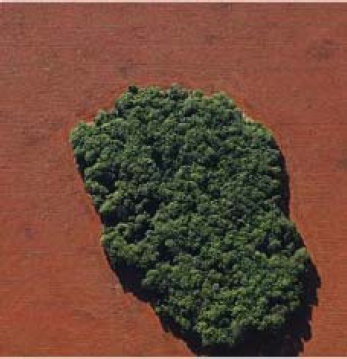
Mato Grosso means thick forests, and the name was once apt. But today, this Brazilian state is a global epicenter of deforestation. Small islands of forest dot the landscape of farms and ranches, fulfilling regulations to maintain percentages of native forest on agricultural properties. Driven by profits derived from fertile soil, the region’s dense forests have been aggressively cleared over the past decade, and Mato Grosso is now Brazil’s leading producer of soy, corn and cattle, exported across the globe by multinational companies.
Photo: Damon Winter/The New York Times
Querência, Mato Grosso, Brazil — José Marcolini, 53, a local farmer, has a permit from the Brazilian government to clear 12,500 acres of rain forest this year to create highly profitable new soy fields.
But he says he is struggling with his conscience. A Brazilian environmental group is offering him a yearly cash payment to leave his forest standing to help combat climate change. Mr. Marcolini says he cares about the environment. But he also has a family to feed, and he doubts that the group’s initial offer in the negotiation — $12 per acre, per year — is enough for him to accept.
“For me to resist the pressure, surrounded by soybeans, I’ll have to be paid — a lot,” said the farmer, noting that cleared farmland in the state of Mato Grosso sells for up to $1,300 an acre.
However, until now, there has been no financial help for keeping forest standing. This is why a growing number of scientists, politicians and environmentalists argue that cash payments — like that offered to Mr. Marcolini — are the only way to end tropical forest destruction and provide a game-changing strategy in efforts to limit global warming.
Adapted from http://www.nytimes.com/2009/08/22/science/earth/22degrees.html?pagewanted=all
Glossário
dot – pontilham
fulfilling – cumprindo
profits - lucros
struggling – lutando
argue - defendem
In the next four question, choose the correct alternative according to the text:
The expression “…surrounded by soybeans…” (4th paragraph), considering the context, indicates that ____ .
06