


![[Marketing] Questao Topo - deslogado](https://storage.estuda.com.br/banners/0_6b7ebee90b03af1c560c73bb8bcce34a_banner_deslogado_70_dias.png)
Questões de Inglês
19.971 Questões
Questão 38 1366557
UFAL 2010Answer the following question according to Text.
Text
ATMOSPHERIC SCIENCE
Do Rain Forest Make Rain?
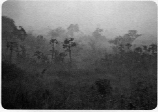
Long-standing assumption: rain forests are a consequence of heavy rainfall. New hypothesis: some forested regions may produce conditions that lead to heavy rainfall. This “biotic pump” model contends that a vast forest such as the Amazon draws in large amounts of water vapor. Evaporation and condensation of the acquired water lead to a local atmospheric pressure drop. That decrease causes rain and attracts more water vapor to the forest, in a continuous positive feedback loop. “This theory could explain why continental interiors with huge rain forests remain so moist,” says Wildlife Conservation Society researcher Douglas Sheil, who in an April Bioscience paper revived the biotic pump model, originally proposed in 2006 by Anastassia Makarieva and Victor Gorchkov, both at the Petersburg Nuclear Physics Institute in Russia. “It could also underline the dangers of widespread deforestation.” Though promising, the model needs more data regarding air circulation patterns and vegetations types to support it, Sheil notes. – Steve Mirsky
Scientific American, July 2009, page 18.
The pump model was originally _____________ by Anastassia Makarieva and Victor Gorshkov.
Questão 36 1366553
UFAL 2010Answer the following question according to Text.
Text
ATMOSPHERIC SCIENCE
Do Rain Forest Make Rain?
Long-standing assumption: rain forests are a consequence of heavy rainfall. New hypothesis: some forested regions may produce conditions that lead to heavy rainfall. This “biotic pump” model contends that a vast forest such as the Amazon draws in large amounts of water vapor. Evaporation and condensation of the acquired water lead to a local atmospheric pressure drop. That decrease causes rain and attracts more water vapor to the forest, in a continuous positive feedback loop. “This theory could explain why continental interiors with huge rain forests remain so moist,” says Wildlife Conservation Society researcher Douglas Sheil, who in an April Bioscience paper revived the biotic pump model, originally proposed in 2006 by Anastassia Makarieva and Victor Gorchkov, both at the Petersburg Nuclear Physics Institute in Russia. “It could also underline the dangers of widespread deforestation.” Though promising, the model needs more data regarding air circulation patterns and vegetations types to support it, Sheil notes. – Steve Mirsky
Scientific American, July 2009, page 18.
A recent theory claims that
Questão 60 793947
UFN Inverno 2010Toddlers who lie 'will do better'
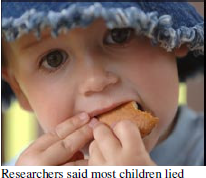
[1] Toddlers who
tell lies early
on are more
likely to do well
[5] later, resear-
chers claim.
The complex
brain processes
involved in for-
[10] mulating a lie
are an indicator
of a child's early
intelligence, they
add. A Canadian study of 1,200 children aged two
[15] to 17 suggests those who are able to lie have
reached an important developmental stage. Only a
fifth of two-year-olds tested in the study were able to
lie. But at age four, 90% were capable of lying, the
study found. The rate increases with age to a peak
[20] at age 12.
'Developmental milestone'
The director of the Institute of Child Study at
Toronto University, Dr Kang Lee, said: "Parents
should not be alarmed if their child tells a fib.
[25] "Their children are not going to turn out to be
pathological liars. Almost all children lie.
"It is a sign that they have reached a new
developmental milestone.
"Those who have better cognitive development lie
[30] because they can cover up their tracks."
This was because they had developed the ability
to carry out a complex juggling act which involves
keeping the truth at the back of their brains.
He added: "They even make bankers in later life."
[35] Dr Kang tested the children's honesty by telling
them not to peek at a toy placed behind their backs
while leaving the room.
He then monitored their reactions by video and
returned to ask if they had turned around, checking
[40] their responses against the recording.
http://news.bbc.co.uk/2/hi/education/10119297.stm Page last updated at 10:55 GMT, Monday, 17 May 2010 11:55 UK
Uma tradução adequada para o vocábulo “milestone”, conforme aparece nas linhas 21 e 28, seria
Questão 59 793945
UFN Inverno 2010Toddlers who lie 'will do better'
[1] Toddlers who
tell lies early
on are more
likely to do well
[5] later, resear-
chers claim.
The complex
brain processes
involved in for-
[10] mulating a lie
are an indicator
of a child's early
intelligence, they
add. A Canadian study of 1,200 children aged two
[15] to 17 suggests those who are able to lie have
reached an important developmental stage. Only a
fifth of two-year-olds tested in the study were able to
lie. But at age four, 90% were capable of lying, the
study found. The rate increases with age to a peak
[20] at age 12.
'Developmental milestone'
The director of the Institute of Child Study at
Toronto University, Dr Kang Lee, said: "Parents
should not be alarmed if their child tells a fib.
[25] "Their children are not going to turn out to be
pathological liars. Almost all children lie.
"It is a sign that they have reached a new
developmental milestone.
"Those who have better cognitive development lie
[30] because they can cover up their tracks."
This was because they had developed the ability
to carry out a complex juggling act which involves
keeping the truth at the back of their brains.
He added: "They even make bankers in later life."
[35] Dr Kang tested the children's honesty by telling
them not to peek at a toy placed behind their backs
while leaving the room.
He then monitored their reactions by video and
returned to ask if they had turned around, checking
[40] their responses against the recording.
http://news.bbc.co.uk/2/hi/education/10119297.stm Page last updated at 10:55 GMT, Monday, 17 May 2010 11:55 UK
O conetivo “because”, conforme empregado na linha 30, sinaliza uma relação de __________ entre as orações e pode ser substituído, sem alteração de sentido, por __________ .
Questão 57 793929
UFN Inverno 2010Toddlers who lie 'will do better'
[1] Toddlers who
tell lies early
on are more
likely to do well
[5] later, resear-
chers claim.
The complex
brain processes
involved in for-
[10] mulating a lie
are an indicator
of a child's early
intelligence, they
add. A Canadian study of 1,200 children aged two
[15] to 17 suggests those who are able to lie have
reached an important developmental stage. Only a
fifth of two-year-olds tested in the study were able to
lie. But at age four, 90% were capable of lying, the
study found. The rate increases with age to a peak
[20] at age 12.
'Developmental milestone'
The director of the Institute of Child Study at
Toronto University, Dr Kang Lee, said: "Parents
should not be alarmed if their child tells a fib.
[25] "Their children are not going to turn out to be
pathological liars. Almost all children lie.
"It is a sign that they have reached a new
developmental milestone.
"Those who have better cognitive development lie
[30] because they can cover up their tracks."
This was because they had developed the ability
to carry out a complex juggling act which involves
keeping the truth at the back of their brains.
He added: "They even make bankers in later life."
[35] Dr Kang tested the children's honesty by telling
them not to peek at a toy placed behind their backs
while leaving the room.
He then monitored their reactions by video and
returned to ask if they had turned around, checking
[40] their responses against the recording.
http://news.bbc.co.uk/2/hi/education/10119297.stm Page last updated at 10:55 GMT, Monday, 17 May 2010 11:55 UK
Analise as seguintes afirmações sobre a pesquisa relatada no texto e identifique cada uma como verdadeira (V) ou falsa (F).
( ) A pesquisa teve como participantes 1.200 crianças de 02 a 17 anos.
( ) Uma análise mais precisa dos resultados da pesquisa revelou que a capacidade de formulação de inverdades diminui à medida em que aumenta a faixa etária das crianças.
( ) Aos 12 anos de idade, a capacidade de formulação de inverdades pelas crianças atinge o seu ponto máximo.
( ) Segundo o Dr. Kang Lee, o fato de a maioria das crianças elaborarem inverdades não deve ser motivo de preocupação para os pais, já que essa atitude representa um novo estágio no desenvolvimento infantil.
( ) Segundo o Dr. Kang Lee, os pais devem ficar atentos para que seus filhos, que elaboram inverdades quando crianças, não se tornem mentirosos compulsivos na fase adulta.
A sequência correta é
Questão 56 793928
UFN Inverno 2010Toddlers who lie 'will do better'
[1] Toddlers who
tell lies early
on are more
likely to do well
[5] later, resear-
chers claim.
The complex
brain processes
involved in for-
[10] mulating a lie
are an indicator
of a child's early
intelligence, they
add. A Canadian study of 1,200 children aged two
[15] to 17 suggests those who are able to lie have
reached an important developmental stage. Only a
fifth of two-year-olds tested in the study were able to
lie. But at age four, 90% were capable of lying, the
study found. The rate increases with age to a peak
[20] at age 12.
'Developmental milestone'
The director of the Institute of Child Study at
Toronto University, Dr Kang Lee, said: "Parents
should not be alarmed if their child tells a fib.
[25] "Their children are not going to turn out to be
pathological liars. Almost all children lie.
"It is a sign that they have reached a new
developmental milestone.
"Those who have better cognitive development lie
[30] because they can cover up their tracks."
This was because they had developed the ability
to carry out a complex juggling act which involves
keeping the truth at the back of their brains.
He added: "They even make bankers in later life."
[35] Dr Kang tested the children's honesty by telling
them not to peek at a toy placed behind their backs
while leaving the room.
He then monitored their reactions by video and
returned to ask if they had turned around, checking
[40] their responses against the recording.
http://news.bbc.co.uk/2/hi/education/10119297.stm Page last updated at 10:55 GMT, Monday, 17 May 2010 11:55 UK
O texto é uma notícia que apresenta resultados de uma pesquisa
I - sobre crianças canadenses, em que são considerados fatores como faixa etária, desenvolvimento cognitivo e grau de instrução dos pais.
II - canadense sobre os efeitos da mentira no desempenho cognitivo de crianças e suas consequências na fase adulta.
III - sobre crianças canadenses que, devido à precária educação recebida dos pais, tornaram-se mentirosos patológicos na fase adulta.
Está(ão) correta(s)
06