


![[Marketing] Questao Topo - deslogado](https://storage.estuda.com.br/banners/0_6b7ebee90b03af1c560c73bb8bcce34a_banner_deslogado_70_dias.png)
Questões de Inglês
19.971 Questões
Questão 12 6046063
Unilago 2019/1Leia a propaganda a seguir e responda à questão.

Assinale a alternativa que apresenta, corretamente, o principal objetivo do texto.
Questão 11 6045915
Unilago 2019/1Leia o texto a seguir e responda à questão.
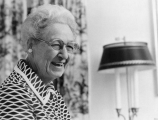
“Nobody, but nobody, is going to stop breathing on me.”
Today is the birthday of Dr. Virginia Apgar, who has helped make many, many, many birthdays possible. The pioneering doctor lived from June 7, 1909, to August 7, 1974, and is the subject of today’s Google Doodle. You can’t really go through medical school without knowing Apgar’s name, at least her last name. Here’s why
In 1952, Dr. Apgar unveiled the Apgar score. Besides being her last name, Apgar stands for the following five domains “Appearance, Pulse, Grimace, Activity, and Respiration” of the score. Basically 1 minute and 5 minutes after a baby is born, doctors, nurses, and midwives will score the baby from 0 to 2 (with 2 being the best) for each of these domains.
You then sum the 5 domain scores to get a sense of the baby’s overall health. If you do the math, you will see that the total score can range from a 0 to a 10 with a higher score being better. A baby rarely scores a 10, because most babies have at least blue hands and feet when they are born (hey, life ain’t easy and not everyone is the best at everything). A score of 7 or higher is normal. Lower than 7 merits immediate medical attention such as potentially oxygen, clearing out the airway, or physical stimulation to get the heart beating faster. Time may be all that the baby needs, since low scores at 1 minute frequently become normal at 5 minutes. Sometimes a doctor, nurse, or midwife may check an Apgar score 10 minutes after birth if any questions remain.
Of course, an Apgar score is only an immediate assessment and usually does not forecast either good or bad health in the future. So putting your good Apgar score on your resume will impress no one. A high Apgar score doesn’t necessarily mean that everything will be beer and candies from thereon. Similarly babies with low initial Apgar scores can go on to have very healthy lives.
While it may seem routine now, using a standardized way to check a baby’s health was not standard practice before Dr. Apgar invented the score. Newborn care was a lot more haphazard, making survival among infants, especially those born prematurely, more challenging.
It was an accomplishment for Dr. Apgar even to get to a position to make such an important invention. Back when she graduated from Mount Holyoke College in 1929 and then from the Columbia University College of Physicians and Surgeons in 1933, the “Apgar” score for the medical careers of women and minorities was very, very low. Very few were even allowed into medical school, let alone progress in their careers afterwards. But Dr. Apgar was a persistent pioneer, eventually becoming the first woman to achieve the rank of full professor at her medical university in 1949. Things aren’t smooth sailing for women and minorities today in medical and academic careers. But you can thank Dr. Apgar for at least making some initial inroads.
Therefore, if you entered this world after the 1950’s (and assuming that you were born rather than spontaneously generated), you can use Dr. Apgar’s birthday to thank Dr. Apgar for people checking you on your birthday.
(Adaptado de: LEE, B. Y. How Today’s Google Doodle, Dr. Virginia Apgar, Made A Big Difference In: Forbes (online) Pharma and Healthcare. 7 jun. 2018. Disponível em: Acesso em: 18 ago. 2018.)
Em relação ao Teste de Apgar, assinale a alternativa correta.
Questão 60 5773031
PUC- RJ Inverno 2019Can you stop your parents sharing photos of you online?
By Helier Cheung BBC News
28 March 2019
It's a great way of staying in touch - and it's always amusing watching your parents attempt to take selfies or use
emojis. But if they share photos of you online without your permission - and have no understanding of privacy
settings - have they crossed the line? And - if you want to - how do you convince them to take the photos down?
"Sharenting" - the act of parents sharing news and pictures of their kids online - is in the news after Gwyneth
[5] Paltrow posted a picture of her and her 14-year-old daughter Apple Martin skiing. More than 150,000 people liked
the picture, but Apple wasn't so impressed, writing (from her private Instagram account): "Mom we have discussed
this. You may not post anything without my consent." Paltrow replied: "You can't even see your face!" Many of
Paltrow's fans have argued that, as the mother, she had every right to share pictures of her daughter - but others
say children deserve a right to privacy too.
[10] Ironically, children aren't technically allowed to register with most social media services until they are 13 anyway -
which means some rule-abiding teenagers get a shock when they finally get online.
Konrad Iturbe, a 19-year-old software developer in Spain, told the BBC he had a "big awakening" when he realised
his parents had been posting photos of him online. "I really don't like photos of me online anyway - I don't even
post photos of myself on my Instagram account - so when I followed my mother and saw them on her profile, I
[15] told her to 'take this down, I've not given you permission'."
Konrad says his mother understood his concerns and acted quickly to deal with the issue - as he says all parents
should. He says discovering the pictures it felt like a "breach of privacy". It particularly bothered him because there
were photos of him as a young child, and his mother's Instagram account was open to the public. "I didn't want
photos of my youth shared, it's a very intimate thing," he says, adding that he is also worried about "facial
[20] recognition algorithms" and people being able to "start tracing me when I'm older".
Sonia Bokhari, a 14-year-old in the US, had a similar experience when she first joined Twitter and Facebook.
Writing in Fast Company magazine, she says: "When I saw the pictures that she [her mother] had been posting on
Facebook for years, I felt utterly embarrassed, and deeply betrayed.
Not everyone minds "sharenting", however. Charlotte Christy, a 23-year-old studying in London, says she
[25] personally thinks it's "quite normal". She was 13 when her mum started uploading photos of her on Facebook. "She
would tag me and it would be on my news feed so everyone could see it. I thought it was embarrassing, but I
wasn't upset to the point of asking her to remove it."
"I feel like we live in a society where everyone wants their photos to be really flattering - but if my mum posts an
unflattering photo of me it doesn't really bother me. I think I share photos of my mum just as much as she shares
[30] photos of me - I think it's a natural thing to share and I don't see why she should ask for my permission - she's my
mum."
For Sarah (not her real name), a 29-year-old health professional in Hong Kong, the most worrying thing was the
privacy implications. "When I was 21, my mum tagged me on Facebook, and I saw that she'd posted a bunch of
photos of me - from when I was a baby to me in my 20s," she told the BBC.
[35] "Her settings were public, so I just found it very unsafe. I didn't want my baby photos leaked to everyone, and I
knew that with Google, you can search for someone's name using their photos. And by her contributing more
photos of me online, technology companies have more data on how I look."
Andra Siibak, a professor in media studies at the University of Tartu in Estonia, has conducted several studies into
"sharenting". In one study involving Estonian children aged nine to 13, she found that children liked "parents
[40] sharing positive things about them", but that "there were big discrepancies between what children and parents
considered to be nice photos".
"Children were not in favour of parents sharing unflattering visuals of them - for example, if their hair was messed
up or they were wearing a dress they didn't actually like. In many contexts the parents would not consider those
things to be a big problem, but for the pre-teens this could affect their self-image" or potentially lead to cyber
[45] bullying.
Another potential risk from "sharenting" is "digital kidnapping", Prof Siibak says, where strangers take publicly
available photos of children, and use them for fraudulent or sexual purposes. Prof Siibak says many parents feel
that, as the adult, they are responsible for their child's wellbeing, and don't need their child's permission as long as
they believe the photos are not doing any harm. However, she argues that parents should "absolutely" take their
[50] children's privacy concerns more seriously.
Adapted from https://www.bbc.com/news/world-47722427
According to the text, all of the alternatives below indicate a risk associated to sharenting, EXCEPT the fact that
Questão 54 5772975
PUC- RJ Inverno 2019Can you stop your parents sharing photos of you online?
By Helier Cheung BBC News
28 March 2019
It's a great way of staying in touch - and it's always amusing watching your parents attempt to take selfies or use
emojis. But if they share photos of you online without your permission - and have no understanding of privacy
settings - have they crossed the line? And - if you want to - how do you convince them to take the photos down?
"Sharenting" - the act of parents sharing news and pictures of their kids online - is in the news after Gwyneth
[5] Paltrow posted a picture of her and her 14-year-old daughter Apple Martin skiing. More than 150,000 people liked
the picture, but Apple wasn't so impressed, writing (from her private Instagram account): "Mom we have discussed
this. You may not post anything without my consent." Paltrow replied: "You can't even see your face!" Many of
Paltrow's fans have argued that, as the mother, she had every right to share pictures of her daughter - but others
say children deserve a right to privacy too.
[10] Ironically, children aren't technically allowed to register with most social media services until they are 13 anyway -
which means some rule-abiding teenagers get a shock when they finally get online.
Konrad Iturbe, a 19-year-old software developer in Spain, told the BBC he had a "big awakening" when he realised
his parents had been posting photos of him online. "I really don't like photos of me online anyway - I don't even
post photos of myself on my Instagram account - so when I followed my mother and saw them on her profile, I
[15] told her to 'take this down, I've not given you permission'."
Konrad says his mother understood his concerns and acted quickly to deal with the issue - as he says all parents
should. He says discovering the pictures it felt like a "breach of privacy". It particularly bothered him because there
were photos of him as a young child, and his mother's Instagram account was open to the public. "I didn't want
photos of my youth shared, it's a very intimate thing," he says, adding that he is also worried about "facial
[20] recognition algorithms" and people being able to "start tracing me when I'm older".
Sonia Bokhari, a 14-year-old in the US, had a similar experience when she first joined Twitter and Facebook.
Writing in Fast Company magazine, she says: "When I saw the pictures that she [her mother] had been posting on
Facebook for years, I felt utterly embarrassed, and deeply betrayed.
Not everyone minds "sharenting", however. Charlotte Christy, a 23-year-old studying in London, says she
[25] personally thinks it's "quite normal". She was 13 when her mum started uploading photos of her on Facebook. "She
would tag me and it would be on my news feed so everyone could see it. I thought it was embarrassing, but I
wasn't upset to the point of asking her to remove it."
"I feel like we live in a society where everyone wants their photos to be really flattering - but if my mum posts an
unflattering photo of me it doesn't really bother me. I think I share photos of my mum just as much as she shares
[30] photos of me - I think it's a natural thing to share and I don't see why she should ask for my permission - she's my
mum."
For Sarah (not her real name), a 29-year-old health professional in Hong Kong, the most worrying thing was the
privacy implications. "When I was 21, my mum tagged me on Facebook, and I saw that she'd posted a bunch of
photos of me - from when I was a baby to me in my 20s," she told the BBC.
[35] "Her settings were public, so I just found it very unsafe. I didn't want my baby photos leaked to everyone, and I
knew that with Google, you can search for someone's name using their photos. And by her contributing more
photos of me online, technology companies have more data on how I look."
Andra Siibak, a professor in media studies at the University of Tartu in Estonia, has conducted several studies into
"sharenting". In one study involving Estonian children aged nine to 13, she found that children liked "parents
[40] sharing positive things about them", but that "there were big discrepancies between what children and parents
considered to be nice photos".
"Children were not in favour of parents sharing unflattering visuals of them - for example, if their hair was messed
up or they were wearing a dress they didn't actually like. In many contexts the parents would not consider those
things to be a big problem, but for the pre-teens this could affect their self-image" or potentially lead to cyber
[45] bullying.
Another potential risk from "sharenting" is "digital kidnapping", Prof Siibak says, where strangers take publicly
available photos of children, and use them for fraudulent or sexual purposes. Prof Siibak says many parents feel
that, as the adult, they are responsible for their child's wellbeing, and don't need their child's permission as long as
they believe the photos are not doing any harm. However, she argues that parents should "absolutely" take their
[50] children's privacy concerns more seriously.
Adapted from https://www.bbc.com/news/world-47722427
In relation to Konrad Iturbe and Sonia Bokhari views on sharenting, one can infer that
Questão 1 5766144
PUC- RJ Verão 2019Our fiction addiction: Why humans need stories
By David Robson
Although we have no firm evidence of storytelling
before the advent of writing, we can assume that
narratives have been central to human life for
thousands of years. Cave paintings in France from
[5] 30,000 years ago appear to depict dramatic scenes
that were probably accompanied by oral storytelling.
Today, we may not gather around the camp fire, but
the average adult is still thought to spend at least 6%
of the waking day engrossed in fictional stories on our
[10] various screens.
From an evolutionary point of view, that would be
an awful lot of time and energy to expend on pure
escapism, but psychologists and literary theorists
have now identified many potential benefits to this
[15] fiction addiction.
One common idea is that storytelling is a form of
cognitive play that hones our minds, allowing us to
simulate the world around us and imagine different
strategies, particularly in social situations. “It teaches
[20] us about other people and it’s a practice in empathy
and theory of mind,” says Joseph Carroll at the
University of Missouri-St Louis.
Providing some evidence for this theory, brain
scans have shown that reading or hearing stories
[25] activates various areas of the cortex that are known
to be involved in social and emotional processing, and
the more people read fiction, the easier they find it to
empathise with other people.
Crucially, evolutionary psychologists believe that
[30] our prehistoric preoccupations still shape the form
of the stories we enjoy. As humans evolved to live in
bigger societies, for instance, we needed to learn how
to cooperate, without being a ‘free rider’ who takes too
much and gives nothing, or overbearing individuals
[35] abusing their dominance to the detriment of the
group’s welfare. Our capacity for storytelling – and the
tales we tell – may have therefore also evolved as a
way of communicating the right social norms.
Along these lines, various studies have identified
[40] cooperation as a core theme in popular narratives
across the world. The anthropologist Daniel Smith of
University College London recently visited 18 groups
of hunter-gatherers of the Philippines. He found
nearly 80% of their tales concerned moral decision
[45] making and social dilemmas. Crucially, this then
appeared to translate to their real-life behaviour; the
groups that appeared to invest the most in storytelling
also proved to be the most cooperative during various
experimental tasks – exactly as the evolutionary
[50] theory would suggest.
You might assume that our interest in cooperation
would have dwindled with the increasing individualism
of the Industrial Revolution, but these themes were
still prevalent in some of the most beloved British
[55] novels from the 19th and early 20th Centuries.
Asking a panel of readers to rate the principal
characters in more than 200 novels, researchers
found that the antagonists’ major flaw was most
often a quest for social dominance at the expense of
[60] others or an abuse of their existing power, while the
protagonists appeared to be less individualistic and
ambitious.
Evolutionary theory can also shed light on the
staples of romantic fiction, including the heroines’
[65] preferences for stable ‘dad’ figures or flighty ‘cads’.
The ‘dads’ might be the better choice for the long-term
security and protection of your children, but according
to an evolutionary theory known as the ‘sexy son
hypothesis’, falling for an unfaithful cad can have his
[70] own advantages since they can pass on their good
looks, cunning and charm to his own children, who
may then also enjoy greater sexual success.
There are many more insights to be gained
from these readings, including, for instance, a recent
[75] analysis of the truly evil figures in fantasy and horror
stories. Common features include a grotesque
appearance and appear to be designed to trigger our
evolved fear of contagion and disease, and given our
innate tribalism, villains often carry signs that they are
[80] a member of an “out-group” – hence the reason that
so many Hollywood baddies have foreign accents.
Once again, the idea is that a brush with these evil
beings ultimately reinforces our own sense of altruism
and loyalty to the group.
[85] The novelist Ian McEwan is one of the most
celebrated literary voices to have embraced these
evolutionary readings of literature, and argues that
many common elements of plot can even be found in
the machinations of our primate cousins. “If one reads
[90] accounts of the systematic nonintrusive observations
of troops of bonobo,” he wrote in a book of essays on
the subject, The Literary Animal, “one sees rehearsed
all the major themes of the English 19th-Century
novel: alliances made and broken, individuals rising
[95] while others fall, plots hatched, revenge, gratitude,
injured pride, successful and unsuccessful courtship,
bereavement and mourning.”
McEwan argues we should celebrate these
evolved tendencies as the very source of fiction’s
[100] power to cross the continents and the centuries.
“It would not be possible to enjoy literature from
a time remote from our own, or from a culture that
was profoundly different from our own, unless we
shared some common emotional ground, some deep
[105] reservoir of assumptions, with the writer,” he added.
Available at: http://www.bbc.com/culture/story/20180503-our-fi ction- -addiction-why-humans-need-stories. Retrieved on: 3 May 2018. Adapted.
The main purpose of the article is to
Questão 16 5509218
FACISA 2019/1Read the text below and answer the question that follow.
TEXT
The Rise of Fake news
By James Carson

"Fake news" was not a term many people used two years ago, but it is now seen as one of the greatest threats to democracy, free debate and the Western order. […]
Governments and powerful individuals have used information as a weapon for millennia, to boost their support and quash dissidence. […] However, before the internet, it was much more expensive to distribute information, building up trust took years, and there were much simpler definitions of what constituted news and media, making regulation easier.
But the rise of social media has broken down many of the boundaries that prevented fake news from spreading in democracies, as it has allowed anyone to create and disseminate information […].
Hoaxes and falsehoods have been associated with the internet since its early days, but it is only in the last two years that organised, systematic misinformation campaigns, often linked to governments, have emerged, and their effect on democracy and society scrutinised. The 2016 US election has been seen as providing a fertile breeding ground for fake news. Some credit Donald Trump's anti-establishment rhetoric and distrust of the mainstream media. Others blame widening partisanship, which meant readers were more prone to believe and share stories that fit their beliefs.
The rise of social media itself has also been seen as central. Sites like Facebook are accused of creating "filter bubbles", the phenomenon of showing people things that they like or tend to agree with, and hiding those that they don't.
Critics of Facebook and Twitter say the sites are purpose built for spreading misinformation, with the reach of a story dependent on its ability to go viral – something that often depends on sensationalism and emotional reactions more than truth itself. […]
An aggravating effect may have been that the sheer quantity of fake news stories may have reduced trust in mainstream media – if scepticism about what people read online increases, they may not know what to think. In these situations, people tend to stick to their prejudices.
(Source: Adapted from The Telegraph, UK - 30 October 2018)
According to TEXT, the MAIN factor associated with the growth of fake news is
06