


![[Marketing] Questao Topo - deslogado](https://storage.estuda.com.br/banners/0_6b7ebee90b03af1c560c73bb8bcce34a_banner_deslogado_70_dias.png)
Questões de Inglês
19.971 Questões
Questão 12 50412
UCS Vestibular de Verão 2011DOLLHOUSE
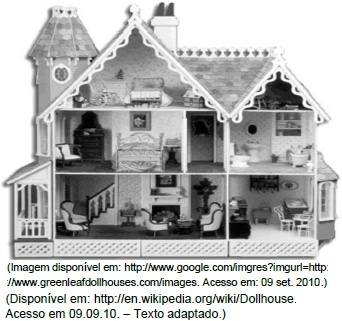
[1] A dollhouse is a toy home, made in miniature. For the last century, dollhouses have primarily been the
domain of children but their collection and crafting is also a hobby for many adults.
Today's dollhouses trace their history back about four hundred years to the baby house display cases of
Europe, which showed idealized interiors. Smaller doll houses with more realistic exteriors appeared in Europe in the
[5] 1700s. Early dollhouses were all handmade, but following the Industrial Revolution and World War II, they were
increasingly mass produced and became more standardized and affordable.
Miniature homes, furnished with domestic articles and resident inhabitants, both people and animals, have
been made for thousands of years. The earliest known examples were found in the Egyptian tombs of the Old
Kingdom, created nearly five thousand years ago. These wooden models of servants, furnishings, boats, livestock
[10] and pets placed in the Pyramids almost certainly were made for religious purposes.
The earliest known European dollhouses were the baby houses from the Sixteenth Century, which were
cabinet display cases made up of rooms. They showed idealized interiors complete with extremely detailed
furnishings and accessories. The cabinets were built with architectural details and filled with miniature household
items and were solely the playthings of adults. They were off-limits to children, not because of safety concerns for the
[15] child but for the dollhouse. Such cabinet houses were trophy collections owned by the few matrons living in the cities
of Holland, England and Germany ________ were rich enough to afford them, and, fully furnished, were worth the
price of a modest full-size house's construction.
The early European dollhouses were each unique, constructed on a custom basis by individual craftsmen.
With the advent of the Industrial Revolution, factories began producing toys, including dollhouses and miniatures
[20] suitable for furnishing them. Germany was the producer of the most prized dollhouses and their furnishings up until
World War I. Notable German miniature companies included Märklin, Rock and Garner and others. Their products
were not only avidly collected in Central Europe, but regularly exported to Britain and North America. Germany's
involvement in World War I seriously impeded both production and export. New manufacturers in other countries
arose. The TynieToy Company of Providence, in the U.S.A., made authentic replicas of American antique houses and
[25] furniture in a uniform scale beginning in about 1917. Dollhouse dolls and miniatures were also produced in Japan,
mostly by copying original German designs.
After World War II, dollhouses became mass produced in factories on a much larger scale than ever before,
even though with less detailed craftsmanship. By the 1950s, the typical dollhouse sold commercially was made of
painted sheet metal and contained plastic furniture. Such houses cost little enough so that the great majority of girls
[30] from the developed western countries that were not struggling with rebuilding after World War II could own one.
In the United States, most houses have an open back and a fancy front façade, while British houses usually
have a front part that opens to reveal the rooms.

Segundo o texto, é correto afirmar que
Questão 11 50411
UCS Vestibular de Verão 2011DOLLHOUSE
[1] A dollhouse is a toy home, made in miniature. For the last century, dollhouses have primarily been the
domain of children but their collection and crafting is also a hobby for many adults.
Today's dollhouses trace their history back about four hundred years to the baby house display cases of
Europe, which showed idealized interiors. Smaller doll houses with more realistic exteriors appeared in Europe in the
[5] 1700s. Early dollhouses were all handmade, but following the Industrial Revolution and World War II, they were
increasingly mass produced and became more standardized and affordable.
Miniature homes, furnished with domestic articles and resident inhabitants, both people and animals, have
been made for thousands of years. The earliest known examples were found in the Egyptian tombs of the Old
Kingdom, created nearly five thousand years ago. These wooden models of servants, furnishings, boats, livestock
[10] and pets placed in the Pyramids almost certainly were made for religious purposes.
The earliest known European dollhouses were the baby houses from the Sixteenth Century, which were
cabinet display cases made up of rooms. They showed idealized interiors complete with extremely detailed
furnishings and accessories. The cabinets were built with architectural details and filled with miniature household
items and were solely the playthings of adults. They were off-limits to children, not because of safety concerns for the
[15] child but for the dollhouse. Such cabinet houses were trophy collections owned by the few matrons living in the cities
of Holland, England and Germany ________ were rich enough to afford them, and, fully furnished, were worth the
price of a modest full-size house's construction.
The early European dollhouses were each unique, constructed on a custom basis by individual craftsmen.
With the advent of the Industrial Revolution, factories began producing toys, including dollhouses and miniatures
[20] suitable for furnishing them. Germany was the producer of the most prized dollhouses and their furnishings up until
World War I. Notable German miniature companies included Märklin, Rock and Garner and others. Their products
were not only avidly collected in Central Europe, but regularly exported to Britain and North America. Germany's
involvement in World War I seriously impeded both production and export. New manufacturers in other countries
arose. The TynieToy Company of Providence, in the U.S.A., made authentic replicas of American antique houses and
[25] furniture in a uniform scale beginning in about 1917. Dollhouse dolls and miniatures were also produced in Japan,
mostly by copying original German designs.
After World War II, dollhouses became mass produced in factories on a much larger scale than ever before,
even though with less detailed craftsmanship. By the 1950s, the typical dollhouse sold commercially was made of
painted sheet metal and contained plastic furniture. Such houses cost little enough so that the great majority of girls
[30] from the developed western countries that were not struggling with rebuilding after World War II could own one.
In the United States, most houses have an open back and a fancy front façade, while British houses usually
have a front part that opens to reveal the rooms.
Assinale a alternativa que completa adequadamente a lacuna do texto na linha 16.
Questão 19 50318
UCS Vestibular de Inverno 2011He had a hunch…
[1] When Steve Wozniak was in high school in the mid-1960s, he dreamed of owning a computer. His father told
him that computers cost as much as the down payment on a house. “Then I’ll live in an apartment,” Wozniak said.
Today, Wozniak is widely acknowledged as the engineering genius who made computers affordable and userfriendly.
“The other Steve,” as Wozniak is known, is the reclusive cofounder – along with the more flamboyant Steve
[5] Jobs – of Apple Inc.
Growing up in Sunny-vale, California, the heart of what would become Silicon Valley, Wozniak started tinkering
in fourth grade, encouraged by his father, an aerospace engineer. It was a time when NASA and the race to the moon
regularly made front-page news.
By the mid-1970s, the shy young man in his mid-20s and a crowd of like-minded nerds founded the Homebrew
[10] Computer Club, an association that nurtured some of Silicon Valley’s smartest brains. “People were talking about how
we were going to revolutionize the world,” Wozniak recalls.
Until that point, electronic parts had been too expensive for Wozniak’s budget, so he’d been designing his
computers mainly on paper. But then the prices came down enough so that Wozniak could move his designs from the
drawing board to reality. “I built a very tiny computer. I couldn’t afford a device for display, but I had a TV at home and
[15] purchased a keyboard.”
Members were fascinated by the idea of a device small enough to fit on a desk. One of the members was
Steve Jobs, a close friend of Wozniak’s who said, “Let’s build a PC board that makes the assembly easy”. It was the
start of an extraordinarily productive partnership. Together, they managed to save a few hundred dollars to start their
business. They named the company Apple Computer and called Wozniak’s creation the Apple I.
[20] The large computer companies that were manufacturing main frames scoffed at the idea of personal
computers for ordinary people. But Wozniak and Jobs made it happen. And by then a young fellow named Bill Gates
was designing software for small computers.
Wozniak was just 26 years old when he cofounded Apple. He had the opportunity to attain wealth to a degree
few 30-year-olds could even imagine. But money had never been a motivating force for Wozniak.
[25] Now older, Wozniak looks back on his life and says, “The themes that drove me were the love of engineering,
enabling me to design things that other people could not design, and also the social ramifications of doing good. We
were talking about taking the little guy to a new place where the individual would be as important as the big company.
I got to be a creator.”
(Reader’s Digest, p.75-80, mar. 2007. – Texto adaptado.)
Analise a veracidade (V) ou a falsidade (F) das proposições abaixo, com base no texto.
( ) A força motivadora de Wozniak foi seu pai, que era considerado um gênio em engenharia.
( ) Uma das aspirações de Wozniak era equiparar o grau de importância das pessoas ao das empresas.
( ) Quando ainda estava na faixa dos 30 anos, Wozniak já podia ser considerado um homem rico.
Assinale a alternativa que preenche corretamente os parênteses, de cima para baixo.
Questão 18 50317
UCS Vestibular de Inverno 2011He had a hunch…
[1] When Steve Wozniak was in high school in the mid-1960s, he dreamed of owning a computer. His father told
him that computers cost as much as the down payment on a house. “Then I’ll live in an apartment,” Wozniak said.
Today, Wozniak is widely acknowledged as the engineering genius who made computers affordable and userfriendly.
“The other Steve,” as Wozniak is known, is the reclusive cofounder – along with the more flamboyant Steve
[5] Jobs – of Apple Inc.
Growing up in Sunny-vale, California, the heart of what would become Silicon Valley, Wozniak started tinkering
in fourth grade, encouraged by his father, an aerospace engineer. It was a time when NASA and the race to the moon
regularly made front-page news.
By the mid-1970s, the shy young man in his mid-20s and a crowd of like-minded nerds founded the Homebrew
[10] Computer Club, an association that nurtured some of Silicon Valley’s smartest brains. “People were talking about how
we were going to revolutionize the world,” Wozniak recalls.
Until that point, electronic parts had been too expensive for Wozniak’s budget, so he’d been designing his
computers mainly on paper. But then the prices came down enough so that Wozniak could move his designs from the
drawing board to reality. “I built a very tiny computer. I couldn’t afford a device for display, but I had a TV at home and
[15] purchased a keyboard.”
Members were fascinated by the idea of a device small enough to fit on a desk. One of the members was
Steve Jobs, a close friend of Wozniak’s who said, “Let’s build a PC board that makes the assembly easy”. It was the
start of an extraordinarily productive partnership. Together, they managed to save a few hundred dollars to start their
business. They named the company Apple Computer and called Wozniak’s creation the Apple I.
[20] The large computer companies that were manufacturing main frames scoffed at the idea of personal
computers for ordinary people. But Wozniak and Jobs made it happen. And by then a young fellow named Bill Gates
was designing software for small computers.
Wozniak was just 26 years old when he cofounded Apple. He had the opportunity to attain wealth to a degree
few 30-year-olds could even imagine. But money had never been a motivating force for Wozniak.
[25] Now older, Wozniak looks back on his life and says, “The themes that drove me were the love of engineering,
enabling me to design things that other people could not design, and also the social ramifications of doing good. We
were talking about taking the little guy to a new place where the individual would be as important as the big company.
I got to be a creator.”
(Reader’s Digest, p.75-80, mar. 2007. – Texto adaptado.)
Segundo o texto, é correto afirmar que
Questão 17 50316
UCS Vestibular de Inverno 2011He had a hunch…
[1] When Steve Wozniak was in high school in the mid-1960s, he dreamed of owning a computer. His father told
him that computers cost as much as the down payment on a house. “Then I’ll live in an apartment,” Wozniak said.
Today, Wozniak is widely acknowledged as the engineering genius who made computers affordable and userfriendly.
“The other Steve,” as Wozniak is known, is the reclusive cofounder – along with the more flamboyant Steve
[5] Jobs – of Apple Inc.
Growing up in Sunny-vale, California, the heart of what would become Silicon Valley, Wozniak started tinkering
in fourth grade, encouraged by his father, an aerospace engineer. It was a time when NASA and the race to the moon
regularly made front-page news.
By the mid-1970s, the shy young man in his mid-20s and a crowd of like-minded nerds founded the Homebrew
[10] Computer Club, an association that nurtured some of Silicon Valley’s smartest brains. “People were talking about how
we were going to revolutionize the world,” Wozniak recalls.
Until that point, electronic parts had been too expensive for Wozniak’s budget, so he’d been designing his
computers mainly on paper. But then the prices came down enough so that Wozniak could move his designs from the
drawing board to reality. “I built a very tiny computer. I couldn’t afford a device for display, but I had a TV at home and
[15] purchased a keyboard.”
Members were fascinated by the idea of a device small enough to fit on a desk. One of the members was
Steve Jobs, a close friend of Wozniak’s who said, “Let’s build a PC board that makes the assembly easy”. It was the
start of an extraordinarily productive partnership. Together, they managed to save a few hundred dollars to start their
business. They named the company Apple Computer and called Wozniak’s creation the Apple I.
[20] The large computer companies that were manufacturing main frames scoffed at the idea of personal
computers for ordinary people. But Wozniak and Jobs made it happen. And by then a young fellow named Bill Gates
was designing software for small computers.
Wozniak was just 26 years old when he cofounded Apple. He had the opportunity to attain wealth to a degree
few 30-year-olds could even imagine. But money had never been a motivating force for Wozniak.
[25] Now older, Wozniak looks back on his life and says, “The themes that drove me were the love of engineering,
enabling me to design things that other people could not design, and also the social ramifications of doing good. We
were talking about taking the little guy to a new place where the individual would be as important as the big company.
I got to be a creator.”
(Reader’s Digest, p.75-80, mar. 2007. – Texto adaptado.)
Analise a veracidade (V) ou a falsidade (F) das proposições abaixo, com base no texto.
( ) A expressão user-friendly (linha 04) equivale a usar convenientemente.
( ) A expressão like-minded (linha 09) faz referência a pessoas que pensam de maneira semelhante.
( ) A expressão Until that point (linha 12) pode ser traduzida por até aquele lugar.
Assinale a alternativa que preenche corretamente os parênteses, de cima para baixo.
Questão 14 50313
UCS Vestibular de Inverno 2011He had a hunch…
[1] When Steve Wozniak was in high school in the mid-1960s, he dreamed of owning a computer. His father told
him that computers cost as much as the down payment on a house. “Then I’ll live in an apartment,” Wozniak said.
Today, Wozniak is widely acknowledged as the engineering genius who made computers affordable and userfriendly.
“The other Steve,” as Wozniak is known, is the reclusive cofounder – along with the more flamboyant Steve
[5] Jobs – of Apple Inc.
Growing up in Sunny-vale, California, the heart of what would become Silicon Valley, Wozniak started tinkering
in fourth grade, encouraged by his father, an aerospace engineer. It was a time when NASA and the race to the moon
regularly made front-page news.
By the mid-1970s, the shy young man in his mid-20s and a crowd of like-minded nerds founded the Homebrew
[10] Computer Club, an association that nurtured some of Silicon Valley’s smartest brains. “People were talking about how
we were going to revolutionize the world,” Wozniak recalls.
Until that point, electronic parts had been too expensive for Wozniak’s budget, so he’d been designing his
computers mainly on paper. But then the prices came down enough so that Wozniak could move his designs from the
drawing board to reality. “I built a very tiny computer. I couldn’t afford a device for display, but I had a TV at home and
[15] purchased a keyboard.”
Members were fascinated by the idea of a device small enough to fit on a desk. One of the members was
Steve Jobs, a close friend of Wozniak’s who said, “Let’s build a PC board that makes the assembly easy”. It was the
start of an extraordinarily productive partnership. Together, they managed to save a few hundred dollars to start their
business. They named the company Apple Computer and called Wozniak’s creation the Apple I.
[20] The large computer companies that were manufacturing main frames scoffed at the idea of personal
computers for ordinary people. But Wozniak and Jobs made it happen. And by then a young fellow named Bill Gates
was designing software for small computers.
Wozniak was just 26 years old when he cofounded Apple. He had the opportunity to attain wealth to a degree
few 30-year-olds could even imagine. But money had never been a motivating force for Wozniak.
[25] Now older, Wozniak looks back on his life and says, “The themes that drove me were the love of engineering,
enabling me to design things that other people could not design, and also the social ramifications of doing good. We
were talking about taking the little guy to a new place where the individual would be as important as the big company.
I got to be a creator.”
(Reader’s Digest, p.75-80, mar. 2007. – Texto adaptado.)
Analise a veracidade (V) ou a falsidade (F) das proposições abaixo, com base no texto.
( ) Wozniak utilizou, na montagem de seu primeiro computador, um televisor que tinha em casa.
( ) Wozniak recebeu ajuda financeira de seu pai para o projeto de construção do computador Apple I.
( ) A notícia da construção do computador foi publicada junto com as manchetes sobre a corrida à Lua.
Assinale a alternativa que preenche corretamente os parênteses, de cima para baixo.
06