


![[Marketing] Questao Topo - deslogado](https://storage.estuda.com.br/banners/0_6b7ebee90b03af1c560c73bb8bcce34a_banner_deslogado_70_dias.png)
Questões de Inglês
19.971 Questões
Questão 13 99599
FCM PB Medicina 2011/1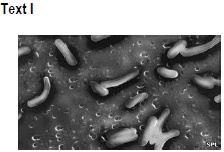
The cholera outbreak in central Haiti that so far has killed more than 250 people and infected more than 3,000 is the worst health challenge the country faces since the earthquake in January. There had been no documented outbreak of the disease in Haiti since 1960. The US Centers for Disease Control and Prevention (CDC) said after the earthquake that while cholera testing should be carried out, the disease was "extremely unlikely to occur". So why has the epidemic struck now?
It is not clear if the cause of the outbreak will ever be identified, but health experts agree that for cholera to occur, bad sanitation and hygiene have to coincide with people carrying the Vibrio Cholerae bacterium. Sanitary conditions were poor in many parts of Haiti even before the earthquake, and Dr Brigitte Vasset from the international humanitarian organization Medecins Sans Frontieres (MSF) in Paris is reluctant to link the outbreak directly with the quake. "Central Haiti - where most people have been infected - was not the region most affected by the earthquake," she says. While many displaced people might have sought refuge in the Artibonite region after the disaster, cholera bacteria could have been present in the Artibonite river or a stagnant water source even before the earthquake, Dr Vasset says. She also points out that while no cases of cholera have been reported from rural areas, this does not mean that it has been completely absent. "In many African countries there are sporadic cases during the year, then the weather changes or other conditions change, and all of a sudden there is an outbreak," Dr Vasset says, adding that the disease is difficult to predict. "I have worked in refugee camps where we expected a cholera outbreak - and it never came," she says.
Sarah Morgan, Senior Health Programme Adviser at aid agency World Vision, agrees that it is possible low-level cholera was present in Haiti all along. "Surveillance data on cholera in Haiti are not available," she says. However, watery diarrhea has been common in the country, causing 5% to 16% of the deaths among Haitian children, according to CDC data. With diarrhea so prevalent and no stringent monitoring by health authorities and 80% of those with symptoms showing only moderate signs of infection, sporadic cases of cholera might not have registered. "While there might have been no significant outbreak of cholera, it is possible that there was a background level of the disease," Ms Morgan says. That cholera has now been picked up so quickly after the outbreak in the Artibonite region is a great success for Haiti's health authorities and international organizations working the country, she adds.
Source: BBC News (Adapted from http://www.bbc.co.uk/news/world-latin-america, October/2010)
Which alternative below has the CORRECT information about the word and its function in the text?
Questão 12 99598
FCM PB Medicina 2011/1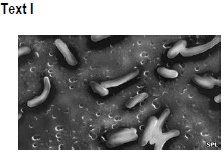
The cholera outbreak in central Haiti that so far has killed more than 250 people and infected more than 3,000 is the worst health challenge the country faces since the earthquake in January. There had been no documented outbreak of the disease in Haiti since 1960. The US Centers for Disease Control and Prevention (CDC) said after the earthquake that while cholera testing should be carried out, the disease was "extremely unlikely to occur". So why has the epidemic struck now?
It is not clear if the cause of the outbreak will ever be identified, but health experts agree that for cholera to occur, bad sanitation and hygiene have to coincide with people carrying the Vibrio Cholerae bacterium. Sanitary conditions were poor in many parts of Haiti even before the earthquake, and Dr Brigitte Vasset from the international humanitarian organization Medecins Sans Frontieres (MSF) in Paris is reluctant to link the outbreak directly with the quake. "Central Haiti - where most people have been infected - was not the region most affected by the earthquake," she says. While many displaced people might have sought refuge in the Artibonite region after the disaster, cholera bacteria could have been present in the Artibonite river or a stagnant water source even before the earthquake, Dr Vasset says. She also points out that while no cases of cholera have been reported from rural areas, this does not mean that it has been completely absent. "In many African countries there are sporadic cases during the year, then the weather changes or other conditions change, and all of a sudden there is an outbreak," Dr Vasset says, adding that the disease is difficult to predict. "I have worked in refugee camps where we expected a cholera outbreak - and it never came," she says.
Sarah Morgan, Senior Health Programme Adviser at aid agency World Vision, agrees that it is possible low-level cholera was present in Haiti all along. "Surveillance data on cholera in Haiti are not available," she says. However, watery diarrhea has been common in the country, causing 5% to 16% of the deaths among Haitian children, according to CDC data. With diarrhea so prevalent and no stringent monitoring by health authorities and 80% of those with symptoms showing only moderate signs of infection, sporadic cases of cholera might not have registered. "While there might have been no significant outbreak of cholera, it is possible that there was a background level of the disease," Ms Morgan says. That cholera has now been picked up so quickly after the outbreak in the Artibonite region is a great success for Haiti's health authorities and international organizations working the country, she adds.
Source: BBC News (Adapted from http://www.bbc.co.uk/news/world-latin-america, October/2010)
The sentence: “ […] With diarrhea so prevalent and no stringent monitoring by health authorities and 80% of those with symptoms showing only moderate signs of infection, sporadic cases of cholera might not have registered.” means that:
Questão 11 99597
FCM PB Medicina 2011/1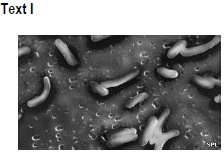
The cholera outbreak in central Haiti that so far has killed more than 250 people and infected more than 3,000 is the worst health challenge the country faces since the earthquake in January. There had been no documented outbreak of the disease in Haiti since 1960. The US Centers for Disease Control and Prevention (CDC) said after the earthquake that while cholera testing should be carried out, the disease was "extremely unlikely to occur". So why has the epidemic struck now?
It is not clear if the cause of the outbreak will ever be identified, but health experts agree that for cholera to occur, bad sanitation and hygiene have to coincide with people carrying the Vibrio Cholerae bacterium. Sanitary conditions were poor in many parts of Haiti even before the earthquake, and Dr Brigitte Vasset from the international humanitarian organization Medecins Sans Frontieres (MSF) in Paris is reluctant to link the outbreak directly with the quake. "Central Haiti - where most people have been infected - was not the region most affected by the earthquake," she says. While many displaced people might have sought refuge in the Artibonite region after the disaster, cholera bacteria could have been present in the Artibonite river or a stagnant water source even before the earthquake, Dr Vasset says. She also points out that while no cases of cholera have been reported from rural areas, this does not mean that it has been completely absent. "In many African countries there are sporadic cases during the year, then the weather changes or other conditions change, and all of a sudden there is an outbreak," Dr Vasset says, adding that the disease is difficult to predict. "I have worked in refugee camps where we expected a cholera outbreak - and it never came," she says.
Sarah Morgan, Senior Health Programme Adviser at aid agency World Vision, agrees that it is possible low-level cholera was present in Haiti all along. "Surveillance data on cholera in Haiti are not available," she says. However, watery diarrhea has been common in the country, causing 5% to 16% of the deaths among Haitian children, according to CDC data. With diarrhea so prevalent and no stringent monitoring by health authorities and 80% of those with symptoms showing only moderate signs of infection, sporadic cases of cholera might not have registered. "While there might have been no significant outbreak of cholera, it is possible that there was a background level of the disease," Ms Morgan says. That cholera has now been picked up so quickly after the outbreak in the Artibonite region is a great success for Haiti's health authorities and international organizations working the country, she adds.
Source: BBC News (Adapted from http://www.bbc.co.uk/news/world-latin-america, October/2010)
According to the information in the text:
Questão 53 95462
UFTM 2011/2Lack of skilled labor hampers Brazilian companies
April 6, 2011
By Cesar Bianconi
SÃO PAULO – Seven in every 10 Brazilian companies are currently facing a shortage of skilled workers, a fact that is weighing on their competitive position and lifting costs, a survey by the country’s largest industrial lobby showed on Wednesday.
The National Industry Confederation poll with over 1,600 companies found the shortages are making manufacturers less competitive relative to peers abroad. One major issue is the precarious state of Brazil’s primary and secondary education. “What brings the most attention is the fact that companies are feeling the pinch of something that universities and other specialized education institutions are too – the poor quality of basic education,” Renato da Fonseca, head of research at the Brasilia-based group, known as CNI, said.
That underscores a challenge for Brazil to keep growing steadily ahead, as labor shortages push wage costs higher and hamper profits in the long run. Nearly all of Brazilian companies polled by CNI are at the moment not being able to fill in open positions. About 78 percent of companies are investing on their own training programs to overcome the lack of specialized labor, CNI said.
Brazil’s state-controlled oil company Petrobras, for example, set an 11-month-long training program for newly-hired engineers, to strengthen their knowledge before going on the field to work. Petrobras has spent more than 100 million reais ($61.9 million) per year to qualify its engineers.
Education Minister Fernando Haddad told Reuters in July that the perceived lack of qualified workers was a short-term issue and said increasing education investments could help close the gap. The ministry’s budget for 2010 was 60 billion reais, 16 percent higher than in the prior year, and twice as much that of 2006. However, public investment in education in the past years was less than 5 percent of gross domestic product. Some analysts say the Brazilian government should invest at least 7 percent of GDP a year in order to improve the education system.(www.reuters.com. Adaptado.)
No último parágrafo, a expressão close the gap significa, em português,
Questão 53 95461
UFTM 2011/2Lack of skilled labor hampers Brazilian companies
April 6, 2011
By Cesar Bianconi
SÃO PAULO – Seven in every 10 Brazilian companies are currently facing a shortage of skilled workers, a fact that is weighing on their competitive position and lifting costs, a survey by the country’s largest industrial lobby showed on Wednesday.
The National Industry Confederation poll with over 1,600 companies found the shortages are making manufacturers less competitive relative to peers abroad. One major issue is the precarious state of Brazil’s primary and secondary education. “What brings the most attention is the fact that companies are feeling the pinch of something that universities and other specialized education institutions are too – the poor quality of basic education,” Renato da Fonseca, head of research at the Brasilia-based group, known as CNI, said.
That underscores a challenge for Brazil to keep growing steadily ahead, as labor shortages push wage costs higher and hamper profits in the long run. Nearly all of Brazilian companies polled by CNI are at the moment not being able to fill in open positions. About 78 percent of companies are investing on their own training programs to overcome the lack of specialized labor, CNI said.
Brazil’s state-controlled oil company Petrobras, for example, set an 11-month-long training program for newly-hired engineers, to strengthen their knowledge before going on the field to work. Petrobras has spent more than 100 million reais ($61.9 million) per year to qualify its engineers.
Education Minister Fernando Haddad told Reuters in July that the perceived lack of qualified workers was a short-term issue and said increasing education investments could help close the gap. The ministry’s budget for 2010 was 60 billion reais, 16 percent higher than in the prior year, and twice as much that of 2006. However, public investment in education in the past years was less than 5 percent of gross domestic product. Some analysts say the Brazilian government should invest at least 7 percent of GDP a year in order to improve the education system.(www.reuters.com. Adaptado.)
No trecho do último parágrafo – in order to improve the education system –, a expressão in order to significa, em português,
Questão 50 95459
UFTM 2011/2Lack of skilled labor hampers Brazilian companies
April 6, 2011
By Cesar Bianconi
SÃO PAULO – Seven in every 10 Brazilian companies are currently facing a shortage of skilled workers, a fact that is weighing on their competitive position and lifting costs, a survey by the country’s largest industrial lobby showed on Wednesday.
The National Industry Confederation poll with over 1,600 companies found the shortages are making manufacturers less competitive relative to peers abroad. One major issue is the precarious state of Brazil’s primary and secondary education. “What brings the most attention is the fact that companies are feeling the pinch of something that universities and other specialized education institutions are too – the poor quality of basic education,” Renato da Fonseca, head of research at the Brasilia-based group, known as CNI, said.
That underscores a challenge for Brazil to keep growing steadily ahead, as labor shortages push wage costs higher and hamper profits in the long run. Nearly all of Brazilian companies polled by CNI are at the moment not being able to fill in open positions. About 78 percent of companies are investing on their own training programs to overcome the lack of specialized labor, CNI said.
Brazil’s state-controlled oil company Petrobras, for example, set an 11-month-long training program for newly-hired engineers, to strengthen their knowledge before going on the field to work. Petrobras has spent more than 100 million reais ($61.9 million) per year to qualify its engineers.
Education Minister Fernando Haddad told Reuters in July that the perceived lack of qualified workers was a short-term issue and said increasing education investments could help close the gap. The ministry’s budget for 2010 was 60 billion reais, 16 percent higher than in the prior year, and twice as much that of 2006. However, public investment in education in the past years was less than 5 percent of gross domestic product. Some analysts say the Brazilian government should invest at least 7 percent of GDP a year in order to improve the education system.(www.reuters.com. Adaptado.)
No trecho do último parágrafo – However, public investment in education in the past years –, a palavra however pode ser substituída, sem alteração de sentido, por
06