


![[Marketing] Questao Topo - deslogado](https://storage.estuda.com.br/banners/0_6b7ebee90b03af1c560c73bb8bcce34a_banner_deslogado_70_dias.png)
Questões de Inglês
19.971 Questões
Questão 85 238761
UECE 2° Fase 1° Dia 2011/2Text
[1] Prof. Katherine Rowe‘s blue-haired
avatar was flying across a grassy landscape
to a virtual three-dimensional re-creation of
the Globe Theater, where some students
[5] from her introductory Shakespeare class at
Bryn Mawr College had already gathered
online. Their assignment was to create
characters on the Web site Theatron3 and
use them to block scenes from the gory
[10] revenge tragedy ''Titus Andronicus,'' to see
how setting can heighten the drama. ''I‘ve
done this class before in a theater and a
lecture hall, but it doesn‘t work as well,'' Ms.
Rowe said, explaining that it was difficult
[15] for students to imagine what it would be like
to put on a production in the 16th-century
Globe, a circular open-air theater without
electric lights, microphones and a curtain.
Jennifer Cook, a senior, used her laptop
[20] to move a black-clad avatar center stage.
She and the other half-dozen students
agreed that in ''Titus,'' the rape, murders and
final banquet — when the Queen
unknowingly eats the remains of her two
[25] children — should all take place in the same
spot. ''Every time someone is in that space,''
Ms. Cook said, ''the audience is going to say,
''Uh oh, you don‘t want to be there.‘ ''
Students like Ms. Cook are among the
[30] first generation of undergraduates at dozens
of colleges to take humanities courses '
even Shakespeare ''that are deeply
influenced by a new array of powerful digital
tools and vast online archives. Ms. Rowe‘s
[35] students, who have occasionally met with
her on the virtual Globe stage while wearing
pajamas in their dorm rooms, are
enthusiastic about the technology.
At the University of Virginia, history
[40] undergraduates have produced a digital
visualization of the college‘s first library
collection, allowing them to consider what
the selection of books says about how
knowledge was classified in the early 18th
[45] century. At Hamilton College, students can
explore a virtual re-creation of the South
African township of Soweto during the 1976
student uprisings, or sign up for ''e-black
studies'' to examine how cyberspace reflects
[50] and shapes the portrayal of minorities.
Many teachers and administrators are
only beginning to figure out the contours of
this emerging field of digital humanities, and
how it should be taught. In the classroom,
[55] however, digitally savvy undergraduates are
not just ready to adapt to the tools but also
to explore how new media may alter the very
process of reading, interpretation and
analysis. ''There‘s a very exciting generation
[60] gap in the classroom,'' said Ms. Rowe, who
developed the digital components of her
Shakespeare course with a graduate student
who now works at Google. ''Students are
fluent in new media, and the faculty bring
[65] sophisticated knowledge of a subject. It‘s a
gap that won‘t last more than a decade. In
10 years these students will be my
colleagues, but now it presents unusual
learning opportunities.'' As Ms. Cook said,
[70] ''The Internet is less foreign to me than a
Shakespeare play written 500 years ago.''
Bryn Mawr‘s unusually close partnership
with Haverford College and Swarthmore
College has enabled the three institutions to
[75] pool their resources, students and faculty. In
November students from all three
participated in the first Digital Humanities
Conference for Undergraduates.
Jen Rajchel, one of the conference
[80] organizers, is the first undergraduate at Bryn
Mawr to have a digital senior thesis accepted
by the English department: a Web site and
archive on the American poet Marianne
Moore, who attended the college nearly a
[85] century ago. Presenting a Moore poem on
the Web site while simultaneously displaying
commentary in different windows next to the
text (as opposed to listing them in a paper)
more accurately reflects the work‘s multiple
[90] meanings, according to Ms. Rajchel. After all,
she argued in the thesis, Moore was acutely
aware of her audience and made subtle
alterations in her poems for different
publications — changes that are more easily
[95] illustrated by displaying the various versions.
The Web presentation of Moore‘s poetry also
allows readers to add comments and talk to
one another, which Ms. Rajchel believes
matches the poet‘s interest in opening a
[100] dialogue with her readers.
Particularly inspiring to Ms. Rajchel is
that her work doesn‘t disappear after being
deposited in a professor‘s in box. The site,
which includes scans of original documents
[105] from Bryn Mawr‘s library, was (and remains)
viewable. ''It really can go outside of the
classroom,'' she said, adding that an
established Marianne Moore scholar at
another university had left a comment.
[110] Doing research that lives outside the
classroom is also what drew Anna Levine, a
junior at Swarthmore, to digital humanities.
Over the summer and after class, she and
Richard Li, a senior at Swarthmore, worked
[115] with Rachel Buurma, an assistant professor
of literature there, to develop the Early
Novels Database for the University of
Pennsylvania‘s Rare Book and Manuscript
Library, which enables users to search more
[120] thoroughly through fiction published between
1660 and 1830. ''I am the one doing all the
grunt work,'' Ms. Levine said of her tasks,
which largely involve entering details about a
novel into the database. ''But one of the
[125] great things is as an undergraduate, it really
enables me to participate in a scholarly
community.''
In a Swarthmore lounge where Ms.
Buurma‘s weekly research seminar on
[130] Victorian literature and culture meets, Ms.
Levine and a handful of other students
recently settled into a cozy circle on stuffed
chairs and couches. As part of their class
work, they have been helping to correct the
[135] transcribed online versions of Household
Words and All the Year Round, two 19th-
century periodicals in which Charles Dickens
initially published some novels, including
''Great Expectations,'' in serial form. On a
[140] square coffee table sat a short stack of
original issues of the magazine that a
librarian had brought from the college‘s
discussed how the experience of reading
[145] differs, depending on whether the text is
presented in discrete segments, surrounded
by advertisements or in a leather binding;
whether you are working in an archive,
editing online or reading for pleasure.
[150] Those skeptical of the digital humanities
worry that the emphasis on data analysis will
distract students from delving deeply into the
heart and soul of literary texts. But Ms.
Buurma contends that these undergraduates
[155] are in fact reading quite closely.
Source: http://www.nytimes.com/March 21, 2011.
According to the text, students at the University of Virginia have been able to
Questão 83 238759
UECE 2° Fase 1° Dia 2011/2Text
[1] Prof. Katherine Rowe‘s blue-haired
avatar was flying across a grassy landscape
to a virtual three-dimensional re-creation of
the Globe Theater, where some students
[5] from her introductory Shakespeare class at
Bryn Mawr College had already gathered
online. Their assignment was to create
characters on the Web site Theatron3 and
use them to block scenes from the gory
[10] revenge tragedy ''Titus Andronicus,'' to see
how setting can heighten the drama. ''I‘ve
done this class before in a theater and a
lecture hall, but it doesn‘t work as well,'' Ms.
Rowe said, explaining that it was difficult
[15] for students to imagine what it would be like
to put on a production in the 16th-century
Globe, a circular open-air theater without
electric lights, microphones and a curtain.
Jennifer Cook, a senior, used her laptop
[20] to move a black-clad avatar center stage.
She and the other half-dozen students
agreed that in ''Titus,'' the rape, murders and
final banquet — when the Queen
unknowingly eats the remains of her two
[25] children — should all take place in the same
spot. ''Every time someone is in that space,''
Ms. Cook said, ''the audience is going to say,
''Uh oh, you don‘t want to be there.‘ ''
Students like Ms. Cook are among the
[30] first generation of undergraduates at dozens
of colleges to take humanities courses '
even Shakespeare ''that are deeply
influenced by a new array of powerful digital
tools and vast online archives. Ms. Rowe‘s
[35] students, who have occasionally met with
her on the virtual Globe stage while wearing
pajamas in their dorm rooms, are
enthusiastic about the technology.
At the University of Virginia, history
[40] undergraduates have produced a digital
visualization of the college‘s first library
collection, allowing them to consider what
the selection of books says about how
knowledge was classified in the early 18th
[45] century. At Hamilton College, students can
explore a virtual re-creation of the South
African township of Soweto during the 1976
student uprisings, or sign up for ''e-black
studies'' to examine how cyberspace reflects
[50] and shapes the portrayal of minorities.
Many teachers and administrators are
only beginning to figure out the contours of
this emerging field of digital humanities, and
how it should be taught. In the classroom,
[55] however, digitally savvy undergraduates are
not just ready to adapt to the tools but also
to explore how new media may alter the very
process of reading, interpretation and
analysis. ''There‘s a very exciting generation
[60] gap in the classroom,'' said Ms. Rowe, who
developed the digital components of her
Shakespeare course with a graduate student
who now works at Google. ''Students are
fluent in new media, and the faculty bring
[65] sophisticated knowledge of a subject. It‘s a
gap that won‘t last more than a decade. In
10 years these students will be my
colleagues, but now it presents unusual
learning opportunities.'' As Ms. Cook said,
[70] ''The Internet is less foreign to me than a
Shakespeare play written 500 years ago.''
Bryn Mawr‘s unusually close partnership
with Haverford College and Swarthmore
College has enabled the three institutions to
[75] pool their resources, students and faculty. In
November students from all three
participated in the first Digital Humanities
Conference for Undergraduates.
Jen Rajchel, one of the conference
[80] organizers, is the first undergraduate at Bryn
Mawr to have a digital senior thesis accepted
by the English department: a Web site and
archive on the American poet Marianne
Moore, who attended the college nearly a
[85] century ago. Presenting a Moore poem on
the Web site while simultaneously displaying
commentary in different windows next to the
text (as opposed to listing them in a paper)
more accurately reflects the work‘s multiple
[90] meanings, according to Ms. Rajchel. After all,
she argued in the thesis, Moore was acutely
aware of her audience and made subtle
alterations in her poems for different
publications — changes that are more easily
[95] illustrated by displaying the various versions.
The Web presentation of Moore‘s poetry also
allows readers to add comments and talk to
one another, which Ms. Rajchel believes
matches the poet‘s interest in opening a
[100] dialogue with her readers.
Particularly inspiring to Ms. Rajchel is
that her work doesn‘t disappear after being
deposited in a professor‘s in box. The site,
which includes scans of original documents
[105] from Bryn Mawr‘s library, was (and remains)
viewable. ''It really can go outside of the
classroom,'' she said, adding that an
established Marianne Moore scholar at
another university had left a comment.
[110] Doing research that lives outside the
classroom is also what drew Anna Levine, a
junior at Swarthmore, to digital humanities.
Over the summer and after class, she and
Richard Li, a senior at Swarthmore, worked
[115] with Rachel Buurma, an assistant professor
of literature there, to develop the Early
Novels Database for the University of
Pennsylvania‘s Rare Book and Manuscript
Library, which enables users to search more
[120] thoroughly through fiction published between
1660 and 1830. ''I am the one doing all the
grunt work,'' Ms. Levine said of her tasks,
which largely involve entering details about a
novel into the database. ''But one of the
[125] great things is as an undergraduate, it really
enables me to participate in a scholarly
community.''
In a Swarthmore lounge where Ms.
Buurma‘s weekly research seminar on
[130] Victorian literature and culture meets, Ms.
Levine and a handful of other students
recently settled into a cozy circle on stuffed
chairs and couches. As part of their class
work, they have been helping to correct the
[135] transcribed online versions of Household
Words and All the Year Round, two 19th-
century periodicals in which Charles Dickens
initially published some novels, including
''Great Expectations,'' in serial form. On a
[140] square coffee table sat a short stack of
original issues of the magazine that a
librarian had brought from the college‘s
discussed how the experience of reading
[145] differs, depending on whether the text is
presented in discrete segments, surrounded
by advertisements or in a leather binding;
whether you are working in an archive,
editing online or reading for pleasure.
[150] Those skeptical of the digital humanities
worry that the emphasis on data analysis will
distract students from delving deeply into the
heart and soul of literary texts. But Ms.
Buurma contends that these undergraduates
[155] are in fact reading quite closely.
Source: http://www.nytimes.com/March 21, 2011.
Jen Rajchel, who helped to organize the Digital Humanities Conference for Undergraduates, considered very positive that her senior thesis
Questão 81 238757
UECE 2° Fase 1° Dia 2011/2Text
[1] Prof. Katherine Rowe‘s blue-haired
avatar was flying across a grassy landscape
to a virtual three-dimensional re-creation of
the Globe Theater, where some students
[5] from her introductory Shakespeare class at
Bryn Mawr College had already gathered
online. Their assignment was to create
characters on the Web site Theatron3 and
use them to block scenes from the gory
[10] revenge tragedy ''Titus Andronicus,'' to see
how setting can heighten the drama. ''I‘ve
done this class before in a theater and a
lecture hall, but it doesn‘t work as well,'' Ms.
Rowe said, explaining that it was difficult
[15] for students to imagine what it would be like
to put on a production in the 16th-century
Globe, a circular open-air theater without
electric lights, microphones and a curtain.
Jennifer Cook, a senior, used her laptop
[20] to move a black-clad avatar center stage.
She and the other half-dozen students
agreed that in ''Titus,'' the rape, murders and
final banquet — when the Queen
unknowingly eats the remains of her two
[25] children — should all take place in the same
spot. ''Every time someone is in that space,''
Ms. Cook said, ''the audience is going to say,
''Uh oh, you don‘t want to be there.‘ ''
Students like Ms. Cook are among the
[30] first generation of undergraduates at dozens
of colleges to take humanities courses '
even Shakespeare ''that are deeply
influenced by a new array of powerful digital
tools and vast online archives. Ms. Rowe‘s
[35] students, who have occasionally met with
her on the virtual Globe stage while wearing
pajamas in their dorm rooms, are
enthusiastic about the technology.
At the University of Virginia, history
[40] undergraduates have produced a digital
visualization of the college‘s first library
collection, allowing them to consider what
the selection of books says about how
knowledge was classified in the early 18th
[45] century. At Hamilton College, students can
explore a virtual re-creation of the South
African township of Soweto during the 1976
student uprisings, or sign up for ''e-black
studies'' to examine how cyberspace reflects
[50] and shapes the portrayal of minorities.
Many teachers and administrators are
only beginning to figure out the contours of
this emerging field of digital humanities, and
how it should be taught. In the classroom,
[55] however, digitally savvy undergraduates are
not just ready to adapt to the tools but also
to explore how new media may alter the very
process of reading, interpretation and
analysis. ''There‘s a very exciting generation
[60] gap in the classroom,'' said Ms. Rowe, who
developed the digital components of her
Shakespeare course with a graduate student
who now works at Google. ''Students are
fluent in new media, and the faculty bring
[65] sophisticated knowledge of a subject. It‘s a
gap that won‘t last more than a decade. In
10 years these students will be my
colleagues, but now it presents unusual
learning opportunities.'' As Ms. Cook said,
[70] ''The Internet is less foreign to me than a
Shakespeare play written 500 years ago.''
Bryn Mawr‘s unusually close partnership
with Haverford College and Swarthmore
College has enabled the three institutions to
[75] pool their resources, students and faculty. In
November students from all three
participated in the first Digital Humanities
Conference for Undergraduates.
Jen Rajchel, one of the conference
[80] organizers, is the first undergraduate at Bryn
Mawr to have a digital senior thesis accepted
by the English department: a Web site and
archive on the American poet Marianne
Moore, who attended the college nearly a
[85] century ago. Presenting a Moore poem on
the Web site while simultaneously displaying
commentary in different windows next to the
text (as opposed to listing them in a paper)
more accurately reflects the work‘s multiple
[90] meanings, according to Ms. Rajchel. After all,
she argued in the thesis, Moore was acutely
aware of her audience and made subtle
alterations in her poems for different
publications — changes that are more easily
[95] illustrated by displaying the various versions.
The Web presentation of Moore‘s poetry also
allows readers to add comments and talk to
one another, which Ms. Rajchel believes
matches the poet‘s interest in opening a
[100] dialogue with her readers.
Particularly inspiring to Ms. Rajchel is
that her work doesn‘t disappear after being
deposited in a professor‘s in box. The site,
which includes scans of original documents
[105] from Bryn Mawr‘s library, was (and remains)
viewable. ''It really can go outside of the
classroom,'' she said, adding that an
established Marianne Moore scholar at
another university had left a comment.
[110] Doing research that lives outside the
classroom is also what drew Anna Levine, a
junior at Swarthmore, to digital humanities.
Over the summer and after class, she and
Richard Li, a senior at Swarthmore, worked
[115] with Rachel Buurma, an assistant professor
of literature there, to develop the Early
Novels Database for the University of
Pennsylvania‘s Rare Book and Manuscript
Library, which enables users to search more
[120] thoroughly through fiction published between
1660 and 1830. ''I am the one doing all the
grunt work,'' Ms. Levine said of her tasks,
which largely involve entering details about a
novel into the database. ''But one of the
[125] great things is as an undergraduate, it really
enables me to participate in a scholarly
community.''
In a Swarthmore lounge where Ms.
Buurma‘s weekly research seminar on
[130] Victorian literature and culture meets, Ms.
Levine and a handful of other students
recently settled into a cozy circle on stuffed
chairs and couches. As part of their class
work, they have been helping to correct the
[135] transcribed online versions of Household
Words and All the Year Round, two 19th-
century periodicals in which Charles Dickens
initially published some novels, including
''Great Expectations,'' in serial form. On a
[140] square coffee table sat a short stack of
original issues of the magazine that a
librarian had brought from the college‘s
discussed how the experience of reading
[145] differs, depending on whether the text is
presented in discrete segments, surrounded
by advertisements or in a leather binding;
whether you are working in an archive,
editing online or reading for pleasure.
[150] Those skeptical of the digital humanities
worry that the emphasis on data analysis will
distract students from delving deeply into the
heart and soul of literary texts. But Ms.
Buurma contends that these undergraduates
[155] are in fact reading quite closely.
Source: http://www.nytimes.com/March 21, 2011.
According to Katherine Rowe, the generation gap that exists in classrooms today will
Questão 93 236770
UECE 2° Fase 1° Dia 2011All quotes in this question are from Mario Varga Llosa, from his book The Truth of Lies.
The sentences
“I will offer a few arguments in favor of the view of literature as one of the most primary and necessary undertakings of the mind, an irreplaceable activity for the formation of citizens in a modern and democratic society, a society of free individuals.”
and
“Literature has been, and will continue to be, as long as it exists, one of the common denominators of human experience through which human beings may recognize themselves and converse with each other, no matter how different their professions, their life plans, their geographical and cultural locations, their personal circumstances.”
should be classified respectively as
Questão 92 236765
UECE 2° Fase 1° Dia 2011Text
[1] Among the five prizes provided for in
Alfred Nobel's will (1895), one was
intended for the person who, in the
literary field, had produced "the most
[5] outstanding work in an ideal direction".
The Laureate should be determined by
"the Academy in Stockholm", which was
specified by the statutes of the Nobel
Foundation to mean the Swedish
[10] Academy. These statutes defined literature
as "not only belles-lettres, but also other
writings which, by virtue of their form and
style, possess literary value".
As guidelines for the distribution of the
[15] Literature Prize, the Swedish Academy had
the general requirement for all the prizes
– the candidate should have bestowed
"the greatest benefit on mankind" – and
the special condition for literature, "in an
[20] ideal direction". Both prescriptions are
vague and the second, in particular, was
to cause much discussion. What did Nobel
actually mean by ideal? In fact, the history
of the Literature Prize appears as a series
[25] of attempts to interpret an imprecisely
worded will. The consecutive phases in
that history reflect the changing sensibility
of an Academy continuously renewing
itself. The main source of knowledge of
[30] the principles and criteria applied is the
annual reports which the Committee
presented to the Academy. Also the
correspondence between the members is
often enlightening. There is an obstacle
[35] though: all Nobel information is to be
secret for 50 years.
A chapter in the history of the Literary
Prize could be entitled "A Literary Policy of
Neutrality". The objectives laid down by
[40] the new chairman of the Academy's Nobel
Committee at the beginning of the First
World War kept the belligerent powers
outside, giving the small nations a chance.
This policy partly explains the
[45] Scandinavian overrepresentation on the
list in this period.
Another period, approximately
coinciding with the 1920s, could be
labeled "The Great Style". This key
[50] concept in the reports of the Committee
reveals the connections with Wirsén's
epoch and its traits of classicism. With
such a standard the Academy was, of
course, out of touch with what happened
[55] in contemporary literature. It could
appreciate Thomas Mann's Buddenbrooks
– a masterpiece "approaching the classical
realism in Tolstoy" – but passed his Magic
Mountain over in silence.
[60] In line with the requirement "the
greatest benefit on mankind", the
Academy of the 1930s tried a new
approach, equating this "mankind" with
the immediate readership of the works in
[65] question. A report of its Committee stated
"universal interest" as a criterion and the
Academy decided on writers within
everybody's reach, from Sinclair Lewis to
Pearl Buck, repudiating exclusive poets
[70] like Paul Valéry and Paul Claudel.
Given a pause for renewal by the
Second World War and inspired by its new
secretary, Anders Österling, the post-war
Academy finished this excursion into
[75] popular taste, focusing instead on what
was called "the pioneers". Like in the
sciences, the Laureates were to be found
among those who paved the way for new
developments. In a way, this is another
[80] interpretation of the formula "the greatest
benefit on mankind": the perfect candidate
was the one who had provided world
literature with new possibilities in outlook
and language.
[85] The “pioneers" criterion lost weight,
however, as the heroic period of the
international avant-garde turned into
history and literary innovation became less
ostentatious. Instead, the instruments
[90] pointed at the "pioneers" of specific
linguistic areas. The 1988 Prize was
awarded a writer who, from a Western
point of view, rather administers the
heritage from Flaubert and Thomas Mann.
[95] In the Arabic world, on the other hand,
Naguib Mahfouz appears as the creator of
its contemporary novel.
Another policy, partly coinciding with
the one just outlined, partly replacing it, is
[100] "the pragmatic consideration". A growing
number within the Academy wanted to call
attention to important but unnoticed
writers and literatures, thus giving the
world audience masterpieces they would
[105] otherwise miss, and at the same time,
giving an important writer due attention.
The criterion gives poetry a prominent
place. In no other period were the poets
so well provided for as in the years 1990-
[110] 1996 when four of the seven prizes went
to Octavio Paz, Derek Walcott, Seamus
Heaney, and Wislawa Szymborska, all of
them earlier unknown to the world
audience.
[115] The criteria discussed sometimes
alternate, sometimes coincide. The
spotlight on the unknown master Canetti
in 1981 is thus followed by the laurel to
the universally hailed "pioneer" of magic
[120] realism, Gabriel García Márquez, in 1982.
Some Laureates answer both
requirements, like Faulkner, who was not
only "the great experimentalist among
twentieth-century novelists" – the
[125] Academy was here fortunate enough to
anticipate Faulkner's enormous
importance to later fiction - but also, in
1950, a fairly unknown writer.
It is also realized that on the whole the
[130] serious literature that is worthy of a prize
furthers knowledge of man and his
condition and endeavours to enrich and
improve his life.
The Literary Prize has often given rise
[135] to discussion of its political implications.
The Swedish Academy, for its part, has on
many occasions expressed a desire to
stand apart from political antagonisms.
The guiding principle, in Lars Gyllensten's
[140] words, has been "political integrity". This
has quite often not been understood.
The history of the Literature Prize is
also the history of its reception in the
press and in other media. Apart from
[145] overlooking the changes in outlooks and
criteria within the Swedish Academy,
international criticism has tended to
neglect the crowd of likely names around
the Prize a specific year. The Academy
[150] cannot have the ambition to crown all
worthy writers. What it cannot afford is
giving Nobel's laurel to a minor talent. Its
practice during the last full half-century
has also largely escaped criticism on that
[155] point.
Adapted from the text by Kjell Espmark nobelprize.org/nobel_prizes/literature
According to the text, one of the things the Swedish Academy should not do is to
Questão 20 190225
ITA 2011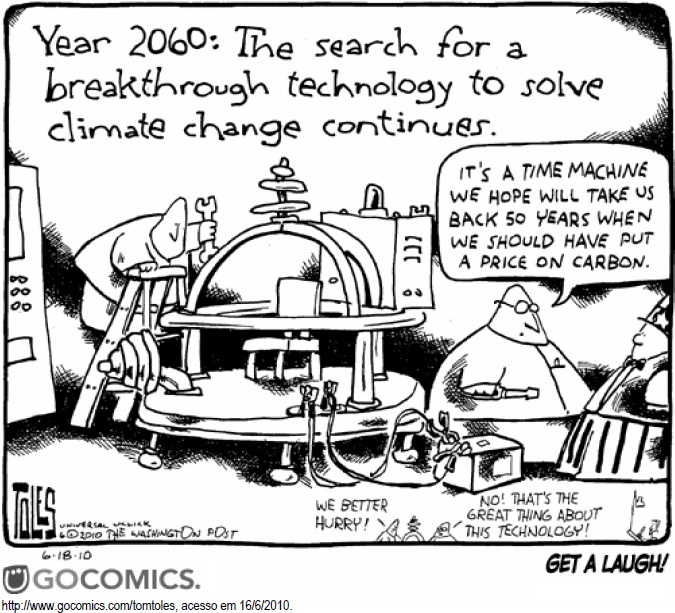
Assinale a opção que mais se aproxima da ideia central do texto.
06