


![[Marketing] Questao Topo - deslogado](https://storage.estuda.com.br/banners/0_6b7ebee90b03af1c560c73bb8bcce34a_banner_deslogado_70_dias.png)
Questões de Inglês
19.971 Questões
Questão 51 44955
UFRN 1° Dia 2012
I recently found out that we could save 4 million kids’ lives in the next 5 years. How? With 2 new vaccines that could drastically reduce child deaths in poor countries from 2 diseases, which cause pneumonia and diarrhoea.
However, it’s one thing having these vaccines available; it’s another getting them safely to the places where they are needed. That’s where you come in. In a few weeks world leaders are meeting to decide how much they will pledge to support the roll out of these vaccines in developing countries.
You can help protect children for a lifetime by adding your name to our petition.
Nearly 1 out of 3 child deaths is caused by these two diseases. But they don’t only kill, they also make children ill. Fewer sick kids means more time in school, less strain on health services, and healthier future generations. […]
O autor do post afirma que o objetivo do encontro dos líderes mundiais é decidir sobre
Questão 47 44652
UNEMAT 1° Dia - específico 2012/2THIS COULD PUT BIOPSIES OUT OF BUSINESS
At last month’s American Physical Society meeting, Dartmouth researcher Mary Ann Myeek described a new laser system that will help doctors identify a malignant tumor without having to do a biopsy. The laser system can detect slight chemical and structural changes in a tissue that may signify the very early stages of cancers. When tested on patients with colon polyps, this new detection method was just as accurate as conventional procedures.
Normally, when a doctor finds a suspicious growth a piece of the tissue is removed and sent to laboratory for analysis. Getting the result can take days even weeks. Myeek’s new laser system, however, gives immediate answers, and it’s much less invasive than a biopsy. Myeek’s team tested the laser system on 17 patients who were undergoing routine colon examinations. Every time a polyp was discovered, doctor took a picture of the tissue’s molecular structure with the laser. For comparison, a tissue sample was also biopsied. In nearly every case, the two methods gave similar results. Myeek says this device could be widely available in a few years.
Fonte: Business week, 12/04/09, p. 61.
Indique o significado da expressão out of business empregada no texto.
Questão 49 44563
UNEMAT 1° Dia 2012/2NO MORE FISH 'N' CHIPS: THE ORIGINAL FAST FOOD IS STRUGGLING TO SURVIVE …
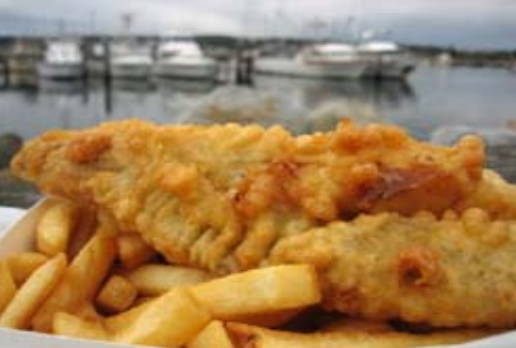
[1] It is the original British fast food; fish 'n' chips, the original "carry‐out" meal, has been part of
British life for over 100 years. But will it survive much longer? Perhaps only in the form of a
luxury for those who can afford it. Long before the Big Mac was invented, Britain had its own
national form of fast food.
[5] "When I was a young man, it was the sort of thing you'd have once or twice a week," remembers
82‐year old Arthur Mowbrey. "Before the last war, you'd get a full size portion of cod and chips
for sixpence. It was cheap, and good". Fish 'n' chips was nourishing too. It was a proper meal, that
you could eat in the street on your way home from work, or during the lunch‐break. Wrapped in
newspaper, it would keep warm to the last chip, even on the coldest days of the year.
[10] In the last quarter of a century, things have changed. "It's not so popular with young people these
days," says Lizzie, a teenager. "Most of the time, if young people want to eat out, they'll go to a
Burger King or something like that, or a Chinese take‐away. Fish 'n' chips is a bit old‐fashioned
really, I suppose. But there are still cheap chip shops around. I had fish 'n' chips about three
weeks ago. We sometimes have it at home, and we go and get it from the chip shop. It saves
[15] cooking!"
Thousands of chip shops, however, have closed in the last twenty‐five years. Some have been
turned into Chinese or Indian take‐aways, others have just closed. They have survived best in
seaside towns, where the fish is really fresh, and people visit them more as a tradition than for
any other reason. Yet nothing, perhaps, can save the classic fish 'n' chip shop from extinction.
[20] Fish 'n' chips wrapped in newspaper is already just a memory of the past. British and European
hygiene rules no longer allow food to be wrapped in old papers, so today's carry‐out chip shops
use new paper or styrofoam cartons. Of course, you can still eat fish and chips with your fingers if
you want, but there are now plastic throw‐away forks for those who don't want to get greasy
fingers! Yet in spite of these changes, the classic fish 'n' chip shop could disappear from British
[25] streets in a few years' time, for a completely different reason; lack of fish.
For over ten years, European agriculture ministers have been trying to solve the fish problem,
but with little success. As a result of modern industrial fishing, some types of fish are facing
extinction in the North Sea and Atlantic. "Overfishing in the North Sea has reached crisis levels,"
say Greenpeace. Quotas have been introduced, but each time there are new restrictions,
[30] fishermen in Britain, France, Spain and other countries protest, because jobs are lost.
Sadly, this is inevitable; and unless strict quotas are applied, thousands of European fishermen
could lose their jobs, as there will be few fish left to catch (at least, few of the kinds of fish that
people want to eat). One way or the other, sea fish will become rarer, and therefore more
expensive.
Fonte:http://linguapress.com/intermediate/nomorefishnchips.htm (acesso e adaptado em 05/04/11)
Assinale a alternativa incorreta.
Questão 47 44561
UNEMAT 1° Dia 2012/2NO MORE FISH 'N' CHIPS: THE ORIGINAL FAST FOOD IS STRUGGLING TO SURVIVE …
[1] It is the original British fast food; fish 'n' chips, the original "carry‐out" meal, has been part of
British life for over 100 years. But will it survive much longer? Perhaps only in the form of a
luxury for those who can afford it. Long before the Big Mac was invented, Britain had its own
national form of fast food.
[5] "When I was a young man, it was the sort of thing you'd have once or twice a week," remembers
82‐year old Arthur Mowbrey. "Before the last war, you'd get a full size portion of cod and chips
for sixpence. It was cheap, and good". Fish 'n' chips was nourishing too. It was a proper meal, that
you could eat in the street on your way home from work, or during the lunch‐break. Wrapped in
newspaper, it would keep warm to the last chip, even on the coldest days of the year.
[10] In the last quarter of a century, things have changed. "It's not so popular with young people these
days," says Lizzie, a teenager. "Most of the time, if young people want to eat out, they'll go to a
Burger King or something like that, or a Chinese take‐away. Fish 'n' chips is a bit old‐fashioned
really, I suppose. But there are still cheap chip shops around. I had fish 'n' chips about three
weeks ago. We sometimes have it at home, and we go and get it from the chip shop. It saves
[15] cooking!"
Thousands of chip shops, however, have closed in the last twenty‐five years. Some have been
turned into Chinese or Indian take‐aways, others have just closed. They have survived best in
seaside towns, where the fish is really fresh, and people visit them more as a tradition than for
any other reason. Yet nothing, perhaps, can save the classic fish 'n' chip shop from extinction.
[20] Fish 'n' chips wrapped in newspaper is already just a memory of the past. British and European
hygiene rules no longer allow food to be wrapped in old papers, so today's carry‐out chip shops
use new paper or styrofoam cartons. Of course, you can still eat fish and chips with your fingers if
you want, but there are now plastic throw‐away forks for those who don't want to get greasy
fingers! Yet in spite of these changes, the classic fish 'n' chip shop could disappear from British
[25] streets in a few years' time, for a completely different reason; lack of fish.
For over ten years, European agriculture ministers have been trying to solve the fish problem,
but with little success. As a result of modern industrial fishing, some types of fish are facing
extinction in the North Sea and Atlantic. "Overfishing in the North Sea has reached crisis levels,"
say Greenpeace. Quotas have been introduced, but each time there are new restrictions,
[30] fishermen in Britain, France, Spain and other countries protest, because jobs are lost.
Sadly, this is inevitable; and unless strict quotas are applied, thousands of European fishermen
could lose their jobs, as there will be few fish left to catch (at least, few of the kinds of fish that
people want to eat). One way or the other, sea fish will become rarer, and therefore more
expensive.
Fonte:http://linguapress.com/intermediate/nomorefishnchips.htm (acesso e adaptado em 05/04/11)
Assinale a alternativa correta.
Questão 48 44471
UNEMAT 1° Dia 2012/1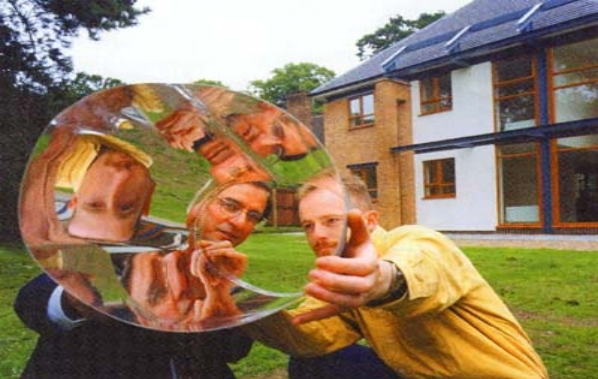
Everyone says that we must use less energy! But how? That is the
big question. In this article, you can read about the house of the
future, which uses hardly any energy at all...
Most houses use energy - lots of it. We use energy for heating,
[5] lighting, for running our household appliances - TV's, washing
machines, fridges, and so on. In winter time, most houses use
dozens of kilowatts of electricity every day, or the equivalent in
gas.
The house in the photo, on the other hand, uses virtually nothing:
[10] most of the energy that it uses comes straight from the sun, the
wind or the ground. This is an experimental house at the University
of Nottingham, and it could be the kind of house that most people
are living in fifty years from now.
During the daytime, it is rarely necessary to turn on an electric
[15] light, even in rooms without windows. Sunlight, or daylight, is
"piped" through the house, into each room, through special highreflection
aluminium tubes. You can see how well they reflect light,
by looking at the reflections of the faces in the picture!
http://linguapress.com/intermediate/no-energy.htm
Leia as afirmações.
I. A casa da foto usa todos os tipos de energia.
II. Trata-se de um estudo longitudinal realizado pela Universidade de Nottingham.
III. É um tipo de casa em que muitas pessoas irão viver nos próximos 50 anos.
IV. Durante o dia a casa necessita apenas de luz solar.
V. À noite ou durante o dia a casa recebe em cada cômodo uma iluminação especial através de um gás encanado.
Assinale a alternativa que indica a(s) afirmativa(s) correta(s).
Questão 47 44470
UNEMAT 1° Dia 2012/1
Everyone says that we must use less energy! But how? That is the
big question. In this article, you can read about the house of the
future, which uses hardly any energy at all...
Most houses use energy - lots of it. We use energy for heating,
[5] lighting, for running our household appliances - TV's, washing
machines, fridges, and so on. In winter time, most houses use
dozens of kilowatts of electricity every day, or the equivalent in
gas.
The house in the photo, on the other hand, uses virtually nothing:
[10] most of the energy that it uses comes straight from the sun, the
wind or the ground. This is an experimental house at the University
of Nottingham, and it could be the kind of house that most people
are living in fifty years from now.
During the daytime, it is rarely necessary to turn on an electric
[15] light, even in rooms without windows. Sunlight, or daylight, is
"piped" through the house, into each room, through special highreflection
aluminium tubes. You can see how well they reflect light,
by looking at the reflections of the faces in the picture!
http://linguapress.com/intermediate/no-energy.htm
Na frase “Everyone says that we must use less energy”! (ℓ.1), os verbos sublinhados fazem referência a:
06