


![[Marketing] Questao Topo - deslogado](https://storage.estuda.com.br/banners/0_6b7ebee90b03af1c560c73bb8bcce34a_banner_deslogado_70_dias.png)
Questões de Inglês
19.971 Questões
Questão 12 99474
FCM PB Medicina 2012/2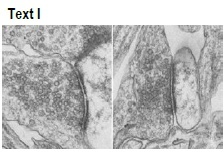
Every millisecond of every day, a remarkable sequence of events occurs in the brain: billions of brain cells called neurons transmit signals to each other. And they do it at trillions of junctions called synapses. It is an extremely fast and efficient process — one central to everything the brain does, including learning, memorizing, planning, reasoning, and enabling movement.
When even one part of the process breaks down, the results can be devastating. Many brain disorders and nervous system diseases, including autism, schizophrenia, Alzheimer’s disease, epilepsy, and even botulinum poisoning, have been linked to problems at the synapse.
Thanks to advances in molecular cell biology, neuroscientists have pieced together many of the step-by-step details going on at synapses. They discovered different molecules play special roles to make sure neurotransmitters — the chemicals that carry the messages from one neuron to another — are released. This exciting research is leading to:
• A deeper understanding of the cellular processes involved in neural communication.
• Awareness of breakdowns in neurotransmitter release that may contribute to brain diseases and disorders.
How the neuron releases neurotransmitters has been the focus of considerable research. Scientists discovered neurotransmitters are stored in small, bubble-like compartments called vesicles. Each vesicle tends to hold a single kind of neurotransmitter — say, dopamine, which is associated with memory and other cognitive skills, or serotonin, which helps regulate mood.
The vesicles travel like tiny ferryboats to the end of the neuron, where they dock, waiting to be released. When it is time for the neuron to release neurotransmitters, the vesicles fuse with the membrane of the neuron and dump their contents into the synapse gap. The delicate fusion process — described as the merging of two soap bubbles into one — is highly complex and involves the work of many different and specialized molecules within the neuron. After neurotransmitter release, the neuron recycles the empty vesicles, refilling and reusing them several more times before they need to be replaced.
If any part of this process goes awry — if a molecule fails to do its job properly or if the vesicles release their neurotransmitters at the wrong speed — serious problems may develop. Neurotransmitter release problems may also contribute to certain psychiatric disorders. By identifying such breakdowns in neurotransmitter release, scientists hope to develop treatments that may one day reverse the symptoms of several devastating brain disorders. Ongoing research on neurotransmitter release continues to unlock the mysteries of brain health and disease.
(Adapted from: http://www.brainfacts.org/)
In the sentence: "When it is time for the neuron to release neurotransmitters, the vesicles fuse with the membrane of the neuron and dump their contents into the synapse gap" the words in bold could be respectively best replaced by:
Questão 11 99473
FCM PB Medicina 2012/2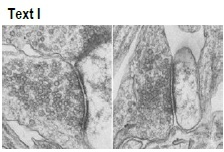
Every millisecond of every day, a remarkable sequence of events occurs in the brain: billions of brain cells called neurons transmit signals to each other. And they do it at trillions of junctions called synapses. It is an extremely fast and efficient process — one central to everything the brain does, including learning, memorizing, planning, reasoning, and enabling movement.
When even one part of the process breaks down, the results can be devastating. Many brain disorders and nervous system diseases, including autism, schizophrenia, Alzheimer’s disease, epilepsy, and even botulinum poisoning, have been linked to problems at the synapse.
Thanks to advances in molecular cell biology, neuroscientists have pieced together many of the step-by-step details going on at synapses. They discovered different molecules play special roles to make sure neurotransmitters — the chemicals that carry the messages from one neuron to another — are released. This exciting research is leading to:
• A deeper understanding of the cellular processes involved in neural communication.
• Awareness of breakdowns in neurotransmitter release that may contribute to brain diseases and disorders.
How the neuron releases neurotransmitters has been the focus of considerable research. Scientists discovered neurotransmitters are stored in small, bubble-like compartments called vesicles. Each vesicle tends to hold a single kind of neurotransmitter — say, dopamine, which is associated with memory and other cognitive skills, or serotonin, which helps regulate mood.
The vesicles travel like tiny ferryboats to the end of the neuron, where they dock, waiting to be released. When it is time for the neuron to release neurotransmitters, the vesicles fuse with the membrane of the neuron and dump their contents into the synapse gap. The delicate fusion process — described as the merging of two soap bubbles into one — is highly complex and involves the work of many different and specialized molecules within the neuron. After neurotransmitter release, the neuron recycles the empty vesicles, refilling and reusing them several more times before they need to be replaced.
If any part of this process goes awry — if a molecule fails to do its job properly or if the vesicles release their neurotransmitters at the wrong speed — serious problems may develop. Neurotransmitter release problems may also contribute to certain psychiatric disorders. By identifying such breakdowns in neurotransmitter release, scientists hope to develop treatments that may one day reverse the symptoms of several devastating brain disorders. Ongoing research on neurotransmitter release continues to unlock the mysteries of brain health and disease.
(Adapted from: http://www.brainfacts.org/)
Which of the following is NOT mentioned in the text?
Questão 59 98928
IMEPAC Medicina 2012/1SHARKS - THE ADAPTABLE OLD-TIMERS
By Peter T. Pugliese and John Heinerman
Sharks are cartilaginous fish (i.e., having a skeleton wholly or largely composed of cartilage). They vary greatly in size, behavior, and in the way they reproduce. They are found at all depths in all the oceans of the world except the Antarctic. However, they are most abundant in tropical and subtropical waters. A few species of shark inhabit freshwater lakes and rivers, and some migrate regularly from salt to freshwater.
Sharks are remarkably successful animals, with few parasites or diseases and almost no enemies except other sharks. As predators and scavengers, sharks play a major role in the ecosystems of the world‟s oceans.
Paleontologists believe that sharks evolved from some primitive, heavily armored, sluggish placoderm that became extinct about 350 million years ago, at the end of the Devonian era. This is approximately when the first shark-like creatures appeared. Sharks almost identical to those living today evolved about 160 million years ago, during the Jurassic period (same time period as represented in the movie Jurassic Park). His species has survived unchanged for 160 million years. In contrast, we poor Homo Sapiens have been around for less than one million years.
Well-attuned to most of the waters of the world, sharks appear to dominate the depths. Swimmers, water skiers, snorkelers, scuba divers, and sea fishermen are invading their habitats in ever-increasing numbers. Sharks have responded with predictable reflex reactions: they have attacked. The resulting notoriety has given sharks a bad reputation. The mass media have embellished the image, and now most people react with alarm to the word “shark”. However, the facts don‟t support this dread of sharks. Of the 100 or so unprovoked attacks that occur worldwide every year, fewer than 35 are fatal.
Internally, sharks are different than bony fish. Sharks have cartilaginous skeletons, skulls without sutures, no air ladder, and reserve rows of teeth attached to the skin of the jaws. Sharks‟ teeth are often found in the wounds of those attacked. An abundance of fossil teeth does not necessarily indicate the presence of multitudes of sharks. Instead, it may indicate multitudes of teeth that were frequently lost and replaced.
From Devour Disease with shark liver oil. Green Bay: IMAKT, 1999.
Usually sharks attack as a result of
Questão 63 98326
FACERES Medicina 2012/2Barack Obama has edged ahead of Mitt Romney in the final days of the presidential campaign, helped by his handling of superstore Sandy, according to a new poll. As the two candidates criss-crossed the country in a last round of campaigning before Tuesday's election, a survey by the Pew Research Center, one of the more reliable pollsters, showed Obama leading Romney 48% to 45% among likely voters. Pew estimated that in the final tally, Obama will take 50% of the popular vote to 47% for Romney. The modest lead for Obama marks a shift from a week ago when the two were tied on 47% before Sandy. Among likely voters, 69% said they ap-proved of Obama's handling of the storm.
The findings are similar to a Wall Street Jour-nal/NBC poll published at the weekend. The two offer the first firm evidence of the impact of Sandy on the election. Pew carries one caution for Obama, suggesting turnout may be lower than in 2008 and 2004, which could help Romney. The poll came as the presidents’ top campaign advisers accused Romney of desperation on Sunday as they claimed the race was moving decisively in Obama's direction. Obama is enjoying a slight edge in polls from most of the crucial swing states that will de-cide the outcome.
Obama and Romney will make eight campaign stops between them on Monday, flying from morning to night across six of the crucial swing states, following similar cross-country dashes over the weekend. Obama's team claimed that Romney's frantic campaign schedule reflected a sense of desperation, squeezing in a late visit to previously neglected Pennsylvania Sunday in the search for elusive electoral college votes else-where. The Obama team also cited visits Monday to Florida and Virginia, two states it said the Romney camp had claimed to have locked up.
http://www.guardian.co.uk (adapted)
According to the passage, it is WRONG to say that:
Questão 62 98325
FACERES Medicina 2012/2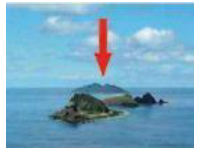
The countries of Asia do not exactly see the world in a grain of sand, but they have identified grave threats to the national interest in the tiny outcrops and shoals scattered off their coasts. The summer has seen a succession of maritime disputes involving China, Japan, South Korea, Vietnam, Taiwan and the Philippines. This week there were more anti-Japanese riots in cities across China because of a dispute over a group of uninhabited islands known to the Japanese as the Senkakus and to the Chi-nese as the Diaoyus. Toyota and Honda closed down their factories. Amid heated rhetoric on both sides, one Chinese newspaper has helpfully suggested skipping the pointless diplomacy and moving straight to the main course by serving up Japan with an atom bomb.
That, thank goodness, is grotesque hyperbole: the government in Beijing is belatedly trying to play down the dispute, aware of the economic interests in keeping the peace. Which all sounds very rational, until you con-sider history – especially the parallel between China's rise and that of imperial Germany over a century ago. Back then nobody in Europe had an economic interest in conflict; but Germany felt that the world was too slow to accommodate its growing power, and crude, irrational passions like nationalism took hold. China is re-emerging after what it sees as 150 years of humiliation, surrounded by anxious neighbours, many of them allied to America. In that context, disputes about clumps of rock could become as significant as the assassination of an archduke.
The Economist UK. September 2012 (with slight adapta-tions)
According to the passage, it is correct to conclude that:
Questão 61 98324
FACERES Medicina 2012/2
The countries of Asia do not exactly see the world in a grain of sand, but they have identified grave threats to the national interest in the tiny outcrops and shoals scattered off their coasts. The summer has seen a succession of maritime disputes involving China, Japan, South Korea, Vietnam, Taiwan and the Philippines. This week there were more anti-Japanese riots in cities across China because of a dispute over a group of uninhabited islands known to the Japanese as the Senkakus and to the Chi-nese as the Diaoyus. Toyota and Honda closed down their factories. Amid heated rhetoric on both sides, one Chinese newspaper has helpfully suggested skipping the pointless diplomacy and moving straight to the main course by serving up Japan with an atom bomb.
That, thank goodness, is grotesque hyperbole: the government in Beijing is belatedly trying to play down the dispute, aware of the economic interests in keeping the peace. Which all sounds very rational, until you con-sider history – especially the parallel between China's rise and that of imperial Germany over a century ago. Back then nobody in Europe had an economic interest in conflict; but Germany felt that the world was too slow to accommodate its growing power, and crude, irrational passions like nationalism took hold. China is re-emerging after what it sees as 150 years of humiliation, surrounded by anxious neighbours, many of them allied to America. In that context, disputes about clumps of rock could become as significant as the assassination of an archduke.
The Economist UK. September 2012 (with slight adapta-tions)
The word belatedly in the passage is closest in meaning to:
06