


![[Marketing] Questao Topo - deslogado](https://storage.estuda.com.br/banners/0_6b7ebee90b03af1c560c73bb8bcce34a_banner_deslogado_70_dias.png)
Questões de Inglês
19.971 Questões
Questão 39 105461
FAMEVAÇO Caderno G01 2012/1Text II
Countdown to seven billionth baby
Today begins the one-week countdown to 31st October when the world population is predicted to reach seven billion.
That's a rise of two billion in less than a quarter century.
Seven days from now the world's seven billionth baby will be born. That's according to the UN's projections, and it's using the milestone to take stock of trends in population growth.
The big question is how long the planet can continue to satisfy the voracious appetite of its growing number of human inhabitants.
In fact, over the past six decades, the global fertility rate has been cut in half. Statistically from five children per woman to 2.5. But 78 million babies are still being born every year, almost all of them in developing countries.
The UN says women in these countries are having so many babies because of poverty, lack of education, income and access to birth control.
Not only that, they and their children face a high risk of poor health, and early death. So the UN is highlighting the need to boost education and employment opportunities for poor women: in other words, address the poverty, and the demography will look after itself, as it did in Europe.
By Barbara Plett, BBC News, New York
(FONTE: http://www.bbc.co.uk/worldservice/)
To boost in “So the UN is highlighting the need to boost education and employment opportunities for poor women …” means
Questão 37 105459
FAMEVAÇO Caderno G01 2012/1Text II
Countdown to seven billionth baby
Today begins the one-week countdown to 31st October when the world population is predicted to reach seven billion.
That's a rise of two billion in less than a quarter century.
Seven days from now the world's seven billionth baby will be born. That's according to the UN's projections, and it's using the milestone to take stock of trends in population growth.
The big question is how long the planet can continue to satisfy the voracious appetite of its growing number of human inhabitants.
In fact, over the past six decades, the global fertility rate has been cut in half. Statistically from five children per woman to 2.5. But 78 million babies are still being born every year, almost all of them in developing countries.
The UN says women in these countries are having so many babies because of poverty, lack of education, income and access to birth control.
Not only that, they and their children face a high risk of poor health, and early death. So the UN is highlighting the need to boost education and employment opportunities for poor women: in other words, address the poverty, and the demography will look after itself, as it did in Europe.
By Barbara Plett, BBC News, New York
(FONTE: http://www.bbc.co.uk/worldservice/)
The word milestone on the 3rd paragraph refers to
Questão 36 105458
FAMEVAÇO Caderno G01 2012/1Text I
Go easy on yourself!
Do you treat yourself as well as you treat your friends or your family?
That simple question is the basis of new area of psychological research called self-compassion – how kindly people view themselves. People who find it easy to be supportive and understanding to others often score surprisingly low on self-compassion tests. They get angry with themselves for perceived failures like being overweight or not exercising.
Anxious
The research suggests that accepting our imperfections may be the first step toward better health. People who score high on tests of self-compassion have less depression and anxiety, and tend to be happier and more optimistic. Preliminary data suggest that self-compassion can even influence how much we eat and may help some people lose weight.
This idea does to contrast with the advice of many doctors and self-help books, which suggest that willpower and self-discipline are the keys to better health. But Kristin Neff, a pioneer in the field says self-compassion is not to be confused with self-indulgence or lower standards.
“I found in my research that the biggest reason people aren’t more self-compassionate is that they are afraid they’ll become self-indulgent,” said Dr. Neff, an associate professor of human development at the University of Texas at Austin. “They believe self-criticism is what keeps them in line. Most people have gotten it wrong because our culture says being hard on yourself is the way to be.”(…)
(FONTE: SpeakUp Magazine #288 page36)
People who find it easy to be supportive and understanding to others often score surprisingly low on self-compassion tests.
The relative pronoun in the sentence above functions as:
Questão 35 105457
FAMEVAÇO Caderno G01 2012/1Text I
Go easy on yourself!
Do you treat yourself as well as you treat your friends or your family?
That simple question is the basis of new area of psychological research called self-compassion – how kindly people view themselves. People who find it easy to be supportive and understanding to others often score surprisingly low on self-compassion tests. They get angry with themselves for perceived failures like being overweight or not exercising.
Anxious
The research suggests that accepting our imperfections may be the first step toward better health. People who score high on tests of self-compassion have less depression and anxiety, and tend to be happier and more optimistic. Preliminary data suggest that self-compassion can even influence how much we eat and may help some people lose weight.
This idea does to contrast with the advice of many doctors and self-help books, which suggest that willpower and self-discipline are the keys to better health. But Kristin Neff, a pioneer in the field says self-compassion is not to be confused with self-indulgence or lower standards.
“I found in my research that the biggest reason people aren’t more self-compassionate is that they are afraid they’ll become self-indulgent,” said Dr. Neff, an associate professor of human development at the University of Texas at Austin. “They believe self-criticism is what keeps them in line. Most people have gotten it wrong because our culture says being hard on yourself is the way to be.”(…)
(FONTE: SpeakUp Magazine #288 page36)
According to the text, our culture tends to be
Questão 34 105456
FAMEVAÇO Caderno G01 2012/1Text I
Go easy on yourself!
Do you treat yourself as well as you treat your friends or your family?
That simple question is the basis of new area of psychological research called self-compassion – how kindly people view themselves. People who find it easy to be supportive and understanding to others often score surprisingly low on self-compassion tests. They get angry with themselves for perceived failures like being overweight or not exercising.
Anxious
The research suggests that accepting our imperfections may be the first step toward better health. People who score high on tests of self-compassion have less depression and anxiety, and tend to be happier and more optimistic. Preliminary data suggest that self-compassion can even influence how much we eat and may help some people lose weight.
This idea does to contrast with the advice of many doctors and self-help books, which suggest that willpower and self-discipline are the keys to better health. But Kristin Neff, a pioneer in the field says self-compassion is not to be confused with self-indulgence or lower standards.
“I found in my research that the biggest reason people aren’t more self-compassionate is that they are afraid they’ll become self-indulgent,” said Dr. Neff, an associate professor of human development at the University of Texas at Austin. “They believe self-criticism is what keeps them in line. Most people have gotten it wrong because our culture says being hard on yourself is the way to be.”(…)
(FONTE: SpeakUp Magazine #288 page36)
In “People who score high on tests of self-compassion have less depression and anxiety, and tend to be happier and more optimistic.” the underlined expressions are:
Questão 40 105383
FAMEVAÇO Caderno G01 2012/2TEXT: Growing Up With a Fat Dad
(DAWN LERMAN)
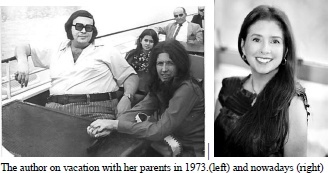
1 I grew up with a fat dad — 450 pounds at his heaviest. Every week he would rotate to a new fad diet, and my family ended up eating whatever freeze-dried, saccharin-loaded concoction he was trying at that moment. By the time I was 9, I was an expert on Atkins, Pritikin and Weight Watchers, just to name a few. Did I mention spending four weeks at Duke University’s “Fat Farm” consuming only minuscule bowls of white rice, while my 10-year-old peers were home eating ice cream cones?
2 In spite of being shorter and scrawnier than my classmates, I was eating calorie-free astronaut mystery powders and drinking diet sodas, which were the only staples in our kitchen. My dad was obsessed with his career in advertising and his fluctuating weight, which was fluctuating mostly in the wrong direction. Every new diet, no matter how stringent or odd, was the potential solution for his expanding waistline.
3 My mother, on the other hand, never understood what the big deal with food was and ate only one small meal a day while standing up and chatting on the phone. She had no interest in preparing food. Most of our meals consisted of my dad’s diet foods, a meal replacement shake, a frozen dinner, or a bagel or pizza in the car. We never had meals together as a family; in fact, we never ate sitting down. At home, we never used silverware or dishes, only plastic forks and paper plates. My mom loved the fact that in India they never used silverware at all. Of course, she missed the part that Indian families actually ate together and sat down while eating.
4 What I remember most about those years is that I was always hungry — hungry for food, hungry for nice clean clothes, hungry for someone to notice when I ran away from home or hid in the closet for hours. I was just hungry — hungry for someone to care for me because I was a child and I yearned to be cared for.
5 But on Friday nights, I was never hungry. My maternal grandfather would pick me up for the weekend, and when we arrived at my grandparents’ home, the table was always set with beautiful china. There was always a pot of something cooking on the stove, a freshly drawn bath, and a fluffy, lavender-smelling nightgown waiting for me. It was at my grandmother’s house where I learned what true nourishment was. It is where my tears were dried.
6 When I walked into her kitchen, life transformed from processed packages of salty MSG instant soup to the delicious warm, fragrant smell of homemade chicken soup. Giant salads, fresh fruits and the aroma of just-baked muffins filled the air and my world. It was the only place I can remember feeling happy, safe and nourished. It was what I craved.
7 My grandmother, who was nicknamed Beauty, taught me how good it felt to be cared for, and how to care for myself and others through cooking. It was always about the ingredients for her. If I asked her how much celery to chop for a soup, she’d wave off the question. “Just use your creativity,” she’d say. “You can’t go wrong when you use fresh ingredients.” She’d throw a few carrots, sweet potatoes, a few veal bones — whatever looked best at the market that day — into a pot, and two hours later, it was the most delicious thing I’d ever tasted.
8 My grandmother Beauty was always extremely skeptical of my parents’ wacky eating habits and reliance on processed diet foods, and made it her mission to teach me how to feed myself and my sister. My grandmother was my mentor and my savior. She poured love and stability into my life, one recipe at a time.
9 After my third-grade year, my dad landed a life-changing job in Manhattan. My mom, my little sister and I had to move away from our hometown, Chicago, and leave my grandmother and her beautiful food behind.
10 Leaving my grandmother was far scarier than the move to New York City. There would be no more special weekends at my grandmother’s house, no more homemade food, no more car rides to school. It was the subway, a latchkey, total independence and self-reliance for survival. In this new city, I felt extremely alone and lost, and I missed my grandmother terribly.
11 My grandmother knew just how I felt — and she knew the cure. Every week, she would send me a card with a $20 bill, a recipe and a list of what to buy at the market. It kept us bonded, and her recipes filled my body and soul.
12 Over the years, I have grown to better understand my father’s struggles with weight and the toll it took on him and those who love him. I have come to realize he was driven not by vanity or selfishness as much as by a deep pain. And in spite of growing up in such an unhealthy eating environment (or perhaps because of it), as an adult I found a passion and a career as a nutrition consultant.
13 Today, my father weighs 220 pounds and is a vegan. How he got there is a story I hope to share in the coming weeks. More important, food is no longer a barrier that keeps us apart, but a bridge that keeps us connected. There is nothing my dad enjoys more than talking with me about dietary theories and his weight-loss victories. And now I am the one regularly sending recipe cards to my father’s house, just as my grandmother did for me.
14 Dawn Lerman is a New York-based health and nutrition consultant and founder of Magnificent Mommies, which provides school lectures, cooking classes and workshops. Her series on growing up with a fat father will appear on occasional Fridays on Well in June and July.
(FONTE: http://well.blogs.nytimes.com. Acesso: 15/06/ 2012)
The verb tense mostly used in the text is
06