


![[Marketing] Questao Topo - deslogado](https://storage.estuda.com.br/banners/0_6b7ebee90b03af1c560c73bb8bcce34a_banner_deslogado_70_dias.png)
Questões de Inglês
19.971 Questões
Questão 84 229460
UECE 2° Fase 1° Dia 2012T E X T
Language is forever changing – and forms such as tweets and text messages are no less valid than any textbook version, says the linguist David Crystal, whose latest book encourages children to engage with the possibilities of their lingua franca.
Were the English language ever to need an official guardian, Professor David Crystal certainly looks the part. But the professor would, I suspect, quickly shrug off such a custodial title – not out of modesty, but principle. Though many endangered languages need their champions, he would say, English does not require a guardian; it is vibrant and evolving and can fend for itself.
Crystal’s A Little Book of Language is the latest work of a prolific career. He already has more than 100 books to his name; some are academic but many are for the general inquisitive reader, including By Hook or by Crook: A Journey in Search of English and Shakespeare's Words, which was co-authored by his son, Ben.
For the Crystals, linguistics is clearly a family affair. In the jaunty early chapters of A Little Book of Language, Crystal notes how, when his four children were young, he would study them."We're talking the 1960s, when the study of linguistics had hardly begun – people did not know, in a scientific way, how you developed language," he recalls. "Several of us linguists at that time would record our own kids, just to get some data. There was some literature on it then, but no day-by-day, blow-by-blow examples. I recorded all my children over the years in some shape or form. It's what linguists do. You don't talk to a linguist without having what you say taken down and used in evidence against you at some point in time."
Something must have rubbed off. Though his elder two children, Steven and Sue, eschewed academia, his daughter Lucy took up copywriting and his son Ben, an actor, is now following his father. "His book Shakespeare on Toast was a runaway hit – I wish I'd written it!" says Crystal, before rapidly, and self-effacingly, adding: "But I couldn't have – because it was so cool and modern and so street in its approach to Shakespeare. He has examples of hip-hop Shakespearians and I would never have dared put any of that stuff into one of my books."
A Little Book of Language is a simple history of all language, taking in phonetics, development, social uses, the internet, endangered languages and a touch of literature.
This all sounds very innocent, but books for children can be a contentious issue. Language, as much as history, is part of a national identity and cannot escape contemporary debates. And since Crystal began his academic career in the early 1960s, there have been dramatic shifts in how the English language is taught. "The ethos of 50 years ago was that there was one kind of English that was right and everything else was wrong; one kind of access that was right and everything else was inferior," he says. "Then nobody touched language for two generations. When it gradually came back in, we didn't want to go back to what we did in the 1950s. There's a new kind of ethos now."
What has replaced it is something far more fluid – descriptive rather than prescriptive, as the terminology goes. In schools, appropriateness has replaced the principle of correctness. "Now, one looks at all varieties of language and asks why they are used, says Crystal. "We are rearing a generation of kids who are more equitable and more understanding about the existence of language variety and why it is there."
This doesn't sit easy with the traditionalists, of whom there are still many. His clearest example is the belief that text messaging is destroying children's ability to spell. "It's all nonsense, but people believe it."
He addressed this in his book Txtng: the Gr8 Db8, published three years ago, in which he found that "txt speak" accounted for barely 10 per cent of the contents of the messages exchanged, and noted that abbreviations have always been part of the English language. Having solved that argument with some decent data, he tells me that he's now moving on to Twitter.
"On Twitter [which limits each written entry to 140 characters], you don't get the range of texting abbreviations you get in text messaging. It's a more sophisticated kind of communicative medium. You get semantic threads running through it. When you start counting thousands and thousands of messages, you suddenly realise that on the whole it's a new art form in the making."
The breadth of the internet means that language is morphing not just on grocers' signs and in school playgrounds, but on a far more fundamental level.
"All these different genres – instant messaging, blogging, chatrooms, virtual worlds – have evolved different sets of communicative strategies, which means that you can look at the language and say, 'That must be an example of a chatroom, that must be an example of a tweet,' and you can predict it."
Becoming involved in bigger arguments seems to be an occupational hazard for a linguist. Whether it be education, politics or neuroscience, we all have a vested interest in the implications of language. Our conversation turns to the recent news of a man who had been lying in a vegetative state for seven years before doctors managed to establish basic communication by scanning his brainwaves. "We are moving fast in a direction where you will be able to see what people are saying," says Crystal, optimistically. "We've got to the stage where you can see the complexity of language processing. We're not at the stage yet of being able to see clearly individual sentence patterns and words, but it's not long off."
Surely this has huge implications, not least for personal liberties? "It is the case that virtually every language issue resolves into a social or political or psychological issue," Crystal reminds me. "Language has no independent existence apart from the people who use it. It is not an end in itself; it is a means to an end of understanding who you are and what society is like. At which point, you know that a linguist has to bow out and say, 'This is bigger than me.'"
By Joy Lo Dico 14 March 2010 http://www.independent.co.uk
Crystal reinforces the interconnection between
Questão 81 229456
UECE 2° Fase 1° Dia 2012T E X T
Language is forever changing – and forms such as tweets and text messages are no less valid than any textbook version, says the linguist David Crystal, whose latest book encourages children to engage with the possibilities of their lingua franca.
Were the English language ever to need an official guardian, Professor David Crystal certainly looks the part. But the professor would, I suspect, quickly shrug off such a custodial title – not out of modesty, but principle. Though many endangered languages need their champions, he would say, English does not require a guardian; it is vibrant and evolving and can fend for itself.
Crystal’s A Little Book of Language is the latest work of a prolific career. He already has more than 100 books to his name; some are academic but many are for the general inquisitive reader, including By Hook or by Crook: A Journey in Search of English and Shakespeare's Words, which was co-authored by his son, Ben.
For the Crystals, linguistics is clearly a family affair. In the jaunty early chapters of A Little Book of Language, Crystal notes how, when his four children were young, he would study them."We're talking the 1960s, when the study of linguistics had hardly begun – people did not know, in a scientific way, how you developed language," he recalls. "Several of us linguists at that time would record our own kids, just to get some data. There was some literature on it then, but no day-by-day, blow-by-blow examples. I recorded all my children over the years in some shape or form. It's what linguists do. You don't talk to a linguist without having what you say taken down and used in evidence against you at some point in time."
Something must have rubbed off. Though his elder two children, Steven and Sue, eschewed academia, his daughter Lucy took up copywriting and his son Ben, an actor, is now following his father. "His book Shakespeare on Toast was a runaway hit – I wish I'd written it!" says Crystal, before rapidly, and self-effacingly, adding: "But I couldn't have – because it was so cool and modern and so street in its approach to Shakespeare. He has examples of hip-hop Shakespearians and I would never have dared put any of that stuff into one of my books."
A Little Book of Language is a simple history of all language, taking in phonetics, development, social uses, the internet, endangered languages and a touch of literature.
This all sounds very innocent, but books for children can be a contentious issue. Language, as much as history, is part of a national identity and cannot escape contemporary debates. And since Crystal began his academic career in the early 1960s, there have been dramatic shifts in how the English language is taught. "The ethos of 50 years ago was that there was one kind of English that was right and everything else was wrong; one kind of access that was right and everything else was inferior," he says. "Then nobody touched language for two generations. When it gradually came back in, we didn't want to go back to what we did in the 1950s. There's a new kind of ethos now."
What has replaced it is something far more fluid – descriptive rather than prescriptive, as the terminology goes. In schools, appropriateness has replaced the principle of correctness. "Now, one looks at all varieties of language and asks why they are used, says Crystal. "We are rearing a generation of kids who are more equitable and more understanding about the existence of language variety and why it is there."
This doesn't sit easy with the traditionalists, of whom there are still many. His clearest example is the belief that text messaging is destroying children's ability to spell. "It's all nonsense, but people believe it."
He addressed this in his book Txtng: the Gr8 Db8, published three years ago, in which he found that "txt speak" accounted for barely 10 per cent of the contents of the messages exchanged, and noted that abbreviations have always been part of the English language. Having solved that argument with some decent data, he tells me that he's now moving on to Twitter.
"On Twitter [which limits each written entry to 140 characters], you don't get the range of texting abbreviations you get in text messaging. It's a more sophisticated kind of communicative medium. You get semantic threads running through it. When you start counting thousands and thousands of messages, you suddenly realise that on the whole it's a new art form in the making."
The breadth of the internet means that language is morphing not just on grocers' signs and in school playgrounds, but on a far more fundamental level.
"All these different genres – instant messaging, blogging, chatrooms, virtual worlds – have evolved different sets of communicative strategies, which means that you can look at the language and say, 'That must be an example of a chatroom, that must be an example of a tweet,' and you can predict it."
Becoming involved in bigger arguments seems to be an occupational hazard for a linguist. Whether it be education, politics or neuroscience, we all have a vested interest in the implications of language. Our conversation turns to the recent news of a man who had been lying in a vegetative state for seven years before doctors managed to establish basic communication by scanning his brainwaves. "We are moving fast in a direction where you will be able to see what people are saying," says Crystal, optimistically. "We've got to the stage where you can see the complexity of language processing. We're not at the stage yet of being able to see clearly individual sentence patterns and words, but it's not long off."
Surely this has huge implications, not least for personal liberties? "It is the case that virtually every language issue resolves into a social or political or psychological issue," Crystal reminds me. "Language has no independent existence apart from the people who use it. It is not an end in itself; it is a means to an end of understanding who you are and what society is like. At which point, you know that a linguist has to bow out and say, 'This is bigger than me.'"
By Joy Lo Dico 14 March 2010 http://www.independent.co.uk
According to the text, David Crystal has
Questão 59 224456
UECE 2012TEXT
Laughter is regularly promoted as a source of health and well being, but it has been hard to pin down exactly why laughing until it hurts feels so good. The answer, reports Robin Dunbar, an evolutionary psychologist at Oxford, is not the intellectual pleasure of cerebral humor, but the physical act of laughing. The simple muscular exertions involved in producing the familiar ha, ha, ha, he said, trigger an increase in endorphins, the brain chemicals known for their feel-good effect.
His results build on a long history of scientific attempts to understand a deceptively simple and universal behavior. “Laughter is very weird stuff, actually,” Dr. Dunbar said. “That’s why we got interested in it.” And the findings fit well with a growing sense that laughter contributes to group bonding and may have been important in the evolution of highly social humans.
In five sets of studies in the laboratory and one field study at comedy performances, Dr. Dunbar and colleagues tested resistance to pain both before and after bouts of social laughter. The pain came from a freezing wine sleeve slipped over a forearm, an ever tightening blood pressure cuff or an excruciating ski exercise.
The findings, published in the Proceedings of the Royal Society B: Biological Sciences, eliminated the possibility that the pain resistance measured was the result of a general sense of well-being rather than actual laughter. And, Dr. Dunbar said, they also provided a partial answer to the ageless conundrum of whether we laugh because we feel giddy or feel giddy because we laugh. “The causal sequence is laughter triggers endorphin activation,” he said. What triggers laughter is a question that leads into a different labyrinth.
Robert R. Provine, a neuroscientist at the University of Maryland, Baltimore County, and the author of “Laughter: A Scientific Investigation,” said he thought the study was “a significant contribution” to a field of study that dates back 2,000 years or so. It has not always focused on the benefits of laughter. Both Plato and Aristotle, Dr. Provine said, were concerned with the power of laughter to undermine authority.
The results of Dr. Dunbar’s experiments, when analyzed, showed that laughing increased pain resistance, whereas simple good feeling in a group setting did not. Pain resistance is used as an indicator of endorphin levels because their presence in the brain is difficult to test; the molecules would not appear in blood samples because they are among the brain chemicals that are prevented from entering circulating blood by the so-called blood brain barrier.
Dr. Dunbar thinks laughter may have been favored by evolution because it helped bring human groups together, the way other activities like dancing and singing do. Those activities also produce endorphins, he said, and physical activity is important in them as well. “Laughter is an early mechanism to bond social groups,” he said. “Primates use it.”
Adapted from “Scientists hint at why laughter feels so good.” September 13, 2011, www.nytimes.com.
Through some experiments Dr. Dunbar concluded that
Questão 56 224453
UECE 2012TEXT
Laughter is regularly promoted as a source of health and well being, but it has been hard to pin down exactly why laughing until it hurts feels so good. The answer, reports Robin Dunbar, an evolutionary psychologist at Oxford, is not the intellectual pleasure of cerebral humor, but the physical act of laughing. The simple muscular exertions involved in producing the familiar ha, ha, ha, he said, trigger an increase in endorphins, the brain chemicals known for their feel-good effect.
His results build on a long history of scientific attempts to understand a deceptively simple and universal behavior. “Laughter is very weird stuff, actually,” Dr. Dunbar said. “That’s why we got interested in it.” And the findings fit well with a growing sense that laughter contributes to group bonding and may have been important in the evolution of highly social humans.
In five sets of studies in the laboratory and one field study at comedy performances, Dr. Dunbar and colleagues tested resistance to pain both before and after bouts of social laughter. The pain came from a freezing wine sleeve slipped over a forearm, an ever tightening blood pressure cuff or an excruciating ski exercise.
The findings, published in the Proceedings of the Royal Society B: Biological Sciences, eliminated the possibility that the pain resistance measured was the result of a general sense of well-being rather than actual laughter. And, Dr. Dunbar said, they also provided a partial answer to the ageless conundrum of whether we laugh because we feel giddy or feel giddy because we laugh. “The causal sequence is laughter triggers endorphin activation,” he said. What triggers laughter is a question that leads into a different labyrinth.
Robert R. Provine, a neuroscientist at the University of Maryland, Baltimore County, and the author of “Laughter: A Scientific Investigation,” said he thought the study was “a significant contribution” to a field of study that dates back 2,000 years or so. It has not always focused on the benefits of laughter. Both Plato and Aristotle, Dr. Provine said, were concerned with the power of laughter to undermine authority.
The results of Dr. Dunbar’s experiments, when analyzed, showed that laughing increased pain resistance, whereas simple good feeling in a group setting did not. Pain resistance is used as an indicator of endorphin levels because their presence in the brain is difficult to test; the molecules would not appear in blood samples because they are among the brain chemicals that are prevented from entering circulating blood by the so-called blood brain barrier.
Dr. Dunbar thinks laughter may have been favored by evolution because it helped bring human groups together, the way other activities like dancing and singing do. Those activities also produce endorphins, he said, and physical activity is important in them as well. “Laughter is an early mechanism to bond social groups,” he said. “Primates use it.”
Adapted from “Scientists hint at why laughter feels so good.” September 13, 2011, www.nytimes.com.
As to the scientific endeavor to decipher laughter and its effects in humans, the text states that it has
Questão 60 197978
IMEPAC 2012/2INSTRUCTIONS – Read the following text carefully and then choose the correct alternatives that answer the questions or complete the statements placed after it. Attention: take your answers from the text!
WORLD MS DAY: WORKING TOWARDS A BRIGHTER FUTURE
Main Category: Multiple Sclerosis
Article Date: 29 May 2012 - 9:00 PDT
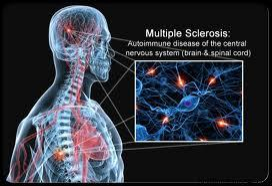
Today (May 30th) is World MS day (WMSD), an annual global awareness raising campaign for multiple sclerosis - a debilitating disease which affects the lives of more than two million people around the world.
In the run-up to WMSD, patient advocacy groups from twenty countries met last weekend in Zurich, Switzerland (May 24th) at a unique Patient Summit which brought together MS societies, activists, MS bloggers and social media experts to learn from each other about how to communicate the challenges of living and working with MS to a wider audience.
MS is the leading cause of neurological disability among young and middle-aged adults.
Symptoms usually start between the ages of 25 and 31 - a time when adult life is just beginning, when careers are being launched and when plans are being laid for the future. One of the most devastating consequences of MS in this relatively young population is unemployment. A key objective of the Patient Summit was to debate how best to convince employers and policy makers that helping people with MS to remain actively employed is good for both patients and for society.
There is growing evidence that helping people with MS continue to work can play a vital role in their well-being,, said Christoph Thalheim, Deputy CEO & Director of External Affairs for the European MS Platform (EMSP) which represents the interests of 38 MS Societies and more than half a million people affected by MS.
Mr Thalheim presented poignant photographs and stories collected as part of the 'UNDER PRESSURE' exhibition, which launched last month at the European Parliament, Brussels. The moving images of patients and their carers together with their personal testimonies vividly demonstrate how national health and social policies influence - for better or worse - those living with MS.
Further MS testimonies are being collected as part of World MS Day, which this year is built around the '1000 Faces of MS' concept. This puts people with MS at the heart of the campaign. People living with and affected by MS can create an on-line 'postcard' to share their story with the world.
At the Zurich meeting, Mr Thalheim said that although progress has been made in improving MS care, many EU countries still have far to go. The EMSP has been tracking the wide disparities in MS care which currently exist between eleven EU countries - such as the continuing shortage of neurologists in Ireland, inconsistent access to treatment in the UK, low access to medication in Belarus and Poland. In Greece the MS Society has made many gains, but fears these may lost due to the current economic crisis, he said.
Available on: www.isaude.net
All elements listed below are part of disparities in multiple sclerosis care, EXCEPT
Questão 58 197975
IMEPAC 2012/2INSTRUCTIONS – Read the following text carefully and then choose the correct alternatives that answer the questions or complete the statements placed after it. Attention: take your answers from the text!
WORLD MS DAY: WORKING TOWARDS A BRIGHTER FUTURE
Main Category: Multiple Sclerosis
Article Date: 29 May 2012 - 9:00 PDT
Today (May 30th) is World MS day (WMSD), an annual global awareness raising campaign for multiple sclerosis - a debilitating disease which affects the lives of more than two million people around the world.
In the run-up to WMSD, patient advocacy groups from twenty countries met last weekend in Zurich, Switzerland (May 24th) at a unique Patient Summit which brought together MS societies, activists, MS bloggers and social media experts to learn from each other about how to communicate the challenges of living and working with MS to a wider audience.
MS is the leading cause of neurological disability among young and middle-aged adults.
Symptoms usually start between the ages of 25 and 31 - a time when adult life is just beginning, when careers are being launched and when plans are being laid for the future. One of the most devastating consequences of MS in this relatively young population is unemployment. A key objective of the Patient Summit was to debate how best to convince employers and policy makers that helping people with MS to remain actively employed is good for both patients and for society.
There is growing evidence that helping people with MS continue to work can play a vital role in their well-being,, said Christoph Thalheim, Deputy CEO & Director of External Affairs for the European MS Platform (EMSP) which represents the interests of 38 MS Societies and more than half a million people affected by MS.
Mr Thalheim presented poignant photographs and stories collected as part of the 'UNDER PRESSURE' exhibition, which launched last month at the European Parliament, Brussels. The moving images of patients and their carers together with their personal testimonies vividly demonstrate how national health and social policies influence - for better or worse - those living with MS.
Further MS testimonies are being collected as part of World MS Day, which this year is built around the '1000 Faces of MS' concept. This puts people with MS at the heart of the campaign. People living with and affected by MS can create an on-line 'postcard' to share their story with the world.
At the Zurich meeting, Mr Thalheim said that although progress has been made in improving MS care, many EU countries still have far to go. The EMSP has been tracking the wide disparities in MS care which currently exist between eleven EU countries - such as the continuing shortage of neurologists in Ireland, inconsistent access to treatment in the UK, low access to medication in Belarus and Poland. In Greece the MS Society has made many gains, but fears these may lost due to the current economic crisis, he said.
Available on: www.isaude.net
The text affirms that people with multiple sclerosis
06