


![[Marketing] Questao Topo - deslogado](https://storage.estuda.com.br/banners/0_6b7ebee90b03af1c560c73bb8bcce34a_banner_deslogado_70_dias.png)
Questões de Inglês
19.971 Questões
Questão 49 602954
UCPEL Inverno 2012Leia o texto e responda a pergunta.
[1] HOW MEN AND WOMEN MANAGE THEIR SOCIAL NETWORKS DIFFERENTLY
[2] A new study of online behavior reveals that men and women organize their social networks very differently.
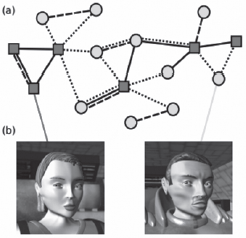
[3] One of the interesting insights that social networks offer is the
[4] difference between male and female behaviour.
[5] In the past, behavioural differences have been hard to measure.
[6] Experiments could only be done on limited numbers of
[7] individuals and even then, the process of measurement often
[8] distorted people’s behaviour.
[9] That’s all changed with the advent of massive online
[10] participation in gaming, professional and friendship networks.
[11] For the first time, it has become possible to quantify exactly
[12] how the genders differ in their approach to things like risk and
[13] communication.
[14] Earlier this year, for example, we looked at a remarkable study
[15] of a mobile phone network that demonstrated the different
[16] reproductive strategies that men and women employ throughout
[17] their lives, as revealed by how often they call friends, family and potential mates.
[18] Today, Michael Szell and Stefan Thurner at the Medical University of Vienna in Austria say they’ve found significant
[19] differences in the way men and women manage their social networks in an online game called Pardus with over
[20] 300,000 players. In this game, players explore various solar systems in a virtual universe. On the way, they can
[21] mark other players as friends or enemies, exchange messages, gain wealth by trading or doing battle but can also
[22] be killed.
[23] The interesting thing about online games is that almost every action of every player is recorded, mostly without the
[24] players being consciously aware of this. That means measurement bias is minimal.
[25] The networks of friends and enemies that are set up also differ in an important way from those on social networking
[26] sites such as Facebook. That’s because players can neither see nor influence other players’ networks. This prevents
[27] the kind of clustering and herding behaviour that sometimes dominates other social networks.
[28] Szell and Thurner say the data reveals clear and significant differences between men and women in Pardus. For
[29] example, men and women interact with the opposite sex differently. ”Males reciprocate friendship requests from
[30] females faster than vice versa and hesitate to reciprocate hostile actions of females,” say Szell and Thurner. Women
[31] are also significantly more risk averse than men as measured by the amount of fighting they engage in and their
[32] likelihood of dying. They are also more likely to be friends with each other than men.
[33] These results are more or less as expected. More surprising is the finding that women tend to be more wealthy than
[34] men, probably because they engage more in economic than destructive behaviour.
[35] One obvious problem is that of gender swapping: men who play as women and vice versa. Szell and Thurner say that
[36] other studies have shown that around ten per cent of online gaming populations engage in gender swapping. They
[37] say there’s no reason to think this would be any different in Pardus and that it shouldn’t affect the results.
[38] A more serious problem could be the well known phenomenon that women tend to receive better treatment in maledominated
[39] online gaming communities. Indeed, Szell and Thurner say they can see evidence of this in their data.
[40] That’s something they’ll need to look into in more detail.
Technology Review published by MIT, 23/05/2012
Adapted from http://www.technologyreview.com/blog/arxiv/27870/
A forma comparativa destacada na frase “More surprising is the finding that women tend to be more wealthy than men” (linha 33) poderia ser corretamente substituída por
Questão 48 602952
UCPEL Inverno 2012Leia o texto e responda a pergunta.
[1] HOW MEN AND WOMEN MANAGE THEIR SOCIAL NETWORKS DIFFERENTLY
[2] A new study of online behavior reveals that men and women organize their social networks very differently.
[3] One of the interesting insights that social networks offer is the
[4] difference between male and female behaviour.
[5] In the past, behavioural differences have been hard to measure.
[6] Experiments could only be done on limited numbers of
[7] individuals and even then, the process of measurement often
[8] distorted people’s behaviour.
[9] That’s all changed with the advent of massive online
[10] participation in gaming, professional and friendship networks.
[11] For the first time, it has become possible to quantify exactly
[12] how the genders differ in their approach to things like risk and
[13] communication.
[14] Earlier this year, for example, we looked at a remarkable study
[15] of a mobile phone network that demonstrated the different
[16] reproductive strategies that men and women employ throughout
[17] their lives, as revealed by how often they call friends, family and potential mates.
[18] Today, Michael Szell and Stefan Thurner at the Medical University of Vienna in Austria say they’ve found significant
[19] differences in the way men and women manage their social networks in an online game called Pardus with over
[20] 300,000 players. In this game, players explore various solar systems in a virtual universe. On the way, they can
[21] mark other players as friends or enemies, exchange messages, gain wealth by trading or doing battle but can also
[22] be killed.
[23] The interesting thing about online games is that almost every action of every player is recorded, mostly without the
[24] players being consciously aware of this. That means measurement bias is minimal.
[25] The networks of friends and enemies that are set up also differ in an important way from those on social networking
[26] sites such as Facebook. That’s because players can neither see nor influence other players’ networks. This prevents
[27] the kind of clustering and herding behaviour that sometimes dominates other social networks.
[28] Szell and Thurner say the data reveals clear and significant differences between men and women in Pardus. For
[29] example, men and women interact with the opposite sex differently. ”Males reciprocate friendship requests from
[30] females faster than vice versa and hesitate to reciprocate hostile actions of females,” say Szell and Thurner. Women
[31] are also significantly more risk averse than men as measured by the amount of fighting they engage in and their
[32] likelihood of dying. They are also more likely to be friends with each other than men.
[33] These results are more or less as expected. More surprising is the finding that women tend to be more wealthy than
[34] men, probably because they engage more in economic than destructive behaviour.
[35] One obvious problem is that of gender swapping: men who play as women and vice versa. Szell and Thurner say that
[36] other studies have shown that around ten per cent of online gaming populations engage in gender swapping. They
[37] say there’s no reason to think this would be any different in Pardus and that it shouldn’t affect the results.
[38] A more serious problem could be the well known phenomenon that women tend to receive better treatment in maledominated
[39] online gaming communities. Indeed, Szell and Thurner say they can see evidence of this in their data.
[40] That’s something they’ll need to look into in more detail.
Technology Review published by MIT, 23/05/2012
Adapted from http://www.technologyreview.com/blog/arxiv/27870/
Em relação às sentenças abaixo, é correto afirmar que:
I. Os pesquisadores Szell e Thurner encontraram diferenças significativas entre os comportamentos de homens e mulheres no Pardus.
II. Os homens aceitam os pedidos de amizade feitos por mulheres mais rapidamente do que os pedidos feitos por outros homens.
III. Comparadas aos homens, as mulheres tendem a fazer mais amizades entre si.
IV. As mulheres se arriscam mais que os homens no Pardus.
Questão 49 602523
UCPEL Verão 2012Leia o texto e responda a pergunta.
[1] SMASHING THE CUBICLES
[2] By designing new spaces around tablets, smart phones, and social technologies, companies can operate with far
[3] fewer desks.

[4] The quick expansion of social and mobile
[5] technologies is creating a widely distributed
[6] workforce. To better suit employees who come into
[7] offices more sporadically, some companies and
[8] design firms are testing radically new and more
[9] efficient configurations for physical offices, betting
[10] that improved technology will make the experiment
[11] more successful than similar ones in the 1990s.
[12] A project at the headquarters of Cisco Systems in
[13] San Jose, California, for example, overthrows
[14] decades-old conventions about office space.
[15] Called Connected Workplace, it replaces
[16] individual cubicles with open clusters of wheeled
[17] desks that belong to groups, not individuals; personal belongings are largely confined to lockers.
[18] There are no PCs at the desks, because employees use mobile technologies. Rick Hutley, a Cisco vice president,
[19] chooses his desk according to which colleagues are present and what’s on the day’s agenda. Then he docks his
[20] tablet to a desktop port that includes a phone handset. The tablet handles voice and video calls whether it’s docked
[21] or mobile, and it can be used to share documents at meetings.
[22] It can also be plugged into a monitor and keyboard to be used like a full PC. “You can walk around with your entire
[23] world with you in this device,” Hutley says. “My laptop would often stay on my desk, but the tablet never does.” If he
[24] needs to make a private voice or video call, he can step into one of the rooms at the edges of the cluster.
[25] Cisco’s vision is an example of a broader effort to reshape office technologies and environments. “We used to have
[26] boring stuff at work and more interesting technology at home,” says Prith Banerjee, leader of Hewlett-Packard’s
[27] research arm. “Now office technology will make use of the same cool experiences and interfaces.”
[28] Such changes could save a lot of money. Cisco’s project, for example, was launched after an internal study found
[29] that cubicles were vacant two-thirds of the time while people roamed the campus or worked remotely. Company
[30] calculations show that the building used for the project can accommodate 140 employees, up from 88 in designs
[31] used in traditional Cisco buildings, and that real-estate costs should drop by 37 percent.
[32] Over the long term, Cisco hopes to save on health costs, too, because people who move around more frequently are
[33] less likely to suffer health problems. The company is planning to study whether the more mature technology of today
[34] can conquer resistance that hobbled previous attempts to build offices with little private space.
[35] By Tom Simonite / Massachusetts, Technology Review, MIT, September/October 2011
[36] Adapted from http://www.technologyreview.com/business/38407/?p1=Mag_story1
Na sentença “My laptop would often stay on my desk, but the tablet never does.” (linha 23), “but the tablet never does” quer dizer
Questão 48 602522
UCPEL Verão 2012Leia o texto e responda a pergunta.
[1] SMASHING THE CUBICLES
[2] By designing new spaces around tablets, smart phones, and social technologies, companies can operate with far
[3] fewer desks.
[4] The quick expansion of social and mobile
[5] technologies is creating a widely distributed
[6] workforce. To better suit employees who come into
[7] offices more sporadically, some companies and
[8] design firms are testing radically new and more
[9] efficient configurations for physical offices, betting
[10] that improved technology will make the experiment
[11] more successful than similar ones in the 1990s.
[12] A project at the headquarters of Cisco Systems in
[13] San Jose, California, for example, overthrows
[14] decades-old conventions about office space.
[15] Called Connected Workplace, it replaces
[16] individual cubicles with open clusters of wheeled
[17] desks that belong to groups, not individuals; personal belongings are largely confined to lockers.
[18] There are no PCs at the desks, because employees use mobile technologies. Rick Hutley, a Cisco vice president,
[19] chooses his desk according to which colleagues are present and what’s on the day’s agenda. Then he docks his
[20] tablet to a desktop port that includes a phone handset. The tablet handles voice and video calls whether it’s docked
[21] or mobile, and it can be used to share documents at meetings.
[22] It can also be plugged into a monitor and keyboard to be used like a full PC. “You can walk around with your entire
[23] world with you in this device,” Hutley says. “My laptop would often stay on my desk, but the tablet never does.” If he
[24] needs to make a private voice or video call, he can step into one of the rooms at the edges of the cluster.
[25] Cisco’s vision is an example of a broader effort to reshape office technologies and environments. “We used to have
[26] boring stuff at work and more interesting technology at home,” says Prith Banerjee, leader of Hewlett-Packard’s
[27] research arm. “Now office technology will make use of the same cool experiences and interfaces.”
[28] Such changes could save a lot of money. Cisco’s project, for example, was launched after an internal study found
[29] that cubicles were vacant two-thirds of the time while people roamed the campus or worked remotely. Company
[30] calculations show that the building used for the project can accommodate 140 employees, up from 88 in designs
[31] used in traditional Cisco buildings, and that real-estate costs should drop by 37 percent.
[32] Over the long term, Cisco hopes to save on health costs, too, because people who move around more frequently are
[33] less likely to suffer health problems. The company is planning to study whether the more mature technology of today
[34] can conquer resistance that hobbled previous attempts to build offices with little private space.
[35] By Tom Simonite / Massachusetts, Technology Review, MIT, September/October 2011
[36] Adapted from http://www.technologyreview.com/business/38407/?p1=Mag_story1
No terceiro parágrafo, linhas 18-21, a ideia da Cisco Systems é que
Questão 47 602511
UCPEL Verão 2012Leia o texto e responda a pergunta.
[1] SMASHING THE CUBICLES
[2] By designing new spaces around tablets, smart phones, and social technologies, companies can operate with far
[3] fewer desks.
[4] The quick expansion of social and mobile
[5] technologies is creating a widely distributed
[6] workforce. To better suit employees who come into
[7] offices more sporadically, some companies and
[8] design firms are testing radically new and more
[9] efficient configurations for physical offices, betting
[10] that improved technology will make the experiment
[11] more successful than similar ones in the 1990s.
[12] A project at the headquarters of Cisco Systems in
[13] San Jose, California, for example, overthrows
[14] decades-old conventions about office space.
[15] Called Connected Workplace, it replaces
[16] individual cubicles with open clusters of wheeled
[17] desks that belong to groups, not individuals; personal belongings are largely confined to lockers.
[18] There are no PCs at the desks, because employees use mobile technologies. Rick Hutley, a Cisco vice president,
[19] chooses his desk according to which colleagues are present and what’s on the day’s agenda. Then he docks his
[20] tablet to a desktop port that includes a phone handset. The tablet handles voice and video calls whether it’s docked
[21] or mobile, and it can be used to share documents at meetings.
[22] It can also be plugged into a monitor and keyboard to be used like a full PC. “You can walk around with your entire
[23] world with you in this device,” Hutley says. “My laptop would often stay on my desk, but the tablet never does.” If he
[24] needs to make a private voice or video call, he can step into one of the rooms at the edges of the cluster.
[25] Cisco’s vision is an example of a broader effort to reshape office technologies and environments. “We used to have
[26] boring stuff at work and more interesting technology at home,” says Prith Banerjee, leader of Hewlett-Packard’s
[27] research arm. “Now office technology will make use of the same cool experiences and interfaces.”
[28] Such changes could save a lot of money. Cisco’s project, for example, was launched after an internal study found
[29] that cubicles were vacant two-thirds of the time while people roamed the campus or worked remotely. Company
[30] calculations show that the building used for the project can accommodate 140 employees, up from 88 in designs
[31] used in traditional Cisco buildings, and that real-estate costs should drop by 37 percent.
[32] Over the long term, Cisco hopes to save on health costs, too, because people who move around more frequently are
[33] less likely to suffer health problems. The company is planning to study whether the more mature technology of today
[34] can conquer resistance that hobbled previous attempts to build offices with little private space.
[35] By Tom Simonite / Massachusetts, Technology Review, MIT, September/October 2011
[36] Adapted from http://www.technologyreview.com/business/38407/?p1=Mag_story1
O texto, nas linhas 2 e 3, indica que, com as novas tecnologias,
Questão 50 602254
UCPEL Fevereiro 2012Leia o texto e responda a pergunta.
[1] BEATING PROCRASTINATION – MANAGE YOUR TIME. GET IT ALL DONE.
[2] If you’ve found yourself putting off important tasks over and over again, you’re not alone. In fact, most people
[3] procrastinate to some degree - but some are so chronically affected by procrastination that it disrupts their careers
[4] and thwarts even their best efforts. The key to controlling and ultimately combating this destructive habit is to understand
[5] how and why it happens (even to the best of us) and to take a few simple steps to better manage your time and
[6] outcomes.
[7] Overcoming procrastination
[8] In a nutshell, you procrastinate when you put off things that you should be focusing on right now, usually in favor of
[9] doing something that is more enjoyable or that you’re more comfortable doing.
[10] Sometimes this happens when someone does not understand the difference between urgency and importance. The
[11] prevailing belief here: We all have the same amount of time in every day and procrastinators spend this time fully, but
[12] do not invest it wisely. Instead, procrastinators focus so much on urgent issues that they have little or no time left for
[13] the important tasks, despite the unpleasant outcomes this may bring about.
[14] Other causes of procrastination can be as simple as waiting for the “right” mood or the “right” time to tackle the
[15] important task at hand; a fear of failure or success; underdeveloped decision-making skills; poor organizational
[16] skills; or perfectionism.
[17] How to combat procrastination
[18] Whatever the reason behind procrastination, it must be recognized, dealt with and controlled before you miss
[19] opportunities or your career is derailed. Part of the solution is to develop good organizational and personal effectiveness
[20] habits. This helps you establish the right priorities, and manage your time in such a way that you make the most of the
[21] opportunities open to you.
[22] The other part of the solution can be as simple as applying this rule of thumb: If you’re not working (directly or
[23] indirectly) to progress your top priority projects, you’re probably procrastinating. And, when you’re doing something
[24] important, such as working on your top-priority project or task, and something urgent comes up, recognize that this
[25] will take time away from this important work.
[26] To do this, it is imperative to understand the difference between urgency and importance. While immediate action is
[27] needed for urgent tasks, they generally only tangentially affect the truly important things in your life. Important things,
[28] on the other hand, are likely to be the actions that serve to broaden you, build your career, or achieve something of
[29] real human significance to you. These important actions are often easy to pinpoint, for they are the ones that help you
[30] achieve your goals.
[31] With proper planning and some self-discipline, many urgent matters disappear altogether or, when they do surface,
[32] your planning and discipline makes them less urgent and easier to deal with. This means that you waste less of the
[33] valuable time that should be spent on the important things. And, keep in mind that you probably do not have to
[34] handle every urgent matter yourself. Delegate as far as possible, so that you do not get caught up in remedying every
[35] urgent situation. To spend life “firefighting” is a misuse of your “important” time.
By Mind Tools / Essential skills for an excellent careerAdapted from http://www.mindtools.com/pages/article/newHTE_96.htm/
Assinale a alternativa FALSA.
06