


![[Marketing] Questao Topo - deslogado](https://storage.estuda.com.br/banners/0_6b7ebee90b03af1c560c73bb8bcce34a_banner_deslogado_70_dias.png)
Questões de Inglês
19.971 Questões
Questão 44 49459
ESPM 2013/1The euro The flight from Spain
Spain can be shored up for a while; but its woes contain an alarming lesson for the entire euro zone
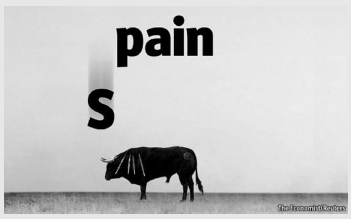
THE worst nightmares are the ones you cannot wake up from. Just ask Spain. A year ago the cost of Spanish government borrowing soared as euro contagion spread from Greece, Ireland and Portugal. Panic seemed to subside with central-bank intervention and the promise of a new reforming government in Madrid. Since then Spain has, broadly, been as good as its word and Mariano Rajoy’s government has, played its part in countless “make-orbreak” summits in Brussels and secured up to €100 billion ($121 billion) to prop up its banks. Yet despite all its efforts and pain, Spain cannot shake off that sense of doom. On July 25th the yield on ten-year bonds touched a euro-era record of 7.75%. Two-year bonds have climbed above 7%: investors fear that Spain must soon ask for a bail-out—or default.
Spain’s nightmare is a symptom of what is wrong with the entire euro zone. As the months drag on, the crisis is deepening. Europe’s leaders have asked the world to trust that they will do what it takes to save the euro. They have also pleaded for more time to sort out the mess. Their task is indeed immense, but as they disappear to their chateaux and beach villas, trust is draining away and time is not their friend.
The bull and the horns
Spain’s situation today is all the more shocking because only this month it had announced €65 billion of tax rises and spending cuts and won the funds for its bank rescue. This was meant to persuade investors that the whole euro zone is serious about keeping Spain. Yet the message was obliterated by news that the government now expects the recession to last into 2013 and, worse, that it will have to find the money to bail out regions which have suddenly confessed to being broke.
The prognosis for Spain is bleak. The economy is in recession, the public sector is cutting spending and the private sector is reluctant to invest. This lack of domestic demand almost guarantees that Mr Rajoy will fail to meet the target to reduce the deficit. If that happens Spain will be asked to impose yet more austerity. That will undermine his popularity, which has already fallen steeply since he was elected. Spain’s resolve will be further damaged by rows over budget cuts between Madrid and regional politicians, who control 40% of public spending—and who, even if they are from Mr Rajoy’s party, jealously guard their autonomy. Political uncertainty will feed back into the economy, which will only deteriorate more. And the vicious circle continues.
Jul 28th 2012 / www.economist.com
According to the text:
Questão 43 49458
ESPM 2013/1The euro The flight from Spain
Spain can be shored up for a while; but its woes contain an alarming lesson for the entire euro zone
THE worst nightmares are the ones you cannot wake up from. Just ask Spain. A year ago the cost of Spanish government borrowing soared as euro contagion spread from Greece, Ireland and Portugal. Panic seemed to subside with central-bank intervention and the promise of a new reforming government in Madrid. Since then Spain has, broadly, been as good as its word and Mariano Rajoy’s government has, played its part in countless “make-orbreak” summits in Brussels and secured up to €100 billion ($121 billion) to prop up its banks. Yet despite all its efforts and pain, Spain cannot shake off that sense of doom. On July 25th the yield on ten-year bonds touched a euro-era record of 7.75%. Two-year bonds have climbed above 7%: investors fear that Spain must soon ask for a bail-out—or default.
Spain’s nightmare is a symptom of what is wrong with the entire euro zone. As the months drag on, the crisis is deepening. Europe’s leaders have asked the world to trust that they will do what it takes to save the euro. They have also pleaded for more time to sort out the mess. Their task is indeed immense, but as they disappear to their chateaux and beach villas, trust is draining away and time is not their friend.
The bull and the horns
Spain’s situation today is all the more shocking because only this month it had announced €65 billion of tax rises and spending cuts and won the funds for its bank rescue. This was meant to persuade investors that the whole euro zone is serious about keeping Spain. Yet the message was obliterated by news that the government now expects the recession to last into 2013 and, worse, that it will have to find the money to bail out regions which have suddenly confessed to being broke.
The prognosis for Spain is bleak. The economy is in recession, the public sector is cutting spending and the private sector is reluctant to invest. This lack of domestic demand almost guarantees that Mr Rajoy will fail to meet the target to reduce the deficit. If that happens Spain will be asked to impose yet more austerity. That will undermine his popularity, which has already fallen steeply since he was elected. Spain’s resolve will be further damaged by rows over budget cuts between Madrid and regional politicians, who control 40% of public spending—and who, even if they are from Mr Rajoy’s party, jealously guard their autonomy. Political uncertainty will feed back into the economy, which will only deteriorate more. And the vicious circle continues.
Jul 28th 2012 / www.economist.com
According to the text:
Questão 42 49457
ESPM 2013/1The euro The flight from Spain
Spain can be shored up for a while; but its woes contain an alarming lesson for the entire euro zone
THE worst nightmares are the ones you cannot wake up from. Just ask Spain. A year ago the cost of Spanish government borrowing soared as euro contagion spread from Greece, Ireland and Portugal. Panic seemed to subside with central-bank intervention and the promise of a new reforming government in Madrid. Since then Spain has, broadly, been as good as its word and Mariano Rajoy’s government has, played its part in countless “make-orbreak” summits in Brussels and secured up to €100 billion ($121 billion) to prop up its banks. Yet despite all its efforts and pain, Spain cannot shake off that sense of doom. On July 25th the yield on ten-year bonds touched a euro-era record of 7.75%. Two-year bonds have climbed above 7%: investors fear that Spain must soon ask for a bail-out—or default.
Spain’s nightmare is a symptom of what is wrong with the entire euro zone. As the months drag on, the crisis is deepening. Europe’s leaders have asked the world to trust that they will do what it takes to save the euro. They have also pleaded for more time to sort out the mess. Their task is indeed immense, but as they disappear to their chateaux and beach villas, trust is draining away and time is not their friend.
The bull and the horns
Spain’s situation today is all the more shocking because only this month it had announced €65 billion of tax rises and spending cuts and won the funds for its bank rescue. This was meant to persuade investors that the whole euro zone is serious about keeping Spain. Yet the message was obliterated by news that the government now expects the recession to last into 2013 and, worse, that it will have to find the money to bail out regions which have suddenly confessed to being broke.
The prognosis for Spain is bleak. The economy is in recession, the public sector is cutting spending and the private sector is reluctant to invest. This lack of domestic demand almost guarantees that Mr Rajoy will fail to meet the target to reduce the deficit. If that happens Spain will be asked to impose yet more austerity. That will undermine his popularity, which has already fallen steeply since he was elected. Spain’s resolve will be further damaged by rows over budget cuts between Madrid and regional politicians, who control 40% of public spending—and who, even if they are from Mr Rajoy’s party, jealously guard their autonomy. Political uncertainty will feed back into the economy, which will only deteriorate more. And the vicious circle continues.
Jul 28th 2012 / www.economist.com
In the underlined sentence “Yet despite all its efforts and pain, Spain cannot shake off that sense of doom.”, the word yet conveys an idea of
Questão 41 49456
ESPM 2013/1The euro The flight from Spain
Spain can be shored up for a while; but its woes contain an alarming lesson for the entire euro zone
THE worst nightmares are the ones you cannot wake up from. Just ask Spain. A year ago the cost of Spanish government borrowing soared as euro contagion spread from Greece, Ireland and Portugal. Panic seemed to subside with central-bank intervention and the promise of a new reforming government in Madrid. Since then Spain has, broadly, been as good as its word and Mariano Rajoy’s government has, played its part in countless “make-orbreak” summits in Brussels and secured up to €100 billion ($121 billion) to prop up its banks. Yet despite all its efforts and pain, Spain cannot shake off that sense of doom. On July 25th the yield on ten-year bonds touched a euro-era record of 7.75%. Two-year bonds have climbed above 7%: investors fear that Spain must soon ask for a bail-out—or default.
Spain’s nightmare is a symptom of what is wrong with the entire euro zone. As the months drag on, the crisis is deepening. Europe’s leaders have asked the world to trust that they will do what it takes to save the euro. They have also pleaded for more time to sort out the mess. Their task is indeed immense, but as they disappear to their chateaux and beach villas, trust is draining away and time is not their friend.
The bull and the horns
Spain’s situation today is all the more shocking because only this month it had announced €65 billion of tax rises and spending cuts and won the funds for its bank rescue. This was meant to persuade investors that the whole euro zone is serious about keeping Spain. Yet the message was obliterated by news that the government now expects the recession to last into 2013 and, worse, that it will have to find the money to bail out regions which have suddenly confessed to being broke.
The prognosis for Spain is bleak. The economy is in recession, the public sector is cutting spending and the private sector is reluctant to invest. This lack of domestic demand almost guarantees that Mr Rajoy will fail to meet the target to reduce the deficit. If that happens Spain will be asked to impose yet more austerity. That will undermine his popularity, which has already fallen steeply since he was elected. Spain’s resolve will be further damaged by rows over budget cuts between Madrid and regional politicians, who control 40% of public spending—and who, even if they are from Mr Rajoy’s party, jealously guard their autonomy. Political uncertainty will feed back into the economy, which will only deteriorate more. And the vicious circle continues.
Jul 28th 2012 / www.economist.com
The main idea of the text is:
Questão 33 48091
UDESC Matutino 2013/2TEXT 2
9 Things I Hate About Everyone
[1] 1) People who point at their wrist asking for the time... I know where my watch is pal,
where the hell is yours? Do I point at my crotch when I ask where the toilet is?
2) People who are willing to get off their a** to search the entire room for the TV remote
because they refuse to walk to the TV and change the channel manually.
[5] 3) When people say "Oh you just want to have your cake and eat it too". Damn Right!
What good is cake if you can't eat it?
4) When people say "it's always the last place you look". Of course it is. Why the hell
would you keep looking after you've found it? Do people do this? Who and where
are they?
[10 5) When people say while watching a film, "did ya see that?" No Loser, I paid $12 to
come to the cinema and stare at the damn floor!
6) People who ask "Can I ask you a question?"... Didn't give me a choice there, did ya
sunshine?
7) When something is 'new and improved'. Which is it? If it's new, then there has
[15] never been anything before it. If it's an improvement, then there must have been
something before it, couldn't be new.
8) When people say "life is short". What the hell??? Life is the longest damn thing
anyone ever does!!! What can you do that`s longer?
9) When you are waiting for the bus and someone asks "Has the bus come yet?" If the
[20] bus came, would I be standing here??
(www.boardofwisdom.com) (Unknown author) Accessed on March 12th, 2013.
It is correct to say that the text:
Questão 32 48090
UDESC Matutino 2013/2TEXT 1
The Health Benefits of Humor and Laughter
[1] Humor is infectious. The sound of roaring laughter is far more contagious than any
cough, sniffle, or sneeze. When laughter is shared, it binds people together and
increases happiness and intimacy. Laughter also triggers healthy physical changes in
the body. Humor and laughter strengthen your immune system, boost your energy,
[5] diminish pain, and protect you from the damaging effects of stress. Best of all, this
priceless medicine is fun, free, and easy to use.
Laughter is strong medicine for mind and body.
Your sense of humor is one of the most powerful tools you have to make certain that
your daily mood and emotional state support good health.” Paul E. McGhee, Ph D.
[10] Laughter is a powerful antidote to stress, pain, and conflict. Nothing works faster or more
dependably to bring your mind and body back into balance than a good laugh. Humor
lightens your burdens, inspires hopes, connects you to others, and keeps you grounded,
focused, and alert.
With so much power to heal and renew, the ability to laugh easily and frequently is a
[15] tremendous resource for surmounting problems, enhancing your relationships, and
supporting both physical and emotional health.
Laughter is good for your health:
− Laughter relaxes the whole body. A good, hearty laugh relieves physical tension
and stress, leaving your muscles relaxed for up to 45 minutes after.
[20] − Laughter boosts the immune system. Laughter decreases stress hormones and
increases immune cells and infection-fighting antibodies, thus improving your
resistance to disease.
− Laughter triggers the release of endorphins, the body’s natural feel-good
chemicals. Endorphins promote an overall sense of well-being and can even
[25] temporarily relieve pain.
− Laughter protects the heart. Laughter improves the function of blood vessels and
increases blood flow, which can help protect you against a heart attack and other
cardiovascular problems.
Laughter is the Best Medicine (www.helpguide.org) Accessed on March 12th, 2013.
Mark the alternative with the best substitutes the sentences from the text.
06